TL;DR

Turn quiet afternoons into listening time
- Thousands of audiobooks, podcasts and originals
- Listen on your phone, tablet or Echo — also offline
- Cancel anytime
A Fit&Well report recommends four exercises—chair-based knee lifts and sit-to-stands, a one-sided dumbbell leg raise, farmer carries and shoulder presses—to train strength and balance for daily activities. The routine calls for two rounds, eight repetitions per side where relevant, and 30-second carries; it is an instructor’s recommendation, not a clinical finding that the exercises prevent falls or preserve independence.
Fit&Well has published a four-exercise routine from a chair-workout instructor who teaches older adults, recommending chair-based knee lifts and sit-to-stands, a one-sided leg raise while holding a dumbbell, farmer carries and shoulder presses. The instructor presents the movements as a way to practice strength and balance used in daily tasks such as standing from a seat, carrying groceries and reaching overhead; the report does not establish that this routine prevents falls or guarantees continued independence.
The routine uses a sturdy chair and a pair of dumbbells. The instructor advises choosing weights that can be controlled throughout each movement and doing two rounds. The prescribed dose is eight repetitions for each exercise, or eight per side when relevant; farmer carries are performed for 30 seconds, followed by 30 seconds of rest.
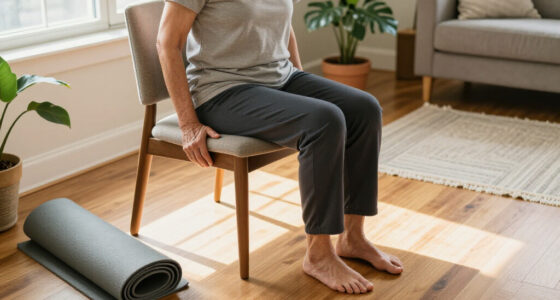
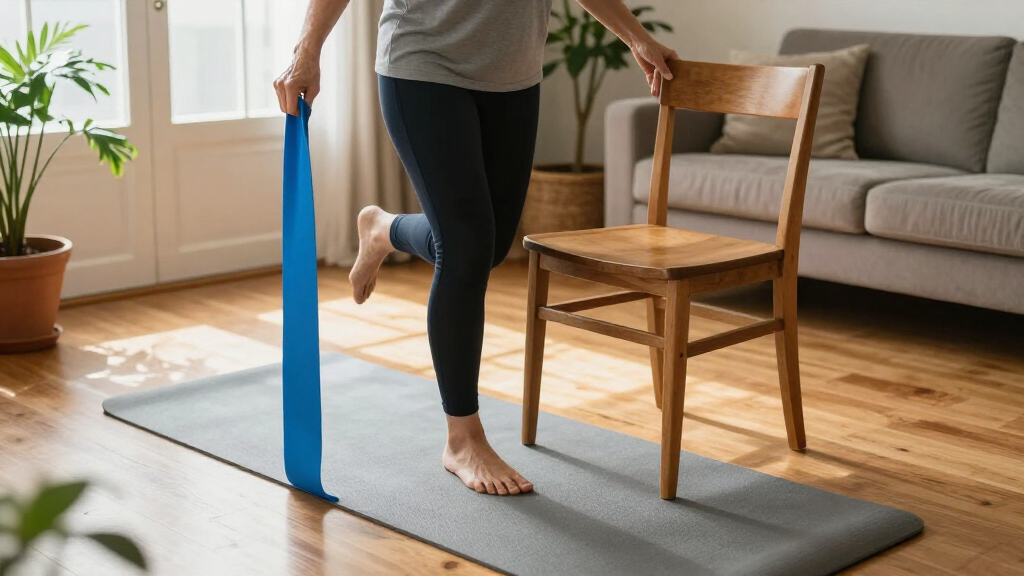
In the first movement, a person sits near the front of the chair, lifts and lowers each knee, then stands and sits back down with control. The instructor links the knee lifts to moving the legs out of a car and the sit-to-stand to rising from a low seat. For the second exercise, the person holds one dumbbell and raises the opposite leg out to the side, aiming to keep the torso upright rather than leaning.
For farmer carries, the person holds one dumbbell in each hand and walks for 30 seconds with an upright torso, then puts the weights down by bending at the hips and knees. The shoulder press can be done standing or seated: weights begin at shoulder height and are pressed overhead before being lowered slowly. The instructor says the carry trains grip and carrying strength, while presses work the shoulders and arms used to place objects on higher shelves.
Training for Everyday Tasks
The routine is framed around practical movements, rather than exercise performance alone. Standing from a chair, walking while carrying weight and lifting objects overhead are examples of daily activities the instructor says the exercises are meant to support. That focus may help readers understand why the movements were selected and how they relate to maintaining function as people age.
The instructor also describes hearing from older clients about changes they associate with strength training. In the report, examples include finding it easier to get into a family member’s car and walking farther to a bus stop. These are personal accounts from the instructor’s classes, not independently measured outcomes or proof that this specific four-move routine caused those changes.
The report says grip strength is used as a marker of overall muscle strength and has been associated with long-term health outcomes, but it provides no study citation or further detail in the supplied material. The routine should therefore be understood as a practical exercise recommendation, not a medical assessment or a guarantee of health benefits.
As an affiliate, we earn on qualifying purchases.
An Instructor’s Chair-Class Experience
The Fit&Well report is written from the perspective of an instructor who teaches chair workout classes to adults ranging from their late 60s to early 90s. The instructor says many attend because they want to remain independent and manage tasks such as shopping, walking and getting in and out of a car.
The report also suggests that building strength earlier may be useful, mentioning people in their 40s and 50s. That is the instructor’s rationale for practicing these movements before later life; the source material does not provide a trial, formal guideline or comparison showing that this exact routine produces a particular result.
“They want to stay independent.”
— Fit&Well report author and chair-workout instructor
As an affiliate, we earn on qualifying purchases.
Limits of the Routine’s Evidence
The supplied report does not identify a clinical study testing these four exercises together, quantify improvements in strength or balance, or establish that the routine reduces falls. Its examples of progress are anecdotes reported by the instructor; the source gives no measurements or independent confirmation of cause and effect.
It is also unclear whether the routine is suitable for every reader, how it should be adapted for people with injuries or mobility limitations, or whether a different number of repetitions or weight would be appropriate. The report advises using controllable weights but does not set out screening criteria or individualized modifications. Readers making exercise decisions around a health condition or physical limitation should consult a qualified professional.
balance and strength training dumbbells
As an affiliate, we earn on qualifying purchases.
As an affiliate, we earn on qualifying purchases.
How Readers Can Use the Routine
The report offers the routine as a repeatable set of movements, but does not announce a study, follow-up assessment or further publication that would verify its effects. Its immediate guidance is to use a sturdy chair, select dumbbells that remain manageable, complete two rounds, and follow the stated repetition and carry timings.
Anyone considering the exercises can review the movement instructions and adapt their approach with a qualified exercise or health professional where needed, particularly if standing, balancing or lifting weights is difficult. The report does not say how often to repeat the workout, specify a progression plan, or provide a schedule for increasing weight; those details remain outside the recommendations supplied.
As an affiliate, we earn on qualifying purchases.
Key Questions
Which four exercises does the report recommend?
It recommends seated knee lifts followed by sit-to-stands, a dumbbell hold with a side leg raise, farmer carries and shoulder presses.
How many repetitions and rounds are prescribed?
The report calls for two rounds and eight repetitions per exercise, or per side where relevant. Farmer carries last 30 seconds, with 30 seconds of rest.
What equipment is needed?
The routine calls for a sturdy chair and two dumbbells. The instructor advises starting with weights that can be controlled throughout each movement.
Does the report show that these exercises prevent falls?
No. It presents the exercises as an instructor’s recommendations for practicing strength and balance, but provides no evidence that the routine prevents falls or guarantees independence.
Source: rss
Fall Picks
fall essentials
As an affiliate, we earn on qualifying purchases.