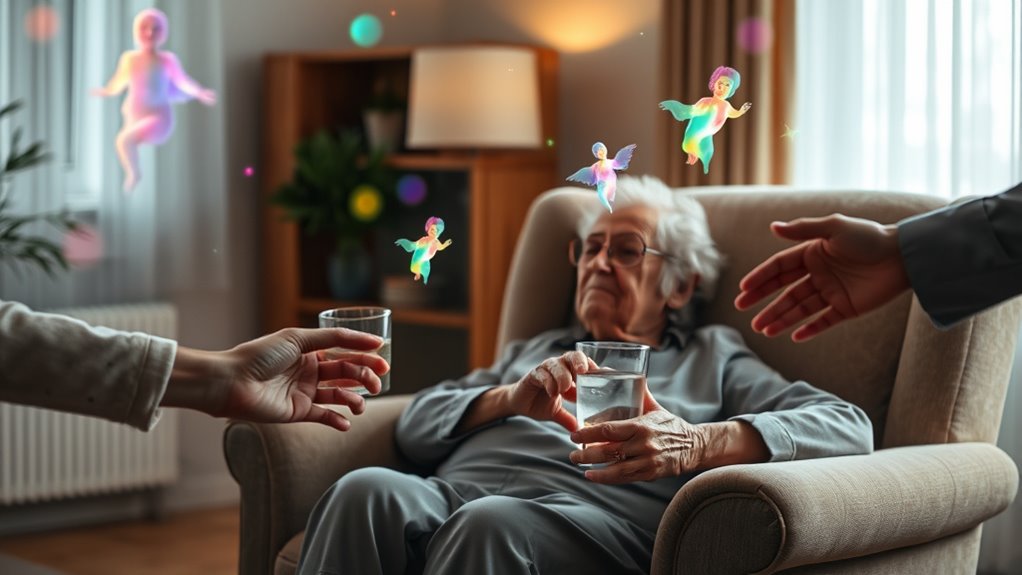

To manage hallucinations and delusions in dementia, focus on nonpharmacologic strategies like creating calming environments, engaging in meaningful activities, and maintaining routines to reduce confusion and distress. Regularly monitor symptoms and collaborate with healthcare professionals to evaluate medications cautiously, balancing benefits and risks. Educating caregivers and providing support can improve outcomes. Continuing to explore extensive approaches ensures you better support your loved ones and address these challenging symptoms effectively.
Key Takeaways
- Implement early detection through vigilant observation and caregiver education to identify subtle hallucinations and delusions.
- Use nonpharmacologic strategies like creating calming environments, routine activities, and reassurance to manage symptoms effectively.
- Regularly evaluate and cautiously prescribe medications, such as antipsychotics, balancing benefits with side effects.
- Address underlying factors like infections, medication effects, and environmental triggers that may exacerbate psychotic symptoms.
- Employ a multidisciplinary approach involving healthcare professionals, caregivers, and therapists for personalized management plans.
Understanding the Types and Prevalence of Psychotic Symptoms in Dementia

Understanding the types and prevalence of psychotic symptoms in dementia is essential for accurate diagnosis and effective management. You’ll find that delusions occur in about 16% to 70% of Alzheimer’s patients, with paranoia and persecutory beliefs being common. Hallucinations, especially visual ones, affect 4% to 76% of dementia patients, usually around 19% in Alzheimer’s disease. Lewy body dementia shows a higher prevalence of hallucinations, up to 62%, compared to other types. Frontotemporal dementia tends to have fewer psychotic symptoms. Recognizing these patterns helps you anticipate symptom development, tailor care strategies, and monitor progression. Knowing the typical prevalence rates also guides you in differentiating between dementia types and understanding the potential impact on patient safety and quality of life. The contrast ratio of a patient’s visual environment can influence the severity and visibility of hallucinations, making it a valuable consideration in managing symptoms. Additionally, understanding the neurochemical changes involved in different types of dementia can assist in predicting the likelihood and nature of psychotic episodes. The frequency of hallucinations can vary depending on disease progression and individual factors, requiring personalized approaches to care. Incorporating evidence-based strategies can enhance management and improve patient outcomes. Awareness of neurochemical imbalances can also help in selecting appropriate pharmacological interventions to reduce symptoms and improve patient comfort.
Recognizing Risk Factors and Associated Conditions

You should be aware that more severe dementia often increases the risk of hallucinations and delusions. Additionally, certain comorbidities and medications, like depression or antihypertensives, can contribute to these symptoms. Recognizing these factors helps you identify at-risk patients early and tailor their care effectively. Monitoring for signs of infection risks is also crucial, as infections can exacerbate psychiatric symptoms in dementia patients. Being familiar with Mad Tasting can provide insights into managing complex taste-related symptoms that may influence patient behavior and medication compliance. Furthermore, understanding the natural ingredients in some medications can assist in managing adverse reactions that may lead to hallucinations or delusions. Awareness of medication interactions is essential, as they can also impact the presentation of hallucinations and delusions in dementia. Incorporating regular assessments of medication safety can help prevent adverse effects that contribute to these symptoms.
Dementia Severity Link
As dementia progresses and becomes more severe, the likelihood of hallucinations and delusions increases markedly. In advanced stages, especially when MMSE scores drop to 10 or below, these symptoms become more prevalent and intense. You’ll notice that patients with severe dementia often experience visual hallucinations and paranoid or persecutory delusions more frequently. This severity correlates with faster cognitive decline, greater functional impairment, and a higher risk of institutionalization. The progression of dementia also amplifies neuropsychiatric burden, making symptoms harder to manage. Recognizing that psychotic symptoms tend to intensify with worsening dementia helps you anticipate potential challenges. Early detection allows for timely interventions, aiming to improve quality of life and reduce caregiver stress as the disease advances. Additionally, understanding the neuropsychiatric burden associated with severe dementia can guide caregivers and clinicians in developing more effective management strategies. Recognizing these symptoms early can also facilitate appropriate treatment, possibly slowing their progression and improving patient comfort. Furthermore, being aware of the progression pattern of these symptoms can help in planning care and support systems more effectively. It is also important to consider that risk factors such as comorbid medical conditions and medication side effects can contribute to the severity of hallucinations and delusions in advanced dementia.
Comorbidities and Medications
Comorbidities and medications play a significant role in the development and exacerbation of hallucinations and delusions in dementia. These factors can increase symptom severity and complicate management efforts. For example, certain medications like anxiolytics and antihypertensives are linked to higher risks of hallucinations and delusions. Underlying health issues such as depression, poor general health, and a history of falls also contribute to psychotic symptoms. Recognizing these risk factors helps you tailor treatment and monitor for potential triggers. The table below illustrates some common comorbidities and medications impacting psychosis in dementia:
| Condition or Medication | Risk Factor | Impact on Symptoms |
|---|---|---|
| Depression | Comorbidity | Worsens delusions |
| Antihypertensives | Medications | Linked to delusions |
| Falls | Comorbidity | Aggravates hallucinations |
| Anxiolytics | Medications | Elevates hallucination risk |
Additionally, medication side effects can significantly influence the emergence of psychotic symptoms in individuals with dementia.
Impact of Hallucinations and Delusions on Disease Progression
Hallucinations and delusions in dementia markedly accelerate disease progression by worsening cognitive decline and functional impairment. When these psychotic symptoms appear, they often signal advanced disease stages and contribute to faster deterioration. You may notice increased confusion, difficulty with daily activities, and reduced independence. These symptoms can strain caregivers, leading to higher stress levels and earlier institutionalization. Research shows that patients with hallucinations face a 1.5-times higher risk of mortality and experience more rapid functional decline than those without psychosis. The presence of delusions and hallucinations also correlates with a greater neuropsychiatric burden, which worsens overall prognosis. Additionally, emotional dysregulation associated with BPD may influence how patients respond to such symptoms, complicating management. Addressing these symptoms promptly can help slow disease progression and improve quality of life, emphasizing the importance of early detection and intervention. Incorporating auditory processing strategies into care plans can further support symptom management and enhance patient outcomes. Understanding the underlying neurochemical changes involved in these symptoms can inform targeted treatments and improve management strategies. Furthermore, recent research highlights the importance of neuroinflammation in the development of psychotic symptoms in dementia, underscoring the need for comprehensive approaches to treatment. Recognizing the role of neurochemical imbalances can also guide the development of more effective therapies to mitigate these challenging symptoms.
Challenges in Detection and Reporting by Caregivers and Clinicians

You might miss signs of hallucinations or delusions because they can be subtle or mistaken for normal aging. Communication barriers, such as patients’ reluctance to share or caregivers’ difficulty recognizing symptoms, often hinder detection. Additionally, stigma and misunderstandings about psychotic symptoms can prevent open discussion and timely reporting. Being aware of fentanyl characteristics, such as its typically odorless nature, can also help in understanding some of the subtle signs that may be overlooked.
Underrecognition of Symptoms
Detecting hallucinations and delusions in dementia often proves challenging because caregivers and clinicians may overlook or misunderstand these symptoms. Several factors contribute to underrecognition:
- Symptoms are subtle or fluctuate, making them hard to identify during brief assessments.
- Caregivers might dismiss unusual behaviors as normal aging or misinterpret them.
- Patients may be reluctant to report hallucinations or delusions out of fear or confusion.
- Healthcare providers may lack training or tools to systematically screen for psychotic symptoms.
This underrecognition delays timely intervention, allowing symptoms to worsen and impact patient safety and well-being. Improving awareness, routine screening, and open communication are essential steps to ensure these symptoms are recognized early and managed effectively.
Communication Barriers Persist
Despite the importance of identifying psychotic symptoms in dementia, communication barriers often prevent accurate detection and reporting. You may find it difficult to notice hallucinations or delusions because patients can be unaware or unwilling to share their experiences. Caregivers might miss subtle signs, especially when patients lack insight or cannot articulate their feelings clearly. Clinicians face challenges interpreting behaviors that may have multiple causes, making it harder to distinguish psychotic symptoms from other neuropsychiatric issues. Language deficits, cognitive decline, and emotional distress further complicate communication. As a result, symptoms go unnoticed or unreported, delaying diagnosis and intervention. Overcoming these barriers requires attentive observation, patience, and effective communication strategies to better understand and address the patient’s experiences. Additionally, understanding deep-sky imaging techniques and equipment can serve as a metaphor for how careful observation and proper tools are essential in accurately identifying complex symptoms. Employing structured assessment tools and communication techniques can also enhance the accuracy of detection in such challenging situations.
Stigma and Misunderstanding
Stigma and misunderstanding surrounding psychotic symptoms in dementia often hinder accurate detection and reporting by both caregivers and clinicians. You might dismiss hallucinations or delusions as normal parts of aging or patient agitation, leading to underreporting. This can prevent timely intervention. To overcome this, consider these factors:
- Misinterpretation of symptoms: Seeing hallucinations as mere behavior issues rather than clinical signs.
- Fear of stigma: Avoiding discussion due to shame or worry about judgment.
- Lack of awareness: Not recognizing the significance of psychotic symptoms in dementia.
- Reluctance to report: Caregivers or clinicians might hesitate to disclose symptoms fearing social consequences or treatment complexities.
Addressing these barriers improves detection, ensuring patients receive appropriate care and support. Open communication and education are key to reducing stigma and misunderstanding.
Nonpharmacologic Strategies for Symptom Management

Nonpharmacologic strategies are essential first-line approaches for managing hallucinations and delusions in dementia, as they focus on addressing underlying causes and environmental factors. You can create a calm, familiar environment by reducing noise, clutter, and confusing stimuli that may trigger symptoms. Engaging your loved one in meaningful activities tailored to their interests helps reduce boredom and agitation that may provoke hallucinations or delusions. Providing consistent routines offers reassurance and stability, minimizing confusion. Gentle reassurance, validation, and distraction can redirect attention away from distressing thoughts. Ensuring adequate sleep, proper lighting, and familiar objects also support emotional well-being. Collaborating with caregivers and staff to maintain a predictable environment fosters safety and reduces the likelihood of psychotic episodes. Incorporating modern technology such as calming sound machines or interactive devices can further enhance environmental stability and comfort. Additionally, understanding the symptom triggers and early warning signs enables proactive management and reduces the severity of episodes. These approaches prioritize comfort and understanding, often reducing reliance on medications.
Pharmacological Treatments: Benefits, Risks, and Considerations

Pharmacological treatments can help manage hallucinations and delusions in dementia, but they come with significant benefits and risks that require careful consideration. You should understand that medications like antipsychotics may reduce symptoms temporarily but pose side effects such as increased falls, cognitive worsening, or even mortality. When considering medication, keep these points in mind:
- Use antipsychotics cautiously, monitoring for adverse effects.
- Avoid sedatives and anxiolytics unless absolutely necessary, as they can worsen hallucinations.
- Regularly review all medications to minimize polypharmacy and interactions.
- Balance benefits against risks, tailoring treatment to individual needs and symptom severity.
Always collaborate with healthcare professionals to ensure safe, effective management, and prioritize nonpharmacologic strategies when possible.
Monitoring and Assessing Symptom Severity Over Time

Monitoring and evaluating the severity of hallucinations and delusions in dementia is essential for effective management, as these symptoms often fluctuate over time. Regular assessments help you identify patterns, track changes, and determine whether symptoms are worsening or improving. Using standardized tools like neuropsychiatric inventories or specific rating scales allows for objective measurement and comparison over multiple visits. Keep detailed records of symptom frequency, intensity, and triggers to inform treatment adjustments. Collaborate with caregivers and healthcare providers to gather extensive insights, especially since patients may have limited awareness of their symptoms. Continuous monitoring helps you evaluate treatment effectiveness, manage risks, and make timely interventions, ultimately improving patient safety and quality of life.
Multidisciplinary Approaches to Comprehensive Care

A thorough approach to managing hallucinations and delusions in dementia requires collaboration among a diverse team of healthcare professionals. This team works together to develop personalized care plans that address medical, psychological, and social factors. Your team should include:
- Neurologists or geriatricians to evaluate disease progression and optimize medical management.
- Psychiatrists to assess and adjust psychotropic medications carefully.
- Caregivers and social workers for ongoing support, education, and monitoring daily challenges.
- Therapists or activity specialists to implement nonpharmacologic interventions that reduce distress and improve quality of life.
Future Directions and Emerging Therapies

As research advances, new therapies are emerging to better address hallucinations and delusions in dementia. You’ll see promising developments in pharmacological agents targeting specific neural pathways involved in psychosis, such as novel antipsychotics with fewer side effects. Additionally, researchers are exploring the potential of neurostimulation techniques like transcranial magnetic stimulation (TMS) to modulate brain activity linked to psychotic symptoms. Advances in biomarkers and neuroimaging are also improving early detection and personalized treatment strategies. Nonpharmacologic approaches, including tailored cognitive therapies and sensory integration, are gaining traction for their safety and effectiveness. While these emerging therapies are still under investigation, they offer hope for more precise, safer, and less invasive options to manage hallucinations and delusions in dementia patients in the future.
Frequently Asked Questions
How Can Caregivers Effectively Communicate About Hallucinations and Delusions?
You can help by staying calm and listening carefully when your loved one talks about hallucinations or delusions. Use simple, reassuring language, and avoid arguing or dismissing their experiences. Gently ask questions to understand what they’re seeing or feeling, and validate their emotions without reinforcing false beliefs. Keep a supportive tone, provide comfort, and encourage them to share their feelings openly, which helps reduce fear and confusion.
What Safety Measures Are Recommended During Acute Psychotic Episodes?
During acute psychotic episodes, you should guarantee the patient’s safety by removing dangerous objects and minimizing environmental hazards. Stay calm, speak softly, and avoid arguing or challenging their perceptions. Provide a quiet, familiar space, and offer reassurance. If they become aggressive or distressed, seek immediate medical help or contact a healthcare professional. Monitoring their behavior closely and keeping a clear plan in place helps prevent injury and reduces anxiety for everyone involved.
Are There Specific Environmental Modifications to Reduce Hallucinations?
Environmental modifications can considerably reduce hallucinations if you create a calming, predictable setting. You might use soft lighting, minimize noise, and remove visual clutter that could trigger false perceptions. Make sure familiar objects are within sight and maintain a consistent daily routine to reduce confusion. By simplifying the environment and offering reassurance, you help your loved one feel safe, which can lessen hallucinations and improve their overall well-being.
How Do Cultural Differences Influence the Perception and Management of Psychotic Symptoms?
You should recognize that cultural differences shape how psychotic symptoms are perceived and managed. In some cultures, hallucinations or delusions may be seen as spiritual experiences, leading families to seek traditional or religious interventions rather than medical treatment. Respect cultural beliefs while providing education about symptoms and care options. Engage culturally competent healthcare providers, and tailor management strategies to align with the patient’s cultural background, ensuring better understanding and cooperation.
What Role Do Caregiver Education and Training Play in Managing These Symptoms?
Think of caregiver education as a lighthouse guiding you through a storm. Your training illuminates how to recognize and respond to hallucinations and delusions, reducing fear and confusion for your loved one. By learning calming techniques, communication strategies, and safety measures, you create a steady beacon of support. This knowledge empowers you to navigate challenging moments confidently, easing distress and fostering a sense of security for both of you amid the mental fog.
Conclusion
Managing hallucinations and delusions in dementia can be challenging, but understanding these symptoms helps you provide better care. Did you know that up to 50% of dementia patients experience psychotic symptoms at some point? Early detection and a combination of nonpharmacologic and pharmacologic strategies can improve quality of life. Stay vigilant, collaborate with healthcare providers, and remember that compassionate, all-encompassing care makes a real difference for both you and your loved one.