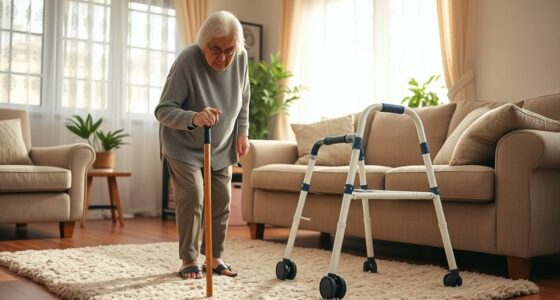

To change an adult diaper with dignity, gather all supplies first, ensuring privacy and comfort. Carefully remove the soiled diaper, supporting the person’s body and maintaining gentle contact. Clean the skin thoroughly, using wipes and barrier creams as needed. Position the new diaper correctly, making sure it fits snugly without causing discomfort or leaks. Establish a routine that suits their needs and maintains respect throughout. If you focus on these steps, you’ll find ways to make the process smoother and more respectful.
Key Takeaways
- Prepare supplies, ensure privacy, and create a comfortable environment before beginning the diaper change.
- Support the individual and clean thoroughly from front to back, using appropriate hygiene and skin care practices.
- Ensure proper diaper fit, positioning, and regular scheduling based on individual needs to prevent leaks and skin issues.
- Use adaptive techniques and tools, like the Thread method or booster pads, to make changes safer and more comfortable.
- Communicate calmly, involve the person in the process, and maintain dignity to promote comfort and respect during care.
Preparing the Changing Area for Comfort and Safety

Creating a comfortable and safe changing area starts with preparing the environment before you begin. First, gather all supplies—clean diapers, wipes, gloves, and barrier creams—and keep them within arm’s reach to save time. Make sure the space offers privacy and minimizes distractions, respecting the individual’s dignity. Use an underpad or towel on the surface to protect bedding and make cleanup easier. Check that the area is well-lit, temperature-controlled, and comfortable, so neither of you feels rushed or cold. Before starting, wash your hands thoroughly or sanitize to prevent infection. Creating this organized, private space helps you work efficiently, ensures safety, and promotes a respectful, calming environment for the person you’re caring for. Additionally, considering soundproofing can enhance privacy and reduce stress during the process. Incorporating modern safety features such as slip-resistant mats can further prevent accidents and ensure a secure environment. Ensuring proper environmental conditions, like ventilation and noise control, can also improve comfort and reduce anxiety for both caregiver and individual. Taking steps to optimize the safety environment can significantly improve the caregiving experience for everyone involved.
Safely Removing the Soiled Diaper With Care

When removing the soiled diaper, gently undo the tabs or rip the sides to prevent sudden movements that could cause discomfort. Keep the diaper partially underneath the person to contain waste and avoid spills. Carefully support the individual and handle the diaper with care to guarantee safety and cleanliness. Being mindful of safe handling practices helps prevent injury and maintains dignity during the process. Additionally, being aware of body positioning can help minimize strain and ensure comfort throughout the procedure. Incorporating proper body mechanics can further reduce the risk of caregiver injury while promoting a respectful and comfortable experience for the individual, especially when managing physical limitations. Using appropriate ergonomic techniques can also aid in reducing caregiver fatigue and enhancing safety during this task.
Gentle Tabs Removal
To remove a soiled diaper safely and comfortably, start by gently undoing the tabs or ripping the sides rather than pulling them apart abruptly. This prevents discomfort and protects the skin. Use your fingers to slowly release each tab, keeping a steady, gentle pressure. If the diaper is sticky or stubborn, a little more patience will make the process smoother. To help you visualize, here’s a simple guide:
| Step | Action | Tip |
|---|---|---|
| 1 | Loosen the tabs | Do it gently to avoid pulling skin |
| 2 | Fold the diaper edges | Keep waste contained |
| 3 | Slide the diaper out | Support the thighs for comfort |
| 4 | Keep the diaper underneath | Catch any drips or messes |
| 5 | Prepare for cleaning | Have wipes ready |
Additionally, supporting the skin’s sensitivity during removal helps prevent irritation and discomfort. Being mindful of proper diaper removal techniques ensures a more comfortable experience for the individual.
Contain Waste Safely
Before removing the soiled diaper, carefully support the individual’s legs and hips to prevent sudden movements that could cause discomfort or accidents. Gently undo the tabs or sides of the diaper, taking care not to rip or tear it abruptly. Keep the soiled diaper partially underneath the individual to contain waste and avoid spills. As you gently slide the diaper away, hold it securely to prevent waste from spilling. Use the edges of the diaper to fold and contain the mess, reducing contamination. Be mindful of skin contact, and avoid pulling the diaper too quickly. Once removed, dispose of it immediately in a lined bin, sealing it securely to contain odors. This careful process helps contain waste safely while maintaining dignity.
Thorough Cleaning and Hygiene Practices

When cleaning, make sure to wipe from front to back to prevent infections, especially for females. Use both wet and dry wipes to thoroughly clean the skin and prevent moisture buildup. After cleaning, apply barrier creams or moisturizers to protect the skin and keep it healthy. Proper hygiene practices are essential for reducing the risk of skin irritation and infections.
Proper Wiping Technique
Proper wiping technique is essential for maintaining hygiene and preventing infection during adult diaper changes. You want to guarantee the area is thoroughly cleaned to avoid irritation or bacteria buildup. Start by using gentle, front-to-back wipes, especially for females, to prevent cross-contamination. Use both wet and dry wipes for a complete clean, paying close attention to skin folds and creases. Always wipe gently to avoid skin damage. Remember to:
- Clean thoroughly, covering all areas with multiple wipes if necessary
- Focus on skin folds to prevent irritation and infection
- Use a gentle, front-to-back motion to reduce bacteria transfer
Finish by patting the area dry with a clean cloth. Proper wiping helps keep the skin healthy and reduces the risk of breakdown or infection.
Skin Care and Moisturization
Thorough cleaning and hygiene practices are essential for maintaining healthy skin and preventing infections during adult diaper changes. You should use gentle wipes, wiping from front to back, especially for females, to reduce infection risk. Confirm you clean all skin folds thoroughly to prevent irritation and moisture buildup. Use both wet and dry wipes for complete removal of waste and excess moisture. Pay close attention to areas prone to chafing or redness. After cleaning, apply a barrier cream or ointment to protect the skin from moisture and irritants. Be gentle but thorough, and avoid scrubbing. Proper skin care helps prevent rashes, breakdown, and infections, promoting comfort and skin integrity. Consistent hygiene and moisturization are key to maintaining healthy, resilient skin during every change.
Properly Positioning and Fitting the New Diaper
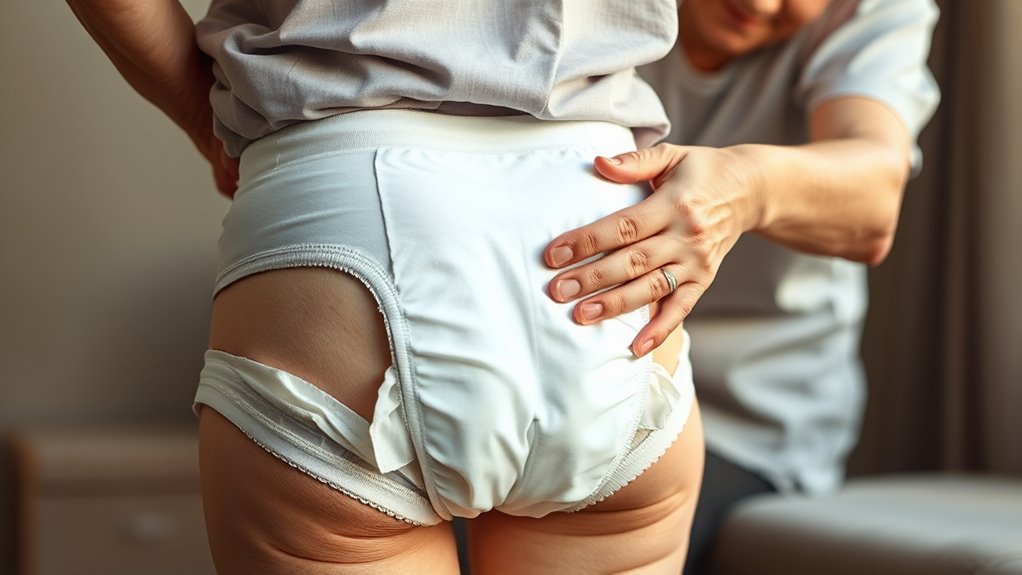
Positioning the new diaper correctly is crucial to prevent leaks and guarantee comfort. First, lift the individual’s hips by placing your forearm behind their knees, making it easier to slide the diaper underneath. Ensure the back of the diaper sits several inches above the tailbone for proper coverage. The diaper should fit snugly around the waist and legs without being too tight, allowing for free movement. Before fastening, check that the waistband and leg openings are secure but comfortable. Adjust the diaper as needed to prevent gaps or bunching, which can cause leaks or skin irritation. Remember, a properly fitted diaper not only keeps the individual dry but also maintains their dignity and comfort throughout the day.
Establishing a Change Schedule and Monitoring Needs

To guarantee ideal skin health and comfort, it’s essential to establish a consistent diaper change schedule tailored to the individual’s needs. Pay attention to their fluid intake, activity level, and mobility to determine how often they require changing. Regular checks help prevent leaks and skin irritation, especially for those who are immobile or have incontinence issues. Keep track of patterns or changes in their elimination habits, as this can signal health concerns or adjustments needed in the schedule. Communicate with the individual or their healthcare team to refine timing, ensuring they stay comfortable and clean. Monitoring their skin condition regularly also helps catch early signs of irritation or infection, allowing prompt intervention. Monitoring techniques are valuable tools to ensure ongoing skin health and comfort. Consistency and observation are key to maintaining hygiene and dignity. Utilizing skin assessment methods can further enhance early detection and intervention, especially when combined with knowledge of skin barrier integrity and response. Incorporating an understanding of lifevest advisors strategies for risk management can also support optimal skin care practices and safeguard against potential complications. Additionally, understanding the principles of Haute Couture craftsmanship can inspire meticulous attention to detail in personal care routines, ensuring the best possible outcomes.
Adaptive Techniques for Difficult or Unique Situations

When faced with difficult or unique situations during diaper changes, adapting your techniques can make the process safer and more comfortable. Flexibility is key to overcoming challenges and maintaining dignity. For example, if the individual has limited mobility, try using the Thread method to slide pull-on underwear without removing shoes or lower garments. If the person is uncooperative, secure tabs while seated or use adaptive clothing with Velcro closures to simplify the process. For extended protection during long periods without access to a restroom, insert booster pads inside the diaper with the Pad-In-Pull-Up method. Additionally, employing adaptive strategies and specialized tools designed for caregiving can help reduce strain and improve safety during these tasks. Being aware of caregiver ergonomics can further prevent injury and enhance comfort for both parties. Incorporating effective communication techniques can also help alleviate anxiety and foster cooperation. Remember to communicate clearly, stay patient, and always prioritize comfort and safety. Utilizing personal protective equipment can further safeguard both caregiver and individual from potential infections. These adaptive strategies help ensure respectful, effective care in difficult or unusual situations.
Promoting Dignity and Independence During the Process

Promoting dignity and independence during the diaper change involves more than just the technical steps; it requires respectful communication and encouragement. Speak calmly and softly, explaining each step to reassure the person and foster a sense of control. Maintain eye contact and use a friendly tone to show respect and compassion. Whenever possible, involve them in the process—allowing choices like positioning or which side to start on promotes independence. Keep the environment private, warm, and comfortable to uphold their dignity. Avoid rushing; instead, focus on gentle, respectful handling. Offering reassurance and positive reinforcement helps the individual feel valued and dignified throughout the process. Remember, your attitude and communication can transform a necessary task into a respectful act of care.
Troubleshooting Common Challenges in Diaper Changing

Troubleshooting common challenges during diaper changes can help guarantee the process remains smooth and comfortable for both caregiver and individual. If the person resists or becomes restless, try explaining what you’re doing or offering a distraction, like a toy or gentle talk. If the diaper won’t stay in place, check the fit and adjust the waistband or leg openings for a snug but comfortable fit. For persistent leaks, ensure the diaper is positioned correctly and the tabs are secure. Additionally, skin irritation from prolonged exposure or poor hygiene can be addressed by gently cleaning thoroughly and applying barrier creams.
Address leaks by adjusting fit, and soothe skin irritation with proper cleaning and barrier creams.
- Gently reassure and communicate during resistance
- Reassess fit and positioning for leaks
- Use soothing techniques to calm agitation
Frequently Asked Questions
How Do I Handle Resistance or Refusal From the Individual During Changing?
You handle resistance by staying calm and patient, speaking softly to reassure the individual. Gently explain what you’re doing and why it’s important for their comfort and hygiene. If they refuse, try distraction techniques or offer choices to give them a sense of control. Respect their feelings, and if needed, pause and revisit later. Your gentle persistence helps reduce anxiety and makes the process smoother.
What Signs Indicate a Skin Infection or Irritation Needing Medical Attention?
You’ll notice signs like redness, swelling, or warmth around the skin, which signals irritation or an infection. Persistent soreness, blistering, or foul odor also suggest trouble. If the skin becomes broken, with open sores or pus, it’s time to seek medical attention. Keep an eye out for increased discomfort or fever, as these indicate a more serious issue needing prompt treatment. Addressing these signs early helps prevent further complications.
How Can I Prevent Diaper Rash Effectively Over Time?
To prevent diaper rash over time, you should change the diaper promptly when it’s soiled or wet, ensuring the skin stays dry. Use barrier creams or ointments to protect skin from moisture and irritation. Make sure the diaper fits well without being too tight, and gently clean the skin during each change. Allow the skin to air out when possible, and choose breathable, moisture-wicking diapers to keep skin healthier.
What Precautions Should I Take for Individuals With Mobility Limitations?
Imagine safeguarding their comfort and dignity; you should guarantee gentle handling to prevent discomfort. Use proper support and positioning, like lifting hips with your forearm, to reduce strain. Always double-check the fit for snugness without tightness, and protect skin with barrier creams. Keep the area clean and dry, change frequently, and adapt techniques to their mobility level. These precautions help prevent injury and promote a sense of security.
How Do I Manage Accidental Leaks or Overflow During a Change?
When managing leaks or overflow, first, stay calm and quickly protect the surrounding area with an underpad or towel. Carefully remove the soiled diaper, using gentle movements to prevent discomfort. Clean the individual thoroughly, paying attention to skin folds, and apply barrier cream if needed. Fit a new, snugly secured diaper, ensuring it’s positioned correctly to prevent future leaks. Always check for signs of overflow and adjust the diaper size if necessary.
Conclusion
By following these respectful, thorough steps, you guarantee your loved one’s comfort and dignity. Remember, maintaining a consistent change schedule can reduce discomfort and skin issues—studies show that regular changes decrease skin infections by up to 50%. Your careful, compassionate approach not only promotes hygiene but also supports their independence and well-being. With patience and practice, you’ll become a confident caregiver, making each change a respectful act of care.