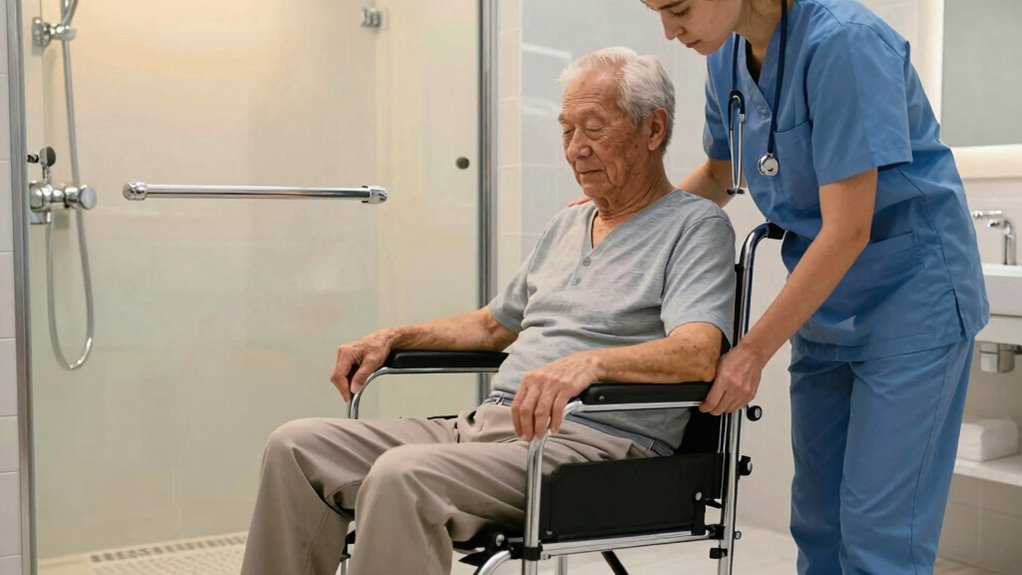

Safe shower transport is crucial to prevent injuries and protect your patients’ dignity, especially those with high needs. Proper handling, assessment, and using appropriate transfer techniques ensure their safety and comfort. Creating a clutter-free environment with safety devices like grab bars and non-slip mats reduces fall risks. Regular staff training boosts confidence and response efficiency during emergencies. If you keep exploring, you’ll discover essential strategies to enhance safety and respect during shower care.

Turn quiet afternoons into listening time
- Thousands of audiobooks, podcasts and originals
- Listen on your phone, tablet or Echo — also offline
- Cancel anytime
Key Takeaways
- Ensures patient safety and prevents injuries during transfers in shower environments.
- Maintains patient dignity and promotes trust through respectful handling.
- Proper assessment and transfer techniques reduce the risk of falls and harm.
- Environmental safety measures prevent slips, trips, and falls in the shower area.
- Regular staff training enhances response capability and adherence to safety protocols.
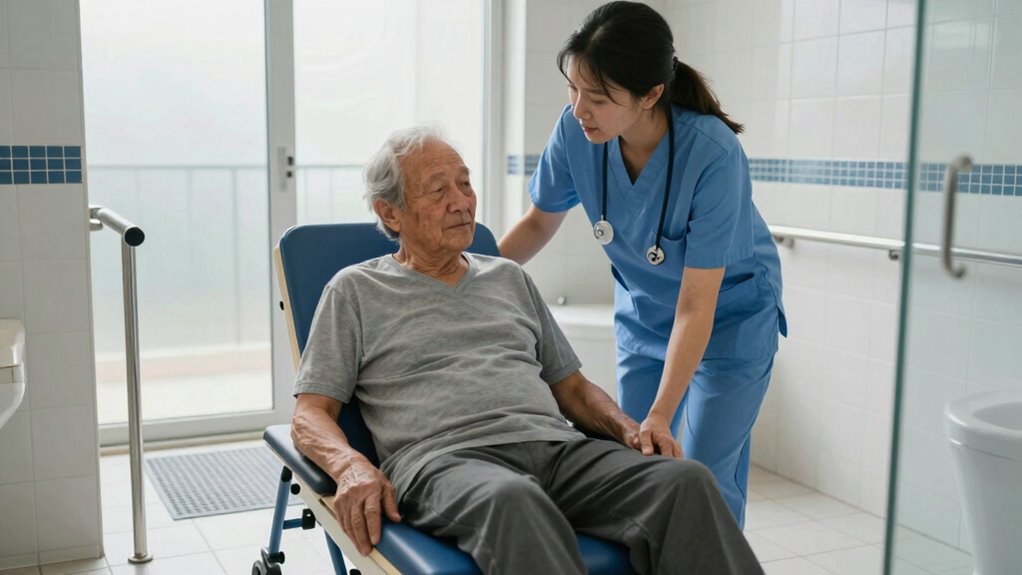
Transporting high-need patients safely during showers is critical to preventing injuries and preserving dignity. When you handle these situations properly, you protect both the patient’s well-being and their sense of respect. To do this effectively, you need to be well-prepared through detailed emergency preparedness plans. These plans guide you on how to respond swiftly and safely if an accident happens, such as a patient slipping or falling. Emergency preparedness isn’t just about having protocols in place; it’s about practicing them regularly so that you and your team respond instinctively. When everyone is trained and confident, the chances of slips, falls, or other injuries decrease dramatically. You should also prioritize creating a safe environment before starting any transfer. Check that the shower area is dry, clutter-free, and equipped with non-slip mats and grab bars. Using these safety features, along with proper transfer techniques learned during staff training, helps prevent accidents. It’s essential to assess each patient’s unique needs beforehand. Some patients may require additional support, such as a slide board or mechanical lift, to make the transfer smoother and safer. Always communicate your plan clearly with the patient, making sure they feel secure and involved in the process. This not only improves safety but also affirms their dignity. In addition to physical safety measures, ongoing staff education about emergency preparedness keeps everyone ready for unexpected situations. Regular drills and refresher courses help you and your team stay sharp, confident, and capable of handling any emergency that might arise during a shower transfer. Incorporating body mechanics and proper handling techniques, which are crucial in reducing injury risk, further enhances safety. Additionally, understanding dog breeds can sometimes be useful when caring for clients with pets, ensuring appropriate handling and environment safety. Being aware of regional safety standards can also guide you in maintaining compliance and best practices. You can also improve overall safety by staying informed about patient-specific needs, which helps tailor transfer methods to individual challenges. When you combine thorough training with proactive safety measures, you can provide high-need patients with the safest, most respectful shower experience possible, protecting them from harm while honoring their dignity.
As an affiliate, we earn on qualifying purchases.
Frequently Asked Questions
What Are the Common Risks During Shower Transport?
During shower transport, you face common risks like slip hazards, which can cause falls if the floor is wet or slippery, and equipment malfunctions, such as faulty lifts or grips that could lead to sudden drops or loss of stability. To prevent these dangers, always check the equipment beforehand, guarantee the environment is safe, and remain attentive to the patient’s needs. Proper precautions help protect both you and your patient from potential accidents.
How Often Should Equipment Be Inspected for Safety?
Have you ever wondered how often you should check your equipment? Regular inspections are vital for safety, so follow your facility’s inspection schedules—typically weekly or monthly. Equipment maintenance ensures everything functions correctly and minimizes risks during shower transport. By adhering to these schedules, you prevent accidents and guarantee patient safety. Always stay proactive with inspections, because neglecting them can lead to costly repairs or dangerous failures.
What Training Is Needed for Caregivers?
You need thorough caregiver training that covers safe shower transport techniques and patient communication skills. This training helps you understand how to operate equipment properly, prevent injuries, and guarantee patient comfort. Effective communication is essential, so you learn how to verbally and non-verbally reassure patients, understand their needs, and maintain dignity. Regular refreshers keep your skills sharp, ensuring safety and trust during shower transport in high-need care situations.
How to Handle Emergencies During Shower Transport?
In emergencies during shower transport, you should stay calm and immediately activate emergency communication protocols to alert the appropriate personnel. Guarantee the patient’s comfort by supporting their body securely and maintaining a gentle, reassuring approach. Continuously assess their condition and provide necessary first aid if needed. Clear communication and swift action help protect the patient’s safety, minimize distress, and ensure prompt assistance arrives to handle the situation effectively.
Are There Specific Regulations for Shower Transport Safety?
Yes, there are specific safety standards and strict regulations you must follow. Regulatory compliance and legal requirements guarantee safe shower transport for high-need clients. You need to adhere to guidelines that cover equipment, staff training, and proper procedures. By following these rules meticulously, you protect your clients from potential harm and safeguard yourself from legal liabilities. Staying informed and compliant guarantees trustworthy, safe, and thorough care during shower transport.
non-slip shower mats for elderly
As an affiliate, we earn on qualifying purchases.
As an affiliate, we earn on qualifying purchases.
Conclusion
Ensuring safe shower transport in high-need care isn’t just about protocols; it’s about protecting lives. Did you know that falls during bathing can account for up to 80% of injuries in care settings? By following proper procedures and staying alert, you can considerably reduce these risks. Your vigilance and careful handling not only safeguard your patients but also bring peace of mind to their families. Remember, safe transport creates a foundation for compassionate, effective care.
As an affiliate, we earn on qualifying purchases.
As an affiliate, we earn on qualifying purchases.
Fall Picks
fall essentials
As an affiliate, we earn on qualifying purchases.