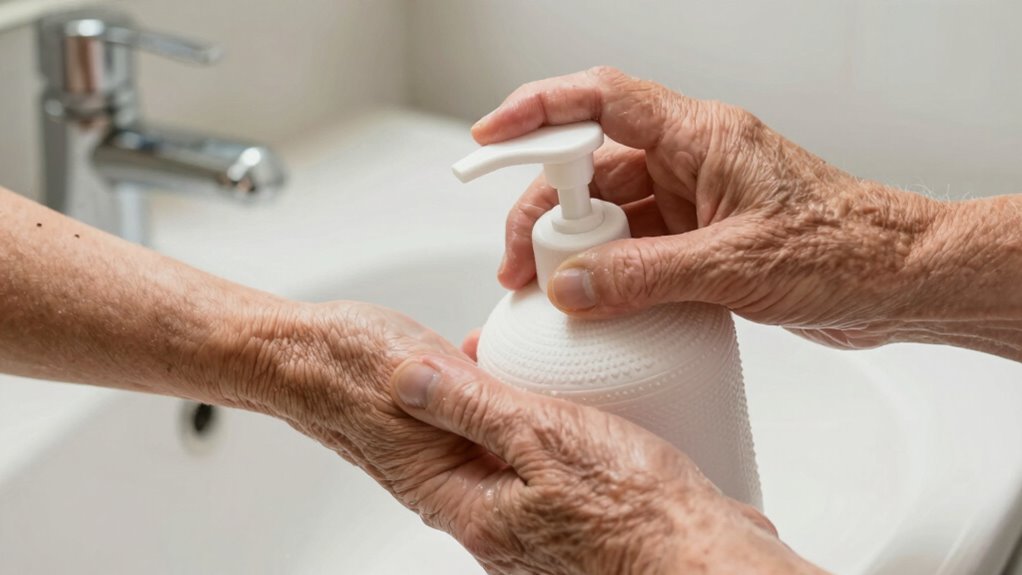

To make hand washing easier for seniors with weak grips, use ergonomic tools like adaptive soap dispensers with soft handles and touchless faucets that require minimal effort. Adding grip covers or textured surfaces boosts control and reduces slipping. Supportive devices like grab bars and hand-held shower heads provide extra stability and make the process safer. These modifications help maintain independence and comfort during hygiene routines—if you keep exploring, you’ll discover more helpful tips and solutions.
Listen free for 30 days with Audible
Thousands of audiobooks and originals — cancel anytime.
As an affiliate, we earn on qualifying purchases.
Key Takeaways
- Use adaptive soap dispensers with touchless operation and soft, contoured handles for easier soap access.
- Install ergonomic faucets with larger, softer grips or automatic sensors to minimize hand strength needed.
- Incorporate silicone grip covers or textured surfaces on tools for better traction and control.
- Add grab bars or hand-held shower heads to provide stability and reduce effort during handwashing.
- Choose lightweight, easy-to-clean hygiene tools designed with ergonomic principles to enhance comfort and independence.
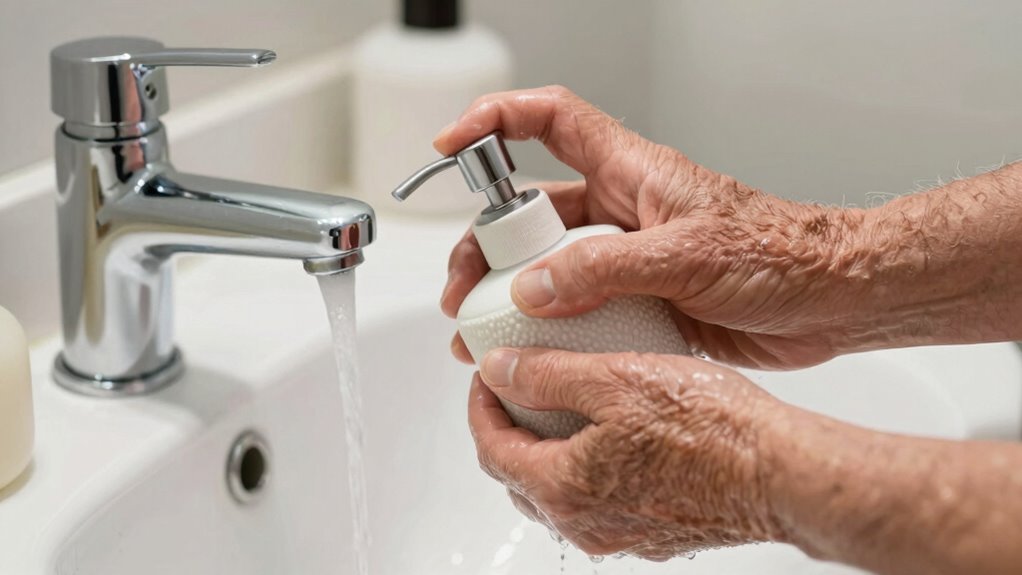
Keeping hands clean is essential for seniors’ health, but it can sometimes be challenging as mobility or dexterity decline. If you or a loved one struggle with a weak grip, finding ways to make hand washing easier becomes vital. Fortunately, adaptive tools and ergonomic designs can considerably improve the experience, making hygiene less frustrating and more effective. These tools are tailored to accommodate limited strength or coordination, helping seniors maintain independence and reduce the risk of infections.
Adaptive tools and ergonomic designs support seniors’ independence in maintaining hygiene and reducing infection risk.
One of the simplest solutions is to use soap dispensers designed with adaptive features. Look for models with large, easy-to-press buttons or touchless operation, so you don’t need to grip or press hard. These dispensers often have a sturdy, non-slip base, providing stability during use. Pairing such dispensers with ergonomic soap holders that are easy to grip can further simplify hand washing. Some soap holders come with soft, contoured handles that require less force to hold securely, making it easier to lather and rinse.
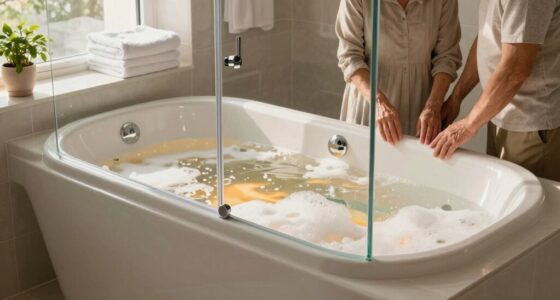
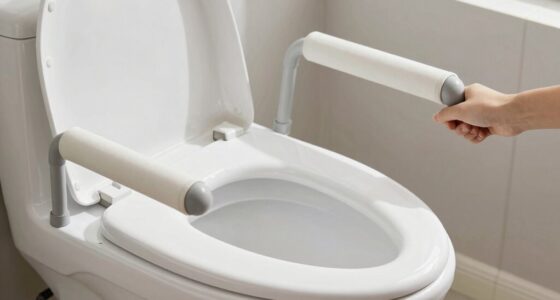
For the faucet, consider installing an automatic or touchless model. These faucets activate with a simple wave of the hand, eliminating the need to turn handles, which can be difficult with limited dexterity. If replacing the faucet isn’t an option, ergonomic faucet attachments are available. These attach directly to standard faucets, offering levers or handles designed with larger, softer grips that are easier to operate. They often feature a lever-style or push-button mechanism that requires minimal strength, making hand washing less strenuous. Incorporating ergonomic design principles can further enhance ease of use and comfort during hand washing. Additionally, choosing tools that are designed with environmental impact in mind can promote sustainable hygiene practices and reduce waste. Using lightweight and easy-to-clean materials for these devices can also make maintenance and daily use more manageable. Incorporating adaptive tools, such as silicone grip covers or textured surfaces, can provide extra traction and control for those with limited hand strength, making the process even easier. Adding assistive devices such as grab bars or hand-held shower heads can provide additional support and stability, reducing the effort needed for effective hand hygiene routines.
adaptive soap dispenser touchless
As an affiliate, we earn on qualifying purchases.
As an affiliate, we earn on qualifying purchases.
Frequently Asked Questions
Are There Specific Soap Types Recommended for Seniors With Weak Grips?
You should choose soaps with soapy textures that are easy to grip and dispense, such as pump bottles or soft, squeeze tubes. Look for antibacterial options that are gentle yet effective, helping maintain hygiene without requiring too much effort. These types of soaps reduce the need for vigorous scrubbing, making hand washing less tiring for seniors with weak grips. Always opt for products that are easy to handle and comfortable to use.
How Often Should Seniors Wash Their Hands for Optimal Hygiene?
Did you know that regular hand hygiene routines can reduce illness risk by up to 21%? To stay healthy, seniors should wash their hands frequently, ideally before eating, after using the bathroom, and when arriving home. Ensuring soap accessibility is key, especially for those with a weak grip. Encourage them to wash hands at these essential times, maintaining good hygiene and preventing germs from spreading.
Can Handwashing Aids Be Used in the Shower as Well?
Yes, you can use handwashing aids in the shower, but make sure they are compatible with shower safety and grip-friendly fixtures. Look for aids that are waterproof and designed for wet environments to prevent slipping or damage. Using these aids can help you maintain hygiene comfortably while minimizing the risk of slips. Always check that the aids are securely attached and suitable for use with your shower setup for maximum safety.
What Are Signs That a Senior Needs Assistance With Hand Hygiene?
Think of your loved one’s hand hygiene as a delicate dance. Signs they need help include difficulty gripping soap, missing spots, or rushing through washing. Watch for elderly mobility issues or cognitive decline, which may cause forgetfulness or disinterest. If they seem hesitant, overly reliant on prompts, or struggle with hand movements, it’s time to step in and support. Staying attentive ensures their hygiene stays thorough and safe.
Are There Alternative Hand-Cleaning Methods for Seniors With Severe Grip Issues?
Yes, there are alternative cleaning methods for seniors with severe grip issues. You can try using no-rinse cleansing wipes or foam cleansers that require minimal grip strength. Incorporate grip strength exercises into daily routines to help improve hand function over time. These exercises can gradually enhance grip, making traditional handwashing easier and more manageable, ultimately promoting better hygiene independence.
ergonomic faucet handle for seniors
As an affiliate, we earn on qualifying purchases.
As an affiliate, we earn on qualifying purchases.
Conclusion
Making hand washing easier for seniors with weak grips transforms a simple task into a moment of independence. While their hands may tremble and struggle, your thoughtful adjustments—like easy-grip soap dispensers—highlight resilience amid challenge. In this dance of effort and support, each small change empowers them to maintain dignity and hygiene. Ultimately, these adjustments bridge the gap between difficulty and ease, proving that even in weakness, there’s strength in caring.
silicone grip covers for hygiene tools
As an affiliate, we earn on qualifying purchases.
As an affiliate, we earn on qualifying purchases.
As an affiliate, we earn on qualifying purchases.
Flea & tick season Picks
flea and tick prevention
As an affiliate, we earn on qualifying purchases.