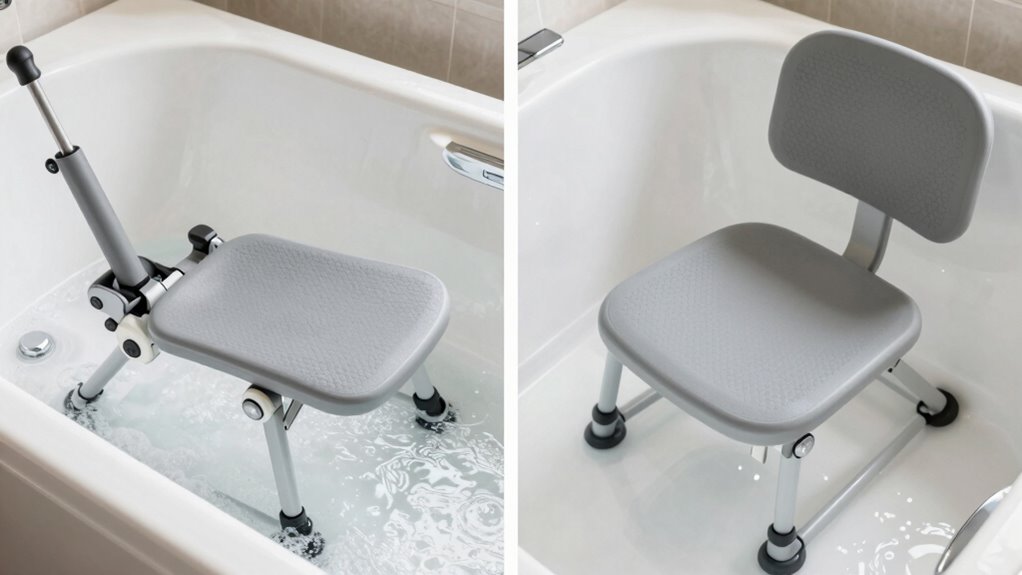

A bath lift is a portable device that adds to your existing bathtub, helping you sit and lower yourself safely without major renovations. In contrast, a walk-in tub is a standalone unit with a door, built-in seat, and advanced features like jets and lighting, requiring professional installation. Bath lifts are cost-effective and flexible, while walk-in tubs offer long-term comfort with added safety features. If you want to understand the key differences in more detail, keep exploring.

Turn quiet afternoons into listening time
- Thousands of audiobooks, podcasts and originals
- Listen on your phone, tablet or Echo — also offline
- Cancel anytime
Key Takeaways
- Bath lifts are portable devices added to existing tubs, while walk-in tubs are standalone units requiring professional installation.
- Bath lifts provide adjustable seating and remote controls, whereas walk-in tubs feature built-in seats and advanced spa features.
- Installing a bath lift involves minimal renovation, but walk-in tubs need permanent plumbing and remodeling.
- Walk-in tubs often include safety features like low thresholds, grab bars, and slip-resistant surfaces, similar to bath lifts.
- Walk-in tubs typically offer luxury features like jets and digital controls, unlike basic bath lifts.
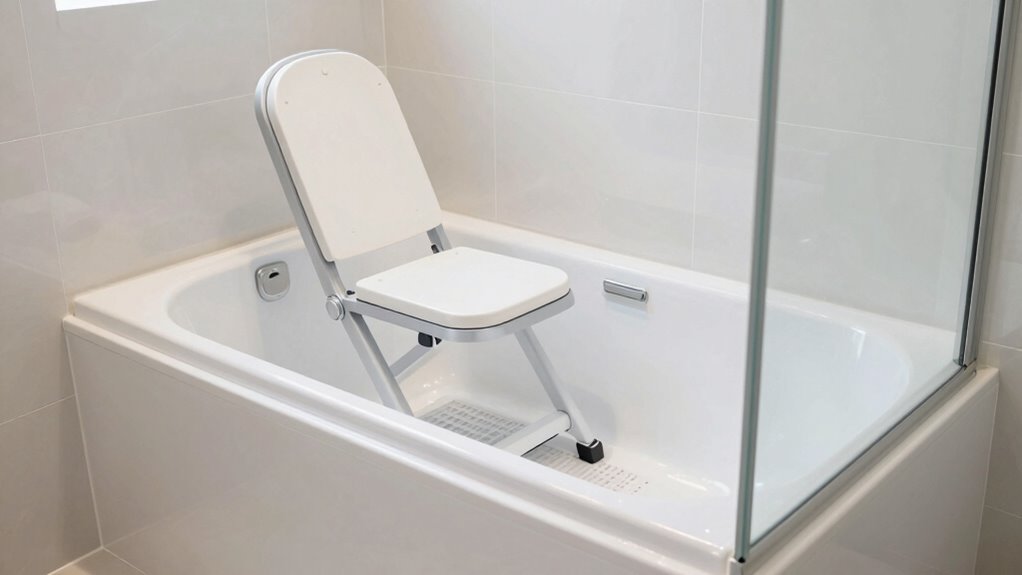
Are you unsure whether a bath lift or a walk-in tub is the right choice for your bathroom? Making this decision involves understanding the key differences in design, functionality, and features. A bath lift is a portable device that you can add to your existing bathtub. It’s designed to lift and lower you into the tub safely, making bathing easier without extensive renovations. When considering spa features, many bath lifts come with adjustable seats, remote controls, and cushioned surfaces, which add to comfort and convenience. Safety equipment is also built into these devices, such as sturdy armrests and slip-resistant surfaces, ensuring you feel secure during every bath. They’re ideal if you want an affordable, flexible solution that allows you to keep your current bathtub.
On the other hand, a walk-in tub is a standalone unit built specifically for safety and accessibility. It features a low-threshold door that you can open and close easily, allowing you to step in without lifting your legs over a high edge. Walk-in tubs often include integrated spa features like whirlpool jets, chromotherapy lighting, and heated surfaces, transforming your bathing experience into a relaxing retreat. These tubs are designed with safety equipment in mind, including grab bars, anti-slip floors, and a built-in seat, which caters to individuals with limited mobility or balance issues. They’re a more permanent installation and generally require professional plumbing and renovation, but they provide an extensive solution that combines safety and luxury. Additionally, advancements in digital controls make operating these tubs more user-friendly and customizable. The installation process for walk-in tubs can be complex, but the long-term benefits often outweigh the initial effort. Furthermore, considering environmental impact and water efficiency can be important factors when choosing between these options, especially if sustainability is a priority for you. Modern walk-in tubs also often feature energy-efficient heating systems, which help reduce ongoing utility costs.
When choosing between the two, think about your bathroom space, budget, and specific needs. A bath lift offers flexibility and can be added to your existing tub, making it a practical choice if you’re not ready for major renovations. It provides safety equipment like slip-resistant features, but it doesn’t offer the spa features that come with many walk-in tubs. Moreover, technology advancements continue to improve accessibility and ease of use for both options. Conversely, a walk-in tub provides a more immersive experience with advanced spa features and enhanced safety equipment built into its design. It’s best if you’re looking for a long-term, accessible bathing solution that combines comfort with safety.
As an affiliate, we earn on qualifying purchases.
Frequently Asked Questions
What Is the Average Cost of Each Option?
A bath lift typically costs between $300 and $1,000, while a walk-in tub ranges from $1,500 to over $10,000. In a cost comparison, bath lifts are more affordable upfront, but walk-in tubs offer additional safety and comfort features. Price factors include the tub’s size, materials, installation complexity, and optional features like jets or heated seats. Your choice depends on your budget and specific needs.
How Long Does Installation Typically Take?
You’ll find installation typically takes one to two days, depending on your bathroom’s setup. While some believe luxury features and safety enhancements might extend this timeframe, most installations are straightforward with professional help. A walk-in tub or bath lift is designed for quick setup, guaranteeing you enjoy safety benefits and added comfort sooner. Expect minimal disruption, and your installer will ensure all safety features are in place during the process.
Are There Any Maintenance Requirements?
You should clean your bath lift or walk-in tub regularly, typically once a week, to prevent mold and soap scum buildup. Keep an eye on the seals and fittings for signs of wear, and address technical troubleshooting issues promptly to guarantee safety and functionality. Follow the manufacturer’s instructions for maintenance, including checking batteries or electrical connections, to extend your unit’s lifespan and maintain peak performance.
Which Option Is More Suitable for Elderly Users?
A walk-in tub is generally more suitable for elderly users because it prioritizes personal safety with features like a door and built-in seat, reducing fall risks. It also offers greater user comfort, allowing easier entry and exit without slipping. While bath lifts are portable and less expensive, they may not provide the same level of safety and ease of use that a walk-in tub offers for those with limited mobility or balance concerns.
Can These Solutions Be Rented Instead of Bought?
You can rent these solutions instead of buying, offering flexible options for your needs. Rental options often come with lower upfront costs, making them more budget-friendly, especially when compared to the cost comparison of purchasing. While buying provides long-term use, renting allows you to test comfort and suitability without a significant investment. This flexibility helps you decide what truly fits your lifestyle and health requirements.
As an affiliate, we earn on qualifying purchases.
Conclusion
Whether you choose a bath lift or a walk-in tub, you’re prioritizing safety, comfort, and independence. Both options offer convenience, both options provide peace of mind, and both options support your well-being. By understanding the differences, you can make an informed decision that suits your needs. Ultimately, it’s about choosing what makes you feel secure, what restores your confidence, and what enhances your daily routine. Your comfort, your safety, your choice—make it confidently.
As an affiliate, we earn on qualifying purchases.
walk-in tub with safety features
As an affiliate, we earn on qualifying purchases.
As an affiliate, we earn on qualifying purchases.
Fall Picks
fall essentials
As an affiliate, we earn on qualifying purchases.