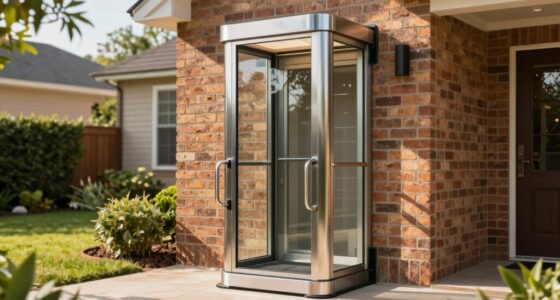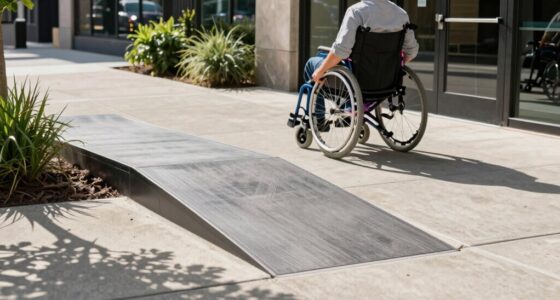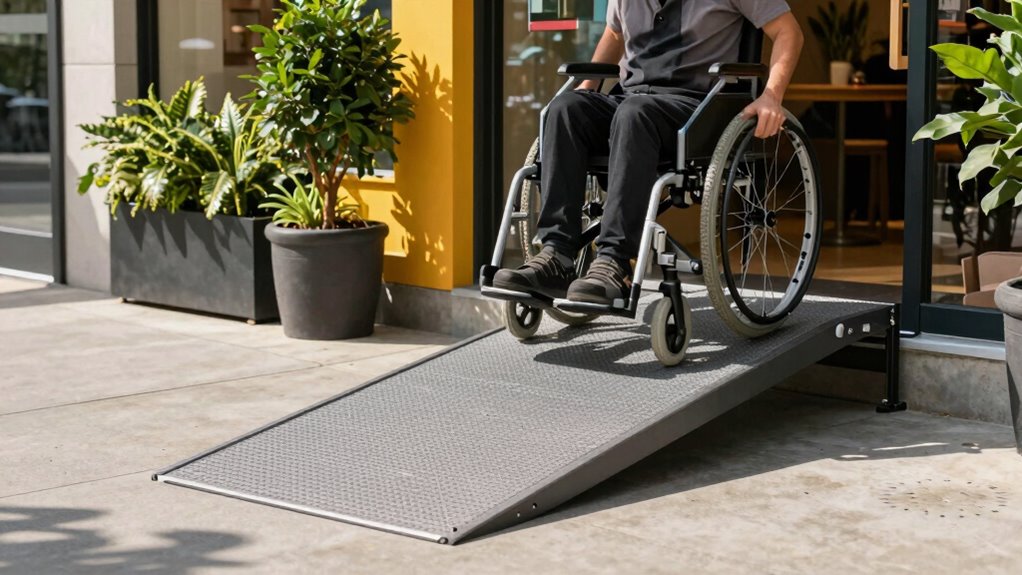

Wheelchair ramps transform your daily life by providing safe, easy access to homes, workplaces, and outdoor spaces. They promote independence, allowing you to move freely without relying on others. Well-designed ramps follow accessibility standards, ensuring safety with features like sturdy handrails and non-slip surfaces. Properly planned ramps also help you feel confident maneuvering different environments, making everyday activities smoother. To discover more about creating inclusive spaces that truly support your needs, keep exploring the essential details.
Key Takeaways
- Provides independent access to homes, workplaces, and public spaces, reducing reliance on assistance.
- Enhances safety and confidence for wheelchair users navigating different environments.
- Promotes inclusion by enabling participation in social, recreational, and community activities.
- Facilitates seamless entry, improving daily routines and reducing physical strain.
- Contributes to a more equitable environment, supporting equal opportunities for all users.
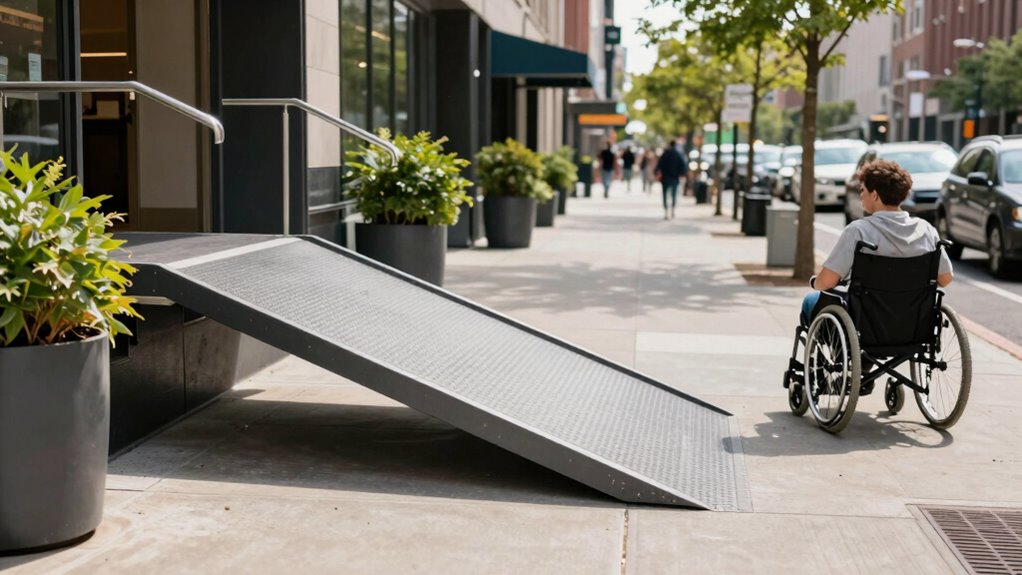
Wheelchair ramps are essential tools that guarantee accessibility and independence for individuals with mobility challenges. When you think about creating a truly inclusive environment, accessibility design becomes a top priority. Properly designed ramps ensure that your space accommodates everyone, whether they use a wheelchair, walker, or have difficulty navigating stairs. You want a ramp that seamlessly integrates with your existing architecture, providing a smooth transition from one level to another. This means considering the slope, length, and placement to make sure users can move comfortably and safely. When planning, you should pay close attention to the specifications recommended by accessibility standards, such as the Americans with Disabilities Act (ADA). These guidelines specify the ideal slope ratio—usually 1:12—so you don’t make the incline too steep, which could cause safety issues. The ramp should also be wide enough to accommodate various wheelchair sizes, with a minimum of 36 inches, allowing enough room for turning and maneuvering.
Safety considerations are crucial when installing or designing wheelchair ramps. You need to think beyond just meeting basic standards; your goal should be to create a secure environment that minimizes risks. For example, adding sturdy handrails on both sides of the ramp provides support for users, especially on longer inclines. Non-slip surfaces are equally important, particularly in wet or icy conditions, to prevent slips and falls. You should also ensure that the edges of the ramp are clearly marked and free of obstructions, so users can easily identify the boundaries and avoid accidents. Lighting is another safety feature to consider—adequate illumination ensures visibility during nighttime or in low-light conditions. When you assess safety, also think about the surroundings—are there any trip hazards, uneven surfaces, or sharp drops nearby? Addressing these issues beforehand helps you create a safe, reliable pathway for everyone. Additionally, understanding side-channel vulnerabilities can help in designing secure access points that prevent unauthorized entry. Incorporating accessibility standards into your planning ensures that the ramp not only meets regulations but is also optimized for safety and usability. Considering user experience and feedback from those who will use the ramp can lead to further improvements that enhance safety and comfort. Staying informed about emerging accessibility technology can help you incorporate innovative features that improve the overall use and safety of the ramp. Moreover, studying drone bees and hive health can inspire innovative approaches in structural stability and environmental considerations for accessible design.
Ultimately, well-planned wheelchair ramps do more than just meet legal requirements—they transform daily life by giving you and others the freedom to access different spaces without barriers. When accessibility design is thoughtfully executed with safety considerations at the forefront, you empower individuals to move independently and confidently. Whether it’s entering a home, a commercial building, or an outdoor area, the right ramp can make the difference between dependence and independence, opening up new possibilities and fostering inclusivity in every aspect of life.

Smart Watch for Women Men, Smartwatch for iPhone & Android Bluetooth (Answer/Call) Built-in Alexa, 1.91" HD Fitness Tracker with 105+ Sport Modes, IP68 Waterproof, Sleep/Heart Rate/SpO2/Stress Monitor
【BUILT-IN ALEXA & BLUETOOTH CALLING】This brand-new smart watch features an integrated Amazon Alexa voice assistant and supports Bluetooth...
As an affiliate, we earn on qualifying purchases.
Frequently Asked Questions
How Do I Maintain My Wheelchair Ramp Long-Term?
To maintain your wheelchair ramp long-term, you should perform routine inspections regularly to check for damage, loose bolts, or corrosion. Guarantee the surface remains non-slip and free of debris. Protect your ramp from weather elements by applying weatherproof coatings or covers to prevent rust and deterioration. Keep it clean and clear of obstructions, and address repairs promptly to extend its lifespan and ensure safe, reliable access every day.
Are There Portable Wheelchair Ramps for Travel?
Yes, there are portable wheelchair ramps designed for travel convenience. These portable solutions are lightweight, compact, and easy to carry, making them ideal for various travel situations. You can quickly set them up at different locations, ensuring smooth access wherever you go. Whether visiting friends or exploring new places, these ramps provide reliable support, giving you independence and confidence during your travels.
What Are the Most Durable Materials for Outdoor Ramps?
You’ll want to choose durable materials like aluminum or concrete for outdoor ramps, as they excel in material longevity and weather resistance. Did you know aluminum ramps can last over 20 years with minimal maintenance? Aluminum is lightweight yet strong, resisting rust and corrosion, making it perfect for outdoor conditions. Concrete offers exceptional durability against harsh weather, ensuring your ramp stays safe and reliable for years to come.
How Do I Ensure My Ramp Complies With Local Regulations?
To guarantee your ramp complies with local regulations, start by checking permit requirements from your city or county, as some places need approval before installation. Follow safety standards, including proper slope, handrails, and surface traction. Consult your local building department or code enforcement agency to verify specific regulations. Regularly inspect your ramp to maintain safety and compliance, and keep documentation of permits and inspections for future reference.
Can Ramps Be Customized for Unique Doorways?
Absolutely, ramps can be customized for unique doorways. Think of it as tailoring a suit to fit perfectly—your custom design guarantees seamless access. With material versatility, you can select durable options like aluminum or wood, matching your aesthetic and environment. Custom ramps accommodate odd angles, tight spaces, or specific height requirements, making entry effortless and safe. Your doorway’s uniqueness becomes an opportunity for a personalized, functional solution.

MorePro Health Fitness Tracker for Women Men, 24/7 Heart Rate Blood Pressure & Oxygen Monitoring, Sleep Tracker, 100+ Sport Modes Smart Watch, IP68 Waterproof, 2 Bands, Compatible Android iOS
Track your wellness day and night with 24/7 heart rate, blood pressure and blood oxygen monitoring, MorePro health...
As an affiliate, we earn on qualifying purchases.
Conclusion
Imagine a world where every step you take is effortless, where doors swing open without a second thought, and barriers crumble like paper walls. That’s the power of wheelchair ramps—they don’t just change entry access; they revolutionize your entire life. With these simple structures, you open a universe of independence and freedom, turning everyday obstacles into nothing more than distant memories. Embrace ramps, and watch your world expand beyond what you ever thought possible!
![Apple Watch Series 11 [GPS 46mm] Smartwatch with Space Gray Aluminum Case with Black Sport Band - M/L. Sleep Score, Fitness Tracker, Health Monitoring, Always-On Display, Water Resistant](https://m.media-amazon.com/images/I/41zIatKgB3L._SL500_.jpg)
Apple Watch Series 11 [GPS 46mm] Smartwatch with Space Gray Aluminum Case with Black Sport Band - M/L. Sleep Score, Fitness Tracker, Health Monitoring, Always-On Display, Water Resistant
A FULL-FEATURED HEALTH TRACKER—Apple Watch Series 11 gives you invaluable insights about your body, right from your wrist....
As an affiliate, we earn on qualifying purchases.

Advanced Health Smartwatch for Women Men with Real-Time Monitoring of Heart Rate, Blood Oxygen, Body Temperature, Blood Pressure, Sleep Auality and Stress Levels.Always-On Display, for Android & iOS
【Your True Companion for Health Monitoring!】The blood pressure smart watch for men and women is equipped with a...
As an affiliate, we earn on qualifying purchases.