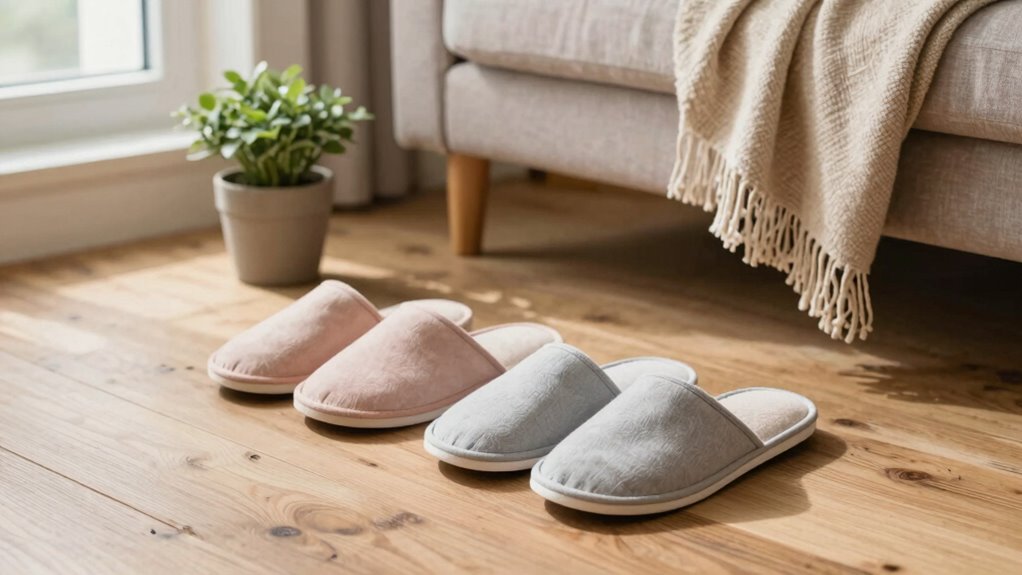
To think better about footwear at home, focus on support, breathability, and hygiene. Choose shoes that fit well and provide cushioning to prevent foot fatigue and strain. Opt for natural fibers like cotton or wool that allow air flow and reduce moisture build-up, helping keep your feet healthy. Regularly clean and replace your footwear to maintain hygiene and prevent infections. Prioritizing these aspects improves comfort and supports your foot health—stay with us to learn more about making smarter footwear choices at home.

Turn quiet afternoons into listening time
- Thousands of audiobooks, podcasts and originals
- Listen on your phone, tablet or Echo — also offline
- Cancel anytime
Key Takeaways
- Prioritize supportive, well-maintained indoor shoes or slippers for comfort and foot health.
- Choose breathable, natural fiber footwear to enhance hygiene and reduce moisture buildup.
- Regularly clean and replace indoor shoes to prevent bacteria and fungi growth.
- Avoid walking barefoot on hard or uneven floors to prevent foot strain and soreness.
- View footwear as an essential part of home comfort and overall foot wellness.
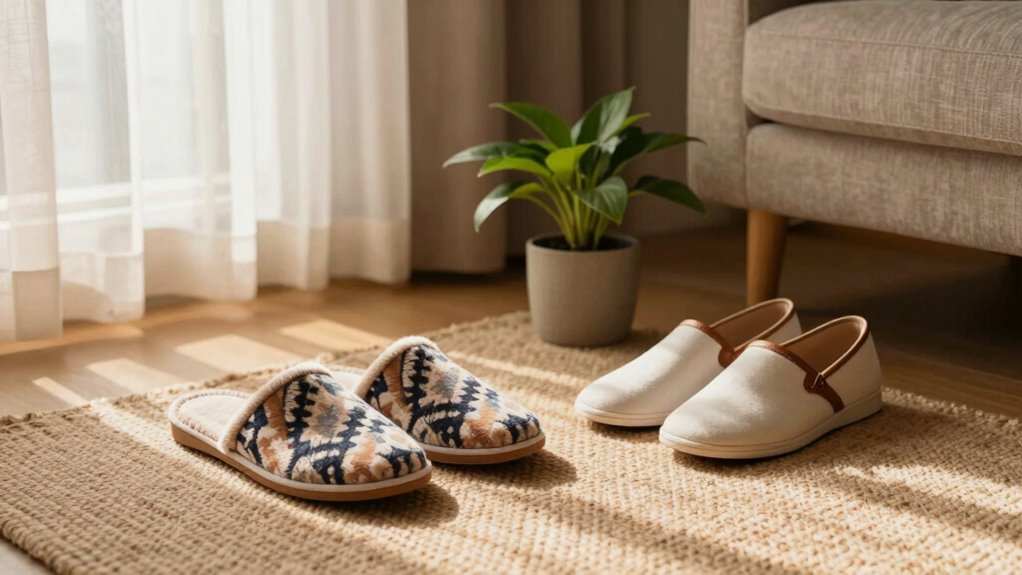
Have you ever wondered if your choice of footwear at home truly affects your comfort and well-being? Many people overlook how much your indoor footwear impacts not just comfort but also overall health. When you walk around barefoot or wear the same slippers every day, you might be unknowingly compromising your indoor comfort and footwear hygiene. Choosing the right footwear isn’t just about style; it’s about creating a healthier environment for your feet and your home.
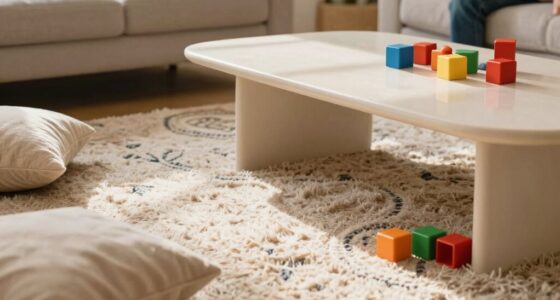
First, consider how your footwear influences indoor comfort. Shoes that fit well and provide proper support can prevent foot fatigue and discomfort. If you’re spending a lot of time standing or walking indoors, switching to supportive slippers or indoor shoes can make a difference. These provide cushioning and stability, reducing strain on your arches, ankles, and knees. On the other hand, walking barefoot may seem natural, but it can lead to issues like sore feet or plantar strain, especially if your floors are hard or uneven. The right footwear acts as a barrier, offering comfort where bare feet might struggle. Additionally, proper footwear maintenance is key to preventing the buildup of residue that can harbor bacteria and fungi. Incorporating footwear hygiene practices can further enhance foot health and reduce the risk of infections.
Supportive indoor footwear prevents fatigue and strain, enhancing comfort and protecting your feet on hard or uneven floors.
Moreover, choosing breathable materials for your indoor shoes plays a significant role in footwear hygiene. Shoes made from natural fibers like cotton or wool allow air circulation, reducing moisture buildup that can lead to fungal growth. Avoid synthetic materials that trap heat and sweat, creating a breeding ground for bacteria. Remember, your feet sweat, even indoors, so allowing proper ventilation and regular cleaning helps keep your feet dry and healthy. Incorporating natural fiber shoes into your routine can enhance both comfort and hygiene. Recognizing the importance of footwear hygiene can help you maintain healthier feet and prevent infections.
In essence, thinking about your indoor footwear as a part of your daily routine can transform your home comfort and foot health. Don’t settle for just any slippers or shoes; select ones that promote comfort, support, and hygiene. Keep them clean, breathable, and well-maintained. Doing so not only enhances your overall well-being but also ensures that your home remains a comfortable, healthy space. Your feet deserve thoughtful care, and embracing this better way to think about footwear at home makes a real difference in your everyday comfort and health.
supportive indoor slippers for women
As an affiliate, we earn on qualifying purchases.
As an affiliate, we earn on qualifying purchases.
Frequently Asked Questions
How Do I Choose the Most Comfortable Indoor Footwear?
To choose the most comfortable indoor footwear, start by exploring various indoor shoe styles that suit your needs. Prioritize slippers with cushioned insoles and breathable fabrics for added comfort. Use slipper sizing tips, like sizing up if you wear thick socks or trying on shoes in the afternoon when feet are slightly swollen. Comfort hinges on proper fit, so take your time to find slippers that support your feet without pinching.
Are There Health Benefits to Wearing Specific Types of Slippers?
Wearing specific slippers with proper footwear ergonomics and good arch support offers health benefits, like reducing foot pain and preventing conditions like plantar fasciitis. Some might think all slippers are the same, but investing in ones with supportive insoles can improve comfort and posture. By choosing slippers designed with foot health in mind, you promote better alignment and lessen strain on your feet, ankles, and lower back.
Can Indoor Shoes Help Prevent Household Dirt and Germs?
Indoor shoe styles can definitely help prevent household dirt and germs. By wearing specific indoor shoes, you create a barrier that stops dirt, bacteria, and germs from spreading across your floors. Use germ prevention techniques like choosing easy-to-clean shoes and changing them regularly. This way, you keep your home cleaner, reduce germs, and maintain a healthier environment, making indoor shoes a practical choice for hygiene.
What Materials Are Best for Breathable and Hygienic Slippers?
Think of your slippers as tiny gardens for your feet; choosing the right materials keeps them thriving. Breathable fabrics like cotton, bamboo, or linen allow air to flow, preventing moisture buildup. Hygienic materials such as antimicrobial-treated fabrics or natural fibers work like a shield, warding off germs. These materials help your slippers stay fresh and clean, turning your home into a sanctuary where comfort and hygiene walk hand in hand.
How Often Should I Replace My Indoor Footwear?
You should replace your indoor footwear every 3 to 6 months to maintain hygiene and comfort. Regular slipper maintenance, like cleaning and airing them out, helps extend their lifespan. Store your indoor shoes properly in a dry, ventilated space to prevent mold and odors. Keep an eye on wear and tear; if soles are worn through or they become uncomfortable, it’s time for a new pair to guarantee foot health and cleanliness.
breathable natural fiber slippers
As an affiliate, we earn on qualifying purchases.
As an affiliate, we earn on qualifying purchases.
Conclusion
So, next time you step inside, think of your footwear as your comfort, your support, your style. Embrace the variety, choose what feels right, and let your shoes reflect your mood. Wear them for your well-being, for your confidence, for your happiness. Make your footwear a part of your home experience—because when you do, every step becomes a statement, every moment a reflection of who you are. Keep walking forward, comfortably, confidently, consciously.
As an affiliate, we earn on qualifying purchases.
As an affiliate, we earn on qualifying purchases.
Fall Picks
fall essentials
As an affiliate, we earn on qualifying purchases.