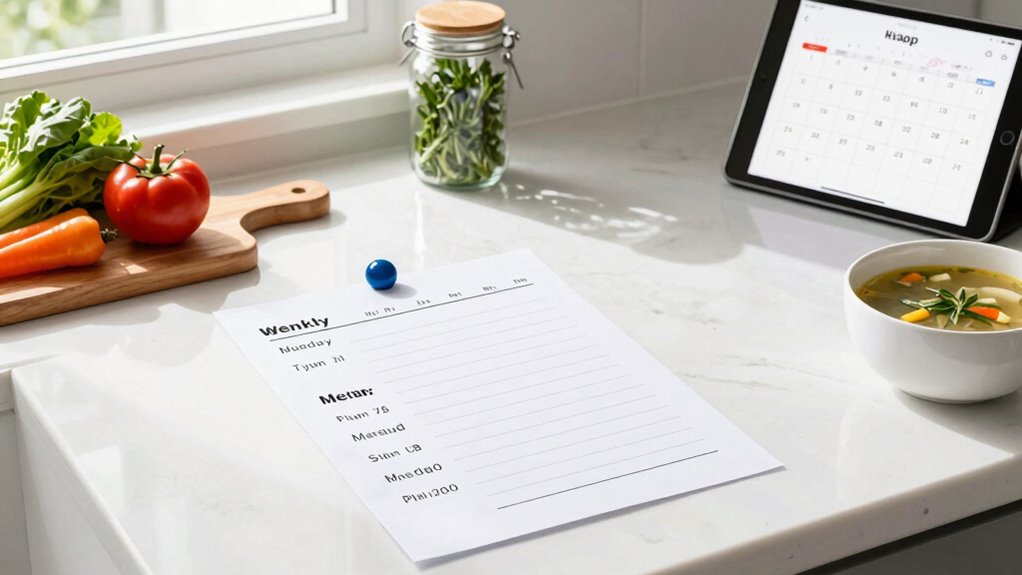

To build a simple weekly meal plan, start by deciding how many meals you need for each day and choosing versatile ingredients that you can use across different dishes. Use a basic template with your go-to recipes to keep things easy and avoid decision fatigue. Create a focused grocery list organized by store sections, and do one shopping trip to save time. Keep your plan flexible, and you’ll find it’s easier to stay on track—more helpful tips follow.

Turn quiet afternoons into listening time
- Thousands of audiobooks, podcasts and originals
- Listen on your phone, tablet or Echo — also offline
- Cancel anytime
Key Takeaways
- Determine daily meal requirements and select versatile, healthy recipes to streamline planning and ingredient use.
- Create a basic meal template or list of go-to meals to reduce decision fatigue.
- Make a focused, organized grocery list based on your meal plan, shopping once weekly.
- Batch prepare ingredients or meals ahead of time to save daily cooking effort.
- Regularly review and adjust your plan for variety, nutritional balance, and efficiency.
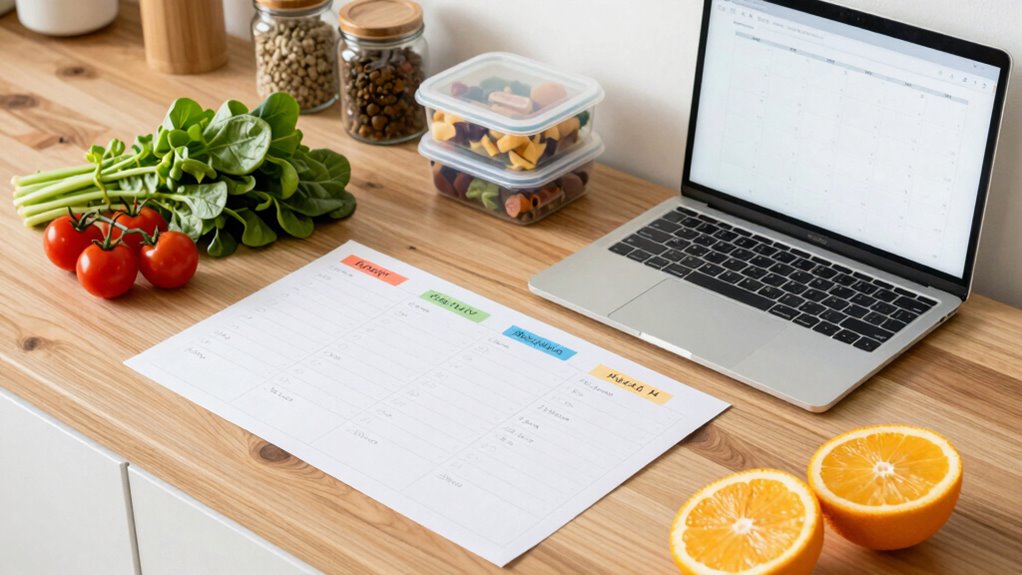
Planning your weekly meals doesn’t have to be complicated or time-consuming. With a few simple strategies, you can create a meal plan that saves you time, reduces stress, and keeps your diet on track. The key is to think ahead about your meals and organize your grocery shopping around that plan. This way, you avoid last-minute decisions and unnecessary trips to the store. When you incorporate meal prep into your routine, you set yourself up for success. Preparing ingredients in advance or even cooking entire meals ahead of time means you’ll always have healthy options ready to go, even on your busiest days.
Plan ahead and prep meals to save time, reduce stress, and stay on track all week long.
Start by figuring out how many meals you need for the week—breakfast, lunch, dinner, and snacks. Keep your plan simple by choosing versatile ingredients that can be used across multiple dishes. For example, roasted chicken can be used for salads, wraps, and stir-fries. When you plan your meals, it’s helpful to create a basic template or list of go-to recipes. This makes the process more efficient and minimizes decision fatigue. Once you have your meals mapped out, make a detailed grocery list based on those recipes. This focused shopping approach helps you buy only what you need, which saves money and reduces food waste. Incorporating natural pools into your home environment can inspire you to think creatively about sustainable living and resource management. Additionally, understanding nutritional balance can help you create healthier meal options that meet your dietary needs.
Grocery shopping becomes much smoother when you stick to your list and shop intentionally. Consider shopping once a week to get everything you need, which frees up time and keeps your kitchen stocked with essentials. When you’re in the store, stick to the list to avoid impulse buys that can derail your budget or lead to unplanned meals. If you find it helpful, organize your shopping list by sections of the store—produce, dairy, grains, etc.—so you can be efficient and avoid wandering aimlessly. To streamline your routine further, batch your grocery shopping on a day when you have time, and replenish your pantry and fridge for the week ahead. Additionally, understanding contrast ratios in projectors can help you choose the right display for your kitchen or dining area, ensuring clear visuals during your meal prep or movie nights.
As an affiliate, we earn on qualifying purchases.
Frequently Asked Questions
How Can I Customize a Meal Plan for Dietary Restrictions?
You can customize your meal plan by replacing ingredients with gluten-free swaps and vegan substitutions. For gluten intolerance, choose gluten-free grains like rice or quinoa instead of wheat-based products. For a vegan diet, swap animal proteins with beans, tofu, or tempeh. Always check labels for hidden ingredients, and adapt recipes to meet your dietary needs. Planning ahead guarantees you enjoy satisfying, personalized meals that fit your restrictions.
What Are Quick Meal Prep Tips for Busy Weekdays?
To save time on busy weekdays, prep quick snack ideas like cut veggies, yogurt, or trail mix, which are easy to grab. Plan efficient grocery shopping by making a detailed list and sticking to it, avoiding multiple trips. Batch cook staples like rice or grilled chicken ahead of time, then assemble meals quickly. This approach keeps your week organized, minimizes stress, and guarantees you have nutritious options ready when you need them most.
How Do I Prevent Food Waste With My Weekly Plan?
To prevent food waste with your weekly plan, focus on smart food storage and leftovers management. Store perishable items properly in airtight containers and label leftovers with dates to track their freshness. Plan to use leftovers creatively in new meals, like turning roasted vegetables into soups or salads. Regularly check your fridge, consume older items first, and adjust your shopping list to avoid overbuying, ensuring minimal waste and fresher food.
What Budget-Friendly Ingredients Work Best for Meal Planning?
Think of your pantry as a treasure chest, filled with affordable staples and versatile ingredients. Items like rice, beans, pasta, and canned tomatoes are budget-friendly and adaptable to many recipes. These staples act like a chameleon, fitting into breakfast, lunch, or dinner. By choosing these, you save money, reduce waste, and keep your meal options flexible. This approach guarantees you’re always prepared to craft tasty, cost-effective meals.
How Can I Involve Family Members in Meal Planning?
You can involve family members in meal planning by encouraging family participation during weekly meal brainstorming sessions. Ask everyone for their favorite dishes and dietary preferences, making it a collaborative activity. Create a shared meal plan together, allowing each person to suggest ideas. This not only makes meal prep more enjoyable but also guarantees everyone feels involved and satisfied with the weekly menu, fostering a sense of teamwork and ownership.
As an affiliate, we earn on qualifying purchases.
Conclusion
By planning your weekly meals, you can save up to 40% on grocery costs and cut down on food waste. It’s an easy, smart approach that keeps you organized and guarantees you eat healthier. Remember, just 15 minutes of planning each week can make a big difference. So, give it a try—you’ll be surprised how much simpler and more enjoyable your mealtime becomes! Start today and enjoy the benefits of a well-planned week.
As an affiliate, we earn on qualifying purchases.
As an affiliate, we earn on qualifying purchases.
Halloween Picks
halloween
As an affiliate, we earn on qualifying purchases.