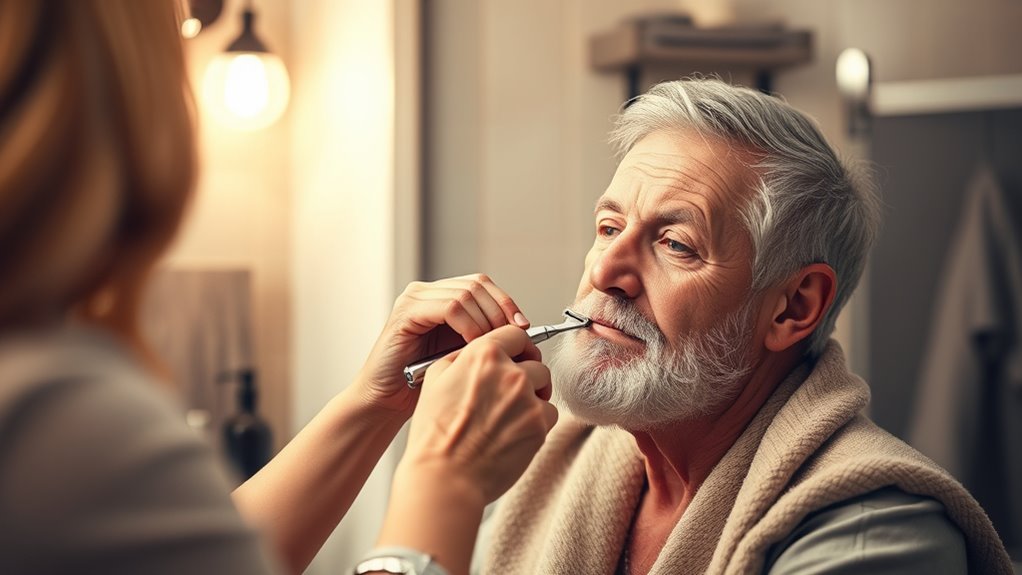

When caring for an aging pet’s grooming needs, use gentle techniques and the right tools to keep them safe and comfortable, especially if they can’t do it themselves. Opt for soft-bristled brushes, rounded-tip scissors, and adjustable clippers to prevent injuries. Be patient, calm, and cautious around sensitive areas, trimming carefully while monitoring their comfort. Keep their skin moisturized and nails well-trimmed to support their overall well-being—continue to explore more tips for gentle, safe grooming.
Key Takeaways
- Use gentle, hypoallergenic shampoos and moisturizers suitable for elderly pets’ sensitive, dry skin.
- Employ soft-bristled brushes and rounded-tip scissors to trim hair safely and comfortably.
- Ensure the pet is calm, using gentle strokes and calming tones during grooming to reduce anxiety.
- Utilize electric clippers with adjustable blades for safe, precise shaving, going slowly to prevent injury.
- Seek professional grooming assistance if unsure, and monitor skin for abnormalities or issues during grooming sessions.

Ever wondered how to keep your senior pet comfortable and healthy through grooming? As your pet ages, their grooming needs change, and it’s essential to focus on elderly skincare to prevent skin infections, matting, and discomfort. When it comes to grooming tools, choosing the right ones makes all the difference. Soft-bristled brushes are gentle enough for sensitive skin, while stainless steel scissors with rounded tips provide safe trimming options. Electric clippers with adjustable blades can help you manage longer fur without pulling or causing pain. Remember, the goal is to keep your pet comfortable, so select tools that are effective yet gentle.
Keep your senior pet comfortable with gentle grooming tools and proper skincare.
Grooming a senior pet requires patience and a gentle touch. Before starting, ensure your pet is calm and relaxed. Use a calm voice and gentle strokes to ease any anxiety. When grooming, pay special attention to the elderly skincare needs. Their skin tends to be drier and more delicate, so avoid harsh shampoos or products with strong fragrances. Opt for moisturizing, hypoallergenic shampoos designed for sensitive skin. After bathing, gently pat the fur dry and apply a pet-safe moisturizer if needed. This helps maintain skin elasticity and prevents dryness or cracking.
Shaving or trimming around sensitive areas should be done with utmost care. If your pet’s hair is matted or uneven, use grooming tools specifically designed for such tasks. Electric clippers with guard combs are ideal for safe, even trimming, but always go slowly and avoid pulling on the hair. If you’re uncomfortable doing it yourself, don’t hesitate to seek professional grooming help. Regular grooming sessions help monitor for skin issues, lumps, or abnormalities that become more common with age. Additionally, understanding projector technology can help you select the best tools and techniques for at-home grooming, ensuring the process is safe and effective.
When trimming nails, be gentle and precise. Overgrown nails can cause pain or lead to mobility issues. Use a nail grinder or scissors designed for pets, and avoid cutting too close to the quick, which can cause bleeding and discomfort. If your senior pet’s mobility is limited, consider trimming their nails more frequently to prevent overgrowth and related problems.
Frequently Asked Questions
How Often Should Senior Grooming Routines Be Scheduled?
You should schedule senior grooming routines based on individual needs, typically every one to two weeks. Regular grooming frequency helps maintain hygiene and comfort, fitting into their senior care schedules. Keep an eye on changes in skin or hair health, and adapt the routine accordingly. Consistency is key, so establish a routine that works for them and ensures they feel clean, comfortable, and cared for without overdoing it.
What Are the Signs of Skin Irritation in Seniors?
Did you know that nearly 50% of seniors experience skin irritation from grooming routines? You should watch for redness, itching, swelling, or rashes, which are common signs of skin sensitivity. To prevent rashes, guarantee proper shaving techniques, use gentle products, and keep the skin moisturized. Regularly check their skin for irritation, and adjust grooming methods as needed to promote rash prevention and comfort.
Are Electric Razors Safer for Elderly Skin?
Electric razors are generally safer for elderly skin because they reduce the risk of cuts and irritation. Their safety, especially for those with skin sensitivity, comes from gentle, controlled movements and the absence of direct blade contact. Plus, they’re easy to maneuver, making shaving less stressful. If you choose an electric razor, look for models designed for sensitive skin to guarantee ideal electric razor safety and comfort for your loved one.
How Can I Make Grooming Comfortable for Seniors?
Think of grooming as a gentle dance; you want every step to bring comfort. To ease senior grooming challenges and enhance elderly hair care, use warm, soothing products and guarantee tools are gentle and safe. Communicate clearly, be patient, and adapt techniques to their needs. Offering a calm, relaxed environment helps seniors feel respected and secure, making grooming a pleasant experience rather than a chore.
What Supplies Are Essential for Senior Grooming at Home?
You’ll need essential supplies like gentle grooming products such as mild shampoos, conditioners, and skincare. Keep a soft brush or comb handy for personal grooming, along with safety razors or electric shavers to prevent irritation. Have a mirror at eye level and accessible towels nearby. Stock up on lubricants or creams if needed, ensuring everything is within easy reach to make grooming comfortable and safe for seniors at home.
Conclusion
Taking care of your loved one’s grooming needs isn’t just about appearance—it’s about their dignity and comfort. As you navigate these routines, remember that small details can make a big difference, and sometimes, unexpected challenges arise. Will you be ready when that essential moment comes? Stay attentive, adapt as needed, and keep their well-being at the forefront. Because when it comes to their safety and confidence, a little extra effort can make all the difference—what’s next on your grooming journey?