TL;DR

Turn quiet afternoons into listening time
- Thousands of audiobooks, podcasts and originals
- Listen on your phone, tablet or Echo — also offline
- Cancel anytime
A report on research into older adults’ technology use says AI chatbots and voice assistants can make health information faster and easier to access. The researcher recommends “informed skepticism”: check chatbot answers against reliable sources and avoid sharing identifying details. The article also reports that many chatbot users do not verify health responses.
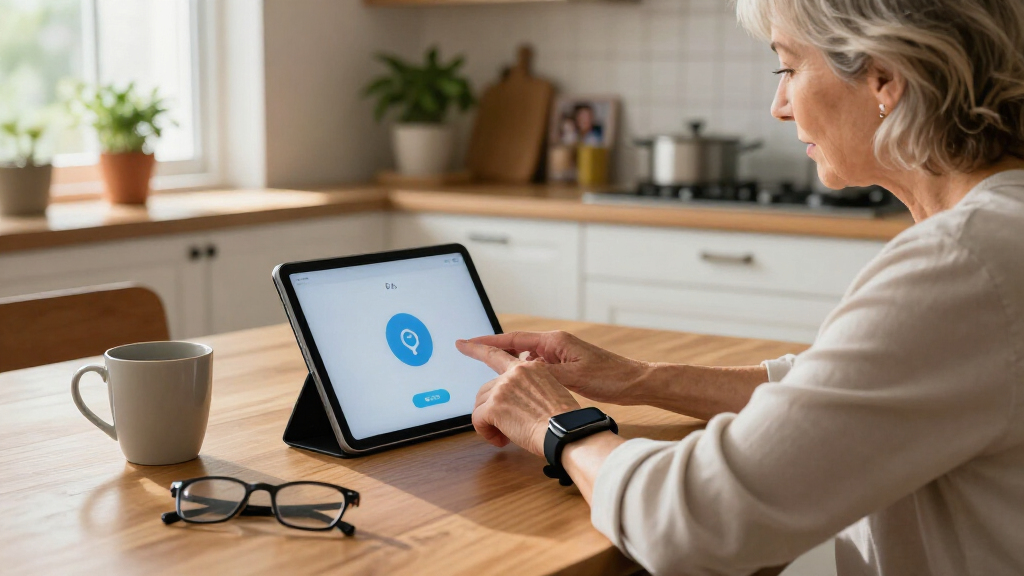
Older adults can use AI chatbots and voice assistants to get quick explanations of health information, but a researcher says they should check responses rather than accept them at face value. The October 2026 report in Medical Xpress describes the potential benefits and risks, including inaccurate advice and privacy concerns, and calls this approach “informed skepticism.”
The report says chatbots can help users summarize complex topics, explain medical information in different ways and answer questions without the wait that can come with booking a health care appointment. Some people may also find it easier to raise sensitive questions with a chatbot. These tools include general-purpose services such as ChatGPT, Claude and Gemini, as well as systems developed for health providers.
A 2025 survey of 300 adults cited in the report found that about one in five respondents used AI chatbots to ask health questions. A separate poll conducted by the researcher and colleagues found that one in two older adults reported using AI chatbots or voice assistants, while about 14% of that group used them to access health information. The report does not provide additional survey details, such as sampling methods, that would establish how representative those figures are.
The researcher warns that chatbot answers can be wrong even when they sound convincing. Systems may misclassify conditions, give incorrect advice during emergencies or respond in an overly agreeable way—sometimes called “sycophancy.” The report also cites the survey finding that four in five adults who used a health chatbot said they never checked its output. That result applies to the surveyed participants, not necessarily to all chatbot users.
Fast Answers, Real Health Risks
For older adults managing chronic conditions or new diagnoses, quick, plain-language explanations may make health information easier to access between appointments. Being able to ask questions at home may also give users a stronger sense of control, the report says, particularly when they feel left out of conversations in clinical settings.
But speed and clarity are not proof of accuracy. A chatbot can produce a fluent answer based on patterns in its data without reliably identifying whether the response is medically sound. If a user treats the tool as a substitute for professional care, a mistaken answer could affect decisions about symptoms or treatment. The report’s recommendation is to use chatbots as a starting point for information, not as a replacement for a qualified health professional.
Verification can be harder if users prefer to complete an information search on the same device or platform. The researcher says their work found that older people using voice assistants often preferred to begin and finish a search there, while younger adults were more likely to expect AI to direct them to another source. That finding suggests guidance should account for how different users actually seek information, rather than assuming everyone will independently cross-check a chatbot.
Products Worth Considering

Coway Airmega 250 Air Purifier for Large Rooms

LEVOIT Vital 200S-P Smart Air Purifier for Large Rooms

Levoit Core 400S-P Smart Air Purifier for Large Rooms
As an affiliate, we earn on qualifying purchases.
How Older Adults Use AI
The report challenges the assumption that older adults are generally unwilling or unable to use newer technology. The researcher’s work focuses on how people interact with computers, voice assistants and chatbots, including tools such as Siri and Alexa. The cited poll found that AI tools are already part of many older adults’ lives, although the survey figures alone do not show how frequently they use them or how they make decisions based on the answers.
Health questions are one use among several: people also use AI for entertainment and travel planning. In health settings, chatbots’ appeal comes partly from their speed and ability to restate complicated information. The same convenience can discourage users from seeking a second source. The report says mainstream chatbots commonly display warnings that their responses may contain mistakes, but those warnings can be easy to miss.
The U.S. Senate’s bipartisan Aging with AI Act, introduced in 2026, is cited in the report as an example of growing attention to the benefits and risks of AI for older adults. The supplied report does not describe the bill’s provisions or legislative status beyond its introduction.
““informed skepticism””
— The researcher quoted in the Medical Xpress report
Limits of the Survey Evidence
The survey figures offer a snapshot, but the report does not supply enough methodological detail to determine how well the samples represent older adults or chatbot users more broadly. The results also do not establish whether chatbot use improves health outcomes or changes care decisions.
The report warns about errors and privacy risks but does not quantify how often harmful health responses occur or explain the data practices of each service. Public chatbot companies may retain prompts for training, according to the report, but specific retention rules vary and are not detailed here. It is also unclear how many users notice on-screen warnings or follow the report’s suggested verification steps.
Practical Checks Before Asking
The researcher recommends checking a chatbot’s information-quality features, such as any sources or links it provides, and comparing health claims with reliable published material. Users should avoid entering personally identifying information into public chatbots, the report says. For urgent symptoms or decisions about care, the article does not present a chatbot as a substitute for contacting a qualified health professional.
The report also suggests learning how to turn off AI features in search. It says Google users can add “-ai” to the end of a query to remove AI content from results, while some services, including Bing, ask users to opt in to AI. The Aging with AI Act’s progress and further research into older adults’ use of these tools are developments to watch; the report does not provide a timetable for either.
Key Questions
Can older adults use AI chatbots for health information?
Yes, they can use them to ask questions or get explanations, but the report recommends treating responses as information to check—not as a diagnosis or substitute for professional care.
How common was health chatbot use in the surveys?
A 2025 survey of 300 adults found that about one in five respondents asked AI chatbots health questions. A separate poll cited by the researcher found that about 14% of older adults in that poll used AI for health information. The report does not provide further sampling details.
Why might a chatbot’s health answer be unreliable?
Chatbots can produce convincing but inaccurate responses, misclassify conditions or agree with a user’s assumptions. The report says users should cross-check claims with reliable sources.
What should users avoid sharing with a public chatbot?
The report cites researchers’ general recommendation not to include personally identifiable information in prompts, because public chatbot companies may retain prompts for model training.
Source: medicalxpress.com