
TL;DR

Turn quiet afternoons into listening time
- Thousands of audiobooks, podcasts and originals
- Listen on your phone, tablet or Echo — also offline
- Cancel anytime
A Fit&Well report describes how the Royal Osteoporosis Society’s free online bone-health assessment flagged a previous fracture after a minor bump as a reason to consider further discussion with a medical professional. The quiz is a screening tool, not a diagnosis, and the source does not report a clinical assessment or diagnosis for the reporter.
A free Royal Osteoporosis Society (ROS) online assessment prompted a Fit&Well reporter to reconsider their bone-health risk after it flagged a fracture following a minor bump as a factor worth discussing with a medical professional. The account does not say the reporter was diagnosed with osteoporosis; the quiz is designed to identify possible risk and suggest whether further advice may be useful.
The reporter, who said they were 39 and regularly active, had assumed that weight-bearing exercise and vitamin D supplements meant their risk was low. The assessment drew attention to a hand fracture from about five years earlier: after colliding with a fence during a five-a-side soccer game, the reporter sustained a spiral fracture of the fifth metacarpal and wore a cast for several weeks.
The ROS tool states that a previous fracture can be relevant to future risk. It says someone who has broken a bone may be two or three times more likely to break another than someone with no previous fracture, while a spinal fracture may raise risk by as much as five times. These are figures presented by the tool in the report; the source does not provide the underlying study details or explain how individual risk is calculated.
The assessment also asks about factors including age, menopause, low body mass index, family history of hip fracture, smoking, alcohol use and some health conditions, such as an overactive thyroid or coeliac disease. The article says the tool can point users toward a discussion with a clinician, but it does not establish a diagnosis or replace an in-person assessment.
A Past Fracture Can Prompt Review
Osteoporosis can develop without obvious symptoms, so a person may not know their bone strength has declined until a fracture occurs. The report cites the International Osteoporosis Foundation as estimating that one in three women and one in five men over 50 worldwide will experience a fracture due to osteoporosis. That estimate concerns people over 50 and should not be read as an individual prediction.
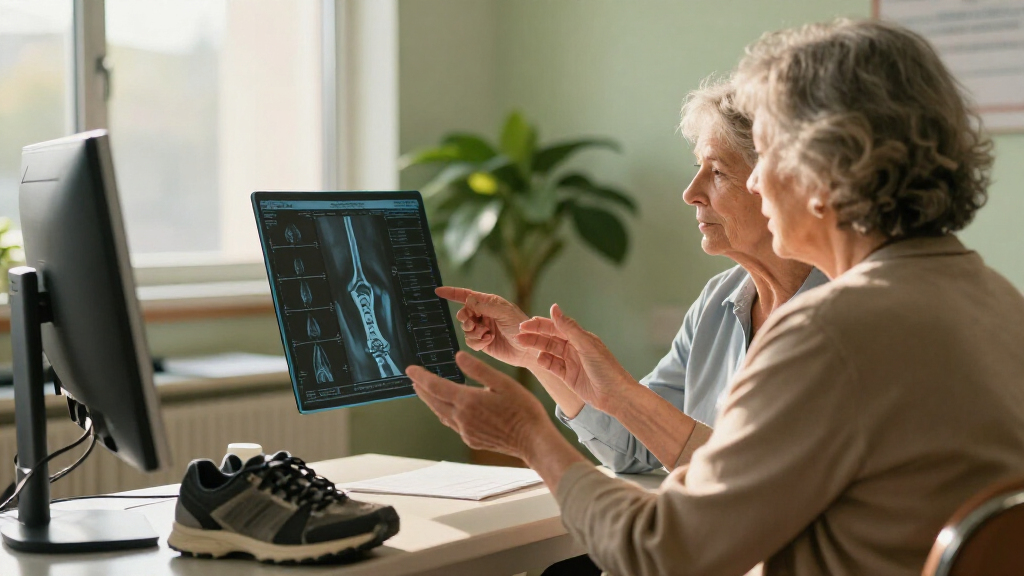
The online checker may help users notice risk factors they had not connected to bone health and prepare questions for a medical professional. A previous fracture does not by itself prove osteoporosis: the ROS’s Julia Thomson told Fit&Well that not every broken bone signals a bone-health problem. The significance is that the circumstances of a fracture can be worth reviewing, particularly when it followed a relatively minor impact.
calcium and vitamin D supplement for bone health
As an affiliate, we earn on qualifying purchases.
As an affiliate, we earn on qualifying purchases.
How the Online Check Works
The ROS launched the free assessment to address what it describes as a gap in public awareness about osteoporosis risk. The report presents it as a way to consider whether someone may benefit from in-person advice or a fuller fracture-risk assessment, rather than as a test that measures bone density or confirms disease.
The article also discusses nutrition. Thomson says calcium supports bone strength and gives recommended daily amounts cited in the report: 700 milligrams for adults generally and 1,000 milligrams for people at increased risk. The source says many people can meet their needs through a varied diet, while those who avoid dairy or follow a restricted diet may wish to check their intake. It also says the ROS tool highlights vitamin D, but individual supplement needs are not assessed in the article.
“You will be two or three times more likely to break another bone than someone who has never broken a bone.”
— Royal Osteoporosis Society bone-check tool, as quoted by Fit&Well
As an affiliate, we earn on qualifying purchases.
Screening Does Not Confirm Osteoporosis
The source does not provide the reporter’s assessment result in a formal risk category, a bone-density measurement, or a subsequent medical diagnosis. It also does not include details about the quiz’s validation, the method behind its risk estimates, or how its recommendations vary by a user’s full medical history.
A fracture can have different causes, and the report does not establish that the reporter’s hand injury was caused by osteoporosis. Users’ risk and need for testing cannot be determined from this personal account or from the figures alone; the article says the checker may help guide a conversation with a clinician.
weight-bearing exercise equipment resistance bands
As an affiliate, we earn on qualifying purchases.
As an affiliate, we earn on qualifying purchases.
Discuss Individual Risk With a Clinician
The report’s suggested next step for someone whose answers raise concern is to seek in-person advice from a medical professional and discuss whether a full fracture-risk assessment or other action is appropriate. The supplied material does not announce a follow-up study, a change to clinical guidance, or a further milestone for the ROS tool.
The reporter encourages readers to check their own risk, but the account does not say what follow-up care they pursued. The assessment should be treated as an initial prompt: a clinician can consider the person’s fracture history, health conditions and other circumstances before advising on testing or bone-health measures.
bone health nutrition guide osteoporosis prevention
As an affiliate, we earn on qualifying purchases.
As an affiliate, we earn on qualifying purchases.
Key Questions
Does the ROS online assessment diagnose osteoporosis?
No. The report describes it as a risk checker that may suggest discussing bone health with a medical professional. It does not report that the tool measures bone density or confirms a diagnosis.
Does one broken bone mean someone has osteoporosis?
No. ROS representative Julia Thomson said not all broken bones indicate a bone-health problem. The circumstances of the injury and a person’s other risk factors may be relevant, and a clinician can advise whether further assessment is appropriate.
What factors does the assessment ask about?
The Fit&Well report lists age, menopause, low body mass index, a parent’s hip fracture, smoking, alcohol use and certain health conditions, including an overactive thyroid or coeliac disease. The article does not provide the complete questionnaire or its scoring method.
What should someone do if the quiz flags a risk?
The report says the tool may help users decide whether to seek in-person medical advice or ask about a full fracture-risk assessment. It does not provide a personalized care plan or establish what tests a particular person needs.
Source: rss
Halloween Picks
halloween
As an affiliate, we earn on qualifying purchases.