

Establishing a consistent routine is essential for supporting seniors with dementia, as it boosts their memory, independence, and emotional well-being. Predictable schedules help reduce confusion, anxiety, and behavioral challenges while encouraging physical activity and better sleep. Familiar activities foster a sense of security and trust, making daily life calmer and more manageable. If you want to discover effective strategies to create these routines, you’ll find helpful tips that can make a positive difference.
Play games included with Prime
Start a Prime free trial and play with Amazon Luna on your devices.
As an affiliate, we earn on qualifying purchases.
Key Takeaways
- Routines support memory and daily living independence by reinforcing familiar activities and reducing reliance on short-term memory.
- Consistent schedules decrease confusion, anxiety, and behavioral challenges, fostering emotional stability.
- Structured activities promote physical movement and social engagement, enhancing overall well-being.
- Regular routines help regulate sleep patterns and circadian rhythms, improving rest and daytime alertness.
- Implementing predictable routines enhances quality of life and reduces caregiver stress by creating a calm, supportive environment.
How Routines Support Memory and Cognitive Skills

Routines support memory and cognitive skills in seniors with dementia by tapping into procedural memory, which is often preserved longer than short-term memory. When you establish daily routines, you create familiar patterns that help your loved one recall how to perform tasks automatically. These routines serve as cues that reinforce actions like dressing, eating, or grooming without needing to remember every step consciously. Consistent activities strengthen neural pathways associated with these skills, helping maintain their functionality longer. Additionally, incorporating natural cues from the environment can further enhance environmental triggers that support task completion. Using sensory cues such as familiar smells, sounds, or objects can also reinforce routines and aid memory recall. Creating a structured environment with clearly marked areas and predictable layouts can also facilitate independence and reduce stress. Furthermore, engaging in repetitive activities can further reinforce memory retention by repeatedly activating neural circuits associated with specific tasks. Repetition not only aids in skill retention but also builds a sense of familiarity and comfort. Over time, routines become a reliable framework, boosting confidence and independence. This steady structure supports ongoing cognitive engagement, making everyday activities feel more manageable and less overwhelming.
Reducing Anxiety and Managing Behavioral Challenges

Consistent daily schedules play a crucial role in reducing anxiety and behavioral challenges in seniors with dementia. When your loved one follows predictable routines, they feel more secure because they know what to expect. This predictability helps minimize confusion and frustration, which often trigger agitation or agitation-related behaviors. By sticking to familiar activities, you create a calming environment that reduces stress and emotional outbursts. Incorporating simple, routine tasks like meals, bathing, and rest helps your loved one manage their emotions better. Additionally, routines can prevent them from feeling overwhelmed by uncertainty. As a result, behavioral issues such as wandering, aggression, or resistance decrease, making daily caregiving more manageable. Overall, routines foster a sense of stability that helps your loved one feel safer and more comfortable. Simple systems you set up can be maintained easily, providing ongoing support for their well-being. Establishing predictable routines also supports cognitive function by reinforcing familiar cues and patterns.
Promoting Physical Activity Through Daily Structure

Incorporating movement into daily routines encourages seniors with dementia to stay active and engaged. You can also promote social interaction by pairing activities with others, which boosts mood and motivation. Consistent movement and social engagement help maintain physical health and cognitive function over time. Additionally, establishing a predictable routine can reduce confusion and anxiety, supporting overall well-being. Regularly integrating physical activity into daily life has been shown to improve both mental and physical health outcomes for seniors with dementia. Moreover, creating structured activities that are enjoyable and easy to follow can further motivate participation and foster a sense of normalcy. Incorporating routine-based interventions can also provide a comforting framework that enhances emotional stability and leverages the benefits of regular exercise to support cognitive and physical health.
Incorporate Movement Daily
Adding movement into daily activities can considerably improve a senior’s physical and mental well-being. Incorporate simple exercises like walking around the house or garden, stretching, or gentle chair exercises into your loved one’s routine. Consistency is key—set specific times for movement to create predictability. Even short sessions of 10–15 minutes can boost circulation, enhance mood, and strengthen muscles. Use familiar activities, such as tidying up or watering plants, to naturally promote movement. Keep activities engaging and enjoyable to encourage participation. Remember, the goal is to make movement a regular, stress-free part of the day. This not only supports physical health but also stimulates cognitive function, helping your loved one maintain independence and a positive outlook. Incorporating evidence‑based guidance can also serve as a motivational tool, inspiring hope and resilience throughout the caregiving journey. Regularly integrating structured routines can further reinforce positive habits and reduce anxiety for seniors with dementia. Additionally, engaging in regular movement can improve overall mobility and balance, decreasing the risk of falls and injuries. Research shows that predictable routines enhance a senior’s sense of security, making it easier for them to accept and participate in activities.
Encourage Social Engagement
Encouraging social engagement naturally promotes physical activity by creating opportunities for seniors to move and interact throughout the day. When you include group activities, such as walks, dance sessions, or community events, it motivates seniors to stay active while fostering connections. Regular social interactions help reduce feelings of loneliness and improve mood, making movement more enjoyable. You can also set up simple routines like morning chats or shared hobbies, which encourage participation. These activities not only promote physical movement but also stimulate cognitive functions and emotional well-being. Incorporating social interaction strategies into daily routines can further enhance the benefits by providing a predictable structure that encourages participation and stability. Understanding fan culture can offer insight into how social bonds are formed and maintained, which can be adapted to help seniors build a sense of community. Additionally, incorporating positive reinforcement can motivate seniors to engage more consistently in social activities. By integrating social engagement into daily routines, you help seniors stay active, connected, and engaged, ultimately supporting their overall health and quality of life.
Enhancing Sleep Quality and Circadian Rhythms

You can improve sleep quality by establishing consistent bedtime routines that signal your loved one’s body it’s time to rest. Exposing them to natural light during the day helps synchronize their circadian rhythms, making sleep more regular. Maintaining regular meal schedules also supports a stable daily pattern, further enhancing sleep and overall well-being. Incorporating sleep-friendly practices into daily routines can further reinforce healthy sleep patterns. Additionally, minimizing disruptive stimuli before bedtime can help create a calming environment conducive to restful sleep. Understanding best anime movies and animated films that touch hearts can provide comforting entertainment during wakeful periods, promoting relaxation and emotional well-being.
Consistent Bedtime Routines
Establishing a consistent bedtime routine is essential for improving sleep quality and supporting circadian rhythm regulation in seniors with dementia. A predictable schedule signals to the body that it’s time to wind down, helping to promote restful sleep. Keep activities calming and routine, such as dimming lights, lowering noise, and engaging in gentle activities like reading or listening to soft music. Avoid stimulating tasks or screens close to bedtime, as they can interfere with melatonin production. Consistency in timing reinforces the body’s internal clock, reducing nighttime wakefulness and confusion. Over time, a stable routine can lessen sundowning and nighttime agitation, leading to better sleep patterns. This regularity not only benefits sleep but also supports overall well-being and daily functioning.
Natural Light Exposure
Getting enough natural light during the day plays a vital role in improving sleep quality and maintaining healthy circadian rhythms in seniors with dementia. Exposure to sunlight helps regulate your loved one’s internal clock, making it easier for them to distinguish day from night. This can lead to more restful sleep and less nighttime wandering or confusion. To maximize benefits, encourage your loved one to spend time outdoors or near windows during daylight hours. Keep routines consistent by scheduling outdoor walks or open-window activities at the same time each day. Natural light also boosts mood and alertness, helping to reduce feelings of depression or apathy common in dementia. Ensuring adequate daylight exposure supports overall well-being and helps stabilize sleep patterns naturally.
Regular Meal Schedules
Regular meal schedules play a essential role in maintaining healthy sleep patterns and stabilizing circadian rhythms in seniors with dementia. When you serve meals at consistent times each day, you help your loved one’s body anticipate and prepare for rest and activity periods. This predictability supports their internal clock, making it easier to fall asleep and wake up refreshed. Avoiding irregular eating times reduces fluctuations in blood sugar and energy levels, which can disrupt sleep. When meals are routine, it also reinforces daily structure, decreasing confusion and agitation. Additionally, regular eating helps prevent nighttime hunger or discomfort that may wake them during sleep. By sticking to a set mealtime schedule, you promote better sleep quality and overall well-being for your loved one.
Preserving Daily Living Skills and Independence

Maintaining daily living skills and independence is essential for enhancing quality of life in seniors with dementia. Establishing familiar routines helps you reinforce abilities like dressing, grooming, and eating. Repetitive activities become automatic, tapping into procedural memory and slowing decline. You can support independence by creating cues and prompts that guide tasks without overhelping. This boosts confidence and reduces reliance on caregivers. Incorporating enjoyable hobbies encourages engagement and motivation. Use the following table to visualize key skills and strategies:
| Skill | Strategy |
|---|---|
| Dressing | Consistent routine with visual cues |
| Grooming | Step-by-step prompts |
| Eating | Scheduled meal times |
| Medication Management | Using reminder systems |
| Personal Hygiene | Regular routines with checklists |
The Role of Routine in Emotional Well-being

Establishing a consistent routine can help reduce feelings of anxiety and fear in seniors with dementia. When daily activities are predictable, they feel more secure and less overwhelmed by the unknown. This sense of stability encourages emotional well-being and promotes a calmer, more positive outlook.
Reduces Anxiety and Fear
When routines are predictable and consistent, they play a crucial role in reducing anxiety and fear in seniors with dementia. Knowing what to expect each day helps your loved one feel more in control, easing feelings of uncertainty. Familiar activities and clear schedules eliminate surprises that can cause agitation or panic. As routines become part of their daily life, they develop a sense of stability and trust in their environment. This predictability minimizes confusion, making it easier for them to navigate their day without becoming overwhelmed. When your loved one feels safe and secure, their anxiety diminishes, and they can focus on engaging with their surroundings more confidently. Consistent routines foster emotional calmness and help manage behavioral symptoms linked to fear and distress.
Promotes Sense of Security
Routine provides a foundation of stability that helps seniors with dementia feel safer and more in control. When your loved one knows what to expect each day, they experience less uncertainty, which boosts their sense of security. Familiar routines create a predictable environment where they can navigate daily activities confidently. This consistency reduces feelings of confusion and fear, helping them feel more grounded. When routines are regular, your loved one learns to anticipate what’s coming next, fostering trust and comfort. They begin to associate certain times with specific activities, strengthening their sense of familiarity. As a result, their emotional well-being improves, and they feel more secure in their surroundings, easing the challenges of dementia’s unpredictable nature.
How Consistent Schedules Improve Orientation and Security

Consistent schedules play a crucial role in helping seniors with dementia stay oriented and feel secure. When your loved one follows a predictable routine, it reduces confusion about what comes next, making daily navigation easier. Knowing what to expect helps them recognize familiar activities and surroundings, decreasing disorientation. Embedded time cues, like specific meal or bedtime, reinforce their understanding of the day’s structure. This consistency provides a sense of stability, decreasing feelings of uncertainty that often trigger anxiety or agitation. Over time, routines help your loved one develop a mental map of their day, boosting confidence and independence. As a result, they feel safer and more in control, improving their overall well-being and making caregiving less stressful for you.
Strategies for Establishing Effective Routines
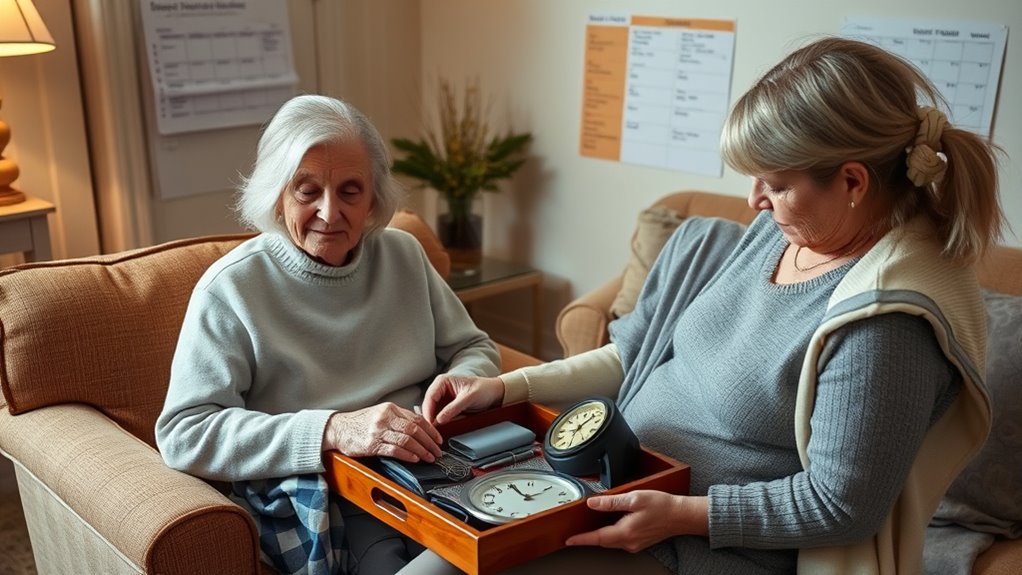
To establish effective routines for seniors with dementia, you should start by observing their current habits and preferences. Notice what activities they enjoy, times they feel most alert, and patterns in their daily behavior. Use this information to create a predictable schedule that incorporates familiar tasks, such as meals, bathing, or walks. Keep routines simple and consistent, gradually introducing new activities to avoid confusion. Visual cues like calendars, clocks, or labeled containers can reinforce understanding. Involve your loved one in planning, giving them a sense of control and participation. Be patient and flexible, adjusting routines as needed to accommodate changing needs or preferences. Consistency and attentiveness help build confidence, reduce anxiety, and promote a sense of security.
The Impact of Routine on Caregiver Stress and Relationships

When caregivers establish predictable daily schedules for seniors with dementia, they often find that stress levels decrease considerably. Knowing what to expect reduces feelings of chaos and frustration, making caregiving more manageable. This consistency helps prevent misunderstandings and minimizes behavioral challenges, which in turn lowers your anxiety.
Establishing predictable routines reduces stress and behavioral issues for caregivers and seniors alike.
Consider these benefits:
- Fewer interruptions and crises, leading to a calmer environment.
- Improved communication, making interactions smoother.
- More quality time for bonding and emotional support.
- Reduced feelings of helplessness, boosting your confidence.
Incorporating Enjoyable Activities Into Daily Patterns

Incorporating enjoyable activities into daily routines can considerably boost a senior’s mood and engagement, making caregiving more rewarding. When you include hobbies or favorite pastimes, you create positive associations with daily tasks, encouraging participation. For example, listening to music during chores or gardening in the morning can bring joy and a sense of purpose. Use familiar activities that your loved one enjoys, as these are more likely to be retained and evoke positive emotions. Incorporate movement into activities like dancing or gentle stretching to promote physical health. Keep activities simple and consistent to avoid frustration. By blending enjoyment with routine, you help your loved one feel more connected, reduce boredom, and foster a sense of accomplishment, all while making daily caregiving more fulfilling.
Frequently Asked Questions
How Can Routines Be Tailored for Different Stages of Dementia?
You can tailor routines for different stages of dementia by simplifying tasks in early stages, focusing on familiar activities to boost confidence. As the condition progresses, break routines into smaller steps, offer more guidance, and use visual cues or prompts. In later stages, keep routines consistent and gentle, emphasizing comfort and familiarity. Adjust activities based on their current abilities, always prioritizing safety, reassurance, and emotional connection to support their changing needs.
What Are Signs Routines Are No Longer Effective?
You’ll notice routines are no longer effective when your loved one becomes increasingly confused, resistant, or agitated during activities they once handled well. They may forget essential steps, refuse participation, or show heightened anxiety. If routines stop providing comfort or structure, and behavioral issues worsen despite consistent efforts, it’s a sign to reassess and adapt their schedule to better fit their changing needs and abilities.
How Do Routines Impact Medication Adherence?
You can improve medication adherence by establishing consistent routines. When you incorporate medication times into daily activities, your loved one is more likely to remember and take their pills on schedule. Using visual cues like alarms or labeled containers helps reinforce the routine. This predictability reduces forgetfulness and confusion, making it easier for them to stay on track with their medication, ultimately supporting their health and well-being.
Can Routines Help With Managing Nighttime Wandering?
You can turn the tide on nighttime wandering by establishing a calming, consistent routine before bed. This helps your loved one feel secure and reduces the urge to roam. Incorporate relaxing activities like gentle stretches or listening to soothing music. Keep lights dim and avoid overstimulation. Over time, this steady rhythm becomes second nature, helping your loved one settle down peacefully and regain control over their nights.
How Do Cultural Differences Influence Routine Planning?
Cultural differences shape how you plan routines by influencing daily activities, meal times, and social interactions. You can adapt routines to honor cultural traditions, language preferences, and family roles, making them more meaningful and comfortable for your loved one. Incorporate cultural practices into daily schedules to boost familiarity, reinforce identity, and promote emotional well-being, helping your loved one feel secure and respected within their cultural context.
Conclusion
By weaving routines into your loved one’s day, you create a steady anchor in a sea of change. These familiar patterns act like gentle anchors, grounding their world and illuminating their path through confusion. As you nurture consistency, you cultivate a sanctuary of security and joy. Remember, each well-planned day is a brushstroke in the masterpiece of their well-being, turning everyday moments into a comforting melody that resonates long after the day ends.
Fall Picks
fall essentials
As an affiliate, we earn on qualifying purchases.