
This checklist is for older adults and caregivers comparing everyday comfort items for aches and stiffness. It can help organize a shopping conversation, but it does not diagnose pain or replace guidance from a clinician. Start with the person’s needs, including where discomfort occurs and what they can comfortably use.

Give the gift of listening to someone you love
- Choose a 1-, 3-, 6- or 12-month membership
- They pick the audiobooks they love
- Easy to send by email
The sections are arranged by product type: hot and cold therapy, heating pads, knee supports, wrist braces, TENS units, and massage tools. Each section explains what to consider, offers a short checklist, and gives a practical verdict on the named pick—or advice when no product is listed. Use each section to compare function, fit, and ease of handling.
Before buying, check the product’s instructions and confirm that it suits the intended user. Consider dexterity, sensation, mobility, and whether another person will help set it up. For new, severe, or persistent pain, or uncertainty about a device, ask a healthcare professional for advice before use.
Hot and Cold Therapy
Hot and cold products are often considered for temporary comfort, but the listed pick is a set of concrete molds for flagstone pavers. Its name does not describe a therapy wrap, pack, or other pain-relief item. That mismatch matters: a product should be chosen for the intended use, not because its category sounds relevant. Verify the product type before adding anything to a care plan.
For a hot or cold therapy item, look for clear instructions about preparation, application, and safe duration. Check whether it can be held comfortably or secured in place, and whether its shape suits the area where it will be used. Avoid assuming that a general-purpose item is appropriate for sensitive skin or reduced sensation. A caregiver can help review directions, but should not use heat or cold over an area if the person cannot reliably notice discomfort. Fit the item to the body area and the user’s ability to monitor it.
Do not infer therapy features from the provided pick’s name. Compare a purpose-labeled product with the person’s needs and clinician guidance, especially when sensation or circulation is a concern. Choose for the stated use, and pause if the instructions are unclear.
What to look for:
- A product explicitly intended for hot or cold therapy
- Clear preparation and use instructions
- A shape suited to the intended body area
- A way to monitor comfort during use
- Directions that are easy for the user or caregiver to follow
Reusable ABS Concrete Molds for Flagstone Pavers, 6-Pack

This set includes six reusable ABS plastic molds for making textured concrete flagstone pavers for garden paths, patios, and lawn borders. The molds cover 4 sq.
Pros:
- Six distinct textures mimic natural rock.
- Reusable flexible ABS is designed for smooth release.
- Can be used to make pavers for paths, patios, and lawn borders.
- Simple pour-and-lift process requires no masonry skills.
Cons:
- Requires concrete mixing and ground leveling.
- Release oil is recommended for easier removal.
Best for: People shopping for flagstone paver molds
Not ideal for: Anyone seeking a hot or cold pain-relief item
Bottom line: The named molds are not identified as therapy products, so choose an item explicitly intended for hot or cold use.
Heating Pads
The listed pick is an electric heating pad sized 33 x 24 inches and named for the neck, shoulders, and back. The stated dimensions and areas give shoppers a starting point for checking coverage, but they do not establish how the pad fits a particular person. Consider where it will be placed, whether the user can position it without strain, and whether a caregiver will assist. Check the placement and coverage against the intended use.
A common mistake is to assume that a larger pad is automatically easier or safer to use. Review the directions for setup, controls, and use duration, and make sure the controls are reachable and understandable. For older adults with reduced sensation, difficulty communicating discomfort, or other health concerns, ask a clinician whether heat is appropriate. Never rely on the product name alone to determine suitability. Read the instructions first and follow any precautions supplied by the manufacturer.
Before purchase, compare the listed size with the user’s mobility and the space where the pad will be used. Ensure that the user can stop use promptly if it feels uncomfortable, or arrange for a caregiver to check in. The name specifies neck, shoulder, and back use; it does not state additional fit or safety details. Confirm those details in the product information.
What to look for:
- Dimensions and intended body areas that match the user’s needs
- Controls the user or caregiver can reach and operate
- Clear setup, use, and stopping instructions
- Manufacturer guidance on precautions and duration
- A plan to monitor comfort, especially with reduced sensation
Electric Heating Pad for Neck, Shoulders, and Back, 33 x 24 in

This contoured, weighted heating pad is designed to rest over the neck, shoulders, and back, with an adjustable strap for a hands-free fit. It offers six temperature settings from 100°F to 150°F and a 30-, 60-, or 90-minute auto-off timer, plus ETL certification and overheat protection.
Pros:
- Contoured shape, weighted beads, and adjustable strap help keep the pad in place.
- Six heat settings and three timer options allow adjustable use.
- Detachable controller makes the pad machine washable.
- ETL certification and overheat protection are included.
Cons:
- The controller must be detached before washing.
- The largest timer setting is 90 minutes.
Best for: Someone seeking a pad named for the neck, shoulders, and back
Not ideal for: A user who cannot monitor heat or operate the controls without help
Bottom line: Confirm placement, controls, and safety guidance before using this electric heating pad.
Knee Supports
No knee support product is listed, so this section is advice only. Start by identifying what the user wants the support to do and whether a clinician has recommended a particular style. A support that is difficult to put on or remove may not work well in everyday care, even if its description sounds suitable. Prioritize manageable use alongside the intended purpose.
Check the sizing guide and measure as directed by the manufacturer; do not assume that clothing size determines brace fit. Consider whether the support can be applied without painful bending or pulling, and whether closures are manageable for the user’s hands. A caregiver may help with fitting, but should be able to see whether the product sits as instructed. Avoid choosing a support that causes discomfort, restricts movement unexpectedly, or conflicts with clinical advice. Use the maker’s sizing directions rather than guessing.
Compatibility also includes the user’s daily routine: think about when and where it will be worn, clothing over or under it, and whether it can be removed without assistance. If the knee problem is new, worsening, or accompanied by other concerning symptoms, seek medical guidance rather than relying on a support alone. Ask a clinician when the right type or fit is uncertain.
What to look for:
- A style recommended for the user’s intended need
- Sizing instructions with clear measurement steps
- Closures the user or caregiver can manage
- A fit that stays positioned as directed
- Compatibility with clothing and the daily routine
Wrist Braces
The listed pick is an adjustable black wrist support described for light traumas and minor injuries. That description offers a general use cue, but it does not specify sizing, closure details, or which wrist it fits. Check the product information for those details before buying. Confirm the fit information rather than assuming one adjustable support will suit every hand and wrist.
For an older adult, putting on and adjusting a brace can matter as much as its stated purpose. Review how the support fastens and whether the user can manage it with their available hand strength and dexterity. Check that the sizing guidance matches the wrist measurements and that the product’s intended use fits the situation. Do not treat the phrase “minor injuries” as a diagnosis or as proof that the support is appropriate for a particular injury. Follow professional advice when the cause or severity of pain is uncertain.
Before use, make sure the support can be positioned according to its directions and removed without undue difficulty. Ask a clinician if symptoms are significant, persist, or worsen, or if the user needs advice about wearing time. A caregiver can help inspect fit and ease of use, while the user should report discomfort promptly. Make comfort and removability part of the decision.
What to look for:
- Sizing guidance and any required wrist measurements
- Instructions for positioning and adjusting the support
- Closures manageable for the user’s dexterity
- Clear description of intended use
- Advice on when to consult a clinician
Wrist Support for Light Traumas and Minor Injuries, Adjustable, Black
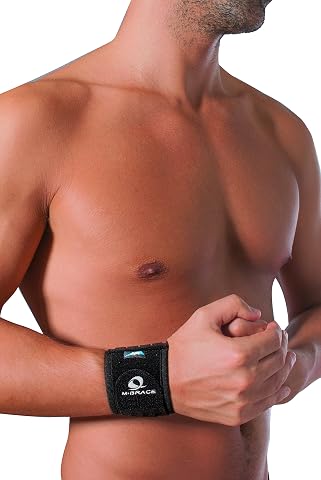
This wrist support is designed for light traumas and minor injuries, providing adjustable tension for a comfortable fit. Made from breathable, latex-free neoprene, it is suitable for both right and left wrists and ideal for injury prevention during sports.
Pros:
- Lightweight and breathable for comfort
- Adjustable for a customized fit
- Suitable for both wrists and injury prevention
Cons:
- Limited support for severe injuries
- May not fit all wrist sizes comfortably
- Designed mainly for minor injuries and prevention
Best for: Someone comparing an adjustable support for a minor wrist issue
Not ideal for: Anyone with an uncertain or worsening wrist problem
Bottom line: Verify sizing, fastening, and intended use, and seek clinical advice when symptoms call for it.
TENS Units
The named pick is the Neocarbon TENS Unit Muscle Stimulator Pro, in red. The product name identifies it as a TENS unit, but does not provide details about controls, electrode placement, instructions, or suitability for a specific user. Review the complete product information and consult a clinician before use when the user has questions or health conditions that may affect device use. Do not rely on the name alone to decide whether it is appropriate.
Ease of setup is important for a device that may require the user to manage controls and placement. Check whether the directions clearly explain operation, where components go, and how to stop a session. Consider whether the user can see and manipulate the controls, or whether a caregiver can help consistently. Follow the device instructions and clinician guidance; do not improvise placement or settings. Confirm instructions and support before purchasing.
A common mistake is to treat a stimulation device as a general solution for unexplained pain. It does not replace evaluation of new, severe, persistent, or changing symptoms. Ask a healthcare professional whether this type of device fits the user’s situation, and review any manufacturer warnings with them. Get guidance before use if suitability is uncertain.
What to look for:
- Complete operating instructions and warnings
- Clear guidance on component placement
- Controls the user or caregiver can manage
- A way to stop use promptly
- Clinician guidance on whether the device suits the user
Neocarbon TENS Unit Muscle Stimulator Pro, Red

This portable TENS/EMS stimulator offers drug-free electrical-pulse therapy for targeted muscle soreness and pain in areas such as the back, neck, shoulders, knees, and legs. The kit includes a range of stimulation modes and intensity levels, reusable electrode pads, cables, pad holders, a USB-C charging cable, and a travel case.
Pros:
- Offers 36 modes and 20 intensity levels per channel
- Includes 12 reusable electrode pads and accessories
- USB-C charging with up to 50 hours of use per charge
- Portable design includes a travel case
Cons:
- Requires electrode pads and cables for use
- The description does not specify battery capacity or device dimensions
Best for: Shoppers considering a named TENS muscle stimulator
Not ideal for: Anyone unsure whether stimulation is appropriate for them
Bottom line: Review the instructions and ask a clinician about suitability before using this TENS unit.
Massage Tools
The listed pick is a handheld cordless massager with a flexible head and 10 vibration modes. These are the features provided in its name; it does not state the tool’s weight, grip dimensions, control layout, or suitability for a particular person. Check those details before buying, especially if the user has limited hand strength, dexterity, or range of motion. Assess handling in advance rather than assuming a handheld tool will be easy to use.
A flexible head and multiple modes may sound convenient, but they do not show whether the device can be positioned comfortably or operated safely by the intended user. Read the manufacturer’s directions, including any warnings about where and how to use it. Consider whether someone can help with setup and monitor comfort. Avoid using a massage tool over an area when the user cannot reliably communicate discomfort, and ask a clinician if the user has a condition that raises questions about massage. Follow the product directions and seek guidance where needed.
Check whether the controls are easy to identify and whether cordless use suits the user’s routine. If the device feels awkward to hold or reach the intended area, it may not be a practical choice. The listed modes do not establish a benefit or a best setting for pain relief. Choose for usable fit, and stop if use is uncomfortable.
What to look for:
- A weight and grip that suit the user’s strength
- Controls that are easy to identify and operate
- Directions and warnings for use
- A head that can reach the intended area comfortably
- Caregiver assistance options if positioning is difficult
Handheld Cordless Massager with Flexible Head and 10 Vibration Modes

This cordless handheld massager features a 360° adjustable head for targeted use on areas such as the neck, shoulders, back, and arms. It offers 10 vibration modes, app and button controls, a soft silicone body, and an IPX6 waterproof design.
Pros:
- Adjustable head supports targeted massage at different angles
- Offers 10 vibration modes and app or button controls
- Soft silicone is easy to clean
- Cordless design provides up to 90 minutes of use per charge
Cons:
- Requires charging after up to 90 minutes of use
Best for: Someone seeking a cordless handheld massager with a flexible head
Not ideal for: A user who cannot grip, position, or control the device comfortably
Bottom line: Confirm handling, reach, and safe-use directions before choosing this massager.
For a budget-first buying order, begin with the item that addresses the user’s clearest need and has the simplest verified fit and instructions. Compare suitable options within that category, and postpone purchases when the product does not match its stated purpose—especially the listed flagstone molds in the hot and cold section. Spend first on a verified match, not a category label.
Use this checklist as a starting point for a practical conversation with the older adult, caregiver, and clinician when needed. Check sizing, controls, setup, and comfort before regular use, and adjust the plan as needs change. Small, careful choices can make shopping more manageable.