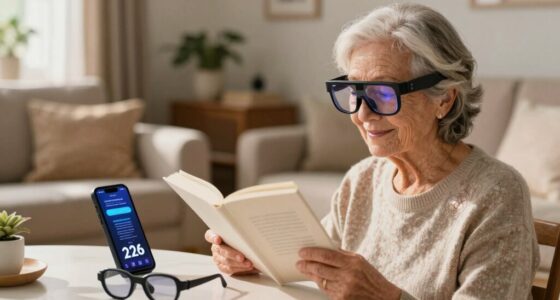
As more seniors choose to live independently, safety and peace of mind become top priorities for families and caregivers. The right smart home device can prevent falls, alert loved ones to emergencies, and help seniors stay connected. In 2026, two standout options lead the pack: the WiFi Smart Bed Sensor Alarm offers reliable fall detection and room monitoring, while the Seculife Medical Alert Smartband provides portable GPS tracking, fall alerts, and emergency calling. While both excel in safety, they serve different needs—one is stationary, ideal for those who spend most time in bed, and the other is wearable, suited for active seniors. The main tradeoffs? The bed sensor depends heavily on WiFi and is limited to one user, whereas the smartband offers mobility but requires frequent charging and a subscription for full features.

Turn quiet afternoons into listening time
- Thousands of audiobooks, podcasts and originals
- Listen on your phone, tablet or Echo — also offline
- Cancel anytime
Complete the kit


Key Takeaways
- The WiFi Smart Bed Sensor is ideal for seniors who spend most of their time in bed or a fixed space, offering non-intrusive fall prevention and room monitoring.
- The Seculife Smartband suits active seniors, providing GPS, fall detection, and emergency calling on the go, but it relies on daily charging and a subscription.
- Both devices require WiFi or cellular connection; standalone options are limited, so connectivity is essential.
- Choosing between these depends on activity level, comfort with wearables, and the need for mobility or stationary monitoring.
- Tradeoffs include battery life limitations in the smartband and WiFi dependency in the bed sensor—consider these before committing.
| WiFi Smart Bed Sensor Alarm and Fall Prevention for Elderly and Adults |  | Best for stationary fall prevention and room monitoring | WiFi Support: 2.4GHz only | Detection Range (Open Area): 330 ft | Indoor Detection Range: 30-150 ft | VIEW ON AMAZON | See Our Full Breakdown |
| Seculife Medical Alert Smartband for Seniors with Fall Detection & GPS |  | Best for active seniors needing mobility and emergency safety | Operating System: iOS, Android | Additional Features: 2-Way Calling, Fall Alerts, GPS Tracking, Geofence, SOS | Display Screen Size: 2 inches | VIEW ON AMAZON | See Our Full Breakdown |
| smart home devices for elderly living alone | WiFi Support | Detection Range (Open Area) | Indoor Detection Range | Expandable |
|---|---|---|---|---|
| WiFi Smart Bed Sensor Alarm an | 2.4GHz only | 330 ft | 30-150 ft | Yes, up to 20 transmitters |
| Seculife Medical Alert Smartba | — | — | — | — |
More Details on Our Top Picks
WiFi Smart Bed Sensor Alarm and Fall Prevention for Elderly and Adults
This WiFi-enabled bed sensor alarm stands out for its straightforward approach to fall prevention, providing real-time alerts directly to caregivers’ smartphones. Compared with other monitoring devices, its focus on bed and room detection makes it ideal for seniors who spend most of their day in bed or a fixed space. The system is expandable, supporting up to 20 transmitters, which is a big advantage for multi-room setups or multiple seniors. However, it’s limited to 2.4GHz WiFi, which might be a drawback in homes with dual-band networks, and it requires WiFi to work—no standalone operation is possible. It’s best suited for families who want passive, continuous monitoring without needing the senior to wear anything.
Pros:- Provides immediate alerts to caregivers via smartphone
- Expandable system supports multiple sensors and rooms
- Simple setup and sharing functions for family members
Cons:- Limited to 2.4GHz WiFi networks
- No standalone functionality without WiFi
- Supports only one phone connection per hub
Best for: Seniors who are mostly stationary and need reliable fall detection in a fixed environment
Not ideal for: Active seniors who prefer mobility or those without a stable 2.4GHz WiFi connection
- WiFi Support:2.4GHz only
- Detection Range (Open Area):330 ft
- Indoor Detection Range:30-150 ft
- Expandable:Yes, up to 20 transmitters
- Sharing Function:Yes
- Setup:Easy, app-based
Our verdict“This pick is best for families seeking a reliable, stationary fall detection system that integrates seamlessly with existing WiFi networks.”
Seculife Medical Alert Smartband for Seniors with Fall Detection & GPS
The Seculife Medical Alert Smartband is a comprehensive wearable that combines fall detection, GPS tracking, and emergency calling into a sleek, water-resistant device. Its large SOS button and automatic fall alerts make it easy for seniors to summon help, whether at home or outside. Compared to stationary sensors, this smartband offers the advantage of mobility, allowing seniors to stay active with peace of mind. However, its battery life is limited to about a day, requiring daily charging, and the full safety features come with a monthly subscription fee. It’s a practical choice for seniors who want to maintain independence but still have quick access to help if needed.
Pros:- Simple, large SOS button for emergencies
- Automatic fall detection and real-time GPS tracking
- Water-resistant and comfortable for daily wear
- Supports two-way calling for quick communication
Cons:- Battery life limited to approximately 1 day
- Monthly subscription required for full features
- Limited to basic smartwatch functions
Best for: Active seniors who value mobility, GPS tracking, and quick emergency access
Not ideal for: Seniors who prefer passive monitoring or are sensitive to daily charging and subscription costs
- Operating System:iOS, Android
- Additional Features:2-Way Calling, Fall Alerts, GPS Tracking, Geofence, SOS
- Display Screen Size:2 inches
- Water Resistance Level:Waterproof
- Battery Capacity:680 mAh
- Battery Life:1 day
Our verdict“This wearable is well-suited for active seniors who want safety features on the move, accepting the tradeoff of daily charging and ongoing costs.”

How We Picked
Our selection process focused on devices that prioritize safety, ease of use, and reliable alerts for seniors living alone. I considered compatibility with existing home setups, user-friendliness for elderly users, and the ability to monitor real-time activity. Devices had to support standard communication protocols like WiFi or cellular networks and be scalable for different living situations. Tradeoffs such as battery life, setup complexity, and ongoing costs like subscriptions influenced our rankings. Ultimately, these picks balance practicality with advanced safety features tailored specifically for independent elderly living.
Factors to Consider When Choosing Smart Home Devices For Elderly Living Alone
Choosing the right smart home device for an elderly loved one depends on their activity level, comfort with technology, and specific safety needs. While stationary sensors excel at passive monitoring in fixed spaces, wearables are better suited for seniors who are active and need safety on the go. Connectivity, ease of use, and ongoing costs also play crucial roles in decision-making. This guide will help clarify these factors and match you with the best device tailored to your loved one’s lifestyle and your safety expectations.
Understanding Safety Needs
Assess whether your loved one spends most of their time in one place or if they move around frequently. For stationary, bed-based monitoring, sensors like the WiFi Smart Bed Sensor provide non-intrusive fall prevention and room alerts. For those who are more active or want to retain independence outside the home, wearable devices like the Seculife Smartband offer GPS tracking and immediate emergency access. Matching safety features to activity levels ensures effective protection without unnecessary complexity.
Connectivity and Ease of Use
Most smart safety devices require either WiFi or cellular connection. Bed sensors depend on a stable WiFi network, which may be a limitation in some homes. Wearables generally rely on cellular networks and need regular charging, which can be challenging for some seniors. Consider the user interface too—large buttons and simple alerts make a huge difference in emergency situations. Balance technological sophistication with ease of operation for peace of mind.
Ongoing Costs and Setup
Devices like the smartband often involve monthly subscriptions for full safety features, which can add up over time. Bed sensors usually have a one-time setup cost but limited ongoing expenses. Think about the initial setup, whether the device can be shared among family members easily, and if your loved one is comfortable with technology. A device that seamlessly integrates into daily routines will provide the most reliable safety without adding stress or complexity.
Frequently Asked Questions
Are these devices easy for seniors to operate?
Both devices are designed with seniors in mind, featuring simple interfaces and large buttons. The bed sensor is mostly passive, requiring no interaction beyond initial setup, making it very easy for elderly users who are less tech-savvy. The smartband, on the other hand, has a large SOS button and automatic fall detection, but daily charging might be a new routine for some. Overall, their user-friendly designs aim to minimize confusion and maximize safety.
Do these devices require a monthly subscription?
The bed sensor does not require a subscription, functioning primarily through WiFi alerts. In contrast, the Seculife Smartband does need a subscription for full access to GPS tracking and emergency services, which is typical for wearable safety devices. Budgeting for ongoing costs is important when choosing a device, especially if long-term affordability is a concern.
Can these devices be used together for comprehensive safety?
Yes, combining a stationary sensor like the WiFi Smart Bed Sensor with a wearable like the Seculife Smartband can offer layered protection—passive room monitoring plus active mobility safety. However, managing multiple devices means more setup and potential costs. Families often find that pairing these options provides the best coverage, especially if the senior’s routine involves both stationary and active periods.
What if my loved one is not comfortable with technology?
For seniors hesitant about tech, a passive system like the bed sensor is less intimidating, as it requires no interaction beyond initial setup. Wearables might be overwhelming if they involve frequent charging or app management, but large buttons and straightforward emergency features help. In some cases, involving family or caregivers to assist with device management can make a big difference in adoption and ongoing use.
How reliable are these devices in emergencies?
Both devices are built to prioritize quick, reliable alerts. The bed sensor sends instant notifications to caregivers when a fall or exit is detected, minimizing response time. The smartband’s GPS and emergency calling features are designed for quick activation, with automatic fall detection adding an extra layer of security. While no device can guarantee 100% reliability, these options are among the most dependable for in-home and on-the-go safety in 2026.
Conclusion
For seniors who primarily stay in one place and need passive fall prevention, the WiFi Smart Bed Sensor offers a simple, reliable solution that integrates seamlessly with existing WiFi networks. Families seeking mobility and immediate emergency access should consider the Seculife Smartband, especially for active seniors who value independence but want safety features readily available on the go. Ultimately, pairing a stationary sensor with a wearable can provide comprehensive safety coverage, but your choice should align with the senior’s activity level, comfort with technology, and your long-term safety budget.
Halloween Picks
halloween
As an affiliate, we earn on qualifying purchases.