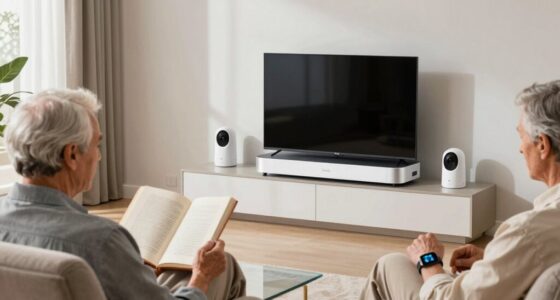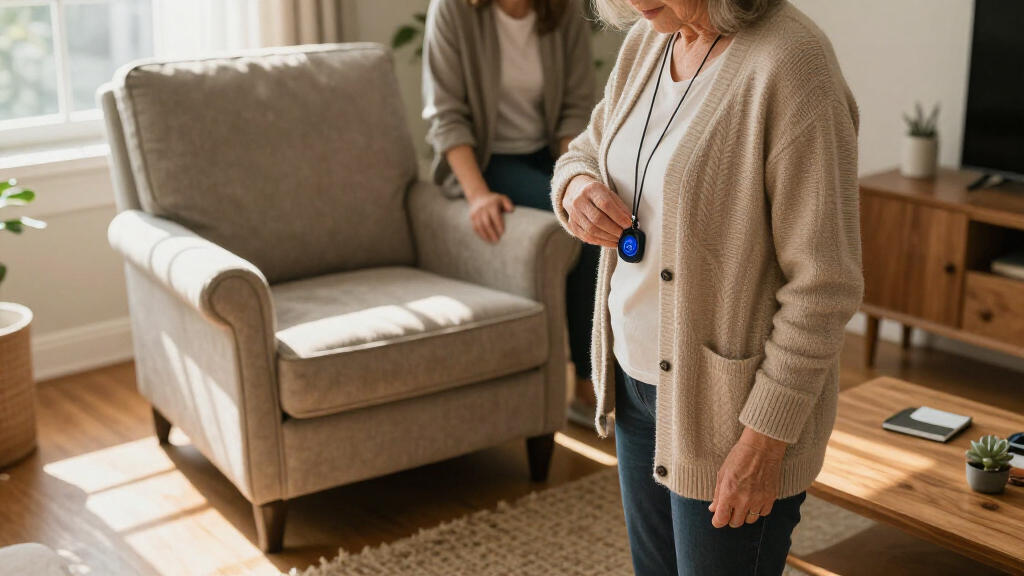

Fall detection systems for seniors range from mobile devices that connect to a response center to in-home alarms that alert a caregiver nearby. I’d choose the Bay Alarm Medical SOS Mobile GPS Medical Alert System as the best overall starting point for seniors who need mobile coverage and professional monitoring; the SecuLife SOS Wristband stands out for wrist-worn GPS and two-way calling, while the StackCare Passive In-Home Monitoring System suits households seeking activity monitoring without a wearable. The central tradeoff is between automatic help away from home, simpler alerts within the home, and how much the system depends on a caregiver or monitoring service. Wearables can be missed or removed, while sensor-based alarms may not detect a fall itself or work beyond their monitored area. Read on for the full breakdown and guidance on matching a system to daily routines.

Get comfort and care essentials delivered free — and shop member deals
- Fast, free delivery on millions of items
- Access to Prime Big Deal Days deals on October 6–7
- Prime Video, Amazon Music and more included
Complete the kit


Key Takeaways
- Mobile coverage changes the shortlist: Bay Alarm Medical, Safety+ 4G, and the SecuLife devices are positioned for users who leave home and need GPS-backed assistance, unlike the Smart Caregiver bed and chair alarms.
- Automatic fall detection is not the same as fall prevention: Wearable detectors aim to report a possible fall, while Smart Caregiver sensor pads and bed-exit alarms focus on notifying someone when a person gets up.
- Wearability is a major dividing line: SecuLife offers wristband and pendant formats, while the GPS health-monitoring watch may appeal to someone already comfortable wearing a watch.
- In-home systems trade mobility for routine-based support: Nomo, the Wi-Fi receiver system, StackCare, and Smart Caregiver options serve different home monitoring needs; buyers should check each system’s alert path and coverage.
- Similar product names do not guarantee identical service: The two Safety+ listings and several pendant-style listings should be compared by monitoring, network coverage, fall-detection terms, and ongoing service requirements—not title alone.
| SecuLife SOS Wristband with Fall Detection, GPS Tracking, and Two-Way Calling |  | Best Screen-Free Wristband | Design: Screen-free wristband | Fall detection: Automatic | Connectivity: GPS tracking, geofencing, and two-way voice calling | VIEW LATEST PRICE | See Our Full Breakdown |
| Medical Alert System for Seniors – Advanced Mini Device with Automatic Fall Detection, 24/7 Monitoring, GPS Tracking, Emergency Alert Pendant Necklace, SOS Button, Caregiver App, Waterproof, Rose Gold |  | Best for Professional Monitoring | Form: Compact emergency alert pendant | Monitoring: 24/7 trained-operator monitoring | Fall detection: Optional add-on | VIEW LATEST PRICE | See Our Full Breakdown |
| SecuLife Medical Alert Pendant for Seniors with Auto Fall Detection, GPS Tracking, and 2-Way Calling |  | Best for Direct Family Alerts | Connectivity: Cellular | Fall detection: Automatic | Alert routing: Preselected family contacts | VIEW LATEST PRICE | See Our Full Breakdown |
| Bay Alarm Medical SOS Mobile GPS Medical Alert System |  | Best for Operator Support Without a Smartphone | Connectivity: 4G LTE | Location: GPS | Weight: Under 2 oz | VIEW LATEST PRICE | See Our Full Breakdown |
| Safety+ 4G Medical Alert System with Fall Detection and GPS |  | Best for Caregiver Tracking and Activity Context | Connectivity: Nationwide 4G | Monitoring: 24/7 professional monitoring | Fall detection: Automatic | VIEW LATEST PRICE | See Our Full Breakdown |
| Smart Caregiver Bed Exit Alarm with Wireless Pager |  | Best Wireless Bedside Pick | Pad dimensions: 10 x 30 inches | Sensor type: Weight sensing | Pager connectivity: Wireless | VIEW LATEST PRICE | See Our Full Breakdown |
| Smart Caregiver Bed and Chair Exit Alarm System with Sensor Pads |  | Best for Bed-and-Chair Coverage | Bed sensor pad size: 10 x 30 inches | Chair sensor pad size: 10 x 15 inches | Pad material: Soft vinyl with foam interior | VIEW LATEST PRICE | See Our Full Breakdown |
| Nomo Medical Alert System with Fall Detection for Seniors |  | Best for Connected Home Monitoring | Included components: Smart Hub, two Satellite range extenders, and wearable Tags | Connectivity: WiFi; no landline required | Communication: Two-way voice through the Hub | VIEW LATEST PRICE | See Our Full Breakdown |
| Wi-Fi Medical Alert System for Seniors with Call Buttons, Waterproof Wristband, Receiver, and LED Display |  | Best No-Fee Pager-Style Alert | Connectivity: 2.4 GHz WiFi and wireless signal | Wireless range: Up to 300 feet | Waterproof component: Wristband remote only | VIEW LATEST PRICE | See Our Full Breakdown |
| StackCare Passive In-Home Monitoring System for Seniors |  | Best for Wearable-Free Activity Monitoring | Brand: Connected Caregiver | Model number: 860012166565 | Compatible devices: iOS and Android | VIEW LATEST PRICE | See Our Full Breakdown |
| Safety+ 4G Medical Alert System for Seniors with Fall Detection |  | Best for Monitored Mobile Protection | Connectivity: 4G cellular | Emergency monitoring: 24/7 | Fall detection: Automatic | VIEW LATEST PRICE | See Our Full Breakdown |
| Senior Fall Detection Watch with GPS, SOS, and Health Monitoring |  | Best for Connected Health Tracking | Operating system: Android Wear 1.0 | Connectivity: 4G cellular | GPS: Built-in; geofencing supported | VIEW LATEST PRICE | See Our Full Breakdown |
| Smart Caregiver Fall Prevention Monitor and Weight Sensing Chair Pad |  | Best for Chair-Exit Alerts | Pad dimensions: 10 x 15 in | Pad material: Soft vinyl | Detection type: Weight-sensing chair exit alert | VIEW LATEST PRICE | See Our Full Breakdown |
| fall detection systems for senior | Connectivity |
|---|---|
| SecuLife SOS Wristband with Fa | GPS tracking, geofencing, and two-way voice calling |
| Medical Alert System for Senio | — |
| SecuLife Medical Alert Pendant | Cellular |
| Bay Alarm Medical SOS Mobile G | 4G LTE |
| Safety+ 4G Medical Alert Syste | Nationwide 4G |
| Smart Caregiver Bed Exit Alarm | — |
| Smart Caregiver Bed and Chair | — |
| Nomo Medical Alert System with | WiFi; no landline required |
| Wi-Fi Medical Alert System for | 2.4 GHz WiFi and wireless signal |
| StackCare Passive In-Home Moni | — |
| Safety+ 4G Medical Alert Syste | 4G cellular |
| Senior Fall Detection Watch wi | 4G cellular |
| Smart Caregiver Fall Preventio | — |
More Details on Our Top Picks
SecuLife SOS Wristband with Fall Detection, GPS Tracking, and Two-Way Calling
This screen-free wristband suits seniors who want fall detection and a way to reach family without managing a display. Its automatic fall detection, one-button calling, and two-way voice communication combine emergency alerts with direct contact, while GPS and geofencing help caregivers check location and receive boundary alerts. Compared with the SecuLife Medical Alert Pendant, this model has the same family-focused approach but shifts the wearable format from a pendant to a wristband. The IP67 rating supports everyday wear around splashes and handwashing, though it does not make the subscription requirement disappear. Buyers should also weigh that service is required to use its connected safety features. Its one-year location history may help caregivers review movement patterns, but the product data does not specify battery life.
Pros:- Automatic fall detection plus one-button contact with preset family or caregiver numbers
- GPS tracking, geofencing alerts, and one year of location history
- Two-way calling with hands-free auto-answer
- IP67-rated protection for rain, splashes, and handwashing
Cons:- A monthly subscription is required for connected service
- No battery-life figure is provided in the product data
- Screen-free design offers no on-device display for status or information
Best for: Seniors who prefer a screen-free wrist wearable and families who want GPS, geofencing, and direct two-way contact.
Not ideal for: Buyers seeking a system without recurring service fees, or anyone who prefers a pendant and wants stated battery-life information before choosing.
- Design:Screen-free wristband
- Fall detection:Automatic
- Connectivity:GPS tracking, geofencing, and two-way voice calling
- Water resistance:IP67
- Location history:1 year
- Emergency contact:One-button calling to preset family or caregiver numbers
- Subscription:Required
- Warranty:1 year
Our verdict“Choose this wristband if screen-free wear and direct family communication matter more than avoiding a monthly service plan.”
This compact pendant is the clearest fit here for seniors who want an operator-led response rather than alerts sent only to family. Its subscription connects the wearer to trained operators around the clock, and nationwide operation on Verizon and AT&T 4G LTE gives it broader stated network compatibility than the Bay Alarm Medical SOS Mobile, whose supplied details specify 4G LTE without naming carriers. Fall detection is optional, however, and costs extra each month; that makes this a less straightforward choice for buyers who expect automatic detection as a standard feature. The up-to-five-day battery and shower-safe construction support regular wear, while the caregiver app adds another way to stay informed. Choose it for monitored assistance, not for the lowest ongoing commitment.
Pros:- 24/7 monitoring connects the wearer with trained operators
- Works on Verizon and AT&T 4G LTE networks
- Up to five days of battery life per charge
- Shower-safe design and caregiver-app access
Cons:- Fall detection is optional and carries an additional monthly fee
- Ongoing subscription is required for monitoring
- The product data does not state a precise water-resistance rating
Best for: Seniors and families who prioritize 24/7 access to trained operators and want a compact pendant with caregiver-app access.
Not ideal for: Buyers who want fall detection included in the base service or who want to avoid recurring monitoring and add-on fees.
- Form:Compact emergency alert pendant
- Monitoring:24/7 trained-operator monitoring
- Fall detection:Optional add-on
- Cellular networks:Verizon and AT&T 4G LTE
- Battery life:Up to 5 days per charge
- Water resistance:Shower safe
- Caregiver access:Caregiver app
- Activation:QR code or phone call
Our verdict“Pick this pendant if professional operator response is your priority and you accept paying extra to add fall detection.”
SecuLife Medical Alert Pendant for Seniors with Auto Fall Detection, GPS Tracking, and 2-Way Calling
Unlike the operator-centered advanced mini pendant, this SecuLife model sends automatic fall alerts to preselected family contacts without routing them through a call center. That can suit households that want relatives to coordinate the response, though it puts more responsibility on those contacts to notice and act on alerts. GPS tracking and geofencing add location context, while hands-free two-way calling gives the wearer a way to speak with contacts. Its stated battery life of up to six days is longer than the advanced mini pendant’s five-day figure, which may mean fewer charging interruptions. The IP67 rating also supports shower wear. This is a family-managed safety option rather than a substitute for professional monitoring, and it still requires a monthly subscription for service.
Pros:- Automatic fall alerts go to preselected family contacts without a third-party call center
- GPS tracking and geofencing provide location information
- Up to six days of battery life
- IP67 water resistance supports shower wear
Cons:- Requires a monthly subscription
- Does not include third-party call-center response
- Family members must be reachable and ready to act on alerts
Best for: Families who want automatic fall alerts sent directly to relatives and can reliably respond without a call-center service.
Not ideal for: Seniors who need trained operators to coordinate emergency response or households that cannot monitor family alerts consistently.
- Connectivity:Cellular
- Fall detection:Automatic
- Alert routing:Preselected family contacts
- Location features:Real-time GPS tracking and geofencing
- Communication:Hands-free two-way calling
- Battery life:Up to 6 days
- Water resistance:IP67
- Included items:Charging cable, SIM card, and user manual
Our verdict“Choose this pendant when family members can manage alerts and you prefer direct contact over operator-led monitoring.”
Bay Alarm Medical SOS Mobile GPS Medical Alert System
For seniors who want a person to answer an emergency call, the Bay Alarm Medical SOS Mobile connects to a trained operator through one button and a built-in two-way speaker. It also works without a smartphone, which makes it a simpler fit than app-dependent approaches for people who do not carry or use one. Compared with the SecuLife pendant, which sends fall alerts to family contacts, this system centers its described response on an operator rather than relatives. The tradeoff is that the supplied product details do not specify automatic fall detection; buyers choosing primarily for hands-free fall alerts should compare it carefully with the Safety+ 4G system. Its under-two-ounce weight and lanyard or belt-clip options make it flexible to wear, but battery life varies with usage and network conditions.
Pros:- One-button connection to a trained operator with two-way audio
- Works independently without a smartphone
- Weighs under two ounces and can be worn with a lanyard or belt clip
- Companion app lets caregivers check device status and battery level
Cons:- Requires an ongoing service subscription
- Automatic fall detection is not specified in the supplied product details
- Battery life varies with usage and network conditions
Best for: Seniors who want one-button access to a trained operator, do not want to rely on a smartphone, and prefer a lanyard or belt clip.
Not ideal for: Buyers whose main requirement is explicitly stated automatic fall detection or who want a fixed battery-life estimate.
- Connectivity:4G LTE
- Location:GPS
- Weight:Under 2 oz
- Communication:One-button calling with built-in two-way speaker
- Battery life:Up to several days, depending on usage and network conditions
- Wearing options:Lanyard or belt clip
- Smartphone required:No
- Subscription:Required
Our verdict“Choose this mobile alert device for operator access and flexible wearing if automatic fall detection is not your deciding requirement.”
Safety+ 4G Medical Alert System with Fall Detection and GPS
The Safety+ 4G pairs automatic fall detection with 24/7 professional monitoring, GPS, and a caregiver app that includes activity monitoring. That broader caregiver view distinguishes it from the SecuLife Medical Alert Pendant, which focuses on direct family alerts, and from the Bay Alarm Medical SOS Mobile, whose supplied details do not list automatic fall detection. Up to six days of battery life and included lanyard and belt clip give families practical choices for regular wear. The device also needs no smartphone for setup, which can reduce the initial burden for a senior who is not comfortable configuring a mobile device. The tradeoffs are an ongoing subscription after the included first month and a required activation phone call before use. This is the stronger fit for households that want professional response plus app-based oversight.
Pros:- Automatic fall detection with 24/7 professional monitoring
- GPS tracking and caregiver app with activity monitoring and emergency notifications
- Up to six days of battery life with charging dock, lanyard, and belt clip included
- No smartphone required for setup
Cons:- Ongoing monthly subscription is required after the included first month
- Activation requires a phone call before use
- Water resistance is described as shower- and rain-safe without a stated rating
Best for: Families seeking automatic fall detection, professional monitoring, GPS location, and caregiver access to activity information.
Not ideal for: Buyers who want a no-subscription device or need to start using the system without completing a phone activation call.
- Connectivity:Nationwide 4G
- Monitoring:24/7 professional monitoring
- Fall detection:Automatic
- Location:GPS tracking
- Battery life:Up to 6 days
- Water resistance:Shower- and rain-safe
- Accessories:Charging dock, lanyard, and belt clip
- Setup:No smartphone required; activation by phone call
Our verdict“Choose Safety+ if you want monitored fall detection and caregiver activity updates without requiring the senior to set up a smartphone.”
Smart Caregiver Bed Exit Alarm with Wireless Pager
This system is a focused choice for caregivers who need an alert when someone leaves a bed, rather than a wearable that depends on the senior remembering to put it on. Its 10 x 30-inch weight-sensing pad detects pressure changes near the shoulder area, which can give a caregiver notice as the person starts to get up. The wireless pager offers sound and vibration, so alerts can be tailored to a caregiver’s surroundings. Compared with the Smart Caregiver Bed and Chair Exit Alarm System, this model prioritizes wireless notification and can support up to six sensors, while the other includes both bed and chair pads in its package. The tradeoff is that placement matters: the pad must sit correctly, and the provided details do not specify pager range or battery life. It alerts to bed exits, not falls wherever they happen.
Pros:- Large 10 x 30-inch sensor pad detects pressure removal around the shoulder area.
- Wireless pager provides both sound and vibration alerts.
- Supports up to six sensors for monitoring additional locations.
- Bed-exit monitoring does not depend on the senior wearing a device.
Cons:- Correct pad placement is needed for the intended detection performance.
- Pager range and battery life are not specified in the provided product details.
- Detects bed exits rather than falls that occur elsewhere in the home.
Best for: Caregivers who want a wireless alert for a senior at risk of getting out of bed unattended, with the option to add sensors in other areas.
Not ideal for: Seniors who need fall detection throughout the home or caregivers who need a stated pager range and battery life before choosing a system.
- Pad dimensions:10 x 30 inches
- Sensor type:Weight sensing
- Pager connectivity:Wireless
- Maximum sensors supported:6
- Alert modes:Vibrate and sound
- Company origin:USA
Our verdict“Choose this for wireless alerts when a senior leaves bed, but pick a wearable or whole-home system for fall coverage beyond the bedside.”
Smart Caregiver Bed and Chair Exit Alarm System with Sensor Pads
For a senior who needs supervision during both bed and chair transfers, this kit gives caregivers two pressure-sensitive pads in one setup. The bed pad measures 10 x 30 inches and the chair pad 10 x 15 inches; removing pressure triggers an alert when the person gets up. Its adjustable volume and reset button make the monitor straightforward to manage, while status lights flag low battery or sensor issues. The pads’ sealed vinyl construction is useful where incontinence protection matters. Compared with the wireless Smart Caregiver Bed Exit Alarm with Wireless Pager, this system includes a chair pad but is less flexible for simultaneous multi-area monitoring: the monitor must be switched between pads, and another monitor is sold separately. It is an exit alarm, not automatic fall detection, so it suits a known transfer risk better than someone who may fall elsewhere.
Pros:- Includes separate bed and chair sensor pads.
- Sealed soft-vinyl pads are designed for incontinence protection.
- Adjustable high and low alarm volume accommodates different rooms and caregiver needs.
- Low-battery and sensor-status lights help identify basic system issues.
Cons:- The monitor must be switched between the bed and chair pads.
- A second monitor is sold separately for independent monitoring of both pads.
- Alerts to pressure changes at the pads rather than detecting falls throughout the home.
Best for: Caregivers monitoring a senior who regularly transfers from both a bed and a chair and need sealed pads for incontinence protection.
Not ideal for: Households needing simultaneous alerts from bed and chair without switching the monitor, or fall detection beyond those sensor locations.
- Bed sensor pad size:10 x 30 inches
- Chair sensor pad size:10 x 15 inches
- Pad material:Soft vinyl with foam interior
- Pad protection:Sealed for incontinence protection
- Alarm volume:Adjustable; high and low settings
- Monitor features:Reset button, low-battery light, and sensor-status light
- Monitor attachment:Clip or place nearby
- Support hours:Monday–Friday, 7:00 AM–3:00 PM PT
Our verdict“Choose this when bed-and-chair exit alerts matter more than wireless flexibility or whole-home fall detection.”
Nomo Medical Alert System with Fall Detection for Seniors
Nomo is the strongest fit here for households seeking wearable fall detection with a route to live assistance. Its Tags include fall detection and panic buttons, while the Smart Hub supports two-way voice communication; two Satellite range extenders are included to help cover the home. Setup is plug-and-play and uses WiFi, so there is no landline or technician visit to arrange. Unlike the StackCare Passive In-Home Monitoring System, Nomo uses wearable Tags and a panic button rather than relying only on changes in activity patterns. That makes it a more direct way to request help, though it depends on the senior wearing a Tag and having WiFi available. A 30-day trial of 24/7 RapidSOS monitoring is included, with a monthly subscription afterward. Compared with the no-subscription pager option in this lineup, it offers a monitoring service but adds an ongoing cost.
Pros:- Wearable Tags combine fall detection with a panic button.
- Two-way voice communication is available through the Smart Hub.
- Two Satellite range extenders are included to support home coverage.
- Plug-and-play setup requires no landline, special wiring, or technician visit.
Cons:- A monthly subscription applies after the 30-day monitoring trial.
- WiFi is required for the system’s connectivity.
- Fall detection depends on the senior wearing a Tag.
Best for: Seniors who will wear a Tag and families who want fall alerts, two-way voice through a hub, and access to monitored support at home.
Not ideal for: People who will not wear a device, households without reliable WiFi, or buyers seeking a system without a recurring monitoring subscription.
- Included components:Smart Hub, two Satellite range extenders, and wearable Tags
- Connectivity:WiFi; no landline required
- Communication:Two-way voice through the Hub
- Fall detection:Detects unusual movement patterns and fall events
- Emergency alerts:Panic button and caregiver notifications
- Monitoring:30-day trial of 24/7 monitoring through RapidSOS
- Subscription:Monthly subscription after trial; cancel anytime
- Setup:Plug-and-play; no special wiring or technician visit
Our verdict“Pick Nomo for a wearable, connected system with two-way voice and monitored support, provided WiFi and ongoing subscription costs suit the household.”
Wi-Fi Medical Alert System for Seniors with Call Buttons, Waterproof Wristband, Receiver, and LED Display
This system is a practical choice for families who want a simple way to summon help at home without paying for the basic pager function each month. The included waterproof wristband remote can be worn in the shower, and call buttons pair with a receiver that displays a number to show which button was pressed. Caregivers can also receive app alerts through Tuya Smart or Smart Life, while the wireless signal is stated to work up to 300 feet and can operate during internet outages. That differs from the Nomo Medical Alert System, which adds fall detection and two-way voice but requires WiFi and a monitoring subscription after its trial. This product is a call-button system, not automatic fall detection or a 24/7 monitored service. Only the wristband is waterproof, and SMS alerts require a subscription.
Pros:- Waterproof wristband remote can be worn while showering.
- App alerts can be shared with multiple caregivers.
- Wireless signaling can operate during internet outages.
- Receiver’s number display helps identify which button was pressed.
Cons:- Only the wrist-worn remote is waterproof.
- WiFi compatibility is limited to 2.4 GHz.
- Additional SMS notifications require a subscription, and the system does not provide automatic fall detection.
Best for: Families seeking a home call-button pager with a shower-ready wristband, app sharing, and no monthly fee for basic receiver alerts.
Not ideal for: Seniors who need automatic fall detection, monitored emergency response, or waterproofing for components beyond the wristband.
- Connectivity:2.4 GHz WiFi and wireless signal
- Wireless range:Up to 300 feet
- Waterproof component:Wristband remote only
- Display:1–6 LED number display
- App compatibility:Tuya Smart or Smart Life
- Subscription:No monthly fee for pager use; subscription required for additional SMS notifications
Our verdict“Choose this for a home call-button pager with a shower-safe wristband, not as a substitute for automatic fall detection or monitored response.”
StackCare Passive In-Home Monitoring System for Seniors
StackCare suits families who want to spot changes in a senior’s routine without asking them to wear a pendant or watch. Its motion and contact sensors feed activity patterns to an app, where caregivers can see daily summaries and receive alerts about unusual changes that may point to a fall or another concern. The setup requires no tools, and the system avoids cameras and microphones, which may appeal to someone who values privacy. Compared with Nomo Medical Alert System, StackCare is passive rather than wearable: it can flag a change in household activity, but it does not provide a wearable panic button or two-way voice through a hub. Its alerts are not direct confirmation of a fall, and service requires a $75 monthly subscription after the first month. Buyers should treat it as a monitoring aid, not a replacement for an emergency alert system.
Pros:- Monitors activity without cameras, microphones, or wearable devices.
- App provides daily summaries and caregiver alerts about unusual changes.
- Motion and contact sensors install without tools.
- Can support awareness of routine changes without requiring the senior to press a button.
Cons:- Costs $75 per month after the first month free.
- Fall-related alerts rely on activity patterns and behavior changes rather than direct fall confirmation.
- Does not provide a wearable panic button or two-way voice communication.
Best for: Families who want app-based awareness of activity changes for a senior who dislikes wearables and prefers monitoring without cameras or microphones.
Not ideal for: Seniors who need a wearable panic button, direct fall detection, two-way emergency communication, or a system without a recurring subscription.
- Brand:Connected Caregiver
- Model number:860012166565
- Compatible devices:iOS and Android
- Sensors:Motion sensor and contact sensor
- Control method:App
- Batteries:8 nonstandard batteries, included
- Monitoring:Passive in-home activity monitoring
- Subscription:$75/month after the first month free
Our verdict“Choose StackCare for discreet, wearable-free awareness of activity changes, but pair it with a direct emergency alert option if immediate fall response is needed.”
Safety+ 4G Medical Alert System for Seniors with Fall Detection
I’d choose this wrist-worn system for a senior who needs 24/7 emergency monitoring alongside automatic fall detection, rather than alerts sent only to family contacts. Its 4G cellular connection and GPS support help when the wearer is away from home, while the caregiver app shares location, activity, steps, and battery updates. Unlike the Senior Fall Detection Watch, this system does not require a smartphone for setup and is built around a monitoring service instead of broader health tracking and watch features. The tradeoff is an ongoing service charge after the first month, plus an activation call; its battery runtime is not specified, so caregivers have less information for planning charging. I’d rank it ahead of simpler home-only alarms for seniors who regularly leave the house.
Pros:- Automatic fall detection is paired with 24/7 emergency monitoring.
- 4G cellular connectivity and GPS support use away from home.
- Caregiver app shares location, activity, step-count, and battery updates.
- Smartphone setup is not required, and a charging dock is included.
Cons:- Activation requires a call, followed by ongoing monthly service after the first month.
- Battery life duration is not specified.
- Water resistance is listed without an ingress-protection rating.
Best for: Seniors who go out independently and want automatic fall detection backed by 24/7 monitoring, with family members who value app-based location and battery updates.
Not ideal for: Buyers who want a one-time device without a continuing service plan, or seniors who need a clearly stated battery runtime before choosing a wearable.
- Connectivity:4G cellular
- Emergency monitoring:24/7
- Fall detection:Automatic
- Location tracking:GPS
- Wearable type:Wrist-worn
- Water resistance:Water-resistant
- Battery:Rechargeable; runtime not specified
- Included accessory:Charging dock with power adapter
Our verdict“Choose this for monitored, GPS-enabled fall protection outside the home, but skip it if you want to avoid an ongoing service plan.”
Senior Fall Detection Watch with GPS, SOS, and Health Monitoring
This watch suits families who want fall alerts and location tools alongside everyday health and activity tracking. GPS, geofencing, SOS alerts, and two-way communication give caregivers more ways to check in than the Smart Caregiver chair pad, which only signals when someone rises from a seat. Its IP67 water resistance also makes it more practical for regular wear around water than a device with unspecified water resistance. The key catch is cellular calling: the included SIM provides data only, so voice calls require a separate SIM and voice service. That can add setup steps for caregivers who expect the watch to work as a phone straight out of the box. I’d favor it over the Safety+ 4G system for buyers who value extra watch functions, but not for those seeking a clearly described 24/7 monitoring service.
Pros:- Fall detection and SOS alerts can notify preset emergency contacts.
- GPS tracking and geofencing add caregiver location tools.
- Tracks activity and health metrics, including heart rate, sleep, and steps.
- IP67 water resistance and magnetic charging support everyday wear.
Cons:- The included data-only SIM does not support voice calls.
- Voice calling requires a separate SIM with voice service.
- The listed blood pressure metric is described as a reference, not a substitute for a medical device.
Best for: Seniors whose caregivers want GPS geofencing, fall and SOS alerts, and health and activity tracking in one watch, and who can arrange separate voice service if needed.
Not ideal for: Buyers who expect voice calling to work with the included SIM or who want a stated 24/7 professional monitoring service.
- Operating system:Android Wear 1.0
- Connectivity:4G cellular
- GPS:Built-in; geofencing supported
- Communication:Video calls and two-way voice; voice service requires a separate SIM
- Health metrics:Heart rate, blood pressure reference, blood oxygen, sleep, and steps
- Water resistance:IP67
- Memory:1 GB
- Compatibility:Android and iOS devices
- Included SIM:Data-only SIM with one year of free data service
Our verdict“Pick this watch for bundled location and health tracking, provided you are prepared to arrange separate voice service if calling is needed.”
Smart Caregiver Fall Prevention Monitor and Weight Sensing Chair Pad
Unlike the Safety+ 4G wearable, this is a stationary caregiver alert, not a system that detects a fall wherever the senior goes. The weight-sensing pad signals when someone stands from a chair, giving a nearby caregiver a chance to respond before an unsteady person starts walking. Its soft, wipe-clean vinyl is useful for daily care, and alerts for a lost pad or low battery help flag problems with the setup itself. The tradeoff is that the pad only helps when it is correctly placed on the chair and the monitor is powered. Neither the 9V battery nor the optional AC adapter is included. I’d choose it over a mobile GPS wearable for a person who needs supervision during chair transfers, but it cannot replace a personal fall-detection alert when they are elsewhere.
Pros:- Alerts caregivers when the user stands from the chair, supporting intervention before walking.
- Soft vinyl pad is incontinence-resistant and easy to wipe clean.
- Pad-lost and low-battery alerts help caregivers spot setup or power problems.
- Volume adjustment and a reset button provide useful alarm controls.
Cons:- The 9V battery is not included, and the AC adapter is sold separately.
- The pad must be placed correctly before the person sits down.
- It detects chair exits rather than falls and does not provide mobile GPS alerts.
Best for: Caregivers supervising a senior who is at risk when standing from a chair and can respond to an in-room alert.
Not ideal for: Seniors who spend much of the day away from the monitored chair, live alone without someone able to respond, or need automatic fall alerts throughout the home.
- Pad dimensions:10 x 15 in
- Pad material:Soft vinyl
- Detection type:Weight-sensing chair exit alert
- Power source:One 9V battery (not included) or AC-02 adapter (sold separately)
- Alerts:Volume adjustment, low-battery indicator, and pad-lost alert
- Controls:Reset button
- Cleaning:Incontinence-resistant and easy to wipe clean
- Warranty:1 year
Our verdict“Choose this as a targeted chair-transfer alert when a caregiver can respond nearby, not as a replacement for a wearable fall-detection system.”

How We Picked
I compared these systems by how directly they address the risks a buyer is trying to manage: automatic fall alerts, access to help at home and away, ease of calling or notifying a caregiver, and fit with everyday routines. I also weighed the practical burdens that can decide whether a system gets used: wearing and charging a device, placing and maintaining sensors, maintaining Wi-Fi or cellular coverage, and understanding who receives an alert.
The ranking favors options that appear to combine broad emergency coverage with a clear path to assistance, which is why mobile alert systems lead the list. In-home monitoring and exit alarms are lower when they cover fewer settings or depend on a nearby caregiver, but they can be the better match for a specific home routine. Product titles alone do not establish identical monitoring terms or performance, so I treat features as claims to verify with the seller and avoid treating a bed-exit alarm, passive monitor, and automatic fall detector as interchangeable.
Factors to Consider When Choosing Fall Detection Systems For Seniors
Choosing among fall detection systems starts with the situation you want covered, not the longest feature list. These broader checks can help reveal whether a wearable, monitored alert device, or home sensor fits the person’s habits and the household’s ability to respond.
Decide Where Help Must Be Available
Start by mapping a typical week: time at home, walks, errands, appointments, and visits with family. A mobile GPS device can be a better match when help may be needed outside the house, while a home-only receiver or sensor is limited by its stated coverage. Confirm whether cellular service works in the places the senior actually goes, including indoors and in less populated areas. Do not assume a device with GPS automatically includes a staffed response center; check who receives an alert and at what times. If the person rarely leaves home, paying attention to room coverage and caregiver response may matter more than mobility features. The right coverage plan follows the person’s routine, not simply the product category.
Separate Fall Detection From Getting Up Alerts
Automatic fall detection attempts to recognize a possible fall, while bed and chair exit alarms signal movement away from a sensor. Those alerts serve different needs: one may call attention to a fall, and the other may help a caregiver respond when someone gets up. Neither category should be treated as a guarantee that every fall or risky movement will be detected. Ask how a suspected fall is handled, whether the user can cancel a false alarm, and whether an alert goes to a monitoring center, a family member, or both. For someone who needs help with transfers or nighttime wandering, an exit alarm may be useful alongside a separate way to call for assistance. Match the alert type to the actual concern rather than relying on the phrase “fall prevention” or “fall detection.”
Be Realistic About Wearability and Charging
A wearable only helps when the senior keeps it on and it has power. Consider whether a wristband, pendant, or watch is comfortable with sleep, bathing, clothing, and dexterity needs. Some users may remove a pendant or forget to put a device back on after charging, leaving gaps in coverage. Before choosing, find out how often the device needs charging, whether it can be worn in water, and what happens when its battery runs low. A bed sensor or passive home monitor avoids asking the user to wear a device, but it cannot provide the same mobile help or personal SOS access. Involve the senior in choosing the format; a less feature-rich device that they will use can be the more dependable fit.
Trace the Alert From Trigger to Human Response
Follow an alert all the way through: what triggers it, who receives it, how they confirm the situation, and who can reach the senior. A call button, caregiver app, wireless pager, and staffed monitoring service each place responsibility in different hands. If family members are often unavailable, a system that relies only on them may leave alerts unanswered. If a monitoring center is involved, check its availability, how responders contact the user, and what happens if the user cannot speak. Ask whether accidental alerts can be canceled and whether contact details can be updated easily. A clear response chain matters as much as the sensor that starts it.
Check Home Layout, Connectivity, and Installation
In-home devices depend on placement and a working connection, so consider the floor plan, walls, stairs, and distance between the user and receiver or sensor. A sensor that works near a bed may not cover a bathroom or a favorite chair; a receiver in one room may not be audible throughout the home. Confirm whether the system needs Wi-Fi, cellular service, a landline, or a nearby pager, and check what happens during a power or internet outage. Sensor pads and monitors also need suitable placement and routine checks to keep them functioning. Ask who installs the system and whether the setup can be adjusted as mobility or living arrangements change. These checks can prevent buying a system whose stated features do not match the home.
Compare Ongoing Service and Support Requirements
The device itself is only one part of the commitment; monitoring, connectivity, app access, and replacement support may have separate requirements. Verify any recurring service terms, cancellation rules, included support, and whether the device can function without an active plan. Ask what technical help is available if a wearable will not connect or a sensor stops communicating. For family-managed systems, consider who will maintain the app, answer notifications, and keep contact information current. A lower-maintenance setup may be preferable for a senior who lives alone, while a caregiver-operated alarm can suit a household with someone consistently nearby. Compare the total responsibilities as well as the advertised functions before deciding.
Frequently Asked Questions
Does automatic fall detection call for help if the senior cannot press the SOS button?
Some systems advertise automatic fall detection, but the alert process varies by device and service. Check whether a detected fall triggers a call to a monitoring center, a caregiver notification, or both, and whether the user has a chance to cancel a false alarm. Do not assume the system will identify every fall or work if it is not being worn, charged, or connected. If the senior may be unable to speak after a fall, ask how responders receive the location and what steps they take when there is no answer. A separate SOS button can still be useful for emergencies the sensor does not detect.
Is a GPS medical alert system necessary if the senior mostly stays at home?
Not always. A GPS device can provide added flexibility for errands and outdoor activity, but a home-focused alert system may fit better if the senior spends nearly all their time in one residence and has reliable nearby support. Consider whether the person leaves alone, whether they can call for help in each room, and how alerts reach a responder. Home systems can have limits around sensor placement, Wi-Fi or cellular coverage, and distance from the receiver. If routines change seasonally or the senior may begin going out alone, mobile coverage could be worth prioritizing even if it is not needed every day.
Can a bed or chair exit alarm replace a fall detection pendant?
No: an exit alarm and a fall detection pendant are designed for different events. A bed or chair sensor can notify a caregiver when someone leaves a monitored spot, which may help with transfers or nighttime supervision. It does not necessarily detect a fall, locate the person, or call a monitoring center. A wearable pendant is designed to offer a personal alert route, and some models add automatic fall detection or GPS. Households facing both risks may need complementary devices, while a caregiver should confirm that each alert is audible, reachable, and practical to respond to.
What should I verify before choosing between a wristband, pendant, and watch?
Ask the senior which form they are most likely to wear consistently, then check comfort, button accessibility, water resistance, battery routine, and how alerts are placed. A wristband may be easier for someone who dislikes a necklace, while a pendant can be simpler for someone who does not wear watches. A watch format may suit someone already comfortable checking a wearable, but health-monitoring features do not by themselves confirm emergency response coverage. Verify whether the device uses GPS, connects to a staffed service, or depends on a caregiver app. Try to account for sleep, bathing, charging, and hand mobility before choosing a style.
How can I tell whether a medical alert system requires a monitoring subscription?
Read the current service terms for the exact model rather than inferring them from its product title. Confirm whether two-way calling reaches a staffed response center or a personal contact, whether cellular connectivity or app features require an active plan, and what service continues if a plan ends. Ask about cancellation, coverage areas, support, and the process for testing the system. This matters especially when comparing products with similar names, since listings may describe different packages or service arrangements. If the senior lives alone, a device that only notifies family may not provide the same response path as professional monitoring.
Conclusion
For a broad starting point, I’d pick Bay Alarm Medical SOS Mobile GPS as the best overall option for shoppers seeking mobile medical-alert coverage, while confirming the service terms and coverage fit before purchase. Best value depends on the monitoring and connectivity included in the exact listing, so compare the two Safety+ entries and other similar packages rather than choosing by title. For beginners, a straightforward SOS wearable with clear two-way calling may be easier to understand than a passive monitoring setup with multiple sensors. For a premium-style feature set, compare the SecuLife wearable formats or the GPS watch if the senior will wear and charge one consistently. For specific home needs, choose Smart Caregiver alarms for bed or chair exit notifications, or consider StackCare or Nomo for home-focused monitoring. The best fit is the one whose alert reaches a responder the senior can count on, in the places they actually spend time.
Cold & flu season Picks
humidifiers
As an affiliate, we earn on qualifying purchases.