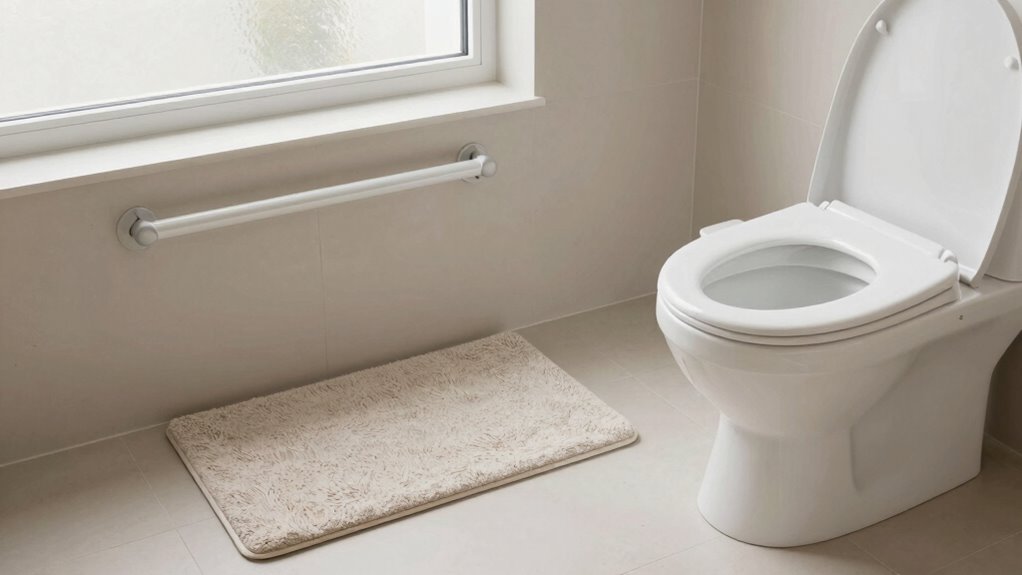

The most important bathroom transfer habit to prevent falls is practicing proper techniques consistently. This means moving slowly, using grab bars, and maintaining steady footing during each transfer. Regularly practicing these habits builds muscle memory and confidence, helping you stay balanced and safe. Managing medications and installing safety features like textured flooring can further reduce risks. Keep at it, and you’ll discover more ways to make your bathroom safer for every step you take.
Key Takeaways
- Always lock your wheelchair or seat securely before transferring to prevent sudden movements.
- Use proper transfer techniques, such as pivoting and maintaining three points of contact.
- Practice and reinforce safe transfer habits regularly to build muscle memory and confidence.
- Ensure grab bars are properly installed and used during transfers for added stability.
- Remove obstacles and ensure a clear, non-slip path to minimize fall risks during transfers.

Falls in the bathroom are a common hazard, especially for seniors and those with mobility issues. You might not realize how small actions can make a big difference in preventing falls. One essential habit involves how you transfer onto and off the toilet or shower seat. By focusing on this transfer technique, you can considerably reduce your risk of falling. Properly managing your medication is also necessary because side effects like dizziness or drowsiness can impair your balance during transfers. Combining good medication management with safe transfer habits creates a powerful defense against bathroom falls. Using security systems that include motion detection alerts can also help monitor bathroom safety, especially during nighttime transfers. Additionally, practicing safe transfer techniques regularly can build muscle memory and improve your confidence during these movements. Incorporating home modifications like installing grab bars and textured flooring further enhances safety and helps prevent falls.
Frequently Asked Questions
How Often Should I Practice This Bathroom Transfer Habit?
You should practice this bathroom transfer habit daily to build timing consistency and guarantee safety. Consistent practice helps you develop muscle memory, reducing fall risks. As you become more comfortable, feel free to adjust your routine to fit your needs better, but keep practicing regularly. Making it a daily habit ensures you stay confident and safe, especially as your balance and strength change over time.
Is This Habit Suitable for All Age Groups?
You bet this habit can work for all age groups, but you need to tailor it using age-specific strategies and developmental considerations. Young children might need more supervision and simplified steps, while older adults should focus on stability and strength. Remember, what’s safe for one age group might not suit another, so adjust your approach accordingly. Think of it as fitting the right shoe—it has to match perfectly.
What Are Common Mistakes to Avoid During Transfer?
When transferring, avoid common mistakes like rushing or using a safe grip that’s too weak, which can lead to falls. Make sure you have a clear pathway free of obstacles, and always test your footing before moving. Don’t forget to support yourself with sturdy surfaces, and never ignore discomfort or instability. Staying mindful of these mistakes helps prevent falls and keeps your transfer safe and steady.
Are There Any Recommended Assistive Devices?
When it comes to assistive devices, safety equipment is your best friend. You should consider grab bars, transfer benches, or raised toilet seats to help maintain stability during bathroom transfers. These devices act as a safety net, making your movements more secure and preventing falls. Using the right assistive devices not only boosts your confidence but also keeps you safe—it’s better to be safe than sorry.
How Can I Motivate Myself to Adopt This Habit Consistently?
To motivate yourself to adopt this bathroom transfer habit consistently, use mental strategies like visualizing the benefits and setting small, achievable goals. Reinforce the habit by tracking your progress daily and rewarding yourself for each milestone. Remember, habit reinforcement builds confidence and makes the routine automatic over time. Focus on the positive impact it has on your safety and independence, which will keep you committed to practicing regularly.
Conclusion
By adopting this simple bathroom transfer habit, you’re not just preventing falls—you’re protecting independence, preserving confidence, and ensuring safety. Each careful step, each deliberate move, reinforces your strength, sharpens your awareness, and fosters resilience. Remember, safety isn’t a one-time effort; it’s a continuous practice. Embrace this habit daily, and you’ll build a foundation of security that empowers you to face each moment with confidence, clarity, and control.