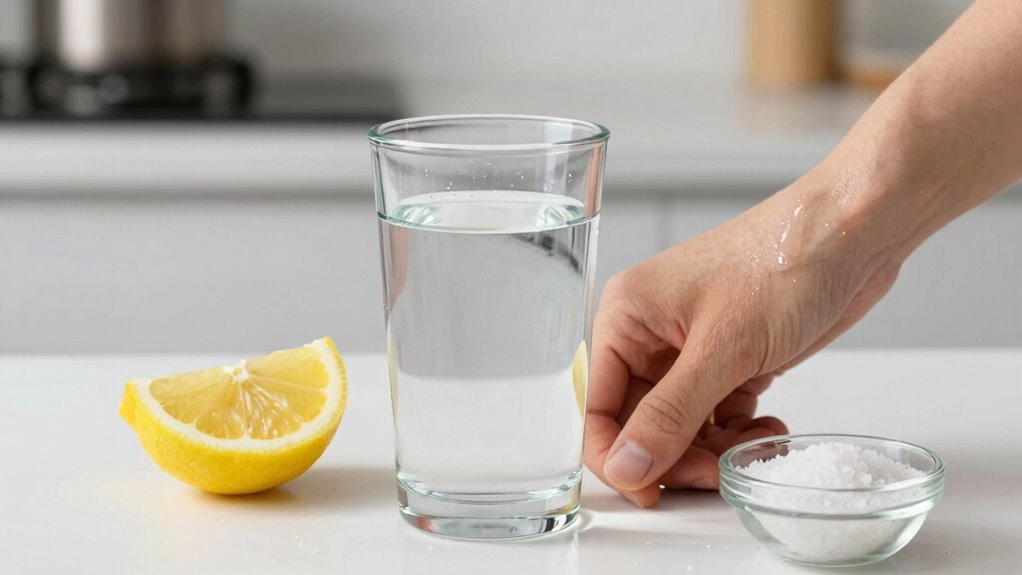

To spot early signs of dehydration at home, pay attention to subtle cues like muscle cramps, dizziness, and skin that stays pinched longer than two seconds—this indicates decreased elasticity. Also, notice if you feel weak or lightheaded, which can be clues before more serious symptoms appear. Monitoring these signs helps you act quickly and stay hydrated. If you want to learn more about staying ahead of dehydration, you’ll find helpful tips below.
Key Takeaways
- Check for muscle cramps, weakness, or dizziness, which are early symptoms of dehydration.
- Perform a skin elasticity test by pinching the skin on your hand or forearm; slow return indicates dehydration.
- Monitor your fluid intake to ensure proper hydration, especially during hot weather or illness.
- Notice if your skin appears less supple or sagging, signaling possible dehydration.
- Be alert to subtle cues like fatigue or lightheadedness, which may precede more obvious dehydration signs.
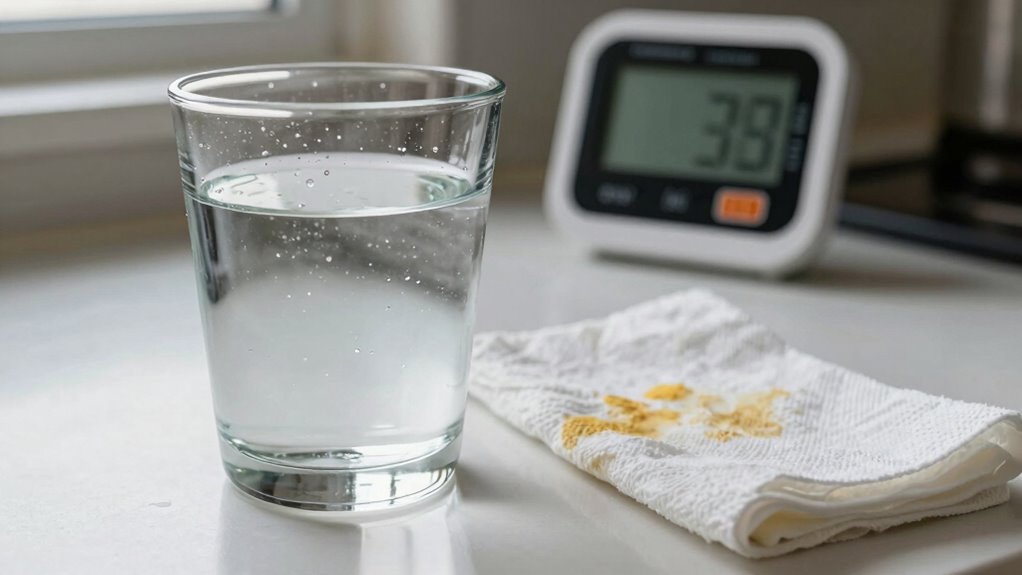
Dehydration can sneak up on you before you realize it, especially when you’re busy or neglecting your usual fluid intake. At first, you might not notice the warning signs, but paying attention to your body can help you catch dehydration early. One of the key indicators is an electrolyte imbalance, which occurs when your body loses more fluids than electrolytes—like sodium, potassium, and chloride—disrupting your body’s normal functions. When this happens, you may feel muscle cramps, weakness, or dizziness, even before experiencing more obvious symptoms. Recognizing these subtle cues allows you to rehydrate promptly, preventing more serious health issues.
Another early sign to look out for is changes in your skin’s elasticity. When you’re dehydrated, your skin often becomes less supple and more prone to sagging. You can test this by gently pinching the skin on your hand or forearm; if it takes longer than a couple of seconds to return to normal, it’s a sign that your body needs more fluids. This skin elasticity test is a simple at-home check that can alert you to dehydration before it worsens. Keep in mind that skin changes can also be influenced by age or skin health, so consider other symptoms alongside this test. Additionally, maintaining proper hydration supports overall body functions, including skin health and electrolyte balance. Drinking enough fluids is essential for preventing dehydration, especially during hot weather or illness. Proper hydration is also crucial for maintaining your electrolyte levels, which play a vital role in your body’s overall balance and function. Moreover, paying attention to early signs like these can help you avoid dehydration complications that might require medical attention if left unchecked.
at-home skin elasticity test kit
As an affiliate, we earn on qualifying purchases.
As an affiliate, we earn on qualifying purchases.
Frequently Asked Questions
Can Dehydration Occur Even if I Don’T Feel Thirsty?
Yes, dehydration can occur even if you don’t feel thirsty. The thirst sensation isn’t always a reliable indicator, especially if your body is already dehydrated. You might not feel the urge to drink, but your body still needs fluids. To avoid dehydration, make certain of consistent fluid intake throughout the day, even if you don’t feel thirsty. Keep an eye on other signs like dry mouth or dark urine to stay properly hydrated.
Are Certain Age Groups More Susceptible to Dehydration Signs?
You’re more vulnerable to dehydration signs if you’re over 65 or under 5, as age-related susceptibility increases. Studies show older adults are twice as likely to experience dehydration symptoms due to decreased thirst response and kidney function. Vulnerable populations, like infants and seniors, need extra care to recognize early signs, such as dry mouth or dizziness, because dehydration can develop faster and be more serious in these groups.
How Does Dehydration Affect Mental Clarity and Concentration?
Dehydration impacts your mental clarity and concentration by reducing your brain’s hydration levels, leading to difficulty focusing, confusion, and slower thinking. When you’re aware of hydration, you can recognize early signs of dehydration that affect cognitive effects. Staying properly hydrated boosts your alertness and sharpness, helping you perform better mentally. Prioritizing hydration awareness ensures you maintain ideal cognitive function and avoid the foggy, distracted feelings caused by dehydration.
Can Dehydration Be Mistaken for Other Medical Conditions?
Yes, dehydration can be mistaken for other medical conditions because its symptoms like fatigue, dizziness, and confusion overlap with issues such as electrolyte imbalance or kidney problems. When you’re dehydrated, your kidney function may decline, causing similar signs. It’s important to monitor your hydration and seek medical advice if symptoms persist, as proper diagnosis guarantees you get the right treatment and prevents complications.
What Are the Long-Term Health Risks of Repeated Dehydration?
Repeated dehydration can lead to serious long-term health risks like electrolyte imbalance and kidney damage. You might not notice the connection until symptoms worsen, but consistently neglecting hydration strains your kidneys and disrupts your body’s electrolyte levels. Over time, this can cause chronic health issues, including kidney stones or impaired kidney function. Staying well-hydrated helps prevent these risks and keeps your body balanced and healthy.
As an affiliate, we earn on qualifying purchases.
Conclusion
Pay attention to the early signs of dehydration, like dry mouth or dark urine, just as you would notice a small leak before it becomes a flood. Recognizing these subtle cues at home can prevent serious health issues down the line. Don’t wait until you’re feeling dizzy or exhausted—catch dehydration early, like spotting a tiny crack before it causes a collapse. Staying aware today keeps you healthier tomorrow.
As an affiliate, we earn on qualifying purchases.
reusable water bottle with hydration reminders
As an affiliate, we earn on qualifying purchases.
As an affiliate, we earn on qualifying purchases.