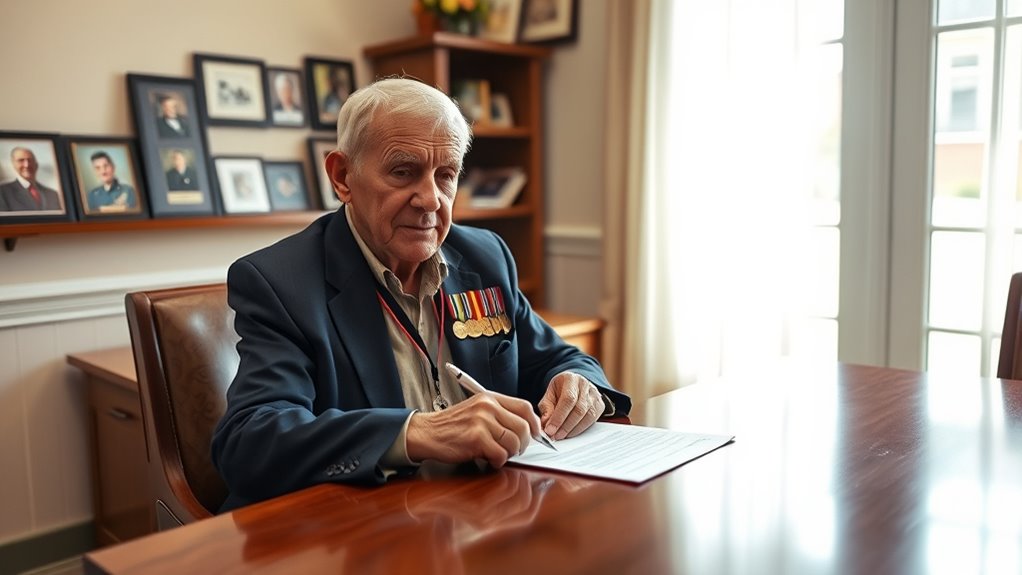

If you’re a veteran or caregiver, VA’s Aid & Attendance benefits can provide extra financial support for senior care costs like in-home services or assisted living. To qualify, you’ll need to meet specific income, net worth, and medical criteria, showing dependence on help with daily activities. Properly managing the application process and understanding income assessments is key. Keep exploring to discover how these benefits can make a real difference in your loved one’s care.

Turn quiet afternoons into listening time
- Thousands of audiobooks, podcasts and originals
- Listen on your phone, tablet or Echo — also offline
- Cancel anytime
Key Takeaways
- The Aid & Attendance program provides financial support for senior veterans needing help with daily activities.
- Qualification requires meeting income, net worth, and medical criteria demonstrating care needs.
- Proper understanding of the VA income assessment process improves chances of benefit approval.
- Veterans and caregivers can access support programs offering training, resources, and stipends.
- Applying involves documenting medical need, income, and service-connected disabilities to qualify effectively.

If you’re a senior veteran or caring for one, understanding the VA benefits available for senior care can make a substantial difference in your quality of life. One essential benefit is the Aid & Attendance (A&A) program, which offers additional financial support to help cover the costs of in-home care, assisted living, or nursing home services. To qualify, you need to meet specific income, net worth, and medical criteria, but the key is demonstrating that you require help with daily activities like bathing, dressing, or eating. If approved, this benefit can provide a considerable monthly stipend that eases financial burdens and improves access to quality care.
A common concern among veterans and their families is the intersection of military pension and VA benefits. Your military pension is separate from VA aid programs, but it plays a role in qualifying for certain benefits, including Aid & Attendance. When applying, it’s important to understand how your income, including your pension, affects your eligibility. The VA considers all income sources in its financial assessment, so knowing where you stand helps you prepare your application properly. If your income exceeds the VA’s limits, you might still qualify if you have substantial medical expenses or if you’re a wartime veteran with a service-connected disability. This is where understanding the nuances of the VA’s income calculations becomes essential. Additionally, studies suggest that understanding the VA’s income assessment process can significantly improve your chances of approval.
Caregiver support is another critical aspect of VA benefits that many seniors overlook. The VA offers programs like the Program of Comprehensive Assistance for Family Caregivers, which provides training, resources, and stipends to those caring for eligible veterans. If you’re a caregiver, this support can ease your responsibilities and help you provide better care. For seniors, having a dedicated caregiver can markedly improve quality of life, and the VA’s caregiver programs recognize this by offering financial and emotional support. Applying for these programs involves documentation of your relationship to the veteran and proof of the veteran’s service-connected disabilities or medical needs. Once approved, you gain access to resources that can lessen your caregiving burden and ensure your loved one receives the best possible care.
in-home care assistance for seniors
As an affiliate, we earn on qualifying purchases.
As an affiliate, we earn on qualifying purchases.
Frequently Asked Questions
Can I Qualify if I Only Served During Wartime?
Yes, you can qualify if you only served during wartime. The VA’s military service requirements for Aid & Attendance benefits focus on wartime service criteria, which typically include serving active duty during a recognized wartime period. If your service meets these criteria, you might be eligible, even without other service details. Make sure to review your service records and confirm your eligibility based on the specific wartime dates and requirements.
Are Spouses Eligible for Veterans’ Aid & Attendance Benefits?
You’d be amazed at how many spouses qualify for veterans’ aid & attendance benefits, even if they weren’t the ones who served. Spouse eligibility hinges on specific benefit criteria, including marriage duration and the veteran’s service record. If your spouse meets these vital requirements, they can access essential senior care support. Don’t assume you’re ineligible—check the detailed criteria and explore your options for financial assistance and care benefits today.
How Long Does the Application Process Typically Take?
The application process for veterans’ aid & attendance benefits typically takes about 3 to 8 months, depending on various factors. You should expect the processing duration to involve gathering supporting documents, submitting your application, and waiting for VA review. To speed things up, make certain your paperwork is complete and accurate. Keep track of your application status and follow up if needed, so you stay informed throughout the entire application timeline.
Is This Benefit Available for Veterans Living Abroad?
Like a lighthouse guiding ships through stormy seas, veterans living abroad can access certain international benefits, but expatriate eligibility for Aid & Attendance is limited. You may qualify if you’re a U.S. veteran residing outside the country and meet specific criteria. However, the benefit’s availability varies by situation and location. Check with the VA or a qualified representative to confirm your eligibility and verify you don’t miss this valuable support.
What Documentation Is Required to Apply for Benefits?
To apply for benefits, you need to provide proof of service, such as your discharge papers (DD-214), and financial records that show your income and assets. Gather documents like bank statements, pension info, and proof of expenses related to senior care. Make certain all records are up-to-date and accurate, as they help verify your eligibility and ensure a smooth application process.
VA Aid & Attendance benefit application guide
As an affiliate, we earn on qualifying purchases.
As an affiliate, we earn on qualifying purchases.
Conclusion
Exploring VA benefits for senior care can feel like charting a course through uncharted waters, but you don’t have to do it alone. With the right guidance, you’ll find the support you deserve, making your journey smoother and more secure. Remember, these benefits are your lighthouse in the fog—shining a bright path toward peace of mind and dignity in your golden years. Reach out, apply, and let your future be guided by the help you’ve earned.
medical alert systems for seniors
As an affiliate, we earn on qualifying purchases.
As an affiliate, we earn on qualifying purchases.
caregiver support resources for veterans
As an affiliate, we earn on qualifying purchases.
As an affiliate, we earn on qualifying purchases.
Fall Picks
fall essentials
As an affiliate, we earn on qualifying purchases.