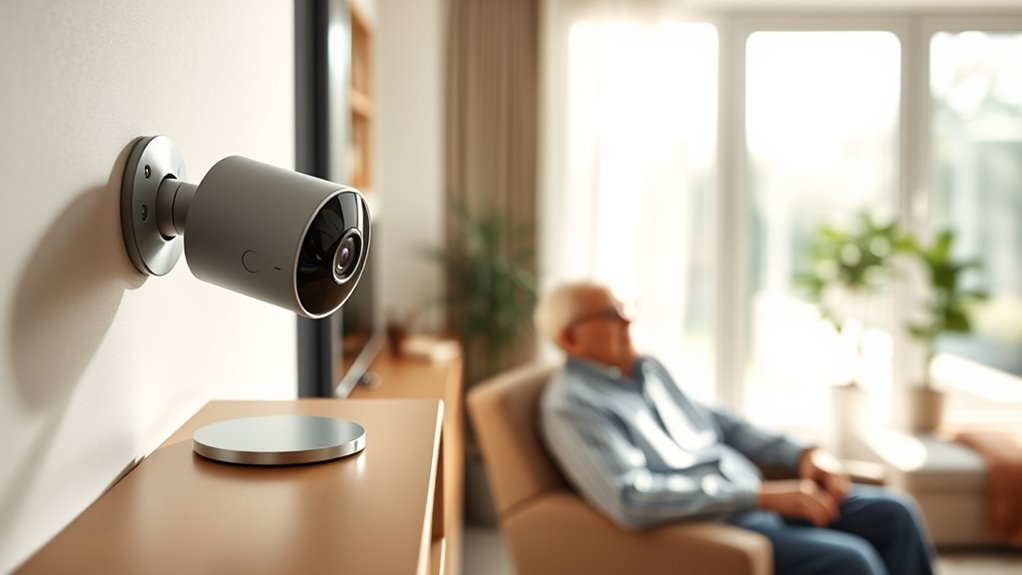

Using home cameras to monitor your senior offers peace of mind by quickly spotting emergencies or falls and ensuring safety in shared spaces. However, it can invade privacy if not handled carefully, and technical issues or maintenance might pose challenges. Open communication about camera use helps build trust, and balancing safety with dignity is key. To learn more about how to navigate these pros and cons effectively, continue exploring the options and best practices.
Key Takeaways
- Cameras in shared areas can enhance safety while respecting senior privacy better than private spaces.
- Monitoring provides peace of mind and quick emergency response but may raise privacy concerns and trust issues.
- Technical challenges like setup, maintenance, and connectivity require planning and possibly professional support.
- Regular updates and network security are essential to protect against hacking and ensure system reliability.
- Open communication with seniors about camera use helps balance safety benefits with dignity and privacy considerations.
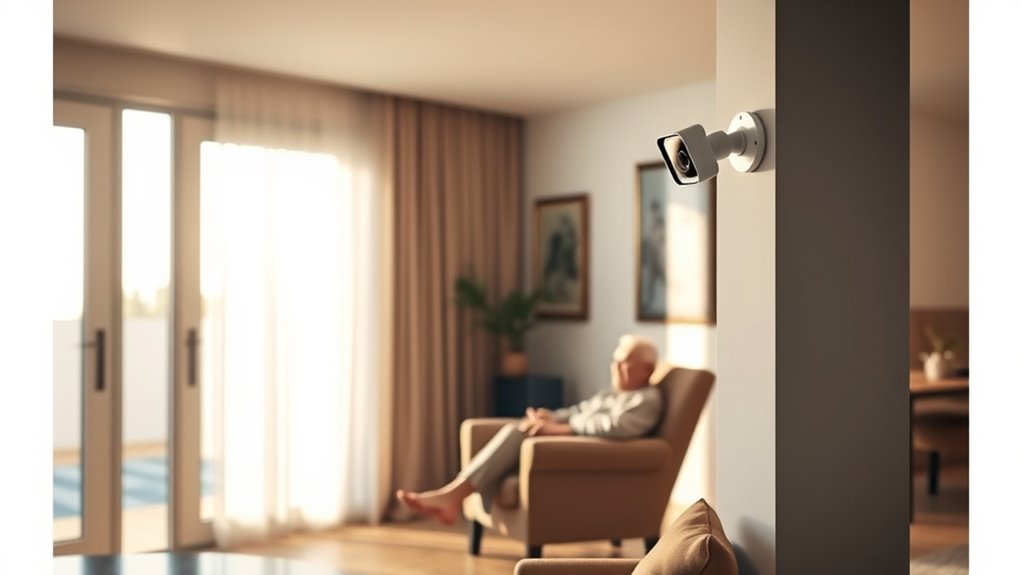
Are home cameras the right solution for monitoring seniors? That’s a question many families ask when considering ways to guarantee their loved ones’ safety. While these devices can provide peace of mind, they also raise important issues like privacy concerns and technical challenges. You want to protect your senior, but you also need to respect their independence and dignity. It’s vital to weigh these factors carefully before installing cameras in their home.
Privacy concerns are perhaps the most significant obstacle when it comes to surveillance. Seniors might feel uncomfortable or invaded if they believe their privacy is being compromised. Cameras placed in private spaces like bedrooms or bathrooms can feel intrusive and erode trust. To address this, you should focus on monitoring common areas such as living rooms or kitchens, where your loved one might need help or reassurance without feeling watched constantly. Open communication is key—explaining why you want the cameras and setting boundaries can help your senior feel more secure rather than surveilled.
Alongside privacy issues, technical challenges can complicate the use of home cameras. Not everyone is tech-savvy, and installing or managing these devices could prove difficult. Troubleshooting connectivity issues, updating software, or ensuring the cameras work reliably requires some technical know-how. If the system isn’t set up correctly, you may experience blind spots or false alarms, which can cause unnecessary stress or lead to missed emergencies. Additionally, power failures or internet outages can disable the cameras when they’re needed most, making it vital to choose reliable equipment and have contingency plans in place.
Furthermore, you have to consider ongoing maintenance. Cameras need regular updates to stay secure from hacking or malware, which could compromise your loved one’s safety and privacy. Securing the network with strong passwords and encryption is essential, but it requires awareness and effort on your part. The technical complexity can be intimidating, especially if you’re unfamiliar with digital devices. You might need to seek professional help for installation or ongoing support, which adds to the cost and planning. Recognizing that home security technology is continually evolving can help you stay informed about the latest solutions and best practices.
Frequently Asked Questions
How Secure Are the Data Recordings From Senior Home Cameras?
The data recordings from senior home cameras are generally secure if they use strong data encryption and storage security measures. You should verify the cameras you choose have up-to-date encryption protocols to protect your footage from hackers. Also, verify the storage security, whether it’s cloud-based or local, to prevent unauthorized access. Regularly updating your device’s software enhances security, giving you peace of mind that your senior’s privacy is safeguarded.
Can Cameras Be Discreetly Installed Without Senior Residents Noticing?
Yes, you can discreetly install cameras to enable unnoticed monitoring of your senior. Use small, hidden devices or place cameras behind objects like picture frames or vents to blend seamlessly into the environment. This way, your loved one remains unaware of the surveillance, allowing you to ensure their safety without causing discomfort. Just make sure to follow legal guidelines and respect their privacy while setting up covert installations.
What Legal Considerations Exist for Monitoring Seniors With Cameras?
Imagine walking through a legal maze where every turn matters. You must guarantee legal compliance by understanding consent requirements, which means your senior should agree to being monitored unless they can’t give consent. Laws vary by jurisdiction, so it’s essential to check local regulations. Always prioritize transparency, respect privacy, and document consent to avoid legal pitfalls and maintain trust while using cameras to monitor your senior.
How Do Cameras Impact the Privacy and Dignity of Seniors?
Cameras can affect your senior’s privacy and dignity by creating consent challenges and emotional impacts. You might feel uncomfortable knowing they’re constantly monitored, which could lead to feelings of mistrust or embarrassment. To minimize this, involve your loved one in the decision, explain the purpose, and respect their comfort levels. Honest communication helps preserve their dignity while ensuring safety, balancing monitoring with respect for their independence.
What Are the Best Practices for Maintaining Camera Systems?
Think of your camera system as a garden; it needs regular tending. To keep it in top shape, carefully select discreet camera placement that respects privacy, and establish maintenance routines like updating software and checking connections. Regularly clean lenses and verify power sources. These practices guarantee your home cameras function effectively, providing peace of mind while respecting your senior’s dignity and privacy.
Conclusion
Ultimately, home cameras are like silent guardians watching over your loved ones, offering reassurance and security. They serve as a lighthouse in life’s fog, guiding you through uncertainty and providing peace of mind. While they can illuminate concerns, they also remind us of the delicate balance between safety and privacy. By choosing to use these tools thoughtfully, you guarantee your senior’s independence shines brightly, even when you’re not physically there to keep watch.