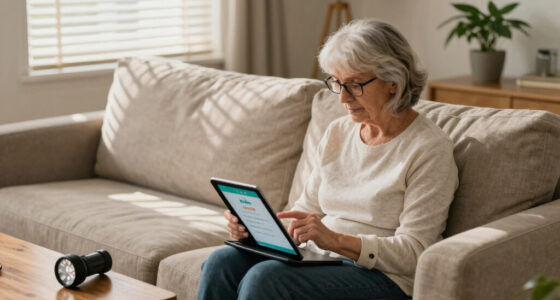
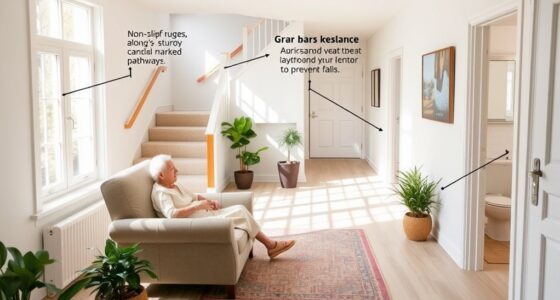
When your senior loved one struggles with stairs, start by observing their behavior for signs of difficulty like hesitation, unsteady gait, or complaints of pain or dizziness. Make immediate safety modifications such as installing sturdy handrails on both sides, adding slip-resistant treads, and improving lighting. Consider assistive devices like stairlifts if needed. Addressing these issues can help prevent falls and rebuild confidence. To learn more about effective safety solutions, continue exploring ways to make stairs safer and support your loved one.

Turn quiet afternoons into listening time
- Thousands of audiobooks, podcasts and originals
- Listen on your phone, tablet or Echo — also offline
- Cancel anytime
Key Takeaways
- Conduct a thorough safety assessment of the stairs, checking for hazards, lighting, and handrail stability.
- Install or upgrade handrails on both sides, ensuring they are sturdy, continuous, and properly positioned.
- Add slip-resistant surfaces such as rubber treads or anti-slip tape for better traction.
- Improve lighting with bright, evenly distributed fixtures and automatic sensors to enhance visibility.
- Consider assistive devices like stairlifts, grab bars, or ramps tailored to the senior’s mobility needs.
As an affiliate, we earn on qualifying purchases.
Recognizing Signs of Stairway Difficulty in Seniors

Recognizing signs of stairway difficulty in seniors is essential for preventing falls and maintaining safety at home. Watch for clues like hesitation or frequent pauses before climbing stairs, which may indicate balance issues or fear of falling. Notice if they hold onto handrails tightly or seem uncertain on each step, suggesting muscle weakness or impaired vision. Pay attention to uneven gait, lack of confidence, or overt signs of fatigue after ascending or descending. If your loved one misses or misjudges steps, trips, or appears nervous on stairs, these are clear warning signs. Additionally, look for complaints of joint pain, dizziness, or reduced flexibility. Proper lighting and contrast can significantly improve visibility on stairs, reducing the risk of missteps. Furthermore, regularly assessing their mobility and ensuring safe stair design is crucial in creating an accessible environment. Addressing balance impairments can help you take proactive measures to support their safety. Incorporating assistive devices such as stair rails or treads can also provide additional stability and reassurance. A comprehensive approach that includes home modifications and regular health check-ups ensures a safer living space. Addressing these signs early can help you implement safety measures before a fall occurs.
non-slip stair treads for elderly
As an affiliate, we earn on qualifying purchases.
As an affiliate, we earn on qualifying purchases.
Assessing the Safety of Your Existing Staircase

Evaluating the safety of your existing staircase is a crucial step in preventing falls and ensuring your loved ones can navigate their home confidently. Start by inspecting each step for damage, such as cracks, loose treads, or uneven surfaces, and repair or replace any issues. Check that handrails are sturdy, securely attached, and extend the full length of the staircase on both sides. Ensure the steps have a consistent rise and run, with no missing or damaged parts. Assess the lighting—make sure it’s bright enough and switches are conveniently located. Clear clutter or loose rugs that could trip someone. Finally, examine the overall staircase design for steepness or narrow steps that could increase fall risk. Incorporating stair safety solutions like non-slip treads or additional handrails can further improve safety. Utilizing protective measures such as installing grab bars or stair lifts can provide extra support. Addressing these factors makes your staircase safer immediately, especially when considering the home environment and how it can be optimized for senior safety. For added security, consider rug padding or securing existing carpets to prevent slipping and tripping hazards.
As an affiliate, we earn on qualifying purchases.
Essential Home Modifications for Safer Stairs
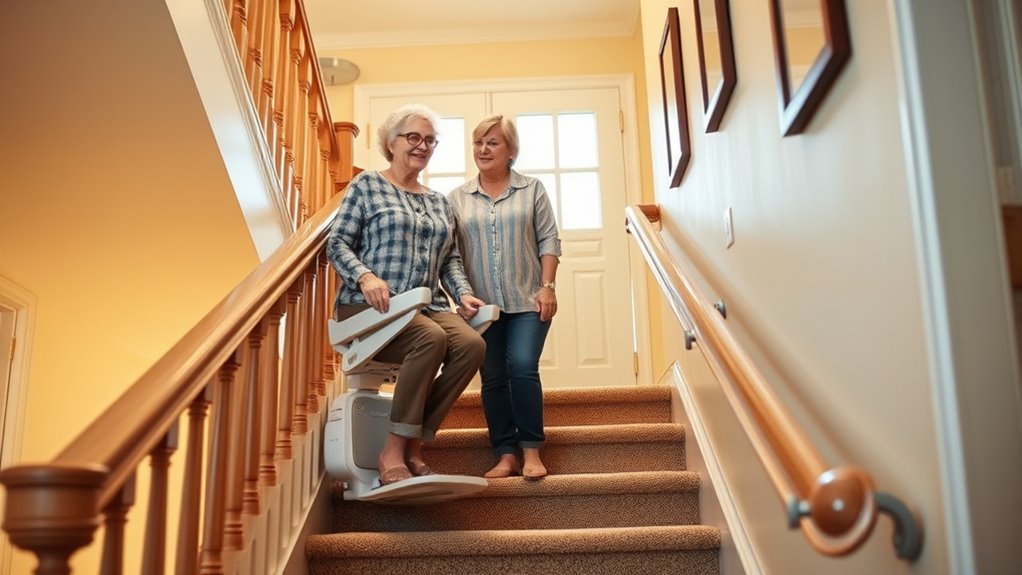
You can make your stairs safer by upgrading handrails to sturdy, properly positioned supports. Adding slip-resistant surfaces like rubber treads or anti-slip tape can considerably reduce falls. These simple modifications help create a safer environment and give you peace of mind. Incorporating digital revolutions such as smart safety devices can further enhance stair safety and monitor movement. Using load‑planning tools can also ensure that your modifications support your loved one’s specific needs effectively. Additionally, consulting with professionals experienced in Gold IRA markets can provide insights into selecting durable and reliable safety upgrades for long-term use. Understanding thermal behavior of materials can assist in choosing the most effective non-slip and safety features for your stairs, ensuring they withstand daily wear and environmental factors. Incorporating proper maintenance practices can prolong the effectiveness of these modifications and ensure ongoing safety.
Handrail Enhancements
Have you considered how a well-installed handrail can dramatically improve stair safety for seniors? Proper handrail enhancements provide essential support, helping prevent falls and boosting confidence. To optimize safety, consider these key features:
- Installing sturdy handrails on both sides of the staircase at 30-36 inches height
- Using smooth, graspable materials like wood or metal for secure gripping
- Ensuring continuous handrails extend beyond top and bottom steps for stability
- Adding non-slip brackets or supports for extra reinforcement
- Positioning handrails close to the wall to minimize difficulty in gripping
- Consulting with architectural solutions professionals to ensure proper installation and compliance with safety standards. Additionally, selecting appropriate materials can enhance durability and safety over time. Incorporating the right body measurements and materials for handrail components can further ensure a perfect fit and longevity.
These upgrades create a reliable support system, reducing fall risk and promoting independence. Well-designed handrails are a simple yet crucial safety feature that can make stairs safer and more accessible for your loved one, especially when considering home safety adaptations.
Slip-Resistant Surfaces
Adding slip-resistant surfaces to your stairs can considerably reduce fall risks by providing better traction and stability. You can achieve this by installing rubber stair treads, anti-slip tape, or low-pile carpeting. These modifications create a textured surface that helps prevent slips, especially on smooth or polished stairs. Make sure the materials are securely attached and extend fully across each step to avoid tripping hazards. Regularly check and replace worn or damaged slip-resistant features to maintain effectiveness. Incorporating testing methods to evaluate slip-resistance can help ensure your modifications are effective over time. Combining these measures with proper lighting and handrails enhances safety further. For optimal results, consider integrating smart home safety features such as sensor-activated lighting or voice-activated alerts to further support your senior loved one’s safety on stairs. By prioritizing slip-resistant surfaces, you help your senior loved one navigate stairs confidently, reducing the chance of dangerous falls and promoting independence in their home.
As an affiliate, we earn on qualifying purchases.
The Role of Handrails and How to Install Them Properly
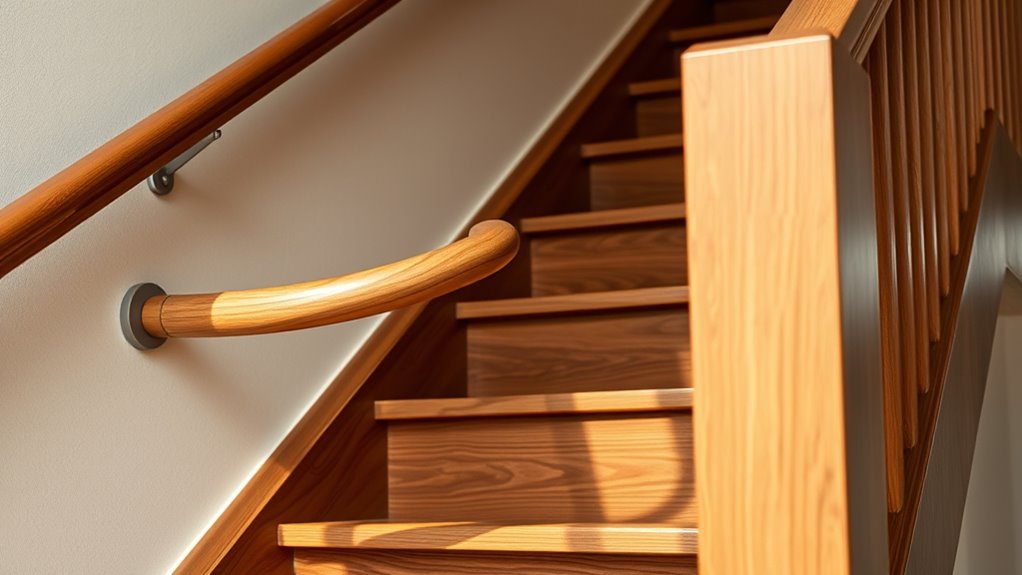
Proper handrail placement is key to maximizing stability and safety on stairs. You should install handrails at a height of 30 to 36 inches, ensuring they’re easy to grip from any step. Using secure installation techniques guarantees the handrails won’t loosen or fall, providing reliable support when needed. Additionally, energetic alignment during installation can enhance the stability and effectiveness of the handrails. To further ensure safety, verify that the handrails are properly registered with relevant safety standards and local building codes. Implementing affiliate disclosure practices can also promote transparency with users about safety product recommendations. Ensuring that handrails are properly anchored with the right hardware and techniques is essential for long-term safety and stability. Staying informed about security measures can help protect your home from potential safety hazards and ensure your loved ones remain safe.
Optimal Handrail Placement
Effective handrail placement is vital for preventing falls on stairs, especially for seniors who may have balance or mobility issues. Proper positioning ensures safety and provides reliable support during use. Ideally, install handrails on both sides of the staircase at a height of 34 to 38 inches from the stair tread nosing. They should extend beyond the top and bottom steps for stability. To optimize safety, consider these factors:
- Position handrails within easy reach for all users
- Ensure they run the full length of the staircase
- Use sturdy materials that can support significant weight
- Attach handrails securely to wall studs or anchors
- Avoid obstructions that could interfere with grip or movement
Correct placement enhances stability, reduces fall risk, and encourages confidence when navigating stairs.
Secure Installation Techniques
Securely installing handrails is essential for guaranteeing they provide reliable support and prevent falls on stairs. First, choose sturdy materials like metal or solid wood, and position the handrail between 30 to 36 inches above the stair tread. Use a level to ensure proper alignment and mark the mounting points accurately. Drill into wall studs or use appropriate anchors if attaching to drywall—never rely solely on drywall anchors. Secure the brackets tightly to prevent wobbling, and ensure the handrail runs continuously along the entire length of the staircase, including landings. Check that all hardware is tight and the handrail feels stable under pressure. Proper installation not only offers safety but also encourages consistent use by your senior loved one.
Choosing and Installing Non-Slip Treads and Surfaces
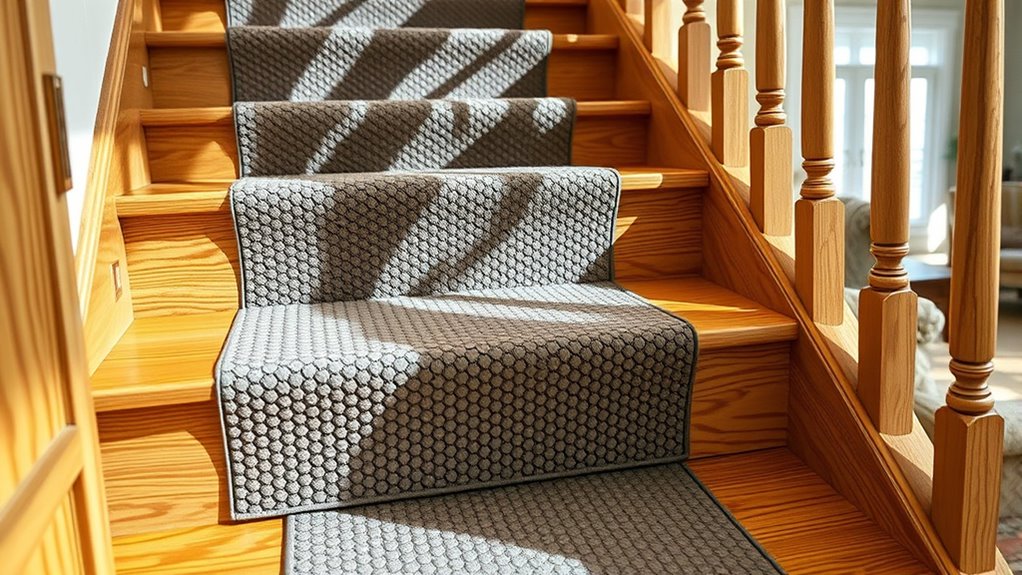
When selecting non-slip treads and surfaces for stairs, it’s important to prioritize materials that provide reliable traction and durability. You want surfaces that resist wear and prevent slips, especially for seniors with limited mobility. Consider these options:
- Rubber stair treads, offering excellent grip and cushioning.
- Anti-slip tape, easy to apply and suitable for existing steps.
- Low-pile, tightly woven carpet, providing traction without tripping hazards.
- Textured vinyl surfaces, durable and slip-resistant.
- Durable adhesive-backed pads, adding grip to smooth or polished stairs.
Ensure the treads are securely attached, flush with the step surface, and regularly maintained. Proper installation and choice of high-quality materials can considerably reduce fall risks and improve safety on stairs.
Improving Lighting to Prevent Accidents

Improving lighting on stairs is a crucial step in preventing accidents among seniors. Proper illumination helps you clearly see each step, reducing missteps and falls. Consider installing bright, evenly distributed lighting that covers the entire staircase without creating glare. Use motion sensors or switch timers for convenience, ensuring lights turn on automatically when needed. Replace dim bulbs with higher wattage or LED lights for consistent brightness. Keep the area free of shadows, and add lighting along handrails or wall-mounted fixtures for better visibility. Regularly check and maintain lights to prevent flickering or burnout. Making these adjustments makes stairs safer, giving your loved one confidence and reducing fall risks.
| Light Type | Placement | Benefits |
|---|---|---|
| Overhead Lights | Ceiling fixtures at top and bottom | Bright, uniform illumination |
| Wall Sconces | Along stairwell walls | Eliminates shadows |
| Motion Sensors | Near stairs or switch areas | Automatic lighting for safety |
| LED Bulbs | Bright, energy-efficient bulbs | Long-lasting, high brightness |
| Handrail Lights | Under or beside handrails | Enhanced visibility along steps |
Exploring Assistive Devices: Stairlifts and Alternatives

Assistive devices like stairlifts offer practical solutions to help seniors safely navigate multi-level homes. They eliminate the need to climb stairs, reducing fall risk and conserving energy. When choosing a stairlift or alternative, consider factors like your home’s layout, mobility needs, and budget.
Assistive devices like stairlifts help seniors navigate stairs safely, reducing fall risk and conserving energy.
Options include:
- Stairlifts: Motorized chairs that run along a rail mounted on the stairs.
- Vertical platform lifts: Suitable for wheelchair users, offering access to different levels.
- Stair tread lifts: Smaller, portable options that attach directly to stairs.
- Handrails and grab bars: Enhance stability and support on existing stairs.
- Home modifications: Widening stairways or installing ramps as additional safety measures.
Exploring these options helps you find effective, tailored solutions for your loved one’s safety.
Overcoming Barriers to Implementing Safety Changes
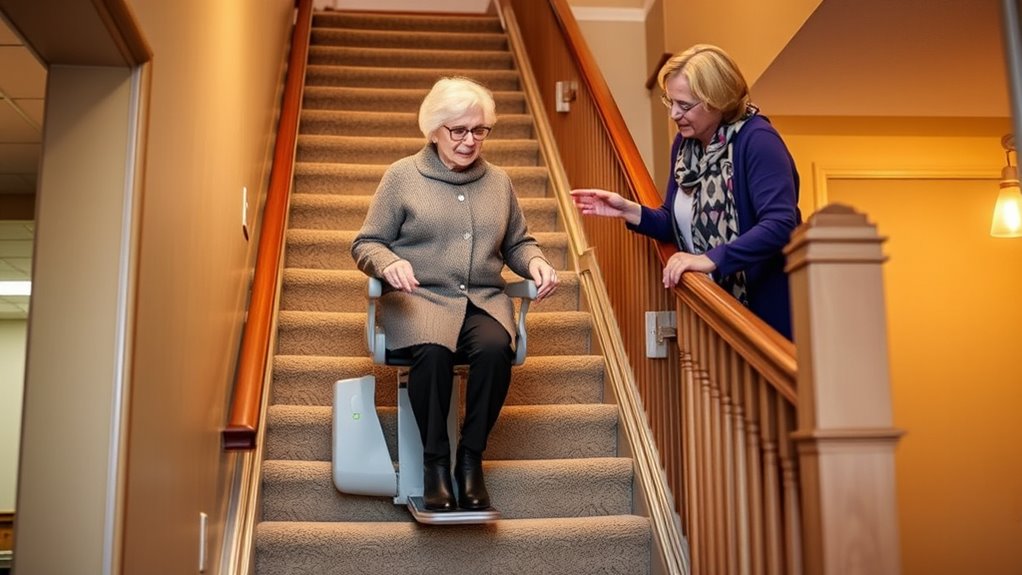
Implementing safety changes to reduce stair fall risks often faces obstacles, despite the clear benefits. You might worry about costs, believe modifications will make your home less appealing, or feel unsure how to start. Some seniors resist change due to pride or fear of losing independence. To overcome these barriers, educate yourself and your loved one about the risks and benefits. Share success stories and involve trusted healthcare professionals to endorse safety updates. Emphasize that modifications can be low-cost and minimally disruptive. Address concerns empathetically, highlighting how these changes promote independence and safety. Start small with simple fixes like improved lighting or handrails. Patience and clear communication are key to overcoming resistance and creating a safer environment.
Encouraging Ongoing Safety Practices and Support
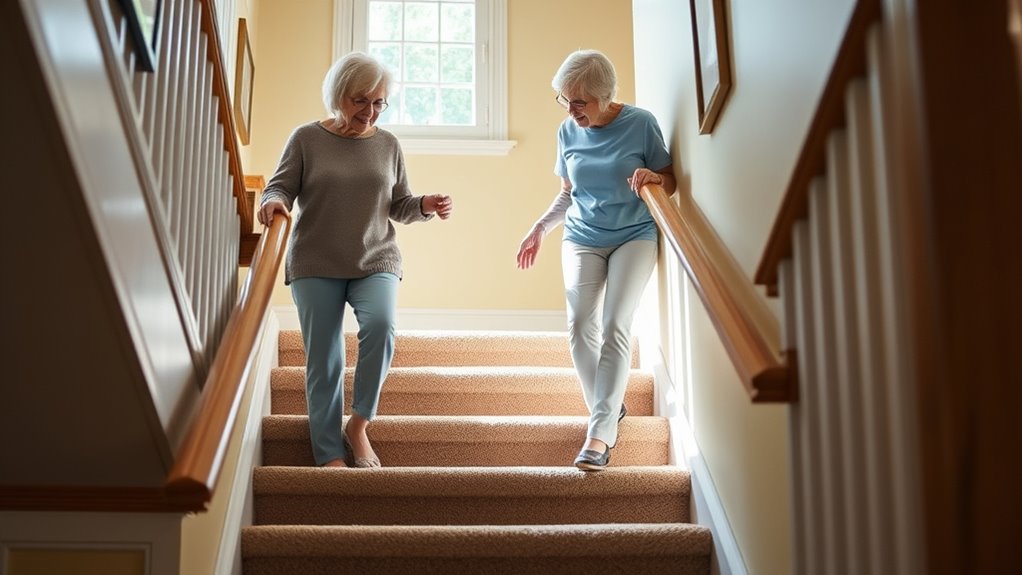
Encouraging ongoing safety practices is essential for maintaining a secure environment for seniors on stairs. To support this, you should foster a proactive mindset and regular check-ins. Reinforce the importance of safe habits and adapt strategies as needs change. Encourage your loved one to participate in safety routines, like inspecting stairs or maintaining lighting. Consider these ongoing support methods:
- Schedule periodic home safety assessments and updates
- Remind them to wear appropriate footwear daily
- Promote consistent use of handrails and other safety devices
- Educate about recognizing hazards and reporting issues promptly
- Provide encouragement and positive reinforcement for safety efforts
Frequently Asked Questions
How Can I Tell if My Senior Is at High Risk for Stair Falls?
You can tell if your senior is at high risk for stair falls by watching for signs like difficulty with balance, muscle weakness, or joint pain. Check if they have vision problems or use medications that cause dizziness. Also, assess their home environment—narrow, uneven stairs, poor lighting, or clutter can increase risk. If they hesitate or seem unsteady, it’s time to contemplate safety modifications or assistive devices.
Are There Affordable Options for Home Modifications to Improve Stair Safety?
Did you know that nearly 50% of stair-related injuries could be prevented with simple home upgrades? You can find affordable options like installing sturdy handrails, adding non-slip treads, or improving lighting without breaking the bank. These small changes drastically reduce fall risks, keeping your loved one safer and more independent. Plus, many of these modifications are DIY-friendly, making it easier and cheaper to create a safer stair environment at home.
What Are the Maintenance Tips for Keeping Stairs Safe Over Time?
To keep stairs safe over time, regularly inspect for damage or loose parts, like handrails or steps. Clean stairs to remove dust, debris, or spills that could cause slips. Confirm lighting stays bright and functional, replacing bulbs as needed. Check for uneven surfaces, cracks, or worn tread surfaces, and repair or replace them promptly. Keep clutter off stairs, and make sure all handrails are securely mounted. Routine maintenance prevents accidents and maintains safety.
How Do I Choose the Best Stairlift Model for My Loved One’s Needs?
Think of choosing a stairlift like selecting a trusted steed for a journey. You should consider your loved one’s mobility, weight, and stair type. Look for models with safety features like seat belts, smooth acceleration, and easy controls. Check for professional installation and good customer support. Prioritize comfort, reliability, and affordability. By doing so, you guarantee a safe, comfortable ride that keeps your loved one independent and secure at home.
What Are Quick Ways to Improve Stair Lighting Effectively?
To quickly improve stair lighting, start by adding bright, energy-efficient LED bulbs to existing fixtures. Install motion-activated lights at the top and bottom of the staircase for easy, automatic illumination. Consider adding strip lighting along the stair risers or under handrails for enhanced visibility. Keep the lighting uniform, avoiding shadows or dark spots, and replace any dim or flickering bulbs promptly to guarantee a safe, well-lit stairway.
Conclusion
By making simple changes like sturdy handrails and bright lighting, you create a safe haven where your loved one can confidently navigate each step. Picture their smile as they ascend the stairs smoothly, free from worry. With thoughtful modifications and ongoing support, you turn your home into a secure sanctuary—where every step is a step toward peace of mind and cherished independence. Together, you ensure their journey up and down the stairs remains safe and steady.
Fall Picks
fall essentials
As an affiliate, we earn on qualifying purchases.