Before bringing a hospital bed into your home, make sure it offers sturdy support, easy-to-use controls, and adjustable features to suit your needs. Check that there’s enough space, clear pathways, and safety accessories like grab bars or side rails. Confirm the mattress provides comfort and support, and verify that mechanical parts are well-maintained to prevent hazards. Considering these factors will help you create a safe, comfortable environment—if you continue, you’ll learn how to make the best choices for your situation.
Open a free Amazon Business account
Business pricing, bulk buying and tax-exempt orders.
As an affiliate, we earn on qualifying purchases.
Key Takeaways
- Assess your space to ensure the bed fits comfortably and allows safe movement around it.
- Choose a sturdy, adjustable bed with reliable locking mechanisms and proper support features.
- Consider safety accessories like side rails, grab bars, and accessible call buttons for added security.
- Select a comfortable, supportive mattress and regularly maintain the bed’s mechanical parts.
- Consult healthcare professionals to ensure the bed meets your specific health needs and safety requirements.
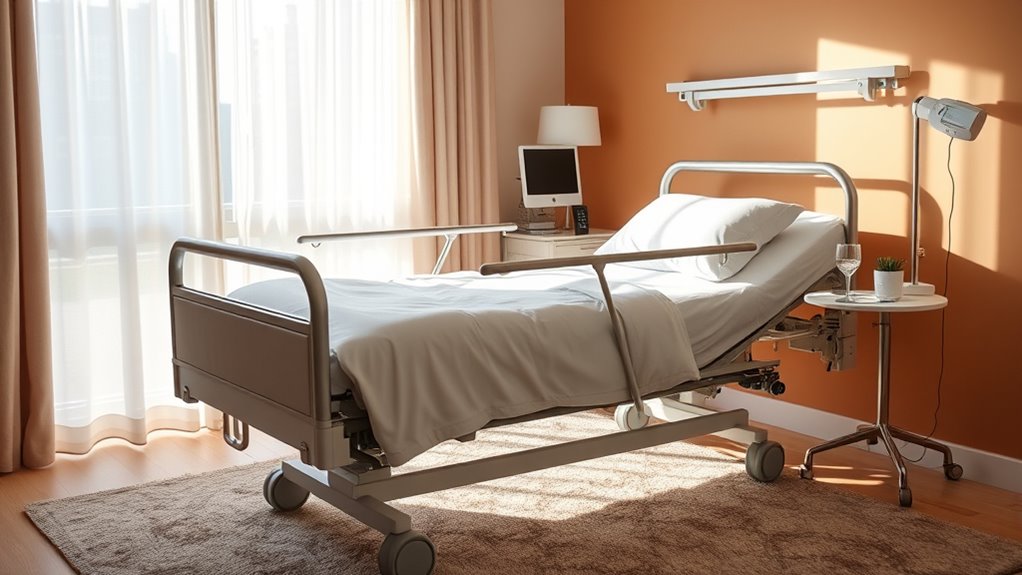
For many patients, recovering at home with a hospital bed offers a comfortable and convenient alternative to long hospital stays. It allows you to be close to loved ones, maintain your daily routines, and regain independence while still receiving the necessary support. However, before bringing a hospital bed into your house, it’s essential to consider how it impacts patient safety and how to choose the right bed for your needs. Ensuring safety starts with selecting a bed that provides proper support and stability. An appropriate bed should have sturdy rails, a reliable locking mechanism, and adjustable features that allow you to change positions easily. These features help prevent falls and injuries, which are common concerns with hospital beds. When choosing a bed, you must evaluate your specific health condition, mobility level, and personal preferences to find the best fit. For instance, if you have limited mobility, a bed with easy-to-use controls and a low height can make transferring in and out safer and more comfortable. Conversely, if you need to elevate your head or legs frequently, look for a bed with smooth, programmable adjustments. It’s also crucial to consider the size of the bed and the space available in your home. A bed that’s too large for your room can create hazards, while one that’s too small might not provide adequate support. Proper bed selection involves assessing these factors carefully and consulting with your healthcare provider or a specialist who can recommend models suited to your specific needs. Safety isn’t just about the bed itself; it also involves the environment around it. Clear pathways, non-slip rugs, and accessible call buttons contribute to a safer recovery space. You should also consider the ease of getting in and out of the bed, especially if you have limited strength or balance issues. Installing side rails or grab bars can add extra security, but they must be used correctly to avoid potential hazards. Additionally, ensure that the bed’s mattress is suitable—firm enough to support your body properly and comfortable enough to promote restful sleep. Regular maintenance and checks are vital to keep the bed in good working condition, preventing mechanical failures that could compromise safety. An understanding of safety considerations and proper setup can greatly reduce the risk of accidents and improve overall safety. Ultimately, selecting the right hospital bed for your home involves balancing safety, functionality, and comfort. Take the time to research options, seek professional advice, and evaluate your living space to make informed decisions. A well-chosen bed can significantly improve your recovery experience, giving you peace of mind and supporting your health every step of the way.
Frequently Asked Questions
How Long Can a Hospital Bed Be Rented?
You can typically rent a hospital bed for as long as your needs require, with bed rental durations varying from a few days to several months. The length depends on rental agreement terms, which you should review carefully. Some providers offer flexible rental periods, but always clarify any potential extensions or costs beforehand. This way, you guarantee the bed suits your situation without unexpected charges or limitations.
Are There Any Safety Certifications for Home Hospital Beds?
Did you know that over 80% of medical equipment, including home hospital beds, must meet strict safety standards? Yes, many home hospital beds have safety certifications like UL or FDA approval, confirming they pass rigorous testing. The certification process guarantees the beds meet safety standards, protecting you from potential hazards. Always check for these certifications before purchasing or renting a hospital bed to ensure it’s safe and reliable for home use.
Can Hospital Beds Be Customized for Specific Medical Needs?
Yes, hospital beds can be tailored for your specific medical needs. You can choose from various customization options, including adjustable height, side rails, and specialized mattresses. Many beds also offer medical-specific features like trapeze bars or integrated scales. To guarantee the bed meets your requirements, discuss your needs with your healthcare provider or supplier, so they can recommend the best options for your comfort and safety.
What Are the Energy Consumption Details of a Hospital Bed?
Think of a hospital bed’s energy consumption as a gentle current, steady and manageable. Most models are designed for energy efficiency, using minimal power to operate motors and controls. Power consumption varies by features, but generally, they’re low, running on standard household electricity. You’ll find that these beds are built to conserve energy, ensuring they support your loved ones without adding a hefty electric bill to your daily rhythm.
Is Professional Installation Required for Home Hospital Beds?
You don’t always need professional setup for home hospital beds, but it’s highly recommended. Installation requirements vary depending on the model, and a professional can make sure the bed is assembled correctly and safely. If the bed has complex features or electrical components, expert installation helps prevent issues and guarantees proper function. Ultimately, investing in professional setup can provide peace of mind, safety, and proper operation for your loved one’s comfort.
Conclusion
Bringing a hospital bed home can be a big step, but with proper planning and preparation, it pays off in comfort and care. Be sure to balance your budget, space, and safety to create a cozy, convenient haven. Remember, thoughtful research and timely tips transform a formidable decision into a delightful, doable dream. So, take the time to think, prepare, and prioritize—making your home a haven where healing happily happens.
Flea & tick season Picks
flea and tick prevention
As an affiliate, we earn on qualifying purchases.