
To choose the right walker or cane, assess your loved one’s mobility needs, stability, and environment. Consider their strength, balance, and daily activities, and select a device that offers support without causing fatigue. Proper fitting and adjustments are key for safety and comfort. Make sure to train on correct use and maintain the device regularly. Knowing these steps will help you provide safe, confident mobility, and there’s more to explore to make the best choice.
Key Takeaways
- Assess the user’s mobility needs, considering balance, strength, and daily activity requirements.
- Evaluate the home environment for space, stairs, and obstacles to determine suitable device features.
- Ensure proper fit by adjusting device height so elbows are slightly bent for comfort and safety.
- Choose between cane or walker based on stability needs, strength, and ease of maneuverability.
- Regularly inspect, maintain, and train users on correct use to promote safety, confidence, and independence.
Understanding Different Types of Mobility Devices
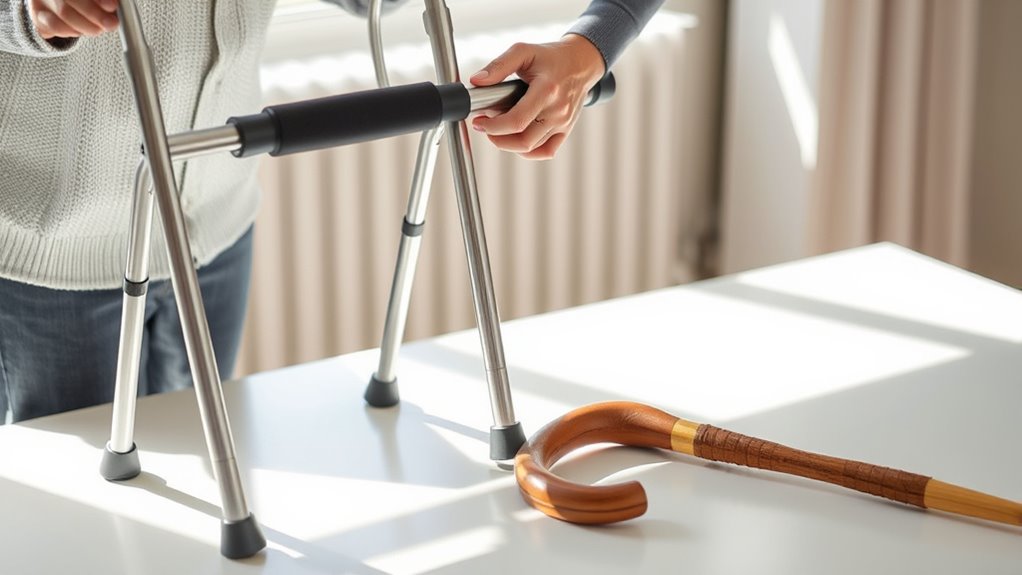
Understanding the different types of mobility devices is essential to choosing the right support for your needs. Canes are lightweight, easy to carry, and mainly help with balance and stability. They’re best for mild balance issues and minor joint pain, with options like single or multi-legged designs and adjustable heights. Walkers, on the other hand, offer more stability with four legs and rubber tips, suitable for muscle weakness, nerve impairments, or fractures. Standard walkers require lifting with each step, while wheeled options like rollators provide easier movement but less stability. Canes are less expensive and more portable, whereas walkers provide greater support but require more effort. Your choice depends on your specific mobility challenges, comfort, and safety considerations.
Assessing the Needs of Your Loved One
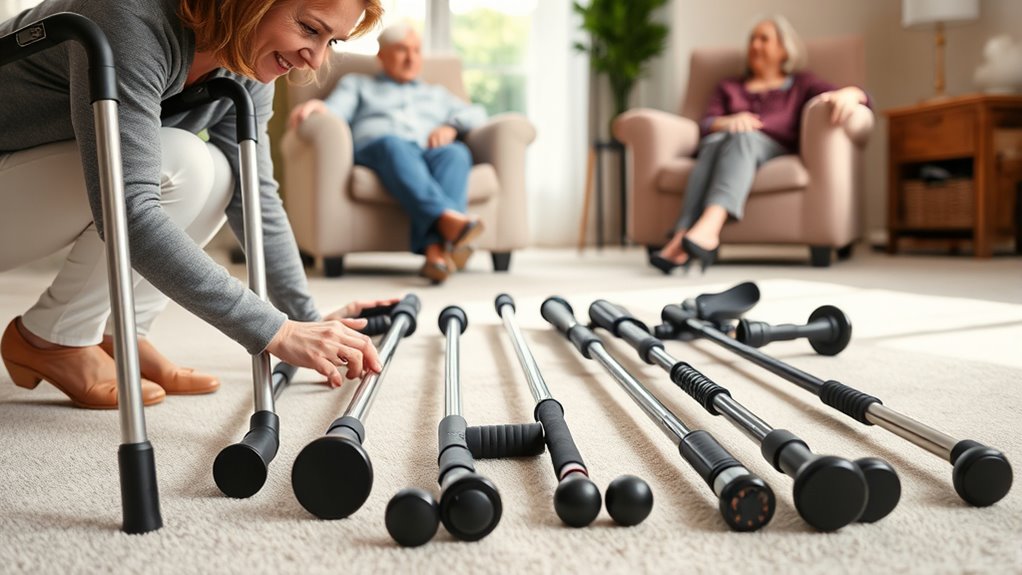
To select the appropriate device, you need to assess your loved one’s mobility limitations and how they impact daily activities. Consider their home environment, including stairs, narrow doorways, or uneven surfaces, to make sure the device fits safely. By understanding these factors, you’ll be better equipped to choose a walker or cane that meets their specific needs. Additionally, evaluating their comfort and the device’s portability ensures they can move around easily in various settings. For example, a lightweight and compact device can significantly improve their independence and confidence when navigating different environments. Moreover, understanding the importance of free floating design principles can help you select equipment that minimizes restrictions and maximizes natural movement. Recognizing the role of quality assurance in ensuring the safety and reliability of mobility devices is also essential for making informed choices, especially considering the importance of reliable net worth assessments for users with fluctuating health needs.
Mobility Limitations Evaluation
Evaluating your loved one’s mobility limitations is a crucial step in choosing the right device, as it helps identify their specific needs and safety concerns. First, observe their movement patterns—do they stumble, need support, or struggle to lift their feet? Note if they experience pain, weakness, or balance issues. Consider their environment and daily activities to determine what support is necessary. Use this table to clarify their needs:
| Limitation Type | Symptoms | Recommended Device |
|---|---|---|
| Balance issues | Frequent falls, wobbling | Cane or walker |
| Weak muscles | Difficulty standing/walking | Walker with support |
| Pain in joints | Limited mobility, discomfort | Cane or walker |
| Coordination problems | Trouble using wheels | Standard walker |
| Endurance concerns | Fatigue after walking | Seat-equipped walker |
This assessment guides you to select the safest, most appropriate mobility aid. Additionally, understanding mobility limitations assessment can help ensure the chosen device effectively addresses your loved one’s unique needs.
Home Environment Compatibility
Evaluating your loved one’s home environment is essential to guarantee their chosen mobility device will be safe and effective. Start by inspecting doorways, hallways, and stairways to ensure they’re wide enough for the device, especially if using a walker or cane. Check for obstacles, clutter, and uneven flooring that could cause trips or falls. Consider the placement of furniture—clear pathways improve mobility and safety. If stairs are present, decide whether a stairlift or ramp is needed, or if the device should be used only on flat surfaces. Assess bathroom safety, like grab bars and non-slip mats, to prevent falls. Ensure that the device’s height and features suit their living space and physical needs, promoting independence without compromising safety. Additionally, choosing a suitable ceiling fan or appropriate lighting can contribute to a safer environment by improving visibility and comfort. Incorporating home safety modifications can further reduce fall risks and enhance overall safety. Moreover, understanding the home environment layout can help determine the best mobility solutions tailored to your loved one’s needs. Paying attention to flooring surfaces and their compatibility with mobility devices is also crucial for preventing slips and ensuring smooth movement throughout the home. To optimize safety, consider assessing the lighting conditions regularly to adapt to changing needs or hazards.
Factors to Consider When Selecting a Cane or Walker

When choosing between a cane or walker, you should consider your specific mobility needs, balance issues, and strength levels. Your daily activities and environment also influence the best choice. Here are key factors to keep in mind:
- Stability needs: Do you require maximum support, or is mild balance assistance sufficient?
- Strength and coordination: Can you lift and maneuver a walker safely, or is a cane easier?
- Mobility goals: Do you want to improve stability or increase independence with less effort?
- Environment: Will you navigate stairs, uneven terrain, or crowded spaces?
Assessing these aspects helps guarantee you select a device that matches your abilities and promotes safe, comfortable movement. Additionally, understanding the types of mobility aids can help you make an informed decision tailored to your specific needs.
Ensuring Proper Fit and Adjustments
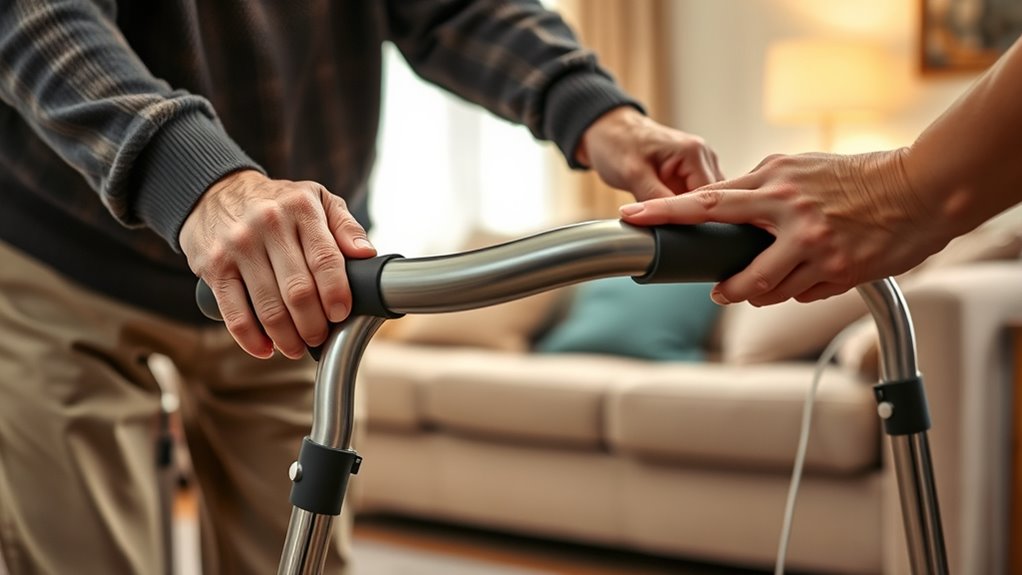
Make sure your cane or walker is set to the correct height so you don’t strain your back or shoulders. Choose a grip that feels comfortable and secure to prevent slipping and improve control. Proper adjustments and comfortable grips are key to safe and effective mobility support. Additionally, ensuring your device is properly maintained can extend its lifespan and enhance safety during use. Regularly checking for wear and tear helps prevent unexpected failures and keeps your device functioning optimally. Being aware of electrical safety principles can also help prevent accidents related to mobility devices that incorporate electronic components. Maintaining adjustment mechanisms ensures that your mobility aid remains secure and reliable over time. Incorporating thermal behavior awareness from outdoor cooking can remind users to keep electronic components cool and prevent overheating issues.
Correct Height Settings
Ensuring your mobility device is set to the correct height is essential for safety and comfort. Improper adjustments can lead to strain, imbalance, or falls. To get it right:
- Stand upright with your shoulders relaxed, holding the device.
- Adjust the device so that your elbow is slightly bent—about 15-30 degrees.
- For canes, the top should align with your wrist crease when standing upright.
- For walkers, the handgrips should be level with your wrists when your arms are extended comfortably.
- Regularly review proper adjustment practices to maintain safety and comfort during use. Checking adjustment guidelines periodically helps ensure continued proper fit as your needs change. Being aware of adjustment options can also help you customize your device for optimal support.
- Remember that ergonomic considerations can significantly improve your overall mobility experience and reduce discomfort. Additionally, understanding adjustment techniques can help you make more precise modifications for better support.
Always double-check the fit after making adjustments. Proper height guarantees stability and minimizes fatigue, helping you move confidently and safely. If unsure, consult a professional for precise measurements.
Comfortable Grip Selection
Choosing a comfortable grip for your mobility device is essential to prevent hand fatigue and improve control. You should select grips that fit your hand size and shape, avoiding those that cause discomfort or excessive pressure. Adjustable grips are ideal because they allow you to customize the fit, ensuring proper hand placement. Look for soft, cushioned materials if you experience joint pain or arthritis, as these reduce strain. Consider the texture—non-slip grips provide better hold, especially if your hands tend to sweat. Proper grip size and material help you maintain stability and reduce fatigue during prolonged use. Regularly check and modify the grip to ensure it remains comfortable and secure, promoting safer and more confident mobility.
Training Your Loved One for Safe and Effective Use

Proper training is essential to help your loved one use their mobility device safely and effectively. Start by demonstrating the correct way to stand, sit, and move with the device, emphasizing stability. Encourage practicing these skills in a safe environment before venturing out.
Proper training ensures safe, confident use of mobility devices through practice and proper technique.
To guarantee proper use, focus on these four key steps:
- Show how to adjust the device for proper height and comfort.
- Teach the correct grip and posture to prevent strain.
- Explain the proper gait pattern—step, move the device, then the affected limb.
- Practice safe techniques for sitting down and standing up from chairs using the device.
Consistent practice builds confidence, reduces fall risk, and maximizes the benefits of mobility devices.
Maintenance, Costs, and Insurance Coverage

Maintaining your loved one’s mobility device is key to guaranteeing it stays safe and functional over time. Regularly inspect for loose parts, worn rubber tips, or damaged frames, and replace parts as needed. Clean the device frequently to prevent dirt buildup, especially on handgrips and wheels. Costs vary: canes typically range from $10 to $40, while walkers cost $20 to $100, depending on features. Medicare Part B may cover eligible devices, reducing out-of-pocket expenses. Consider the durability and adjustability of the device to ensure long-term use. Investing in proper maintenance and selecting the right device can enhance safety, comfort, and independence. Keep receipts and documentation for insurance claims and check coverage options regularly to maximize benefits.
Tips for Promoting Confidence and Independence

Building confidence and independence with a mobility device starts with proper training and support. You can help your loved one feel more secure by focusing on these key tips:
- Educate on proper use: Show them how to operate the device correctly, including how to stand, sit, and navigate safely. Understanding correct technique is essential for preventing falls and ensuring comfort.
- Encourage gradual progress: Start with short, simple walks, and gradually increase distance as confidence grows.
- Celebrate successes: Acknowledge improvements to boost motivation and reassure them they’re on the right track.
- Create a safe environment: Remove trip hazards, ensure good lighting, and check that the device fits properly to reduce fear and promote independence.
- Provide ongoing support: Regularly check in with your loved one to adjust the device or training as needed, fostering a sense of trust and reassurance.
With patience and encouragement, you help foster a sense of mastery and self-reliance.
Frequently Asked Questions
How Do I Know if My Loved One Prefers a Cane or a Walker?
You’ll notice your loved one’s preference by observing their comfort and confidence with each device. Try both to see which feels easier to use and gives them more stability. Ask how they feel about each one—some might prefer a cane for independence, while others need the extra support of a walker. Pay attention to their ease of movement, balance, and willingness to use the device consistently.
What Signs Indicate My Loved One Needs a Different Mobility Device?
Like a delicate balance on a tightrope, your loved one shows signs they need a different device. Notice if they’re falling more often, unable to stand steadily, or struggling to coordinate movements with their current aid. If they avoid using it, complain of pain, or seem fatigued quickly, it’s time to reassess. Their safety depends on matching the right device to their changing needs, preventing falls and promoting confidence.
How Can I Encourage Consistent Use of the Device?
You can encourage consistent device use by making it comfortable and accessible. Show your loved one how to use it properly, and praise their efforts to build confidence. Keep the device within easy reach, and remind them of the safety benefits. Address any fears or embarrassment, and involve them in choosing the device to increase ownership. Regularly check for comfort and proper fit, reinforcing that using the device helps maintain independence.
Are There Any Safety Risks Specific to Certain Mobility Devices?
You should be aware that canes, if not used properly, can cause falls due to improper handling or imbalance. Walkers, especially wheeled ones, may lead to falls if the user doesn’t maintain control or tries to navigate stairs. Always make certain the device fits well, is used correctly, and the user receives proper training. Avoid stairs and uneven surfaces with walkers, and regularly check devices for stability and damage to prevent accidents.
How Often Should a Mobility Device Be Replaced or Upgraded?
You should replace or upgrade your mobility device at least every 1 to 3 years, or sooner if it shows signs of wear, damage, or no longer fits your needs. Ironically, your device’s shiny new look might fool you into thinking it’s still perfect, but frayed grips, wobbling parts, or discomfort convey a different story. Regular checks ensure safety, comfort, and that you’re not just holding onto a ticking time bomb.
Conclusion
Choosing the right walker or cane can feel overwhelming, but with careful thought, you’ll find a device that feels like an extension of your loved one’s confidence. Picture them moving freely, steps steady and sure, as the device supports their independence like a trusted partner. By understanding their needs, ensuring proper fit, and offering gentle guidance, you help them walk forward with safety and dignity, turning each step into a moment of renewed freedom.