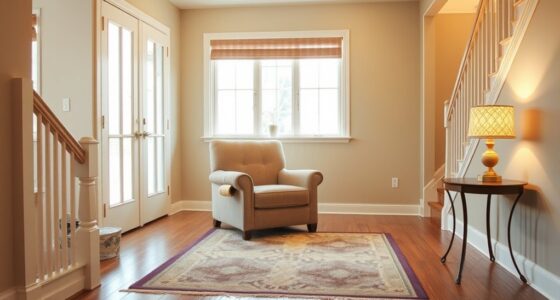
To make your home wheelchair accessible, start by installing ramps at entryways and widening doorways to at least 32 inches for easy passage. Add grab bars in bathrooms and near stairs for safety, and lower sinks and counters for comfortable use. Upgrading door hardware to lever handles and ensuring clear pathways also helps. Many modifications are affordable, and exploring funding options can ease costs. Keep going to discover detailed steps to create a more accessible, safer home.

Turn quiet afternoons into listening time
- Thousands of audiobooks, podcasts and originals
- Listen on your phone, tablet or Echo — also offline
- Cancel anytime
Key Takeaways
- Install ramps at entryways to eliminate steps and ensure smooth wheelchair access.
- Widen doorways to at least 32 inches for easy passage and maneuverability.
- Lower thresholds and door handles to accessible heights for effortless reach.
- Incorporate grab bars in bathrooms and near stairs to provide additional support.
- Use accessible storage and smart technology to enhance independence and safety at home.
As an affiliate, we earn on qualifying purchases.
Essential Home Modifications for Wheelchair Access

To guarantee your home is accessible for wheelchair users, start with key modifications that remove common barriers. Begin by installing a ramp at your entryway to eliminate steps, making it easier to enter and exit. Widen doorways to at least 32 inches, allowing smooth wheelchair passage between rooms. Consider lowering thresholds and door handles to be within easy reach. Inside, remove clutter and furniture that block pathways, ensuring clear, wide aisles. Add grab bars in bathrooms and near stairs for support and safety. Replace traditional sinks and toilets with accessible options, like roll-under sinks and ADA-height toilets. Additionally, proper ventilation considerations can improve air quality and comfort inside accessible spaces. Incorporating Universal Design principles can further enhance functionality and adaptability for all users. These foundational changes create a safer, more navigable environment, enabling independence and reducing accident risks for wheelchair users. Incorporating building codes and standards ensures modifications meet safety and accessibility requirements, providing peace of mind and legal compliance. Upgrading door hardware to lever-style handles can also facilitate easier operation for individuals with limited dexterity.
widened door hinges for accessibility
As an affiliate, we earn on qualifying purchases.
As an affiliate, we earn on qualifying purchases.
Improving Safety and Convenience in Your Bathroom and Kitchen
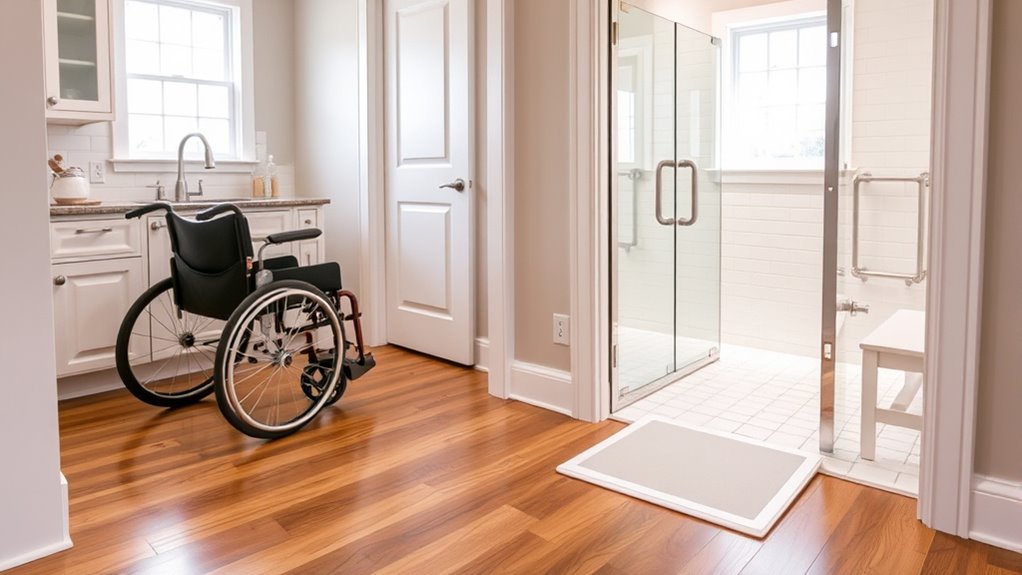
Enhancing safety and convenience in your bathroom and kitchen can considerably improve daily independence for wheelchair users. Start by installing grab bars near toilets, showers, and sinks to prevent falls and provide support. Consider replacing traditional bathtubs with roll-in showers that eliminate barriers and reduce fall risks. Widen doorways to ensure easy wheelchair access to fixtures and facilities. Lower sinks and countertops to comfortable heights, allowing you to reach and use them without strain. Upgrade stove controls to front-mounted ones for safer cooking. Use accessible storage solutions like lowered cabinets for easier item retrieval. Incorporate smart home technology to control lights, locks, and appliances remotely, reducing the need for physical effort. Additionally, adopting energy-efficient appliances can help reduce overall household energy consumption. These modifications make your bathroom and kitchen safer, more functional, and more convenient daily, especially when designed with universal design principles. Conducting a home modification assessment can also help identify specific needs and ensure all adaptations meet your safety standards and personal preferences. Implementing assistive technologies can further enhance independence and ease of use in your daily routines.
As an affiliate, we earn on qualifying purchases.
Tips for Planning and Funding Your Accessibility Updates

Planning and funding your accessibility updates requires careful assessment of your home’s needs and available resources. Start by identifying which modifications are most urgent and feasible within your budget. Prioritize changes that improve safety and independence, like ramps or widened doorways. Explore funding options such as government grants, Medicaid waivers, or local community programs. Research costs for each modification to create a realistic budget plan. Use the table below to understand the relationship between needs, costs, and funding sources:
| Needs | Estimated Costs |
|---|---|
| Entrance ramp | $1,000–$4,000 |
| Widened doorways | $700–$2,500 |
| Bathroom grab bars | $100–$500 each |
| Home modification package | $5,000–$20,000 |
| Funding sources | Grants, Insurance, Loans |
Matching your needs with available resources guarantees a practical, effective plan.
As an affiliate, we earn on qualifying purchases.
Frequently Asked Questions
How Do I Determine Which Modifications Are Most Urgent for My Home?
To determine which modifications are most urgent, assess your home for safety hazards and accessibility barriers. Focus on areas where falls or difficulty occur, like stairs, narrow doorways, or bathrooms. Consult a healthcare professional or an accessibility specialist to identify critical needs. Prioritize changes that enhance safety, such as ramps, grab bars, or widened doorways, ensuring you address the most impactful issues first for safer, easier living.
Are Temporary or Portable Ramps Suitable for Long-Term Accessibility Needs?
Temporary or portable ramps can be suitable for short-term needs or when you’re unsure about permanent modifications. However, for long-term accessibility, they may not be the best choice because they often lack durability, stability, and proper safety features. Investing in a permanent ramp guarantees safety, compliance with accessibility standards, and a reliable solution that adapts to your ongoing needs, providing easier and safer access over time.
What Are the Best Resources or Programs to Help Fund Home Modifications?
You can find fantastic financial assistance through federal, state, and local programs. The VA offers grants for disabled veterans, and Medicaid waivers help fund home modifications. Nonprofits like Rebuilding Together, and programs such as the Department of Housing and Urban Development’s (HUD) grants, also provide support. Check eligibility, explore funding options, and connect with local agencies to access these resources and ease your home improvement journey.
How Can I Ensure That Modifications Comply With ADA Standards and Codes?
You can guarantee your modifications meet ADA standards by consulting your local building department and hiring a licensed contractor familiar with ADA codes. Review the ADA Accessibility Guidelines (ADAAG) available online for specific requirements. Obtain necessary permits before starting work, and schedule inspections throughout the process. Staying informed and working with professionals ensures your home modifications comply with all relevant codes, providing safety and accessibility for your needs.
What Maintenance Is Required to Keep Accessibility Features Safe and Functional?
You should regularly inspect your accessibility features for damage or wear, such as loose ramps, cracked handrails, or malfunctioning lifts. Clean and tighten components as needed, and verify grab bars are secure. Schedule professional checks annually to verify compliance and safety. Keep pathways clear of obstructions, and promptly address any issues to prevent accidents. Regular maintenance keeps your features safe, reliable, and fully functional for everyday use.
Conclusion
By making these simple modifications, you’ll create a safer, more comfortable home that welcomes everyone. Remember, it’s not just about removing barriers—think of it as turning your house into a true castle fit for all. From ramps to wider doorways, each step brings you closer to independence. So, don’t wait for a knight in shining armor—start your home’s transformation today and embrace accessibility like it’s your noble quest!
Fall Picks
fall essentials
As an affiliate, we earn on qualifying purchases.