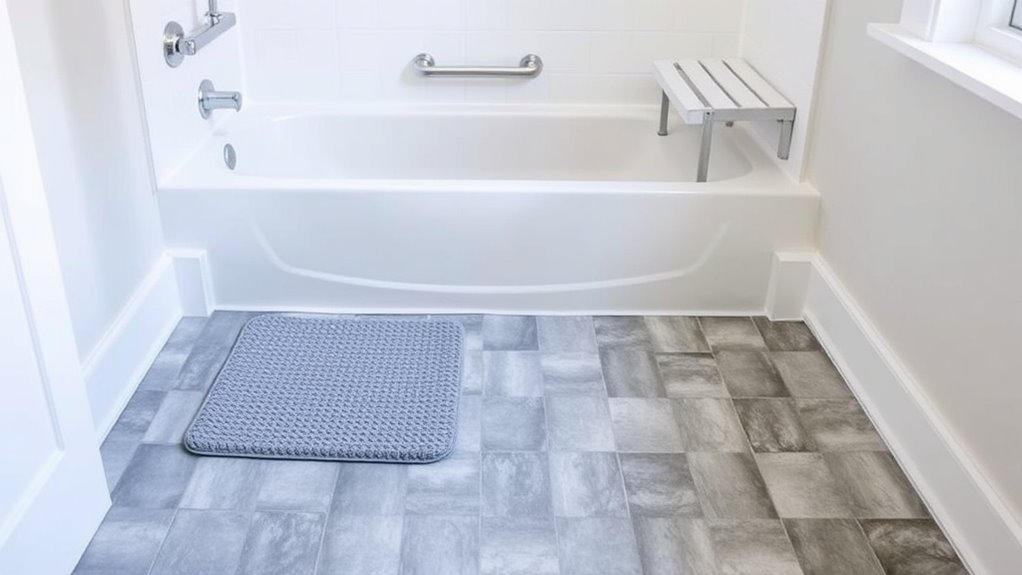

To prevent falls in your bathroom, start with simple modifications like installing grab bars near the toilet, shower, and tub, using non-slip mats and textured flooring, and upgrading to walk-in showers with low thresholds. Good lighting and secure support handles make moving safer. Regularly check that safety devices are secure and in good condition. If you keep these tips in mind, you’ll find more easy ways to keep your bathroom safe and accessible.
Key Takeaways
- Install grab bars near the toilet, shower, and tub for added stability during transfers.
- Use slip-resistant mats and flooring to prevent slips on wet surfaces.
- Add raised toilet seats and safety frames to ease sitting and standing.
- Improve lighting to enhance visibility and reduce trip hazards.
- Keep pathways clear and regularly check for water leaks or mold for safety.
Understanding the Risks of Bathroom Falls Among Seniors
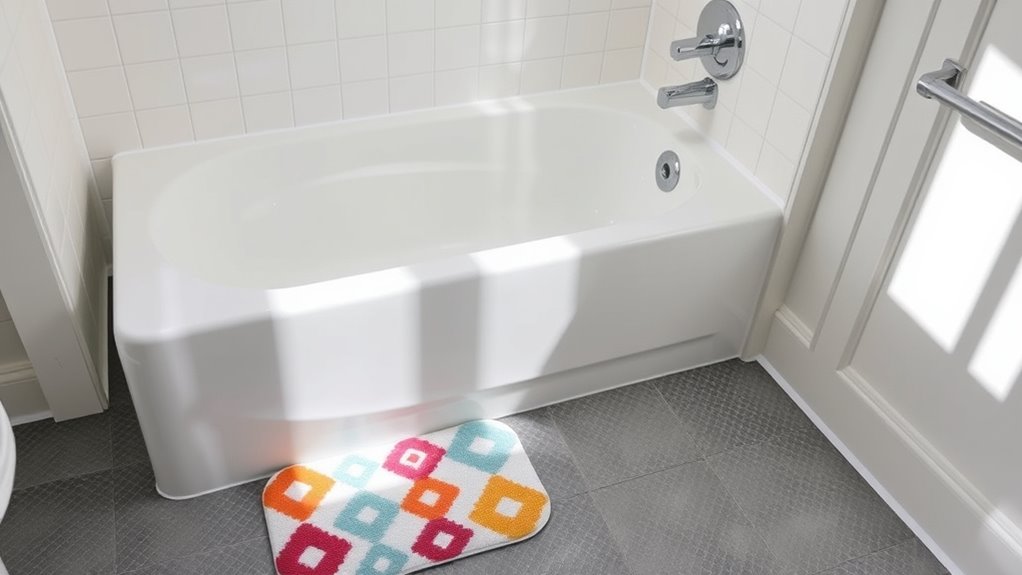
Why are bathrooms such a common location for falls among seniors? Bathrooms are often slippery, especially with wet tiles, soap, or water spills, increasing fall risk. They involve shifts from sitting to standing, which can be challenging if you have limited strength or balance issues. Limited space makes maneuvering difficult, and sharp edges or hard surfaces can cause injuries if you fall. Many seniors have medical conditions like arthritis, vision impairments, or mobility limitations that worsen their risk. Additionally, unfamiliar or poorly maintained bathrooms lack safety features like grab bars or non-slip flooring. Proper lighting and visibility can significantly reduce accidents by helping seniors see hazards more clearly. Making simple bathroom modifications such as installing grab bars or non-slip mats can greatly enhance safety and confidence. Having accessible assistive devices within reach can also prevent unnecessary falls. Fear of falling can also make you hesitant, further decreasing confidence and stability. All these factors combine to make bathrooms a high-risk area for falls among seniors.
Essential Safety Features to Consider in Elderly Bathrooms
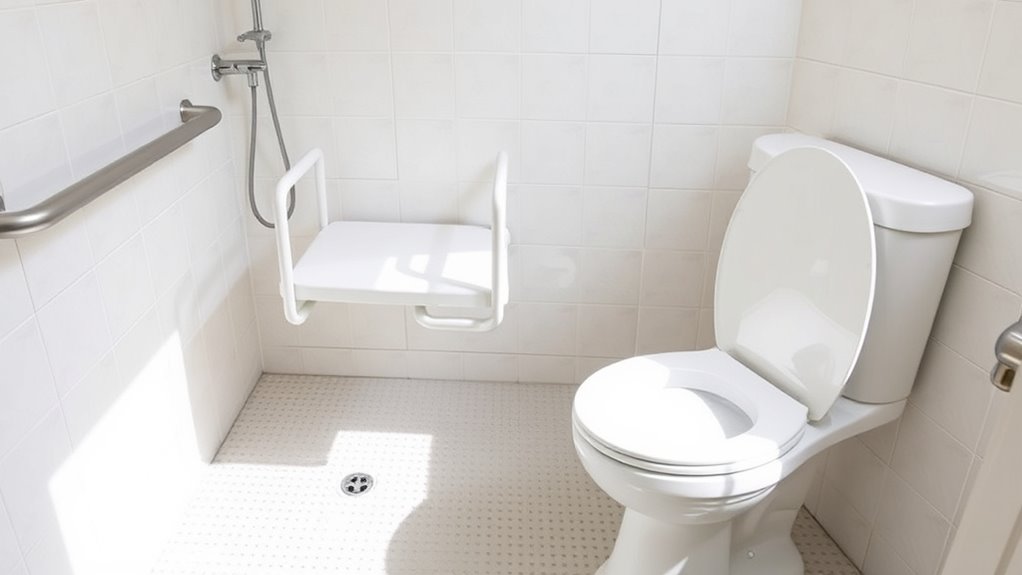
To guarantee safety in elderly bathrooms, incorporating key features can considerably reduce fall risks and promote independence. Start with slip-resistant flooring or mats to prevent slips on wet surfaces. Install grab bars near toilets, showers, and tubs to provide stable support. Consider a raised toilet seat or a safety frame to ease sitting and standing, reducing strain on joints. A walk-in shower with a low threshold or no step makes entry safer and easier. Use handheld showerheads for better control and comfort. Ensure lighting is bright and well-placed to improve visibility. Non-slip surfaces, secure fixtures, and thoughtful placement of safety features create an environment that minimizes hazards. These modifications make daily routines safer and help you maintain your independence at home. Incorporating slip-resistant flooring can further enhance safety by preventing falls on wet surfaces and is especially important when combined with other safety features for a comprehensive approach. Additionally, considering smart lighting systems can improve visibility during nighttime visits, reducing accidental slips or bumps. Moreover, installing elevated fixtures can make using bathroom amenities more accessible and reduce strain on joints. Using ventilation considerations can also help prevent mold and maintain a dry, safe environment.
Installing Grab Bars and Support Handles
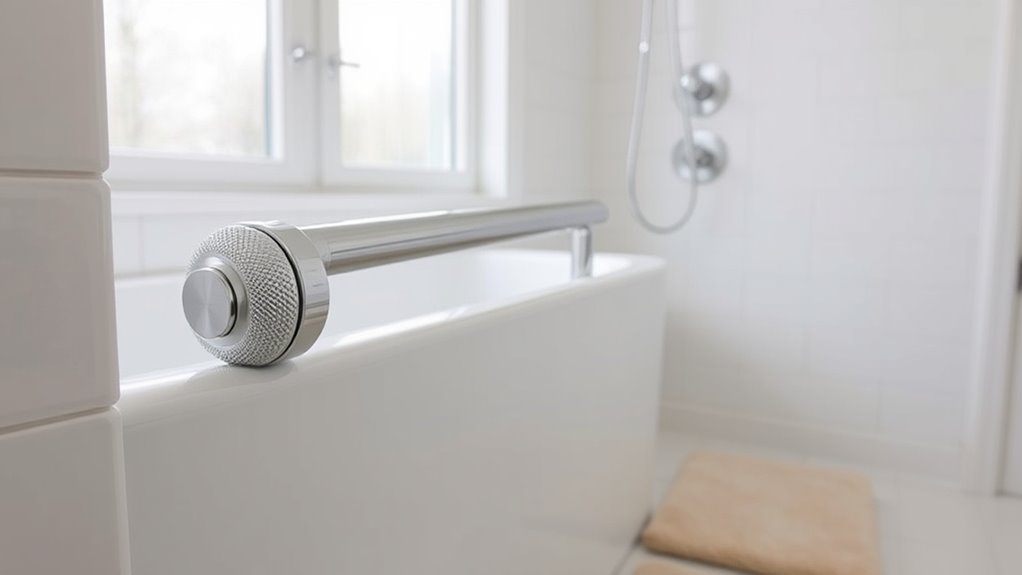
Installing grab bars and support handles is one of the most effective ways to enhance bathroom safety for seniors. You should place them near the toilet, shower, and tub to provide stability during transfers and standing. Proper installation guarantees they can withstand weight and force, reducing fall risk. Use secure anchors into wall studs for maximum support. Here’s a quick guide:
| Location | Tip |
|---|---|
| Near the toilet | Install at a comfortable height for easy grip |
| Inside the shower | Place horizontally at waist level for support |
| Outside the tub | Mount at an accessible height for balance help |
| Along the wall | Use multiple handles for added stability |
Prioritize safety and proper placement to make daily routines safer and more confident. Ensuring proper installation techniques can significantly improve their effectiveness and durability. To further improve bathroom safety, consider non-slip mats and adequate lighting to prevent accidents. Proper support handle placement is essential to maximize stability and safety during transfers. Additionally, selecting high-quality grab bars designed specifically for bathroom use can enhance security and longevity.
Enhancing Flooring With Non-Slip Surfaces and Mats
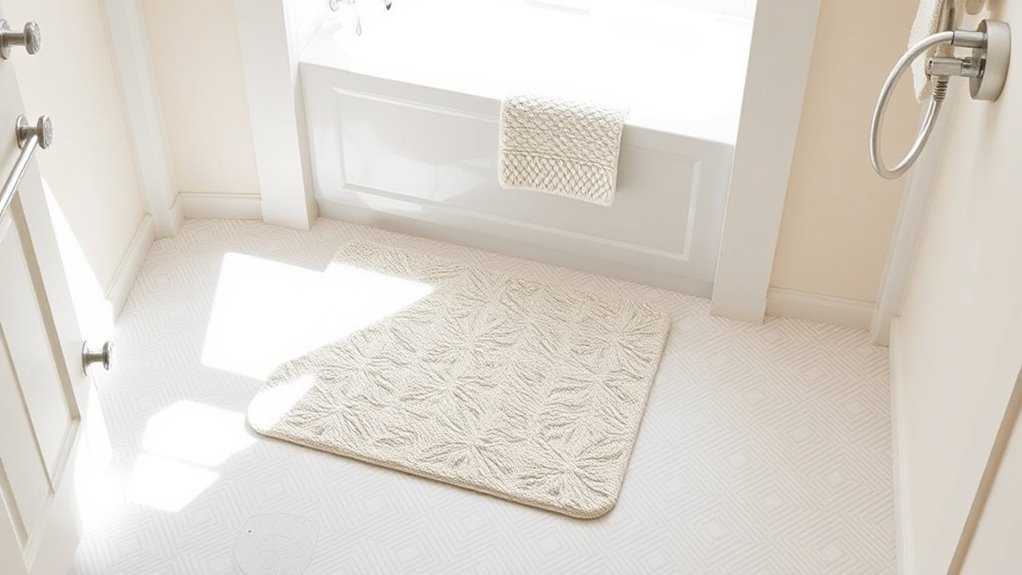
Choosing the right non-slip flooring materials and mats can greatly reduce fall risks in your bathroom. Make sure to select surfaces that provide traction even when wet, and place mats in high-traffic or water-spill areas. Proper placement and secure installation are key to creating a safer, slip-resistant environment for seniors. Incorporating energy-efficient solutions can also promote a more sustainable home while enhancing safety. Additionally, selecting materials with anti-slip properties designed specifically for wet environments can further improve safety and durability. Considering UST projector rankings and optimal placement techniques can serve as a useful analogy for understanding how proper material selection enhances safety and performance. Using durable, slip-resistant materials ensures long-lasting safety benefits and minimizes maintenance needs. Paying attention to material durability can help ensure the flooring maintains its slip-resistant qualities over time, reducing the need for frequent replacements.
Selecting Non-Slip Materials
Have you ever considered how critical non-slip surfaces are in reducing fall risks in bathroom environments? Choosing the right non-slip materials can make a significant difference. Look for flooring options labeled “non-slip” or “ slip-resistant,” especially for shower and bathroom floors. Textured tiles or vinyl with anti-slip coatings provide better traction when wet. Avoid smooth, glossy surfaces that can become slippery. For added safety, select adhesives, paints, or treatments designed to increase grip on existing flooring. When installing new surfaces, prioritize those with high slip resistance ratings. Remember, durability matters—choose materials that maintain their slip-resistant properties over time. Proper selection of non-slip materials helps create a safer bathroom, reducing the chance of falls and enhancing confidence during daily routines. slip resistance ratings are a key factor in ensuring long-lasting safety. Additionally, considering material durability can ensure the safety features remain effective over time, even with frequent cleaning or exposure to moisture. Incorporating non-slip flooring options that are easy to clean and maintain can further enhance safety and longevity. Ensuring the flooring’s body safety features are up to standard helps protect vulnerable users and promotes independence. Including user-friendly installation methods can also facilitate safer and more effective upgrades to bathroom flooring.
Proper Mat Placement
Proper placement of non-slip mats and rugs can considerably reduce fall risks in bathroom environments. Place mats in high-risk areas like in front of the sink, toilet, and inside the shower or tub. Ensure mats have rubber backing to prevent slipping and are securely positioned to avoid tripping hazards. Regularly check for wear and replace damaged mats. Use a few well-placed rugs rather than cluttered layering, which can cause stumbling. Consider the following for ideal placement:
| Area | Recommendations |
|---|---|
| Shower/Tub | Non-slip mat with suction cups, inside and outside |
| Toilet | Rug with slip-resistant backing |
| Sink Area | Small rug or mat to prevent slips |
This simple step makes a significant difference in bathroom safety. Additionally, selecting appropriate flooring materials that are less slippery can further enhance safety. Choosing flooring with non-slip properties can also provide an extra layer of security and reduce fall risks. Incorporating additional safety features, such as grab bars and proper lighting, can further protect seniors from bathroom falls.
Upgrading to Easy-Access Shower and Bath Options
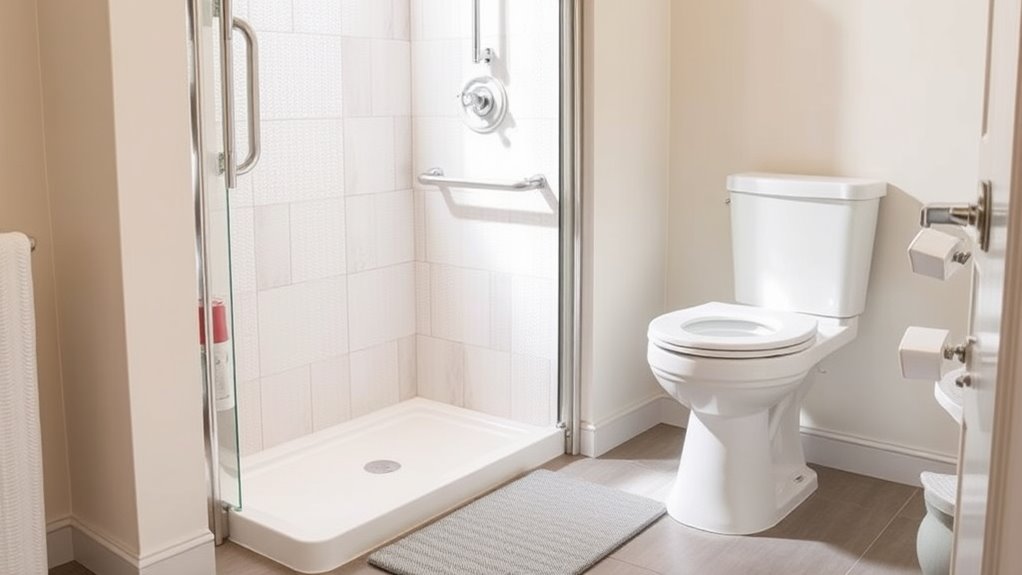
Upgrading to easy-access shower and bath options can make a big difference in safety and independence. Low-threshold designs eliminate trip hazards, while built-in seating provides a secure spot to sit during bathing. These modifications help you stay safe and comfortable, reducing the risk of falls in the bathroom.
Low-Threshold Shower Designs
Low-threshold shower designs offer a safe and accessible solution for seniors by eliminating barriers that can cause falls. These showers feature a minimal or no step at the entrance, making entry and exit easier. To maximize safety and convenience, consider these options:
- Install a shower with a threshold of 1 inch or less to prevent tripping.
- Use slip-resistant flooring within the shower area for added traction.
- Incorporate grab bars along the walls for support when entering or exiting.
- Add a handheld shower head for better control and ease of use.
Built-In Seating Options
Have you considered built-in seating options to make your bathroom safer and more accessible? Installing a built-in shower seat or bench provides a stable, comfortable place to sit while bathing, reducing the risk of falls. These seats are securely anchored into the wall or floor, offering reliable support. They’re especially helpful if you have limited mobility, arthritis, or balance issues. Look for models with non-slip surfaces and adjustable heights to accommodate your needs. Built-in seating also frees up space and eliminates the hazards associated with portable chairs or stools. By choosing a durable, easy-to-clean design, you guarantee safety and convenience. Upgrading to built-in seating is a simple step that can considerably enhance your bathroom’s safety and your independence.
Using Raised Toilet Seats and Support Frames
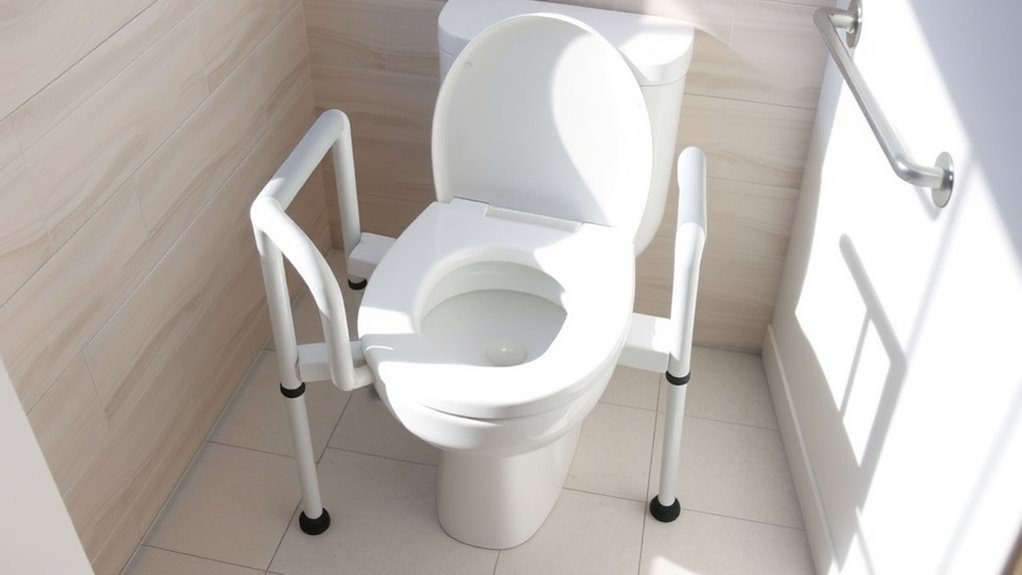
Using raised toilet seats and support frames can considerably enhance bathroom safety for seniors by making it easier to sit down and stand up. These devices reduce strain on your hips and knees, lowering fall risk. Consider these key benefits:
- Increased Height: Raised seats lift the toilet, allowing you to sit and stand with less effort.
- Stability Support: Support frames provide sturdy handholds to assist balance during transfers.
- Improved Safety: Reduces the chance of slips or falls when shifting on and off the toilet.
- Easy Installation: Most models are quick to install and adjustable for comfort.
Addressing Disparities in Access to Bathroom Safety Devices
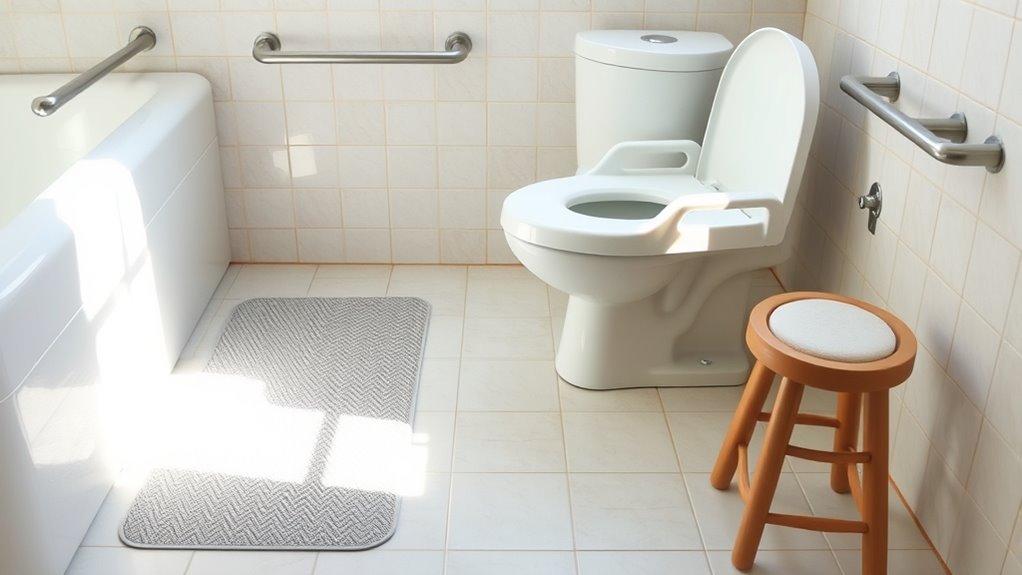
You may notice that cultural beliefs and lack of awareness often prevent some seniors from accessing bathroom safety devices. Socioeconomic barriers can also limit affordability and availability for minority and low-income groups. To improve safety for all, targeted outreach and culturally sensitive programs are essential in closing these gaps.
Cultural Barriers and Awareness
Cultural beliefs and perceptions can substantially influence how seniors and their families view the necessity of bathroom safety devices. Some cultures may see these devices as unnecessary or even stigmatizing, which can prevent installation. To address this, consider these points:
- Recognize cultural attitudes toward aging and independence, and tailor safety messages accordingly.
- Educate families about the importance of fall prevention, emphasizing safety benefits over stigma.
- Engage community leaders to promote awareness and acceptance of bathroom modifications.
- Provide culturally sensitive resources that respect values and language differences to increase understanding and trust.
Socioeconomic Access Gaps
Socioeconomic factors substantially influence seniors’ ability to access essential bathroom safety devices, often creating barriers for low-income and minority populations. Limited financial resources mean you might not afford grab bars, non-slip mats, or raised toilet seats, even if you recognize their importance. Additionally, lack of awareness or access to programs that provide free or subsidized modifications worsens disparities. Minority seniors, including non-Hispanic Black and Hispanic groups, face lower odds of having these safety devices installed, increasing fall risk. Without adequate support, you may feel overwhelmed or unable to prioritize bathroom safety upgrades. Addressing these gaps requires targeted outreach, affordable options, and policy initiatives that ensure all seniors, regardless of socioeconomic status, can access necessary modifications to maintain independence and reduce fall hazards.
Targeted Outreach Strategies
To effectively reduce disparities in access to bathroom safety devices, targeted outreach strategies must focus on engaging underserved communities through culturally sensitive and accessible programs. You can do this by:
- Partnering with community organizations that serve minority and low-income populations to spread awareness.
- Providing multilingual education materials that clearly explain the importance and availability of bathroom safety modifications.
- Offering free or low-cost installation services through local health departments or senior centers.
- Training community health workers to identify at-risk seniors and assist with securing safety devices.
Tips for Maintaining and Regularly Assessing Bathroom Safety

Regularly evaluating your bathroom’s safety is essential to prevent falls and maintain independence. Start by checking that grab bars are secure and firmly anchored into wall studs, not just drywall or tiles. Ensure non-slip mats are in place and in good condition, replacing them if they’re worn or curling. Test the functionality of raised toilet seats and shower chairs, making sure they’re stable. Look for any signs of water leaks, mold, or slippery surfaces that could cause accidents. Keep pathways clear of clutter and ensure lighting is bright enough to see hazards easily. Schedule routine assessments, especially if mobility or health changes occur. Making these quick checks helps you identify risks early and keeps your bathroom a safe, accessible space.
Benefits of Home Modification Programs for Fall Prevention
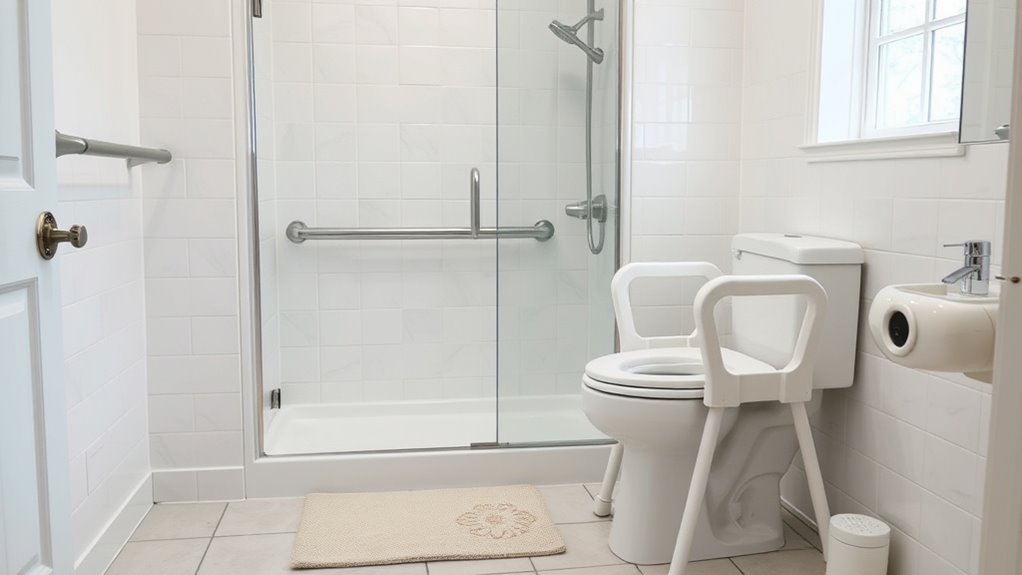
Home modification programs play a crucial role in reducing fall risks among seniors by making living spaces safer and more accessible. These programs can help you or your loved ones stay independent longer and avoid costly hospital visits. Here are some key benefits:
- They lower the chance of falls by installing essential safety features like grab bars and non-slip mats.
- They improve confidence and comfort during daily activities, reducing fear of falling.
- They decrease healthcare costs by preventing injuries that require emergency care or hospitalization.
- They promote aging in place, allowing seniors to maintain their routines safely at home.
Creating a Culturally Sensitive Approach to Elderly Bathroom Safety
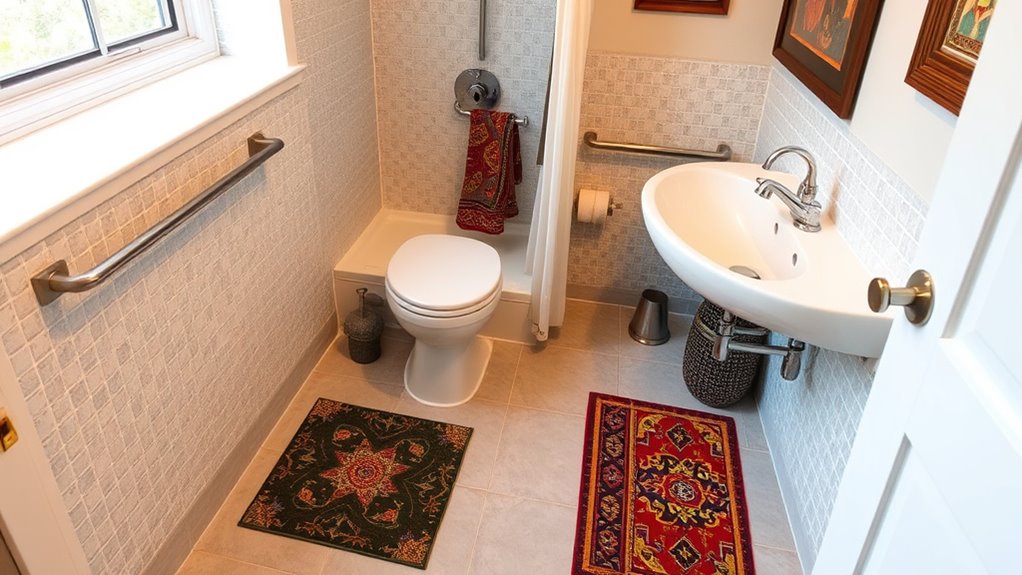
Creating a culturally sensitive approach to elderly bathroom safety is essential for ensuring all seniors receive effective and respectful care. You should recognize that cultural beliefs, language barriers, and traditions influence how seniors perceive safety modifications. Engage with seniors and their families openly, listening to their preferences and concerns. Use culturally appropriate communication methods, such as bilingual materials or involving community leaders, to build trust. Respect their privacy, values, and comfort levels when recommending modifications like grab bars or walk-in showers. Tailor solutions to align with cultural practices and aesthetics, making safety enhancements more acceptable. By understanding and honoring cultural differences, you increase the likelihood that seniors will adopt and maintain essential safety modifications, ultimately reducing fall risks and promoting independence.
Frequently Asked Questions
How Can I Ensure Grab Bars Are Properly Installed for Safety?
You should guarantee grab bars are securely anchored into wall studs, not just drywall or tiles. Use a stud finder to locate the studs and install the bars directly into them with appropriate hardware. Make sure the bars are level and firmly attached to support your weight. Periodically check the stability and tightness of the bars, especially if you notice any movement or looseness, to maintain safety at all times.
Are There Affordable Options for Bathroom Modifications for Seniors on a Budget?
Yes, you can find affordable bathroom modifications for seniors on a budget. Look for budget-friendly options like adhesive grab bars, non-slip mats, or raised toilet seats that don’t require professional installation. You might also consider DIY solutions, such as installing grab bars in stud locations or using temporary non-slip treatments. Check local community programs, senior centers, or government resources that often offer free or discounted safety equipment to help you make necessary changes without overspending.
What Cultural Considerations Should Be Made When Installing Safety Devices?
You should respect cultural preferences when installing safety devices, as some seniors may feel uncomfortable with visible grab bars or certain fixtures. To overcome this, choose discreet or decorative options that blend with their style, making them feel more at ease. Engage them in the decision process, listen to their concerns, and explain how these modifications enhance safety without compromising their cultural identity or aesthetic preferences.
How Often Should Bathroom Safety Assessments Be Conducted for Seniors?
You should conduct bathroom safety assessments for seniors at least once a year. Regular evaluations help identify new risks or changing needs, ensuring safety devices remain effective. If a senior experiences falls, health changes, or mobility issues, schedule an assessment sooner. Consistent reviews allow you to update modifications, add supports, or improve safety features, reducing fall risks and promoting independence in their daily routines.
Do Insurance Plans Typically Cover Bathroom Safety Modifications?
Have you wondered if insurance plans cover bathroom safety modifications? Typically, coverage varies; some Medicare plans and Medicaid programs may include certain safety features like grab bars or shower seats, especially if prescribed by a healthcare professional. It’s essential to check with your specific insurer about what’s covered. Did you know that many seniors find financial assistance or grants helpful in making these vital safety upgrades?
Conclusion
Did you know that falls in the bathroom account for nearly 80% of all senior fall injuries? By making simple modifications like installing grab bars, non-slip mats, and upgrading fixtures, you can greatly reduce this risk. Regularly checking these safety features ensures ongoing protection. Taking these proactive steps not only keeps your loved ones safe but also gives you peace of mind, knowing you’re creating a secure, accessible bathroom environment for seniors.