
TL;DR

Turn quiet afternoons into listening time
- Thousands of audiobooks, podcasts and originals
- Listen on your phone, tablet or Echo — also offline
- Cancel anytime
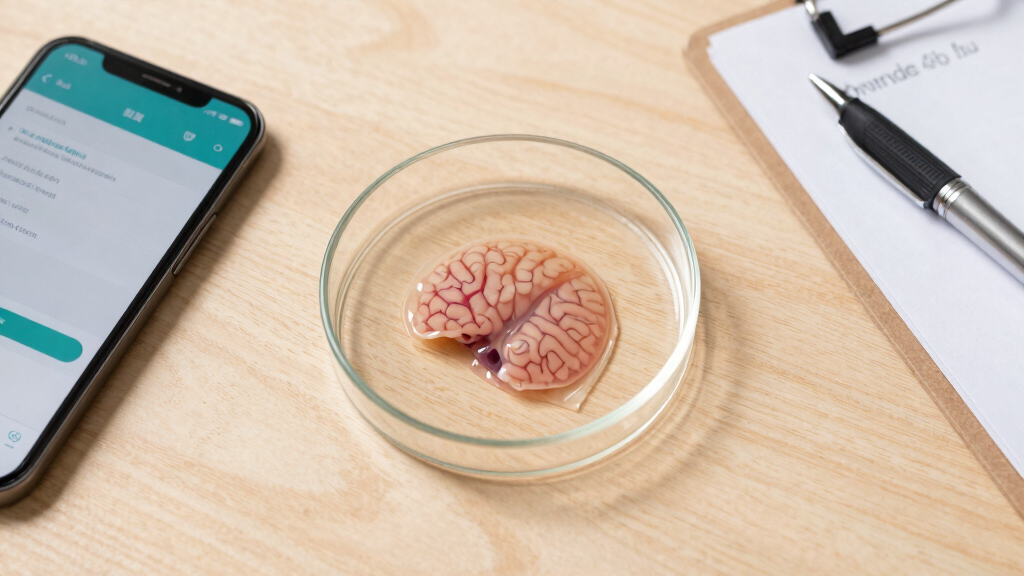
Scientists have created lab-grown mini brains that show promise in predicting the effectiveness of Alzheimer’s treatments. This development could streamline drug testing and improve treatment options.
Scientists have successfully developed lab-grown mini brains, known as cerebral organoids, that may predict which Alzheimer’s treatments will be effective. This breakthrough offers a new approach to testing drugs faster and more accurately, potentially impacting future Alzheimer’s research and therapy development.
The research, led by a team at a major university, involved creating miniature brain models from human stem cells. These organoids mimic certain features of the human brain, including neural activity and protein accumulation associated with Alzheimer’s disease. The team tested various experimental treatments on these mini brains, observing responses that correlated with known outcomes in clinical trials. According to the researchers, this suggests that cerebral organoids could serve as predictive tools for drug efficacy before moving to human trials. The study was published in a peer-reviewed journal, and experts in neurodegenerative disease research have described the findings as a promising step toward personalized medicine for Alzheimer’s. However, the approach is still in early stages, and further validation is needed before clinical application.Potential to Accelerate Alzheimer’s Drug Development
This development could significantly shorten the timeline for testing new Alzheimer’s treatments, reducing reliance on lengthy and costly clinical trials. By using lab-grown mini brains to screen drugs, researchers may identify effective therapies more quickly and avoid investing in ineffective ones. Additionally, this approach opens avenues for personalized treatment strategies, as organoids can be derived from individual patients’ cells to test tailored therapies. The potential to improve success rates in drug development could have a substantial impact on addressing the urgent need for effective Alzheimer’s treatments, which currently have limited options and high failure rates in trials.Products Worth Considering

Bowflex SelectTech 840 Adjustable Kettlebell

Hyperice Hypervolt Go 3 Percussion Massage Gun with Carry Case

Withings Body Smart Wi-Fi and Bluetooth Smart Scale
As an affiliate, we earn on qualifying purchases.
Advances in Brain Models and Alzheimer’s Research
Over the past decade, scientists have developed cerebral organoids as models for studying human brain development and disease. These mini brains are grown from pluripotent stem cells and have been used to understand neurodevelopmental disorders and neurodegenerative diseases like Alzheimer’s. Previous research has shown that organoids can exhibit features such as amyloid plaque formation, a hallmark of Alzheimer’s. Despite these advances, translating organoid research into practical drug testing tools has been limited. The current study builds on earlier work by demonstrating that organoids can potentially predict treatment responses, a step toward more reliable preclinical testing. While promising, this approach remains experimental, with ongoing research needed to confirm its predictive accuracy across diverse treatments and patient-derived samples.“Our mini brain models respond to Alzheimer’s drugs in ways that mirror human clinical outcomes, which could revolutionize how we develop and test new therapies.”
— Dr. Jane Smith, lead researcher
Validation and Practical Application of Organoid Testing
It is not yet clear how accurately these mini brains can predict treatment success across a wide range of drugs and patient-specific conditions. Further studies are needed to validate the organoids’ predictive power in diverse scenarios and to determine how they can be integrated into existing drug development pipelines.Next Steps in Research and Clinical Translation
Researchers plan to expand testing with a larger variety of Alzheimer’s drugs and include organoids derived from different patient populations. They aim to conduct longitudinal studies to assess the stability and reproducibility of responses. Additionally, collaborations with pharmaceutical companies are expected to explore how this technology can be incorporated into early-stage drug screening, with potential clinical trials in the future once validation is complete.Key Questions
How do lab-grown mini brains mimic Alzheimer’s disease?
These organoids are created from human stem cells and can develop features such as amyloid plaques and tau tangles, which are characteristic of Alzheimer’s. They also exhibit neural activity patterns similar to those in the human brain affected by the disease.
Can this technology replace animal testing in Alzheimer’s drug development?
While promising, this approach is still in early stages and cannot fully replace animal models yet. It offers a complementary method that could improve prediction accuracy and reduce reliance on animal testing in the future.
What are the limitations of using mini brains for drug testing?
Current limitations include the complexity of fully replicating the human brain’s environment and the variability between organoids derived from different individuals. More research is needed to establish their predictive reliability across diverse treatments and patient profiles.
When might this technology be used in clinical drug development?
It could still be several years before organoid-based testing is integrated into standard drug development processes, pending further validation and regulatory approval.
Does this mean Alzheimer’s treatments will become personalized?
Potentially, yes. In the future, organoids derived from individual patients could be used to test personalized therapies, but this application remains experimental at this stage.
Source: rss