
TL;DR

Turn quiet afternoons into listening time
- Thousands of audiobooks, podcasts and originals
- Listen on your phone, tablet or Echo — also offline
- Cancel anytime
A woman undergoing brain surgery experienced a piece of her skull falling to the floor. Surgeons managed to retrieve it, and she recovered fully. The incident highlights surgical risks and successful outcomes in complex cases.
A woman undergoing a 16-hour brain surgery to remove a complex arteriovenous malformation (AVM) experienced an unexpected incident when a piece of her skull fell to the floor. Surgeons managed to retrieve it and completed the operation successfully, with her recovering fully. The event is a rare but documented surgical complication that highlights both the risks and the resilience involved in treating complex brain conditions.
The patient, a 34-year-old woman, was diagnosed with a ruptured AVM near the brain region controlling motor functions. The AVM was classified as grade 4 on the Spetzler-Martin scale, indicating high complexity and surgical risk. Despite this, her neurosurgeon decided to proceed with removal due to the risk of future bleeding. The operation involved a team of three neurosurgeons and supporting staff, lasting over 16 hours.
During the procedure, the surgical team accidentally dropped a piece of her skull, which had been removed to access the brain. The surgeons considered replacing it with a 3D-printed implant but opted to clean and preserve the bone fragment while administering extra antibiotics to prevent infection. The incident was disclosed to the patient post-operation, when she was awakened from her induced coma, though she was heavily medicated and hallucinating at the time.
Despite the unusual event, the surgery was deemed successful. The patient experienced a lengthy recovery, including relearning to walk and managing residual sensory deficits. She has since expressed a humorous attitude toward the incident, imagining the surgeons joking about the “five-second rule” for dropped food, and credits her positive outlook to her recovery experience.
NEUROSURGERY · CASE REPORT
A Surprising Experience: Part of My Skull Fell to the Floor During Surgery
During a 16-hour operation to remove a complex brain malformation, a bone fragment was dropped. The team retrieved and preserved it, and the patient recovered.
A high-risk condition, a difficult decision
The patient had a ruptured arteriovenous malformation (AVM) near brain regions involved in motor function. Grade 4 on the Spetzler–Martin scale signals substantial complexity and surgical risk. Her team proceeded because of concern about future bleeding.
Ruptured AVM
An abnormal tangle of blood vessels had bled and lay close to areas controlling movement.
Grade 4 complexity
Removing a high-grade AVM can carry risks including bleeding, infection, and injury to nearby tissue.
Multidisciplinary care
Three neurosurgeons and supporting staff worked through the lengthy operation.
What happened in the operating room
A piece of bone removed to access the brain fell to the floor. The team responded, then continued the operation.
Access
The skull was opened so surgeons could reach the AVM.
Fragment dropped
A piece of the removed skull fell during the procedure.
Managed
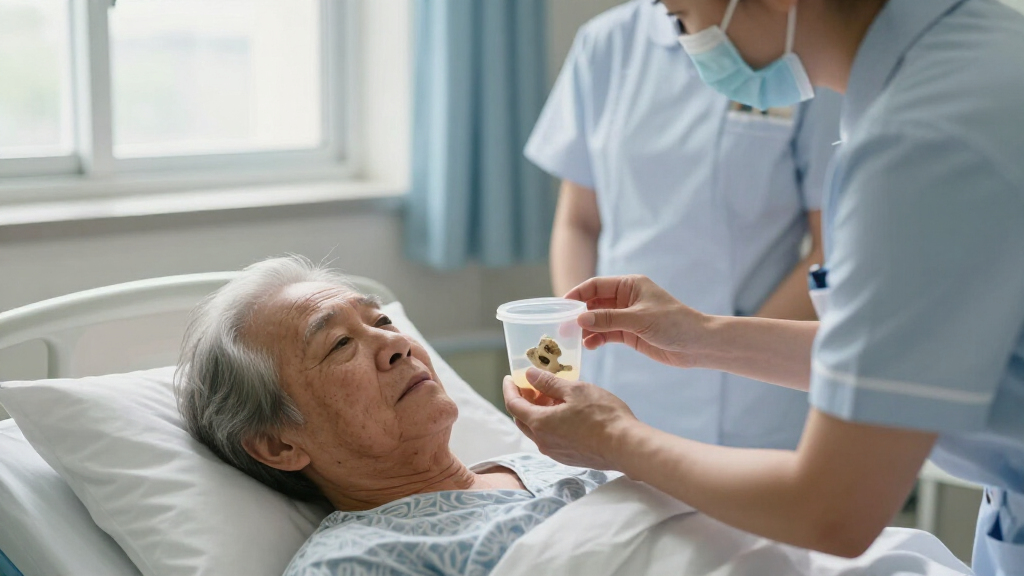
The fragment was retrieved, cleaned, and preserved; extra antibiotics were given.
Operation completed
The team finished the surgery successfully. A 3D-printed implant was considered but not used.
The patient was told what happened after waking from an induced coma. She was heavily medicated and hallucinating at the time, and later joked about the “five-second rule.”
Risk and recovery, in perspective
The dropped fragment was an unusual complication within an already complex operation. It is not described as a common event; published detail about such incidents and their long-term effects is limited.
Illustrative indicators · qualitative descriptions from the reported case, not measured data
Recovery and open questions
Recovery took time and included relearning to walk. The patient has reported a positive outlook, while some sensory deficits remained.
Rebuilding mobility
Relearning to walk was part of a lengthy recovery after the operation.
Positive outlook
She has described herself as recovered, with residual sensory deficits.
Long-term evidence
Delayed effects of this type of incident are not well documented; the precise circumstances were not publicly detailed.
Key questions
Is this common?
No. A skull fragment falling during brain surgery is described as extremely rare, though accidents can happen during complex procedures.
Could infection have been a concern?
Yes. The team cleaned and preserved the fragment and gave extra antibiotics. The patient recovered; broader long-term evidence is limited.
What does the case show?
Complex surgery carries risks, and surgical teams may need to adapt quickly when unexpected events occur.
What may happen next?
Teams may review handling protocols and safety measures. The account does not confirm specific changes resulting from this case.
Source: Guardian Life · Patient outcome and case details as reported
Implications of Skull Drop During Neurosurgery
This incident underscores the inherent risks in complex neurosurgical procedures, where even minor accidents like dropping a bone fragment can occur. It also demonstrates the importance of surgical adaptability and the ability to manage unexpected events without compromising patient outcomes. The successful recovery and the surgeon’s handling of the situation highlight advances in surgical techniques and postoperative care. For patients with high-risk brain conditions, such stories may provide reassurance about the resilience of modern neurosurgery despite rare complications.
As an affiliate, we earn on qualifying purchases.
Rare but Documented Surgical Complication
Brain surgeries involving AVM removal are inherently complex, especially with high-grade cases like grade 4, which are often deemed too risky for complete removal. Advances in imaging and surgical techniques have improved success rates, but complications remain possible. Historically, incidents such as bone fragments falling during surgery are extremely rare but have been reported in surgical literature. Surgeons typically weigh the risks of removing large AVMs against potential complications, including bleeding, infection, and injury to surrounding tissue. This case adds to the limited but growing body of evidence that even unexpected incidents can be managed effectively.
medical bone flap preservation kit
As an affiliate, we earn on qualifying purchases.
As an affiliate, we earn on qualifying purchases.
Unresolved Questions About Long-Term Impact
It remains unclear whether dropping the skull fragment could have led to infection or other complications if not properly managed, though in this case, the patient recovered fully. The long-term effects of such incidents are not well documented, and further research is needed to understand if there are any subtle or delayed impacts on brain function or healing processes. Additionally, the precise circumstances that led to the bone fragment falling during surgery have not been publicly detailed.
As an affiliate, we earn on qualifying purchases.
Future Precautions and Surgical Protocols
Surgeons and medical teams are likely to review and refine protocols to prevent similar incidents, especially during lengthy, high-risk procedures. The case may lead to increased use of protective measures or alternative techniques for handling bone fragments. For the patient, ongoing monitoring will continue to ensure no delayed complications arise, and she may participate in further studies or case reports that examine rare intraoperative events like this one.
antibiotics for surgical site infection
As an affiliate, we earn on qualifying purchases.
As an affiliate, we earn on qualifying purchases.
Key Questions
Is it common for skull fragments to fall during brain surgery?
No, it is an extremely rare occurrence. Surgeons take precautions to prevent such incidents, but accidents can happen in complex procedures.
Could the dropped skull piece cause infection or other problems?
While infection risk exists, in this case, the surgeons managed it with extra antibiotics and careful handling, and the patient recovered fully. The long-term impact of such incidents is not well documented.
What does this incident say about the safety of brain surgery?
It highlights that, despite inherent risks, modern neurosurgery is highly capable of managing complications effectively, especially with experienced teams and advanced techniques.
Will this incident affect future surgical procedures?
It is likely to prompt reviews of surgical protocols and safety measures to minimize the chance of similar accidents in the future.
What is the patient’s current condition?
The patient has fully recovered from the surgery, with some residual sensory deficits, and reports a positive outlook on her experience.
Source: Guardian Life
Fall Picks
fall essentials
As an affiliate, we earn on qualifying purchases.