
When roles in your family shift unexpectedly, you may feel overwhelmed, guilty, or anxious, even if everything seems practical. You might take on responsibilities you didn’t anticipate, leading to emotional struggles you hide behind a brave face. This reverse dynamic can cause feelings of loneliness and long-term emotional impact, affecting your mental health. Recognizing these hidden feelings is just the beginning; understanding these emotional undercurrents can help you find ways to cope and regain balance.
Key Takeaways
- Role reversal often causes emotional distress, including guilt, sadness, and feelings of loss for both parents and children.
- Families may hide their struggles, leading to feelings of isolation and unrecognized emotional suffering.
- Prolonged role reversal can negatively impact mental health and strain long-term family relationships.
- Caregivers often suppress emotions to maintain family stability, masking their internal sadness.
- Recognizing and addressing emotional challenges is essential for emotional well-being and healthy family dynamics.
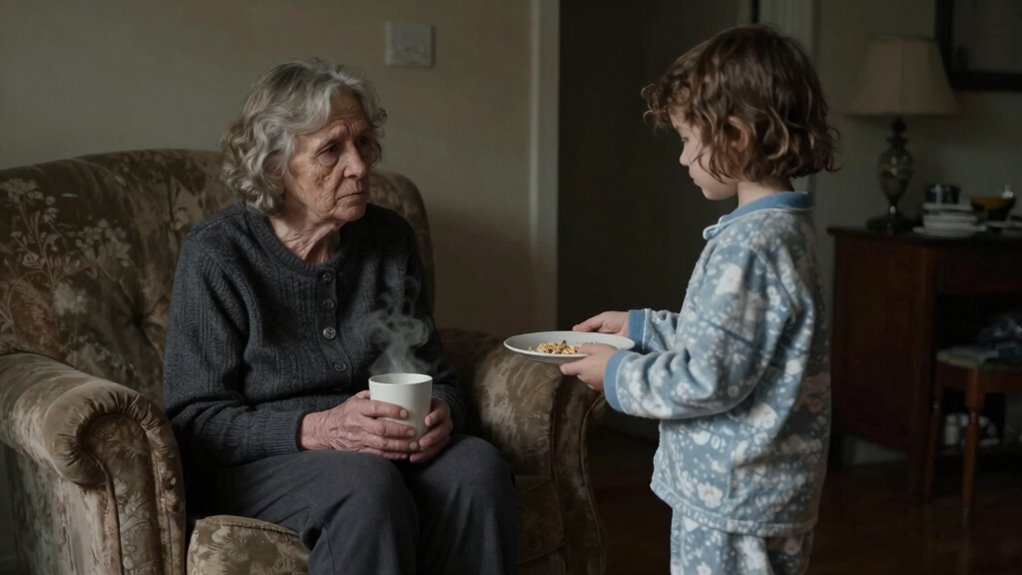
Have you ever noticed how some families experience a shift where children take on roles traditionally held by parents, or parents become more dependent on their kids? This phenomenon, known as role reversal, can happen for many reasons—illness, aging, or unforeseen circumstances that upend the natural order. While it might seem like a practical solution at first, it often brings with it a quiet, persistent sadness. As you step into these unfamiliar roles, you may start to feel the weight of an emotional burden that’s hard to shake. Watching your parents struggle or feeling responsible for their well-being can leave you emotionally drained, often without realizing how deeply it affects you.
The emotional burden of such reversals isn’t just about the physical tasks you handle—it’s about the internal struggle that comes with it. You might find yourself feeling overwhelmed, guilty, or anxious, as if you’re failing in some way. This caregiver guilt can be especially intense; you may blame yourself for not doing enough or worry that you’re losing your childhood or your own life in the process. It’s a common feeling but one that can eat away at your peace of mind. You might wonder if you’re neglecting other aspects of your life—your career, relationships, or personal growth—because you’re caught up in the caregiving role.
This role reversal also impacts your emotional well-being. Instead of enjoying a typical parent-child relationship, you’re often placed in a position of authority, yet emotionally vulnerable yourself. It’s a paradox that can make you feel isolated. Sometimes, family members or friends might not fully understand what you’re going through, which adds to the feeling of loneliness. You may suppress your own feelings, pretending everything is fine while inside, you’re grappling with sadness and frustration. Recognizing that these situations can lead to emotional strain is an important step toward managing them. Developing an awareness of family dynamics can help you better navigate the complex emotions involved. Additionally, understanding the common psychological effects of role reversal can empower you to seek appropriate support.
Furthermore, acknowledging the emotional toll involved can promote healthier coping mechanisms and prevent long-term mental health issues.
In addition, the long-term effects of role reversal can influence future family relationships and your own mental health well beyond the immediate situation. This emotional toll often goes unnoticed, but it’s very real.
Ultimately, this shift reshapes family dynamics and challenges your identity. You might feel guilty for wishing things were different or for missing the simple days before the roles reversed. Recognizing these feelings is an important step toward managing them. It’s okay to admit that you’re overwhelmed or grieving the loss of a traditional family structure. Supporting yourself emotionally, seeking help, or talking openly about your experiences can lighten the burden. Remember, you’re navigating a difficult situation, and acknowledging your feelings is part of caring—for yourself as much as for your family.
emotional support books for family role reversal
As an affiliate, we earn on qualifying purchases.
As an affiliate, we earn on qualifying purchases.
Frequently Asked Questions
How Does Role Reversal Affect Family Communication Dynamics?
Role reversal affects your family’s communication dynamics by blurring parental boundaries and emotional boundaries. You might find yourself confiding in your child or relying on them for emotional support, which shifts traditional roles. This can create confusion, reduce open dialogue, and diminish respect. As a result, honest communication may suffer, and family members may struggle to establish healthy boundaries, leading to misunderstandings and emotional distance within the family unit.
Are There Cultural Differences in Family Role Reversals?
You’ll find that there are clear cultural differences in family role reversals. In some cultures, traditional generational expectations and cultural norms encourage children to care for parents, blurring typical roles. Conversely, other societies emphasize respecting elders and maintaining clear hierarchies, making reversals less common. These variations shape how families navigate responsibilities, often making role reversals a sensitive area where cultural values deeply influence family dynamics and the emotional landscape.
What Signs Indicate Unhealthy Role Reversal?
You can spot unhealthy role reversal when emotional boundaries blur, making one family member overly responsible or dependent. Watch for signs of a power imbalance, where one person makes decisions that should involve others or takes on roles that don’t suit their age or position. If you notice this, it may indicate an unhealthy dynamic, risking emotional strain and hindering genuine family growth. Addressing these signs early helps restore balance and healthy boundaries.
How Can Families Support Reversed Roles Positively?
You can support reversed roles positively by fostering emotional resilience and clear boundary setting. Encourage open communication, allowing family members to express feelings without judgment. Respect each other’s boundaries, ensuring roles don’t become overwhelming or unhealthy. Offer reassurance and validation, helping everyone build resilience. By maintaining a balanced approach, you create a supportive environment where family members feel valued and understood, despite the reversed roles.
What Long-Term Psychological Impacts Can Role Reversal Cause?
Role reversal can lead to long-term psychological impacts like emotional dependency and identity confusion. You might find yourself overly reliant on others for emotional support or struggle to define your own identity outside the reversed roles. These issues can cause feelings of insecurity, anxiety, and difficulty forming healthy relationships. Recognizing these impacts early helps you seek support and work toward establishing a balanced, healthy sense of self and independence.
caregiver stress relief products
As an affiliate, we earn on qualifying purchases.
As an affiliate, we earn on qualifying purchases.
Conclusion
Have you ever stopped to wonder how role reversal might quietly shape your family’s emotional landscape? It’s easy to overlook the hidden sadness that can come with these shifts, yet their impact runs deep. By recognizing and addressing these changes, you can foster understanding and healing. So, are you willing to confront the silent struggles beneath the surface, or will they continue to shape your family’s story in ways you might never fully see?
As an affiliate, we earn on qualifying purchases.
self-care products for caregivers
As an affiliate, we earn on qualifying purchases.
As an affiliate, we earn on qualifying purchases.