

To prevent caregiving from destroying your marriage, prioritize self-care by scheduling regular breaks and engaging in activities that recharge you, like walking or talking with friends. Communicate openly with your partner using honest “I” statements, and encourage them to share their feelings too. Don’t hesitate to seek outside support or delegate tasks to ease your burden. Continuing to explore these strategies can help you maintain your relationship’s strength amid caregiving challenges.
Key Takeaways
- Prioritize self-care and schedule regular breaks to replenish emotional reserves and prevent burnout.
- Foster open, honest communication using “I” statements to share feelings and prevent misunderstandings.
- Recognize signs of emotional exhaustion early and seek support from caregivers, friends, or support groups.
- Delegate tasks and ask for help to reduce caregiver burden and strengthen your support system.
- Engage in stress-relieving activities, such as using home theater projectors or mindfulness, to maintain emotional well-being.
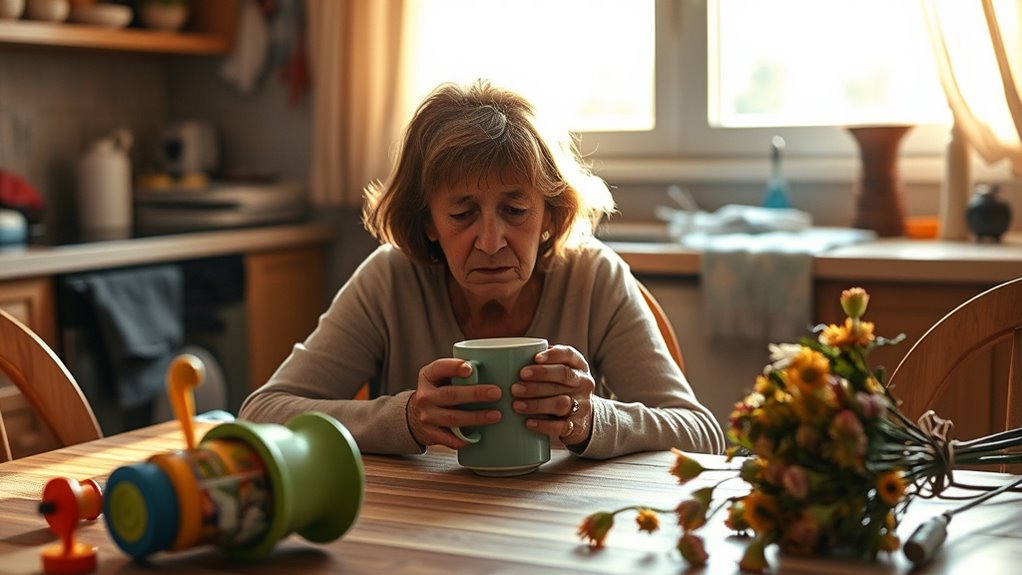
Balancing caregiving responsibilities with your marriage can feel overwhelming, especially when the demands of tending to a loved one’s needs start to take a toll on your relationship. One of the biggest challenges you face is emotional exhaustion. When you’re constantly giving your energy, patience, and emotional support, it’s easy to feel drained and disconnected from your partner. This exhaustion can cloud your judgment, reduce your patience, and make small disagreements escalate. It’s essential to recognize when you’re reaching this point so you can take steps to recharge and avoid burnout, which could damage your marriage long-term.
Another issue that often arises is communication barriers. When you’re emotionally exhausted, you might find it harder to express your feelings clearly or listen actively. You might shut down or become irritable, which creates distance between you and your partner. Conversely, your partner may not fully understand what you’re experiencing, leading to misunderstandings or feelings of neglect. These barriers make it even harder to share your needs or ask for support, deepening the emotional divide. Without open, honest communication, frustration can build, and the bond you share can weaken.
To prevent these issues from spiraling out of control, it’s essential to prioritize both your well-being and your relationship. Schedule regular breaks, even if it’s just a few minutes a day, where you focus solely on self-care. This could be as simple as taking a walk, practicing mindfulness, or talking to a friend. These moments help replenish your emotional reserves and give you the clarity to approach your caregiving duties with a refreshed perspective. Equally important is fostering open communication with your partner. Share your feelings honestly, without guilt or blame, and encourage them to do the same. Use “I” statements to express how you feel, which helps prevent defensiveness and promotes understanding.
It’s also beneficial to create a support network outside your immediate family. Whether it’s a caregiver support group, friends, or professional counselors, reaching out can provide the emotional relief and practical advice you need. Don’t hesitate to delegate tasks or ask for help—doing so isn’t a sign of weakness but a way to sustain your emotional health and keep your relationship strong. Remember, caring for your loved one doesn’t mean neglecting yourself or your marriage. By addressing emotional exhaustion and communication barriers proactively, you can maintain a healthy, supportive partnership even amidst caregiving challenges. Additionally, using appropriate tools like home theater projectors can provide a relaxing escape and help you unwind during your limited free time.

52 Mindfulness Cards – Simple Practices for Stress & Anxiety Relief, Emotional Regulation, and Mindful Living – Daily Self Care Exercises & Inspirational Affirmations for Calm, Relaxation, & Grounding
[Cultivate Presence & Calm] – Practice 52 unique mindfulness exercises to fully ground yourself and engage with the…
As an affiliate, we earn on qualifying purchases.
As an affiliate, we earn on qualifying purchases.
Frequently Asked Questions
How Can I Find Time for My Partner Amidst Caregiving Responsibilities?
To find time for your partner, prioritize scheduling regular date nights and engage in shared hobbies, even if brief. Communicate openly about your needs and set boundaries around caregiving duties. Consider enlisting help from family or friends to create pockets of quality time. Small gestures, like a walk or a coffee break together, can strengthen your bond and remind you both of your partnership amid the caregiving demands.
What Signs Indicate Caregiving Stress Is Harming My Marriage?
Like Icarus flying too close to the sun, you might notice emotional exhaustion and role conflict creeping into your marriage. Signs include feeling distant from your partner, frequent arguments, or neglecting your own needs. You may also feel overwhelmed or irritable, risking emotional burnout. If these signs appear, it’s a clear warning that caregiving stress is harming your relationship, and you should seek support before it’s too late.
Are There Support Groups Specifically for Married Caregivers?
Yes, there are caregiver support groups specifically for married caregivers. These groups provide a safe space to share experiences and get advice, helping you manage stress without harming your marriage. Additionally, marriage counseling can be a valuable resource to strengthen your relationship and address caregiving challenges. By actively participating in support groups and seeking counseling, you’ll find ways to balance your caregiving duties and maintain a healthy marriage.
How Can I Communicate My Needs Without Feeling Guilty?
Think of your needs as a garden that needs tending. To communicate them without guilt, set emotional boundaries and practice assertive communication. Be honest about what you need, using “I” statements to express your feelings clearly and kindly. Remember, asserting yourself isn’t selfish; it’s essential. When you speak up respectfully, you nurture your well-being and strengthen your relationship, creating a healthier balance for both of you.
What Professional Resources Are Available for Caregiver Marital Counseling?
You can access professional counseling and caregiver therapy through local mental health clinics, online platforms, or your healthcare provider. Many therapists specialize in caregiver marital counseling, offering tailored support to help you navigate the emotional challenges of caregiving. Reach out to these resources to find a licensed professional who understands your situation. They can help you address your needs, improve communication, and strengthen your relationship amidst caregiving stresses.
home theater projector for stress relief
As an affiliate, we earn on qualifying purchases.
As an affiliate, we earn on qualifying purchases.
Conclusion
Remember, caregiving is a marathon, not a sprint. If you let it drain your energy and neglect your relationship, it’s like a storm that can tear your marriage apart. But by setting boundaries, sharing responsibilities, and keeping communication open, you can weather the storm together. Your marriage is the anchor that keeps you grounded through caregiving’s rough seas. Stay connected, stay strong, and don’t let the weight of caregiving sink what matters most.
self-care relaxation kit
As an affiliate, we earn on qualifying purchases.
As an affiliate, we earn on qualifying purchases.
caregiver support group books
As an affiliate, we earn on qualifying purchases.
As an affiliate, we earn on qualifying purchases.