Before helping a senior across a room, assess their mobility by observing their balance, strength, and need for support equipment like a cane or walker. Scan the environment for hazards such as uneven flooring, clutter, or loose rugs, and clear the path as needed. Check their footwear to make certain it’s secure and non-slip. Also, communicate calmly, confirm their comfort, and stay attentive to their cues. To stay safe and confident, consider everything involved—more tips follow if you continue on.
Key Takeaways
- Assess the senior’s mobility, balance, and need for support or assistive devices.
- Scan the environment for hazards like clutter, uneven flooring, or obstacles.
- Confirm the senior’s comfort, readiness, and preferred support method.
- Check footwear for proper fit and grip to prevent slipping.
- Maintain a secure grip and stay alert to cues of fatigue or unsteadiness.

Walking a senior across a room requires careful preparation to guarantee their safety and comfort. Before assisting them, you should perform a quick mobility assessment to understand their current abilities. Observe how they stand, walk, and if they use any assistive devices like a cane or walker. Check if they seem steady on their feet or if they show signs of imbalance or weakness. This assessment helps you decide how much support they’ll need and whether you should go slowly or require additional help. Knowing their mobility level also allows you to choose the safest path and position yourself properly to provide the necessary stability.
Perform a quick mobility assessment to ensure safe and supportive assistance when walking a senior.
Next, scan the environment for potential hazards. Look for uneven flooring, loose rugs, clutter, or cords that could cause tripping. Clear the path as much as possible to prevent accidents. Be especially mindful of thresholds or steps—these can be tricky for seniors with limited mobility. If you spot any environmental hazards, address them before starting to walk. For example, move furniture out of the way or ask someone to help rearrange obstacles. Guaranteeing a safe environment is vital to avoid falls or unexpected slips that could seriously injure your senior. Ensuring proper indoor air quality can also contribute to their overall health, especially in environments prone to dust or allergens. Additionally, maintaining a clutter-free space can significantly reduce the risk of trip hazards. Incorporating resilient landscaping techniques, like smooth and stable surfaces, can further enhance safety, especially in outdoor or semi-outdoor areas.
As you prepare to walk them across the room, communicate clearly and calmly. Explain what you’re about to do, and ask if they’re comfortable or if they need a moment. Confirm whether they prefer to hold your arm, use a walker, or hold onto a nearby support. Your tone should be reassuring to reduce anxiety and build trust. Keep your body posture stable and centered, ready to support them evenly on both sides. If they need assistance, grip their hand or arm firmly but gently—never too tight—to help steady them.
Additionally, check their footwear to make sure it’s appropriate and secure. Proper shoes with good grip can prevent slipping. If they’re wearing loose slippers or sandals, consider asking them to switch into more supportive footwear before crossing the room. Throughout the walk, maintain eye contact and stay alert to their cues. If they feel unsteady or say they’re tired, stop immediately and reassess. Good environmental awareness is essential to prevent accidents. Patience and attentiveness are key to making the experience safe and comfortable. By carefully evaluating their mobility and the environment beforehand, you guarantee that crossing the room becomes a smooth, secure process for your senior.
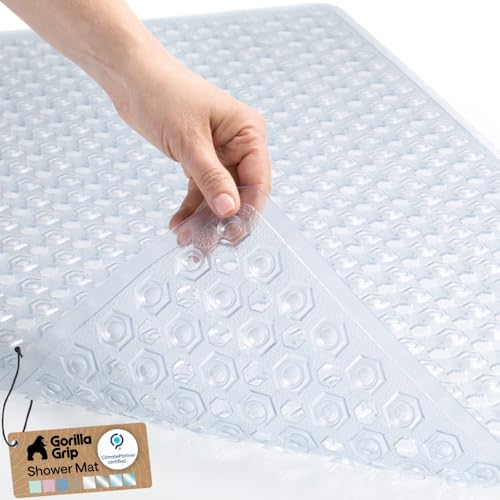
GORILLA GRIP Patented Bath Tub Shower Mat, Machine Washable Bathtub Floor Liner Mats, Suction Cups and Drain Holes to Keep Tubs Clean, Soft on Feet, Bathroom Essentials, 35x16 Inch, Clear
PATENTED DESIGN WITH POWERFUL SUCTION GRIP: a bath mat designed to securely stay in place; this patented bathtub...
As an affiliate, we earn on qualifying purchases.
Frequently Asked Questions
How Do I Assess a Senior’s Mobility Level Accurately?
To assess a senior’s mobility level accurately, start with a thorough mobility assessment, observing how they move and their ability to perform daily tasks. Conduct a balance evaluation by gently testing their stability while standing or walking, noting any hesitations or unsteadiness. Pay attention to their gait, strength, and coordination. This combined approach helps determine their mobility status, guiding safe assistance and tailored support during transfers or ambulation.
What Emergency Supplies Should I Carry During the Walk?
You should carry a well-stocked first aid kit and a list of emergency contacts, like safety anchors in your pocket. These supplies act as your safety net, ready to catch unexpected falls or minor injuries. Keep a phone nearby to quickly summon help if needed. Being prepared guarantees you’re a steady hand in uncertain moments, guiding your senior safely across the room with confidence and calm.
How Can I Communicate Effectively With Seniors With Hearing Impairments?
To communicate effectively with seniors with hearing impairments, you should use clear speech, face them directly, and maintain eye contact. Incorporate assistive devices like hearing aids, if available, and use simple, concise communication strategies. Make certain your environment is quiet, and consider using visual cues or written notes to reinforce your message. Patience and active listening help build trust and ensure they understand you clearly.
What Are Common Signs of Fatigue or Discomfort in Seniors?
Imagine a flickering candle—if you notice flickering, it signals fatigue or discomfort. In seniors, watch for frailty indicators like leaning on furniture, sluggish movements, or a glazed look. Dehydration can amplify these signs, so make certain proper elderly hydration. If they seem to tire easily or become visibly strained, it’s time to pause, offer support, and check for underlying needs, preventing further exhaustion or injury.
How Do I Handle Unexpected Obstacles During the Walk?
When unexpected obstacles appear during obstacle navigation, stay calm and communicate clearly with the senior. Gently guide them around or over the obstacle, ensuring their safety and comfort. If an unexpected interruption occurs, pause and assess the situation before proceeding. Keep a steady pace, offer reassurance, and adapt your route as needed. Your calm, attentive approach helps the senior feel secure and supported throughout the walk.

YINENN Bath and Shower Safety Mats 40x16 inch, Non Slip with Suction Cups for Bathroom Stall and Tub Floor, Extra Large and Machine Washable, Drain Holes Keep Bathtub Clean, Clear
Extra large bath shower safety mats: No chemical smell, vinyl quality material. Heavy duty and standard dimensions and...
As an affiliate, we earn on qualifying purchases.
Conclusion
Think of guiding a senior across a room like steering a delicate boat through calm waters. By checking their stability, communication cues, and environment first, you guarantee a smooth, safe journey. When you pay attention to these details, you’re not just helping them move — you’re creating a bridge over potential choppy waters. With patience and awareness, you can make every crossing feel secure and confident, turning a simple walk into a peaceful voyage.

TEESHLY Bath Tub and Shower Mats, Non Slip 40 x 16 Inch Extra Large Bathtub Mat, Machine Washable Bathmat with Drain Holes, Suction Cups for Bathroom Floor, Gray
NON-SLIP LARGE BATH MAT: Our non-slip large bathtub mat offers superior coverage with its 40 x 16-inch size,...
As an affiliate, we earn on qualifying purchases.

VOCIC Sit to Stand Lift, One-Step Stand Assist Lift for Elderly, Patient Lift Chair Transport Unit with Wheels, Fall Prevention & Muscle Building, AY03 2026 Upgraded
This product features an active open-design and DOES NOT include or support a safety belt restraint. It is...
As an affiliate, we earn on qualifying purchases.