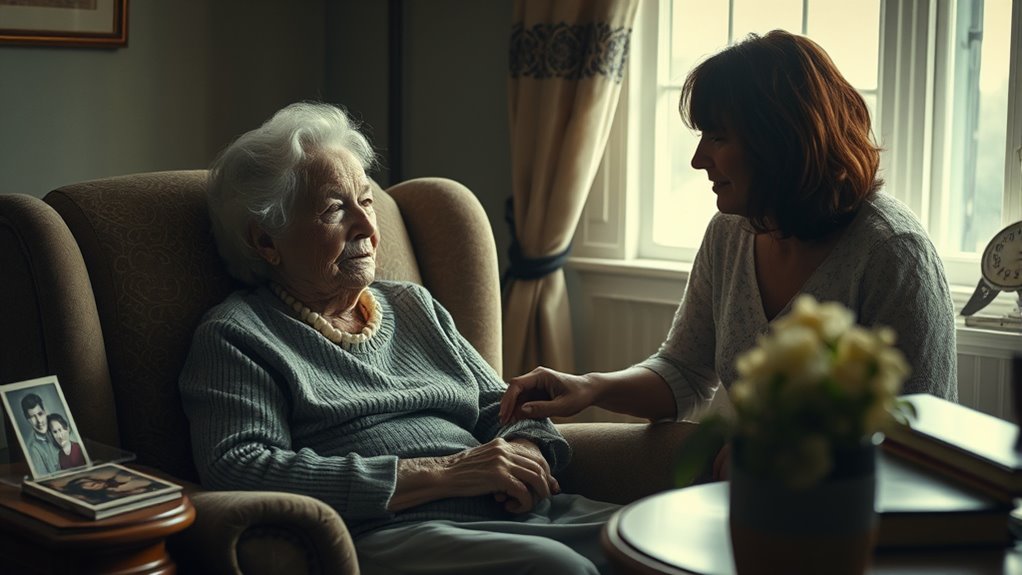

Coping with a loved one’s personality changes from dementia can be emotionally challenging. Focus on building emotional resilience through self-care, support groups, and understanding that these changes are part of the disease. Adapt your communication by using simple language, patience, and non-verbal cues. Creating a calm environment with clear visuals can also help. By validating feelings and responding thoughtfully, you can manage miscommunications more effectively. Continuing explores practical ways to navigate these difficult moments smoothly.
Key Takeaways
- Practice patience and adaptation in communication to accommodate personality shifts.
- Focus on validating feelings and engaging in positive, present-centered activities.
- Enhance visual clarity and environment to reduce confusion and promote comfort.
- Build emotional resilience through self-care, support groups, and understanding the disease process.
- Recognize subtle cues and body language to better address needs and prevent misunderstandings.

Dealing with a loved one’s personality changes due to dementia can be challenging and emotionally draining. As their behavior shifts, you might feel confused, frustrated, or even helpless. It’s natural to want to hold onto the person you knew, but understanding that these changes are part of the disease can help you develop emotional resilience. Building this resilience doesn’t mean suppressing your feelings; rather, it involves finding ways to stay steady amidst the emotional ups and downs. One effective approach is to focus on your self-care, ensuring you have time for activities that replenish your energy and keep you grounded. Support groups or talking with friends who understand dementia can also bolster your emotional strength, reminding you that you’re not alone in this journey.
Communication strategies are essential tools for managing the evolving relationship with your loved one. As their personality shifts, traditional ways of connecting may no longer work, but adapting your approach can foster understanding and reduce frustration. Use simple, clear language, and speak calmly, maintaining a gentle tone. Often, your loved one responds better to non-verbal cues like touch, facial expressions, or gestures, so pay attention to their body language and facial expressions to gauge their feelings. Patience becomes your best ally, as miscommunications are common; giving them extra time to process and respond can prevent misunderstandings and reduce agitation. Recognizing that color accuracy impacts overall image quality can help you better understand how visual clarity influences your loved one’s environment and mood.
It’s also helpful to focus on the moment rather than dwelling on the person they once were. Engage in activities that they enjoy or that evoke positive memories, which can provide comfort and a sense of connection. Avoid arguing or correcting them, as this can lead to frustration for both of you. Instead, validate their feelings—even if they are based on a distorted perception—by acknowledging their emotions without confrontation. Over time, you’ll learn the subtle cues that signal their needs or discomfort, allowing you to respond more effectively.

Dementia Aid: Communication Book for Memory Loss and Nonverbal Adults (Stroke Recovery Brain Exercises & Dementia Activity Workbook Series)
As an affiliate, we earn on qualifying purchases.
As an affiliate, we earn on qualifying purchases.
Frequently Asked Questions
How Can I Prepare Emotionally for Personality Changes?
To prepare emotionally, focus on building emotional resilience by accepting that personality changes are part of dementia’s progression. Recognize anticipatory grief early, allowing you to process feelings of loss beforehand. Stay informed about the disease, seek support from others, and practice self-care. This proactive approach helps you cope better with the emotional ups and downs, making it easier to navigate your loved one’s evolving personality with compassion and strength.
Are There Support Groups Specifically for Family Caregivers?
Yes, many support groups are like safe harbors for caregivers, offering emotional resilience and understanding. You’ll find local and online groups tailored to those caring for loved ones with dementia, where shared stories and advice become your anchor. Joining these communities helps lighten your emotional load, connect you with others who truly get what you’re going through, and strengthen your ability to navigate the stormy seas of caregiving.
What Legal Considerations Should I Be Aware Of?
You should consider creating advance directives to guarantee your loved one’s wishes are respected if they can’t communicate later. It’s also essential to update estate planning documents, like wills and power of attorney, to protect their assets and make healthcare decisions easier. Consulting with an attorney experienced in elder law can help you navigate these legal considerations, giving you peace of mind during this challenging time.
How Can I Balance Patience With Frustration?
Think of patience as a garden that needs constant tending. When frustration rises, use coping strategies like deep breathing, taking short breaks, and reminding yourself of your loved one’s condition. Building emotional resilience helps you stay steady, like a sturdy tree in a storm. By practicing compassion and self-care, you can balance patience and frustration, nurturing your well-being while supporting your loved one through their changes.
When Is the Right Time to Seek Professional Help?
You should seek professional help when you notice early warning signs like significant personality changes, increased confusion, or difficulty communicating effectively. If these symptoms persist or worsen despite your efforts, it’s time to consult healthcare professionals. They can provide guidance, support, and strategies to improve your loved one’s quality of life. Don’t wait too long—early intervention makes a big difference in managing dementia’s challenges effectively.

Visual Schedule for Adults (Red) Visual timetable for dementia, stroke victims, adults with learning difficulties, autistic adults.
Reduce anxiety and bring calm by showing an elderly person, stroke victim, adult with learning difficulties or dementia…
As an affiliate, we earn on qualifying purchases.
As an affiliate, we earn on qualifying purchases.
Conclusion
Remember, you’re not alone in this journey—about 60% of caregivers report feeling overwhelmed by personality changes in loved ones with dementia. While it’s tough to see the person you knew fade away, your patience and understanding make a difference. Focus on small moments of connection and self-care. Staying informed and seeking support can help you cope better. Together, you can navigate these challenges, cherishing the love and memories that remain.

Brain Games – Scavenger Hunt Puzzles
As an affiliate, we earn on qualifying purchases.
As an affiliate, we earn on qualifying purchases.

Joyful Generations Share a Moment Conversation Cards | Dementia Activities for Seniors | Alzheimer’s & Dementia Conversation Cards | Great for Individuals Living with Dementia, Families and Caregivers
✅ Meaningful Conversations Made Easy – With 300 creative questions & eight thoughtful categories, get ready to spark…
As an affiliate, we earn on qualifying purchases.
As an affiliate, we earn on qualifying purchases.