The best home health monitoring devices depend on what you need to track: my best overall pick is the OMRON Complete 2-in-1 Upper Arm Blood Pressure Monitor with EKG, which combines two useful measurements in one setup. For a broader set of routine checks, the Biokit Home Health Monitoring Kit bundles a blood pressure cuff, pulse oximeter, and thermometer; the Withings BPM Vision is a stronger fit for people who want connected blood pressure tracking. The main tradeoff is between an all-in-one device and a focused tool that may be easier to use consistently. Read on for how the 15 options compare, who each suits, and what to check before choosing.

Turn quiet afternoons into listening time
- Thousands of audiobooks, podcasts and originals
- Listen on your phone, tablet or Echo — also offline
- Cancel anytime
Complete the kit


Key Takeaways
- The OMRON Complete pairs blood pressure and EKG readings, making it the most capable single-device choice in this lineup, but it covers fewer measurement types than the Biokit bundle.
- The Biokit offers the broadest basic-check kit among these picks, while requiring users to manage several separate devices and readings.
- ECG tools are not interchangeable: KardiaMobile 1-Lead favors a simpler spot check, while the 6L and EMAY 6L offer more leads for users seeking a richer recording.
- Blood pressure fit and routine matter more than app extras. Upper-arm cuffs suit many home routines, while wrist monitors are easier to pack but need careful positioning.
- Several devices track specialized signals rather than general health. Lingo focuses on glucose trends, the mmWave monitor on sleep signals, and WHOOP on ongoing wearable metrics.
| Biokit Home Health Monitoring Kit with Blood Pressure Cuff, Pulse Oximeter, Thermometer, and App |  | Best Multi-Metric Starter Kit | Included devices: Blood pressure cuff, pulse oximeter, thermometer | Measurements: Blood pressure, blood oxygen, body temperature | Data storage: Measurements saved in the Biocare app | VIEW LATEST PRICE | See Our Full Breakdown |
| WHOOP MG Screenless Health and Fitness Wearable with 12-Month Membership |  | Best for Continuous Wellness Trends | Membership: 12-month WHOOP Life | Included accessories: SuperKnit Luxe band and Waterproof Wireless PowerPack | Battery life: 14+ days | VIEW LATEST PRICE | See Our Full Breakdown |
| Fingertip Pulse Oximeter with OLED Screen |  | Best Simple Spot-Check Device | Display: OLED screen | Measurements: SpO2, pulse rate, signal strength | Operation: One-button | VIEW LATEST PRICE | See Our Full Breakdown |
| EMAY 6L Portable ECG Monitor with Smartphone and PC Connectivity |  | Best for At-Home ECG Recording | Model: EMG-6L | Channels: 6 | Compatible devices: iOS and Android smartphones; Windows and Mac PCs | VIEW LATEST PRICE | See Our Full Breakdown |
| Dario Gen-2 Blood Pressure Monitor for Home Use |  | Best Dedicated Blood Pressure Monitor | Cuff size: 8.75–16.5 in (adjustable adult) | Display: Large backlit display | Connectivity: Bluetooth to Dario app | VIEW LATEST PRICE | See Our Full Breakdown |
| KardiaMobile 6L Six-Lead EKG Heart Monitor |  | Best for More Detailed At-Home EKGs | Leads: 6 | Result time: 30 seconds | Connectivity: Bluetooth | VIEW LATEST PRICE | See Our Full Breakdown |
| KardiaMobile 1-Lead Personal EKG Monitor |  | Best Compact EKG Starter | EKG leads: 1 | Recording time: 30 seconds | Compatible devices: Most smartphones | VIEW LATEST PRICE | See Our Full Breakdown |
| Withings BPM Vision Blood Pressure Monitor with Wi-Fi and Bluetooth |  | Best Guided Blood Pressure Monitor | Display: 2.8-inch LCD | Measurements: Systolic blood pressure, diastolic blood pressure, and heart rate | Connectivity: Wi-Fi and Bluetooth | VIEW LATEST PRICE | See Our Full Breakdown |
| iHealth Track Smart Upper Arm Blood Pressure Monitor with Wide-Range Cuff |  | Best Value for Straightforward Blood Pressure Tracking | Measurement type: Upper-arm blood pressure | Cuff size: 8.7–16.5 inches (22–42 cm) | On-device storage: Up to 99 readings | VIEW LATEST PRICE | See Our Full Breakdown |
| OMRON Complete 2-in-1 Upper Arm Blood Pressure Monitor with EKG |  | Best Combined Blood Pressure and EKG Monitor | Measurement types: Blood pressure and EKG | Cuff fit: Arms 9–17 inches | Stored readings: Up to 90 on device; unlimited in the OMRON Connect app | VIEW LATEST PRICE | See Our Full Breakdown |
| Innovo iP900BP-B Fingertip Pulse Oximeter with Bluetooth | 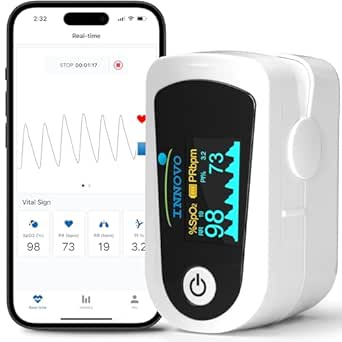 | Best for App-Logged Spot Checks | Measurements: SpO2, pulse rate, and respiratory rate | SpO2 range: 70%–100% | Measurement accuracy: ±2% | VIEW LATEST PRICE | See Our Full Breakdown |
| Oklar Rechargeable Wrist Blood Pressure Monitor |  | Best for Two-User Wrist Tracking | Users: 2 | Reading storage: Up to 240 readings | Measurement time: About 35 seconds | VIEW LATEST PRICE | See Our Full Breakdown |
| 60GHz mmWave Radar Sleep Monitor with Heart Rate and Breathing Tracking |  | Best for Contact-Free Sleep Tracking | Brand and model: cosoway BH60A1-W | Tracking: Heart rate and breathing rate | Frequency: 60 GHz | VIEW LATEST PRICE | See Our Full Breakdown |
| Lingo Continuous Glucose Monitor |  | Best for Lifestyle Glucose Insights | Tracking duration: Up to 14 days | Tracking frequency: Minute by minute | Sensor placement: Back of the arm | VIEW LATEST PRICE | See Our Full Breakdown |
| Nanfevior Fingertip Pulse Oximeter and Blood Pressure Monitor |  | Best for Multi-Measure Portability | Brand and model: Nanfevior BM1000B | Measurements: SpO2, pulse rate, and non-invasive blood pressure | SpO2 range: 70%–100% | VIEW LATEST PRICE | See Our Full Breakdown |
| home health monitoring device | Connectivity |
|---|---|
| Biokit Home Health Monitoring | Mobile app |
| WHOOP MG Screenless Health and | — |
| Fingertip Pulse Oximeter with | — |
| EMAY 6L Portable ECG Monitor w | Bluetooth and USB |
| Dario Gen-2 Blood Pressure Mon | Bluetooth to Dario app |
| KardiaMobile 6L Six-Lead EKG H | Bluetooth |
| KardiaMobile 1-Lead Personal E | No Bluetooth or Wi-Fi required |
| Withings BPM Vision Blood Pres | Wi-Fi and Bluetooth |
| iHealth Track Smart Upper Arm | Bluetooth 4.0 or later |
| OMRON Complete 2-in-1 Upper Ar | Bluetooth |
| Innovo iP900BP-B Fingertip Pul | Bluetooth |
| Oklar Rechargeable Wrist Blood | — |
| 60GHz mmWave Radar Sleep Monit | — |
| Lingo Continuous Glucose Monit | — |
| Nanfevior Fingertip Pulse Oxim | — |
More Details on Our Top Picks
Biokit Home Health Monitoring Kit with Blood Pressure Cuff, Pulse Oximeter, Thermometer, and App
I’d choose the Biokit when the goal is to keep several basic checks in one compact home kit. Its cuff, pulse oximeter, and thermometer cover blood pressure, blood oxygen, and temperature, while the Biocare app saves readings for later review and sharing. That broader mix makes it more useful for routine household tracking than the Dario Gen-2, which focuses on blood pressure and app-based trends. The tradeoff is that Biokit’s connected record depends on a mobile app, and the supplied details don’t specify measurement ranges or clinical validation. It also offers less depth for heart-rhythm review than the EMAY 6L ECG Monitor. I see it as a practical starting point for people who want a few common measurements together, not a substitute for clinical assessment.
Pros:- Combines a blood pressure cuff, pulse oximeter, and thermometer in one kit.
- Covers three common home measurements rather than blood pressure alone.
- Saves measurements in the Biocare app for review and sharing.
- Compact design is suited to home storage.
Cons:- Connected tracking relies on using the mobile app.
- Product details do not specify measurement ranges or clinical validation.
- Does not offer ECG recording for more detailed heart-rhythm review.
Best for: Households that want one compact kit for occasional blood pressure, oxygen saturation, and temperature checks, with app-based record keeping.
Not ideal for: Buyers who want detailed ECG recordings, or anyone who prefers to track readings without a mobile app.
- Included devices:Blood pressure cuff, pulse oximeter, thermometer
- Measurements:Blood pressure, blood oxygen, body temperature
- Data storage:Measurements saved in the Biocare app
- Connectivity:Mobile app
- Design:Compact home monitoring system
- App functions:Reviewing and sharing health data
Our verdict“Choose Biokit if you want a compact, app-connected set of basic monitoring tools rather than a single-purpose blood pressure or ECG device.”
WHOOP MG Screenless Health and Fitness Wearable with 12-Month Membership
The WHOOP MG is the broadest ongoing tracker in this group: it follows sleep, activity, heart rate, HRV, blood oxygen, skin temperature, and other metrics, then pairs those readings with personalized app coaching. Its 14-plus-day battery life and wearable PowerPack support near-continuous use, which suits people interested in patterns across days and nights rather than occasional spot checks. Unlike the Biokit, it does not supply a thermometer or a blood pressure cuff for direct readings; its blood pressure information is described as estimated insights. The screenless design also means the app is where readings and coaching appear, and advanced features rely on a 12-month membership. I’d rank it for ongoing wellness tracking, not for replacing dedicated home measurement devices.
Pros:- Tracks a wide range of sleep, activity, and health metrics.
- Includes personalized coaching and habit insights in the app.
- Battery life is listed as 14 days or more, with charging while worn.
- Package includes a SuperKnit Luxe band and waterproof wireless PowerPack.
Cons:- Screenless design requires the app to view readings and insights.
- Advanced tracking and coaching features are tied to a membership.
- Estimated blood pressure insights are not a direct cuff measurement.
Best for: People who want continuous sleep, activity, and body-metric trends with app-based coaching and are comfortable with a membership.
Not ideal for: Buyers seeking direct cuff-based blood pressure readings, an on-device display, or health tracking without a continuing membership.
- Membership:12-month WHOOP Life
- Included accessories:SuperKnit Luxe band and Waterproof Wireless PowerPack
- Battery life:14+ days
- Design:Screenless
- Health tracking:ECG, estimated blood pressure insights, heart rate, HRV, respiratory rate, blood oxygen, and skin temperature
- Sleep tracking:REM, deep, and light sleep; awake time; sleep need, debt, consistency, and efficiency
- PowerPack water resistance:IP68, up to 10 meters for 2 hours
- App integrations:Apple Health, Google Health Connect, Natural Cycles, Withings, Peloton, and Strava
Our verdict“Pick WHOOP MG for continuous, app-led wellness trends, but choose a dedicated cuff such as the Dario Gen-2 for direct blood pressure readings.”
Fingertip Pulse Oximeter with OLED Screen
For a quick oxygen and pulse check without setting up an app, this fingertip pulse oximeter is the simplest option in the lineup. Its OLED screen shows SpO2, pulse rate, and signal strength; a waveform bar gives a visual indication of the pulse signal, while one-button operation keeps the process straightforward. It is more portable and focused than the Biokit, which bundles several devices and stores readings in an app, but this oximeter does not provide a saved history or temperature and blood pressure measurements. Two AAA batteries and a lanyard are included, though it still depends on replaceable batteries. Product details also provide no accuracy or medical certification information, so I would not treat its display as a diagnosis or as a replacement for professional advice.
Pros:- Displays SpO2, pulse rate, and signal strength on an OLED screen.
- One-button operation keeps spot checks simple.
- Compact, lightweight design is easy to carry.
- Includes two AAA batteries and a lanyard.
Cons:- No accuracy or medical certification details are provided.
- Requires AAA batteries rather than a rechargeable power source.
- Does not store readings or measure blood pressure and temperature.
Best for: People who want a lightweight, no-app device for occasional spot checks of blood oxygen and pulse rate.
Not ideal for: Buyers who need stored measurement trends, multiple health measurements in one kit, or product details documenting accuracy and medical certification.
- Display:OLED screen
- Measurements:SpO2, pulse rate, signal strength
- Operation:One-button
- Power:2 AAA batteries included
- Included accessories:Lanyard and instruction manual
- Auto power-off:Yes
- Pulse display aid:Waveform bar graph
Our verdict“Choose this oximeter for straightforward portable oxygen and pulse checks, but opt for the Biokit if you also want blood pressure and temperature monitoring.”
EMAY 6L Portable ECG Monitor with Smartphone and PC Connectivity
The EMAY 6L is the specialist pick for buyers who want to record ECG signals at home and review them on a phone or computer. Its six-channel recording, heart-rate display, and Bluetooth and USB connections give it a different purpose from the Dario Gen-2, which is built around cuff-based blood pressure readings and app trends. EMAY also avoids a subscription and uses a rechargeable battery, making saved recordings easier to manage without recurring access fees. That focus comes with limits: the product is explicitly not a replacement for hospital diagnostic ECG equipment, and use is not recommended for people with an implanted pacemaker. Its 85 g body is portable, but interpreting recordings still calls for appropriate clinical guidance; it is not a general-purpose monitor for multiple vital signs.
Pros:- Records and stores ECG signals while displaying heart rate.
- Connects to iOS and Android smartphones and Windows and Mac computers.
- Uses Bluetooth and USB connectivity.
- Rechargeable battery and no subscription requirement.
Cons:- Not intended to replace a hospital diagnostic ECG device.
- Use is not recommended for people with an implanted pacemaker.
- Focuses on ECG and heart rate rather than broader measurements such as blood pressure or temperature.
Best for: People who want to capture and store home ECG signals on a smartphone or computer without a subscription.
Not ideal for: People with an implanted pacemaker, or buyers who need hospital-grade diagnosis or routine monitoring of several vital signs.
- Model:EMG-6L
- Channels:6
- Compatible devices:iOS and Android smartphones; Windows and Mac PCs
- Connectivity:Bluetooth and USB
- Display size:2.4 inches
- Dimensions:4.7 × 2.2 × 0.7 inches
- Weight:85 g
- Battery:Rechargeable lithium
- Warranty:1 year
Our verdict“Choose EMAY if stored home ECG recordings are your priority, but use the Dario Gen-2 instead for routine cuff-based blood pressure tracking.”
Dario Gen-2 Blood Pressure Monitor for Home Use
The Dario Gen-2 is the most focused choice here for routine upper-arm blood pressure checks. Its large backlit display shows systolic, diastolic, and pulse readings directly, while Bluetooth syncing adds app-based trends, two on-device profiles, and sharing with healthcare providers. Compared with the Biokit, it concentrates on blood pressure rather than bundling an oximeter and thermometer; compared with the screenless WHOOP MG, it offers a direct cuff reading instead of estimated blood pressure insights. The adjustable cuff fits adult arms from 8.75 to 16.5 inches, and irregular heartbeat detection adds another reading cue. The tradeoffs are a battery-powered design with non-rechargeable batteries, upper-arm-only use, and dependence on a smartphone for full app functions.
Pros:- Large backlit display shows systolic, diastolic, and pulse readings.
- Adjustable adult cuff fits arm circumferences from 8.75 to 16.5 inches.
- Bluetooth app supports trend tracking, two on-device profiles, and sharing.
- Includes batteries and a carrying case; FDA-cleared.
Cons:- Uses non-rechargeable batteries that need replacement.
- Measures at the upper arm only, not the wrist.
- A smartphone is needed for full app functionality.
Best for: Adults who want a dedicated upper-arm blood pressure monitor with a readable display, two user profiles, and app-based trend sharing.
Not ideal for: People who need wrist measurements, rechargeable power, or full app tracking without a smartphone.
- Cuff size:8.75–16.5 in (adjustable adult)
- Display:Large backlit display
- Connectivity:Bluetooth to Dario app
- Power source:Battery powered, non-rechargeable
- User profiles:Two on-device profiles, plus app sync
- Regulatory:FDA cleared; FSA/HSA eligible
- Irregular heartbeat detection:Yes
- Included items:Adjustable cuff, batteries, and carrying case
Our verdict“Choose Dario Gen-2 for direct, shareable upper-arm blood pressure tracking; choose Biokit if you want blood pressure alongside oxygen and temperature checks.”
KardiaMobile 6L Six-Lead EKG Heart Monitor
I rank the KardiaMobile 6L ahead of the KardiaMobile 1-Lead when the goal is a more detailed spot-check: it records a six-lead EKG in 30 seconds and sends the result to the Kardia app. That added detail can make it a better fit for people who want to share rhythm recordings with a clinician, while its compact size makes it easy to keep nearby. App results do not require a membership, which is a practical advantage over features tied to subscriptions on the 1-Lead model. The tradeoff is scope: it identifies certain rhythms but does not detect heart attacks, and it is not tested or recommended for people with pacemakers or ICDs. It also depends on a compatible phone or tablet, unlike a stand-alone display.
Pros:- Records a six-lead EKG for more detail than the KardiaMobile 1-Lead.
- Returns rhythm results through the app in 30 seconds.
- App results do not require a membership.
- Compact, lightweight design works well for portable spot-checks.
Cons:- Does not detect heart attacks.
- Not tested or recommended for people with pacemakers or ICDs.
- Requires a compatible smartphone or tablet to view results.
Best for: People who want portable six-lead rhythm recordings to review or share through a compatible smartphone or tablet.
Not ideal for: People with pacemakers or ICDs, anyone seeking heart attack detection, or buyers who want readings without a compatible mobile device.
- Leads:6
- Result time:30 seconds
- Connectivity:Bluetooth
- Compatible devices:Most smartphones and tablets
- Battery:3 V CR2016
- Battery life:200 hours
- Dimensions:3.54 × 1.18 × 0.28 inches
- Weight:24 g
Our verdict“Choose the KardiaMobile 6L if you want portable, app-based six-lead rhythm recordings and its device and heart-condition limitations fit your needs.”
KardiaMobile 1-Lead Personal EKG Monitor
The KardiaMobile 1-Lead is the simpler, pocket-friendly choice for recording a quick rhythm strip: touch its sensors with your fingers or thumbs, then use the app to capture an EKG in 30 seconds. It can identify several rhythm results, including AFib, and lets users share recordings by email. Compared with the six-lead KardiaMobile 6L, this model offers less lead detail, but its small format and straightforward recording process may suit people who mainly want occasional checks rather than a more elaborate tracing. It still depends on a compatible smartphone and the Kardia app, and some added features—including certain detections and doctor reviews—require a paid subscription. Buyers seeking a broader home-monitoring setup may prefer the OMRON Complete, which combines blood pressure and EKG measurements.
Pros:- Records a single-lead EKG in 30 seconds.
- Identifies several rhythms, including AFib.
- Compact design weighs less than 1 ounce.
- Allows EKG results to be shared by email.
Cons:- Requires a compatible smartphone and the Kardia app.
- Some rhythm detections and doctor reviews require a paid subscription.
- Provides less lead detail than the KardiaMobile 6L.
Best for: People seeking a small, simple way to record and share occasional single-lead EKGs with a compatible smartphone.
Not ideal for: Buyers who want six-lead recordings, blood pressure readings in the same device, or subscription-free access to every added app feature.
- EKG leads:1
- Recording time:30 seconds
- Compatible devices:Most smartphones
- Connectivity:No Bluetooth or Wi-Fi required
- Battery life:12 months
- Battery type:Lithium-ion
- Dimensions:3.28 × 1.25 × 0.2 inches
- Warranty:1 year
Our verdict“Pick this model for compact, occasional single-lead EKG recordings, but choose the 6L if you want a more detailed tracing.”
Withings BPM Vision Blood Pressure Monitor with Wi-Fi and Bluetooth
The Withings BPM Vision is the clearest fit for people who want guidance and visible feedback while taking blood pressure at home. Its 2.8-inch color LCD shows results on the device, and on-screen tutorials can help users follow the measurement process without relying only on a phone. Wi-Fi and Bluetooth sync readings to the Withings app for tracking and sharing; by comparison, the iHealth Track keeps up to 99 readings on the monitor but has a simpler display and relies on Bluetooth for app syncing. The BPM Vision’s case also doubles as a stand, and its battery can last up to 12 months. Its restrictions matter: it is incompatible with pacemakers, and two household users cannot share one phone, making it less convenient for some couples.
Pros:- Color-coded results appear on a 2.8-inch screen.
- On-screen tutorials guide the measurement process.
- Wi-Fi and Bluetooth support app syncing and sharing.
- Protective case doubles as a stand, with battery life up to 12 months.
Cons:- Incompatible with pacemakers.
- Two household users cannot share one phone.
- App compatibility requires iOS 18 or later or Android 12 or later.
Best for: People who want on-device measurement guidance, color-coded blood pressure results, and app-based tracking at home.
Not ideal for: People with pacemakers or households where two users need to manage readings through one phone.
- Display:2.8-inch LCD
- Measurements:Systolic blood pressure, diastolic blood pressure, and heart rate
- Connectivity:Wi-Fi and Bluetooth
- Cuff size:8.7–16.5 inches (22–42 cm)
- Battery life:Up to 12 months
- App compatibility:iOS 18+ and Android 12+
- Data storage:Unlimited measurements in the Withings app
- Regulatory status:FDA-cleared
Our verdict“Choose the BPM Vision for guided, easy-to-read home blood pressure checks, provided its device compatibility and household account limits work for you.”
iHealth Track Smart Upper Arm Blood Pressure Monitor with Wide-Range Cuff
The iHealth Track keeps home blood pressure monitoring practical: a large, multicolor backlit screen makes readings easier to see, and the device stores up to 99 measurements even before connecting to its app. That on-device history is a useful contrast with the Withings BPM Vision, whose guided screen and Wi-Fi syncing are better suited to people who want more instruction and connected tracking. The iHealth also fits upper arms from 8.7 to 16.5 inches and can alert users to detected heart rhythm disturbances. Bluetooth app tracking adds longer-term records, but it requires a compatible phone, and the instructions call for careful reading before use to support measurement accuracy. It is a focused blood pressure monitor, not a combined blood pressure and EKG unit like the OMRON Complete.
Pros:- Large, multicolor backlit display helps make readings easier to read.
- Stores up to 99 readings on the monitor.
- Wide-range cuff fits upper arms measuring 8.7–16.5 inches.
- Can alert users to detected heart rhythm disturbances.
Cons:- App tracking requires a compatible smartphone and Bluetooth 4.0 or later.
- Instructions recommend careful reading before first use for measurement accuracy.
- Does not include EKG measurement capability.
Best for: People who want an easy-to-read upper-arm monitor with local reading storage and a cuff that fits a broad range of arm sizes.
Not ideal for: Buyers seeking on-screen tutorials, Wi-Fi syncing, or blood pressure and EKG measurements in one device.
- Measurement type:Upper-arm blood pressure
- Cuff size:8.7–16.5 inches (22–42 cm)
- On-device storage:Up to 99 readings
- Connectivity:Bluetooth 4.0 or later
- App compatibility:iOS 12.0 or later; Android 9.0 or later
- Display:Large, multicolor backlit display
- Power:4 AAA batteries
- Performance standard:Meets ESH 2010 performance standards
Our verdict“Choose the iHealth Track for straightforward blood pressure checks with useful on-device history, not for guided or multi-measurement monitoring.”
OMRON Complete 2-in-1 Upper Arm Blood Pressure Monitor with EKG
The OMRON Complete earns its place by bringing two home measurements—blood pressure and EKG—into one upper-arm device. That makes it a stronger match than the iHealth Track for people who want to track both pressure and heart electrical activity without keeping separate monitors. Bluetooth sends records to OMRON Connect, with support for Apple Health and Google Fit, so users can follow trends and share reports rather than relying only on the device’s memory. The tradeoff is that on-device storage stops at 90 readings; ongoing history depends on the app, unlike the iHealth Track’s local capacity of 99 readings. It also needs a compatible smartphone for unlimited app storage. The included wide-range cuff, case, guides, and batteries make it a more complete setup, but it is less focused than a dedicated Kardia EKG monitor.
Pros:- Combines blood pressure and EKG measurements in one monitor.
- Bluetooth app supports tracking trends and sharing reports.
- Works with Apple Health and Google Fit through OMRON Connect.
- Includes a wide-range cuff, storage case, guides, and four AA batteries.
Cons:- Stores only up to 90 readings on the device.
- Unlimited reading storage requires the OMRON Connect app and a compatible smartphone.
- Less portable for EKG spot-checks than the KardiaMobile 1-Lead.
Best for: People who want one upper-arm home device for tracking both blood pressure and EKG readings, with app-based reports.
Not ideal for: Buyers who want a dedicated portable EKG recorder, prefer not to use a smartphone app, or need more than 90 readings stored on the device itself.
- Measurement types:Blood pressure and EKG
- Cuff fit:Arms 9–17 inches
- Stored readings:Up to 90 on device; unlimited in the OMRON Connect app
- Connectivity:Bluetooth
- App compatibility:OMRON Connect; Apple Health and Google Fit
- Power:Four AA batteries included
- Included accessories:Wide-range D-ring cuff, storage case, instruction manual, quick start guide
Our verdict“Choose the OMRON Complete if combined upper-arm blood pressure and EKG tracking matters more than standalone portability or generous device-only storage.”
Innovo iP900BP-B Fingertip Pulse Oximeter with Bluetooth
The Innovo iP900BP-B suits people who want more context than a number on a screen during a quick oxygen check. It measures SpO2, pulse rate, and respiratory rate, while the Beyond Oximeter app can save readings and show waveforms and perfusion index. That record-keeping makes it more useful for tracking occasional changes than a basic fingertip oximeter, and its six display layouts let you choose a readable orientation. Compared with the Nanfevior BM1000B, it focuses on oxygen and pulse data rather than adding a blood-pressure reading. The tradeoff is that Bluetooth and the app add setup steps, and readings require you to remain still. It is for spot checks, not continuous overnight tracking; I would look elsewhere for unattended sleep monitoring.
Pros:- Measures SpO2, pulse rate, and respiratory rate
- Bluetooth app records readings and displays waveforms and perfusion index
- Six display layouts offer different viewing orientations
- Includes two AAA batteries and a lanyard
Cons:- Not designed for continuous overnight monitoring
- Movement during a measurement can interfere with a steady reading
- Using the logging features requires a compatible phone and app
Best for: People who take occasional home or activity-related oxygen readings and want app-based records and waveform views.
Not ideal for: Anyone seeking continuous overnight oxygen monitoring or a no-app, hands-off way to collect readings.
- Measurements:SpO2, pulse rate, and respiratory rate
- SpO2 range:70%–100%
- Measurement accuracy:±2%
- Connectivity:Bluetooth
- App:Beyond Oximeter
- Display layouts:6
- Power:2 AAA batteries; listed battery life is 30 hours
- Dimensions:2.25 × 1.25 × 1.35 in
Our verdict“Choose the Innovo if you want app-supported spot checks of oxygen and pulse, but skip it for overnight monitoring or blood-pressure measurement.”
Oklar Rechargeable Wrist Blood Pressure Monitor
The Oklar is a practical fit for households that want a shared blood-pressure log without swapping a traditional upper-arm cuff between users. It stores up to 240 readings for two people, and measurements take about 35 seconds. The backlit display and adjustable voice broadcast can help users who find small screens hard to read; the voice can also be turned off. Compared with the iHealth Track Smart Upper Arm Blood Pressure Monitor, this wrist model is easier to pack and does not require positioning an upper-arm cuff, but wrist placement is a narrower fit and makes correct positioning important. Its rechargeable battery avoids routine disposable-battery changes, though the charging adapter is not included. I’d pick it for convenient household tracking, not for buyers who specifically want an upper-arm monitor or don’t want to manage wrist placement.
Pros:- Stores up to 240 readings for two users
- Large backlit LED display and adjustable voice broadcast
- Rechargeable battery with a Type-C charging cable
- Wrist cuff fits a stated range of 4.92–8.46 inches
Cons:- Charging adapter is not included
- Wrist-only design may not suit buyers seeking an upper-arm cuff
- Correct wrist positioning is needed for consistent measurements
Best for: Two-person households that want a portable wrist monitor with separate stored reading histories and a readable display.
Not ideal for: Buyers who want an upper-arm cuff, need an included wall adapter, or cannot comfortably fit the wrist cuff range.
- Users:2
- Reading storage:Up to 240 readings
- Measurement time:About 35 seconds
- Display:Large backlit LED
- Power:Built-in rechargeable battery
- Charging:Type-C cable included; charging adapter not included
- Wrist cuff range:4.92–8.46 inches
- Voice broadcast:Adjustable volume or can be turned off
Our verdict“Choose the Oklar for portable, shared wrist-based blood-pressure tracking, but choose an upper-arm model if that cuff style better fits your needs.”
60GHz mmWave Radar Sleep Monitor with Heart Rate and Breathing Tracking
This radar monitor takes a different approach from the roundup’s handheld devices: it tracks heart rate and breathing without a wearable, camera, or microphone. Side mounting and app access make it suited to someone who wants sleep reports and remote notifications without attaching a sensor to their body. Compared with the WHOOP MG Screenless Health and Fitness Wearable, the radar unit avoids wearing a device, but it is tied to a fixed location and needs corded USB-C power. Its stated maximum range is two meters, so room layout and placement affect whether it can monitor the intended sleeping area. The manufacturer claims ±1 BPM heart-rate and ±0.1 RPM breathing accuracy; those are claims, not a substitute for clinical evaluation. I’d treat it as a home tracking aid, not a diagnostic monitor, and note that the product data supplied no customer feedback to help judge everyday reliability.
Pros:- Tracks heart rate and breathing without physical contact
- Uses radar rather than a camera or microphone
- App offers remote access, notifications, and sleep reports
- USB-C power connection supports a straightforward corded setup
Cons:- Requires continuous corded power
- Maximum stated range is 2 meters, limiting placement flexibility
- Accuracy figures are manufacturer claims, and supplied product data includes no customer feedback
Best for: People who want contact-free overnight heart-rate and breathing trends from a fixed bedside setup, without a wearable or camera.
Not ideal for: Travelers, people who need a battery-powered monitor, or anyone looking for a clinically validated diagnostic device.
- Brand and model:cosoway BH60A1-W
- Tracking:Heart rate and breathing rate
- Frequency:60 GHz
- Maximum range:2 meters
- Power:Corded electric; USB-C, 5V/1A
- Mounting:Side mounted
- Claimed heart-rate accuracy:±1 BPM
- Claimed breathing-rate accuracy:±0.1 RPM
- Dimensions and weight:2.7 × 1.3 × 2.7 in; 8 oz
Our verdict“Choose this radar monitor for fixed, contact-free sleep tracking, but not for portable use or diagnosis.”
Lingo Continuous Glucose Monitor
Lingo is the lineup’s clearest choice for people who want to see how daily routines relate to glucose, rather than take occasional readings with a finger-prick device. Its arm-worn biosensor tracks glucose minute by minute for up to 14 days, with the app presenting patterns alongside food, exercise, and sleep. Apple Health and Health Connect support can make those records easier to view alongside other personal data. Unlike the Innovo iP900BP-B, which checks oxygen and pulse on demand, Lingo follows one measure continuously over a sensor’s wear period. That focus also limits its audience: it is for adults 18 and older who are not on insulin, and it is not intended to diagnose disease. Some sensors may not last the full 14 days, although the listing states that a failing sensor is replaced free if it stops working early.
Pros:- Tracks glucose minute by minute without finger pricks
- App helps connect glucose patterns with food, exercise, and sleep
- Works with iOS and Android and supports Apple Health and Health Connect
- Listing states that a sensor that fails before 14 days qualifies for free replacement
Cons:- Not intended for people using insulin
- Not intended to diagnose disease
- Some biosensors may not last the full 14-day tracking period
Best for: Adults 18 or older who are not on insulin and want to explore how meals, activity, and sleep relate to glucose patterns.
Not ideal for: People who use insulin, need a device to diagnose or manage a disease, or want readings without wearing an arm sensor.
- Tracking duration:Up to 14 days
- Tracking frequency:Minute by minute
- Sensor placement:Back of the arm
- Water resistance:Water-resistant
- Prescription:Not required
- App compatibility:iOS and Android
- Health app integration:Apple Health and Health Connect
- Intended users:Adults 18 and older who are not on insulin
- Included:1 glucose monitor and access to the Lingo app
Our verdict“Choose Lingo for lifestyle-focused glucose pattern tracking if you meet its intended-use limits, not as a diagnostic or insulin-management device.”
Nanfevior Fingertip Pulse Oximeter and Blood Pressure Monitor
The Nanfevior BM1000B combines SpO2, pulse rate, and non-invasive blood pressure readings in one compact device, making it the broadest measurement mix among the fingertip options here. Its one-touch operation is appealing for quick checks, and the TFT screen puts the results on the device without relying on an app. Compared with the Innovo iP900BP-B, it adds blood pressure but does not list Bluetooth logging, waveform views, or respiratory-rate measurement. That makes Nanfevior simpler for basic on-device checks, while Innovo is the stronger fit for people who want app-recorded oxygen data. The tradeoff is uncertainty: the listing gives conflicting battery-life details, including 15 hours of continuous use and a separate 13-year figure, so I would not rely on the battery claim. Its blood-pressure feature also does not make it an upper-arm cuff monitor.
Pros:- Measures SpO2, pulse rate, and non-invasive blood pressure
- One-touch operation supports quick spot checks
- TFT display shows readings on the device
- Automatic power-off and low-battery reminder are listed
Cons:- Battery-life information is inconsistent in the listing
- Requires two AAA batteries
- Does not list Bluetooth or app-based reading storage
Best for: People who want a compact, one-touch device for occasional oxygen, pulse, and blood-pressure checks without app features.
Not ideal for: Buyers who need clear, dependable battery-life information, app-based records, or a conventional upper-arm blood-pressure monitor.
- Brand and model:Nanfevior BM1000B
- Measurements:SpO2, pulse rate, and non-invasive blood pressure
- SpO2 range:70%–100%
- Display:TFT
- Power:2 AAA batteries
- Battery life:Conflicting listing information: 15 hours of continuous use and 13 years
- Automatic power-off:After 10 seconds without a signal
- Dimensions:Listed as 3.7 × 1.57 × 6.1 in and 15.5 × 9.5 × 4 cm
Our verdict“Choose the Nanfevior for a simple portable mix of oxygen, pulse, and blood-pressure readings, but skip it if clear battery claims or app logging matter.”
How We Picked
I ranked these devices by how directly they support practical home monitoring, how easy their measurements are to collect and review, and how clearly their form and features fit a specific need. I gave extra weight to familiar measurements such as blood pressure, temperature, oxygen saturation, and ECG, while distinguishing spot-check tools from wearables and continuous or overnight trackers. Connectivity mattered when it helped users keep a usable record, but it did not outweigh measurement fit, setup demands, or the need for a dedicated device.
The order reflects breadth and day-to-day usefulness for a general household first, followed by more focused tools for particular monitoring goals. The OMRON Complete leads for combining blood pressure and EKG in one upper-arm device; Biokit ranks high for covering several basic measurements, and Withings stands out for connected blood pressure tracking. Single-purpose tools rank lower for general use, not because they lack value, but because their benefits apply to narrower needs. A home monitor can support personal tracking, but it does not replace clinical diagnosis or care.
Factors to Consider When Choosing Best Home Health Monitoring Devices
Before choosing, start with the measurement you will actually use and the way you plan to act on it. A device with more sensors can add setup and interpretation work, while a focused monitor may create a clearer, more repeatable routine.
Match the device to the measurement
Decide whether you need blood pressure, ECG, oxygen saturation, temperature, glucose trends, or sleep-related signals before comparing extras. Similar-looking devices can measure different things, and a pulse oximeter does not replace an ECG or blood pressure cuff. Multi-function kits can reduce the number of separate purchases, but each component still needs its own setup and correct use. Avoid buying a specialized tracker just because it reports a broad set of wellness metrics. If a clinician has asked you to monitor a particular measurement, follow their guidance on the device type and schedule.
Prioritize fit and repeatable technique
A home monitor is only useful when it fits the person and can be used consistently. For blood pressure, check cuff range and follow the maker’s placement and posture instructions; a poorly fitting cuff can undermine the reading. Wrist models can be convenient for travel or limited arm access, but position is especially important. Finger devices also depend on correct placement and may be affected by movement or cold hands. Before choosing, ask who will use the device, whether they can operate it comfortably, and whether its instructions are clear enough to repeat the same routine.
Choose a recordkeeping approach you will maintain
Bluetooth, Wi-Fi, phone apps, and computer connections can help organize readings, but connected features add account, pairing, and device-compatibility steps. A screen-based monitor may be simpler for someone who wants to check a result without opening an app. If readings need to be shared with a clinician or caregiver, confirm what the app can export or display before purchase. Do not assume that a connected device automatically sends data to a provider. The best record is the one the intended user can maintain without turning each check into a technical task.
Separate spot checks from continuous tracking
Most cuffs and handheld ECG monitors are designed for readings taken at a chosen moment, while wearables and glucose or sleep trackers focus on patterns over time. Continuous tracking can reveal trends, but it may bring subscription requirements, sensor replacement, charging, or more data to interpret. A spot-check device is often easier to use for a specific measurement and may be better for a straightforward routine. Check what ongoing membership or consumables are required before choosing a tracker. Match the monitoring cadence to the question you want answered rather than assuming more data is always more useful.
Know what a home reading can and cannot tell you
Consumer monitors can help record measurements, but their readings are not a diagnosis and may not answer every health concern. ECG features, oxygen readings, and wellness metrics need interpretation in context; a normal result does not rule out a problem. If you are monitoring a condition, ask a healthcare professional which device and reading schedule suit your care plan. Check the instructions for situations that can affect a reading, such as movement or incorrect positioning. Seek professional advice when readings concern you rather than relying on an app label alone.
Account for upkeep and household sharing
Think beyond the initial setup: batteries, charging, cuff cleaning, sensor replacement, app updates, and account access can shape long-term use. A kit with separate instruments may serve multiple needs, but it also means more parts to store and maintain. For a shared device, check whether its app can keep separate user profiles or whether readings may be mixed together. Wearables should fit comfortably enough for the schedule they require, while a bedside sleep monitor needs a suitable location. Choose a design whose routine feels manageable for the person who will use it most.
Frequently Asked Questions
Should I choose an all-in-one monitor or buy separate devices?
An all-in-one option can simplify storage and reduce the number of devices to learn, especially when it combines measurements you already plan to track. Separate devices may be easier to use when you need one measurement regularly or want a tool built around a specific task. Compare how each reading is collected, not just the number of functions listed. Also check whether the readings are stored together or scattered across different apps. Choose breadth only when you will use the added measurements.
Can I use a home ECG monitor instead of seeing a clinician?
No. A personal ECG can capture a limited recording that may help you share information with a healthcare professional, but it cannot replace an examination or diagnose every heart concern. Lead count and recording style affect what the device captures, yet more leads do not make a consumer monitor a substitute for clinical testing. Follow the product directions and any clinician instructions about when to record. Seek urgent care for severe or sudden symptoms rather than waiting for a device reading.
Is an upper-arm blood pressure cuff better than a wrist monitor?
For many home routines, an upper-arm cuff is a practical starting point because it is designed around a common clinical measurement location. A wrist monitor can be easier to carry and may suit someone who cannot comfortably use an upper-arm cuff, but careful positioning is needed. The right choice also depends on cuff fit, mobility, and the instructions provided for the specific model. Ask a clinician which format is suitable if you have a medical reason that affects arm or wrist readings. Consistent technique matters whichever design you choose.
Do I need an app-connected device to track readings well?
No. An app can make it easier to review patterns or share records, but a device with a clear display and a written log can also support a consistent routine. Connected features may require a compatible phone, account setup, pairing, and ongoing access to the app. Before buying, check whether the device still displays readings if you do not use the app. If another person will manage the record, consider which format they can access reliably. Pick the simplest recordkeeping method that fits your needs.
Which type of device is best if I want to monitor several health signals at home?
A kit such as Biokit covers several basic spot checks, while the OMRON Complete combines blood pressure and EKG; neither covers every signal in this roundup. Glucose trends, sleep tracking, and oxygen readings call for different tools and may involve ongoing sensors, wearables, or overnight setup. Start with the measurements requested by a healthcare professional or the ones that have a clear purpose for you. Adding devices without a plan can create more data than you can use. Check how each tool stores results and whether its routine is manageable before combining them.
Conclusion
For a single device that covers two useful home measurements, I recommend the OMRON Complete as best overall. The Biokit is my best value-style pick for households that want several basic spot-check tools in one kit, while the Withings BPM Vision is the best premium fit for connected blood pressure tracking. For beginners, I would start with a straightforward, clearly displayed blood pressure monitor such as the iHealth Track rather than a wearable or specialized tracker. Choose KardiaMobile 6L or EMAY 6L for a focused ECG need, Lingo for glucose trend tracking, or the mmWave sleep monitor for overnight signals; each serves a narrower purpose than an all-purpose home monitor.