TL;DR

Turn quiet afternoons into listening time
- Thousands of audiobooks, podcasts and originals
- Listen on your phone, tablet or Echo — also offline
- Cancel anytime
Fit&Well published five beginner-friendly Pilates exercises recommended by teacher Claire Seager for women in their 60s and 70s. The routine combines strength, mobility and balance work, with modifications supplied for each move; the report does not provide clinical evidence that the exercises correct posture or suit every reader.
Fit&Well has published five beginner-friendly Pilates moves recommended by teacher Claire Seager for women in their 60s and 70s, offering a low-impact routine that targets strength, flexibility and posture. Each exercise includes an easier variation, though the report does not establish that the routine will correct posture or be appropriate for every individual.
Seager, a Pilates teacher and founder of Pilatify, told Fit&Well that she chose the exercises to combine strength, flexibility and posture work. The five are rocking cat and cow, reverse tabletop, knee circles, triceps push-ups and thread the needle. The report recommends 10 repetitions for most moves, with knee circles prescribed in both directions on each side and thread the needle performed 10 times per side.
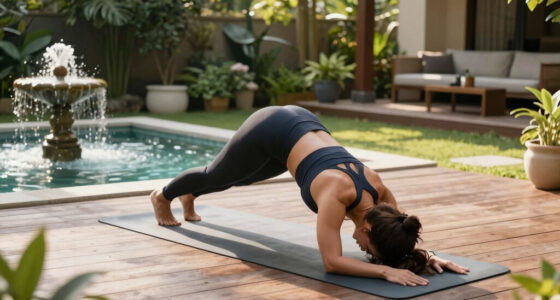
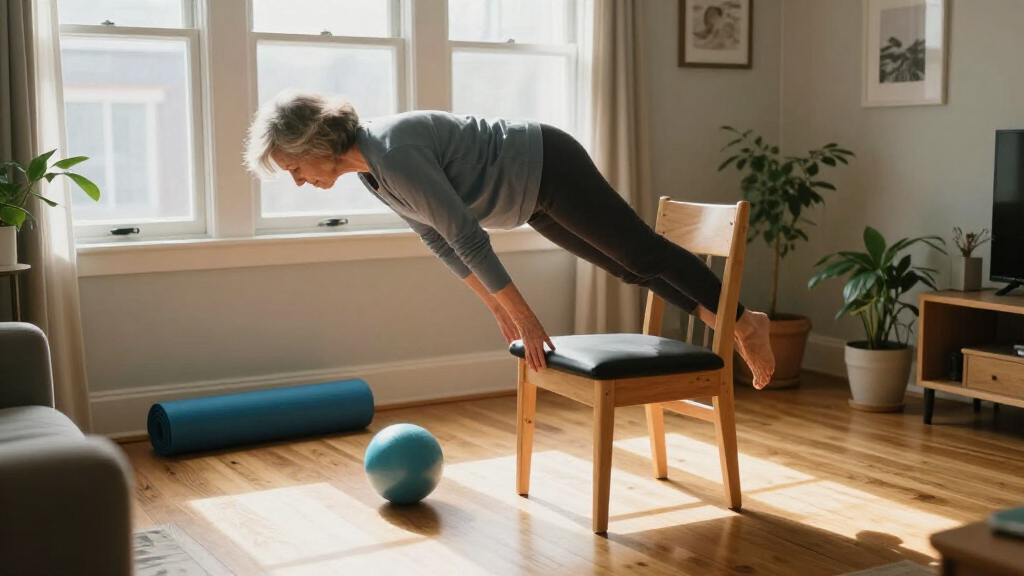
The sequence uses a mix of floor positions and body-weight movements. Rocking cat and cow moves the spine between rounded and arched positions, with an optional forward-and-back rocking motion. Reverse tabletop asks participants to lift their hips from a seated position. Knee circles are performed on hands and knees, while triceps push-ups use a plank position. Thread the needle combines a leg lift with a torso rotation.
Fit&Well’s instructions offer adjustments for all five movements. Participants can omit the rocking motion in cat and cow, bend their knees for reverse tabletop, replace knee circles with simple leg lifts, lower their knees for triceps push-ups, and keep both knees on the floor during thread the needle. These are exercise modifications described in the report, not individualized advice from a clinician.
Modifications Make the Routine More Accessible
The article’s practical emphasis is on giving readers ways to scale the exercises rather than presenting one fixed level of difficulty. That may help people who are new to Pilates or prefer lower-impact, body-weight movement identify a version to try. It also makes the routine easier to follow: each move has a stated repetition target and a simpler option.
Seager told Fit&Well that Pilates can support strength and balance and may counter a head-forward or stooped posture. Those statements are the instructor’s description of potential benefits; the supplied report does not cite research measuring the effects of this specific five-move sequence. Readers should not treat the routine as a proven method of correcting posture or as a substitute for an individual assessment.
For older adults, exercise choices can depend on mobility, prior injuries, balance and other health factors. The article offers general modifications but does not explain how to adapt each movement for particular conditions. Anyone unsure whether a move is suitable can ask a qualified health professional or exercise instructor before beginning.
As an affiliate, we earn on qualifying purchases.
A Routine Designed for Older Beginners
Fit&Well described Pilates as a low-impact option for people who may not feel confident lifting heavy weights or doing high-impact cardio. It also cautioned that modern Pilates classes vary and that some may be more suitable for younger bodies. The report presents Seager’s recommendations as a beginner-friendly selection for women in their 60s and 70s, rather than a claim that all Pilates classes or exercises are suitable for that age group.
Seager, who is 51 and founded Pilatify, said her approach is designed with women over 50 in mind. She told the publication: “Pilates brings the whole body into balance and once we’ve worked one set of muscles, we will stretch them.” She also said modern life and age can contribute to a head-forward, stooped posture, and that Pilates aims to counteract it. The article does not provide further information about the program’s evidence base or how its results are evaluated.
“Pilates brings the whole body into balance and once we’ve worked one set of muscles, we will stretch them.”
— Claire Seager, Pilates teacher and founder of Pilatify, speaking to Fit&Well
adjustable Pilates resistance bands
As an affiliate, we earn on qualifying purchases.
As an affiliate, we earn on qualifying purchases.
Evidence and Individual Suitability
The report does not provide a publication date in the supplied material, cite studies testing the five exercises as a set, or quantify changes in strength, balance or posture. It is also unclear how the routine should be progressed over time, how long a session should take, or how often readers should perform it.
Fit&Well does not give screening guidance for people with pain, balance difficulties, injuries or other health concerns. The listed modifications make movements less demanding in particular ways, but the article does not claim they make every exercise safe for every person. The extent to which the routine can address an individual’s posture or fitness needs is not established by the source.
As an affiliate, we earn on qualifying purchases.
How Readers Can Use the Guidance
The published report provides the five movements and their easier variations but does not announce a follow-up study, training plan or new clinical guidance. Readers who choose to try the sequence can follow the article’s stated repetition counts and use the listed modifications, while stopping if an exercise causes pain or feels unsafe. Those with questions about personal suitability can consult a qualified health professional or Pilates instructor.
Any stronger conclusion about results would require evidence beyond the supplied article, such as research measuring the routine’s effects or guidance tailored to specific health and mobility needs. No such results or follow-up findings are reported here.
ergonomic Pilates exercise equipment
As an affiliate, we earn on qualifying purchases.
As an affiliate, we earn on qualifying purchases.
Key Questions
Which five Pilates moves does the report recommend?
Fit&Well lists rocking cat and cow, reverse tabletop, knee circles, triceps push-ups and thread the needle. Claire Seager selected them for a beginner-friendly routine for women in their 60s and 70s.
How many repetitions does the routine call for?
The report generally gives 10 repetitions. Knee circles are done in each direction on each side; thread the needle is done 10 times per side.
Are there easier versions of the exercises?
Yes. The article suggests options including bending the knees for reverse tabletop, keeping the knees down for triceps push-ups, and lifting and lowering the leg instead of making knee circles.
Does the article prove these moves correct posture?
No. Seager describes posture as one aim of Pilates, but the supplied report does not cite research showing that this specific routine corrects posture or quantify its effects.
Is this routine suitable for everyone over 60?
The report does not establish that it is suitable for everyone. Individual mobility, health and injury history can affect exercise choices; people who are unsure can ask a qualified health professional or instructor.
Source: rss
Cold & flu season Picks
humidifiers
As an affiliate, we earn on qualifying purchases.