

Reverse mortgages can give you access to cash without monthly payments, helping fund elder care and cover expenses. However, they reduce your home’s equity and can increase your debt over time due to compound interest, potentially affecting your inheritance. While offering financial flexibility, it’s important to weigh the pros and cons, compare lenders’ rates, and consider how it fits your long-term goals. Keep exploring to better understand how to make this option work for you.
Key Takeaways
- Reverse mortgages provide seniors with access to funds without monthly payments, useful for elder care expenses.
- Choosing between fixed and variable interest rates impacts total costs and future home equity.
- While offering financial flexibility, reverse mortgages reduce inheritance and can increase long-term debt due to interest accrual.
- Comparing multiple lenders’ interest rates and consulting financial advisors helps make informed decisions.
- Proper use of reverse mortgage proceeds can fund elder care needs, but understanding costs and drawbacks ensures alignment with long-term goals.
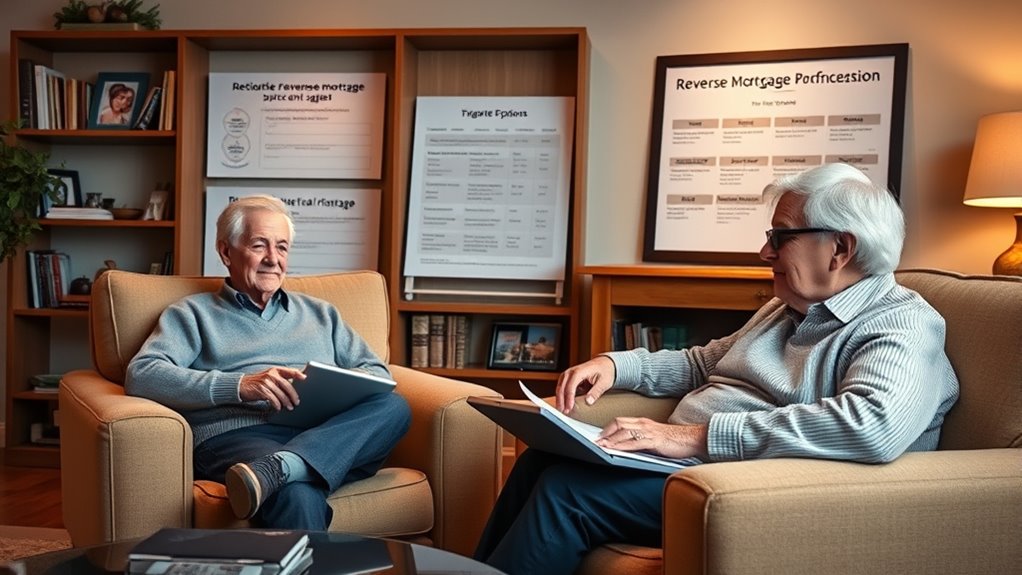
Reverse mortgages come with either fixed or variable interest rates. Fixed rates mean your interest stays the same throughout the loan’s life, providing predictability. Variable rates, on the other hand, can fluctuate with market conditions, which could increase the amount owed over time. It’s important to understand that interest compounds over the life of the loan, meaning that the amount you owe grows as interest accumulates. This can impact your home equity and the inheritance you leave behind. When considering a reverse mortgage, compare interest rates from different lenders, as these can vary notably, influencing your total costs and monthly cash flow. Additionally, understanding the importance of reliable and trustworthy information can help you better evaluate your options and avoid potential pitfalls. While a reverse mortgage can be a valuable financial tool, it’s vital to weigh the pros and cons carefully. On the positive side, it offers access to cash without the burden of monthly payments, giving you flexibility and peace of mind. It can help cover medical bills, home modifications, or everyday expenses, allowing you to remain in your home longer. But it’s not without drawbacks. The loan reduces your home equity, which means less inheritance for your heirs. Additionally, reverse mortgages can be costly, with high upfront costs and accruing interest that can add up over time. You should also be aware that taking out a reverse mortgage may affect eligibility for some government programs or benefits. Before proceeding, thoroughly research your options and speak with a financial advisor or housing counselor. They can help you understand the nuances of loan approval, interest rates, and how a reverse mortgage fits into your overall retirement plan. Knowing the ins and outs ensures you make an informed decision that aligns with your long-term goals and financial security.
Frequently Asked Questions
Can I Lose My Home if I Outlive the Loan?
You won’t lose your home if you outlive the reverse mortgage loan because the loan is only repaid when you sell the home or no longer use it as your primary residence. Your home equity remains protected, and you can’t owe more than the home’s value. The lender cannot force a loan repayment while you live there, so your home is safe as long as you meet the loan requirements.
Are Reverse Mortgages Taxable Income?
You won’t believe it, but reverse mortgage proceeds are usually not taxable income! The IRS considers this money a loan, not income, so there are no tax implications or income reporting requirements for the funds you receive. However, if you earn interest or fees on the loan, those amounts might be taxable. Always check with a tax professional to make sure you’re fully compliant and understand any potential tax consequences.
How Does a Reverse Mortgage Affect Medicaid Eligibility?
A reverse mortgage can impact your Medicaid eligibility because the loan proceeds may be considered assets or income, affecting your qualification. However, it can also serve as an asset protection tool if managed carefully, since the loan isn’t typically counted as income until repayment. You should consult with a financial advisor to understand how it influences your Medicaid eligibility and guarantee you protect your assets effectively.
Can I Sell My Home After Taking Out a Reverse Mortgage?
Yes, you can sell your home after taking out a reverse mortgage. When you sell, your home equity is used to repay the loan, which includes the amount borrowed plus interest and fees. If the home sells for more than the loan balance, you keep the remaining profit. However, if it sells for less, you won’t owe more than the home’s value, and loan repayment is handled through the sale proceeds.
What Are the Costs and Fees Associated With Reverse Mortgages?
You’ll face costs like loan origination fees and mortgage insurance premiums with a reverse mortgage. The loan origination fee is usually a percentage of the home’s value, and mortgage insurance premiums protect the lender if the loan balance exceeds your home’s value. Additionally, you might pay closing costs, servicing fees, and property taxes. Be sure to review these costs carefully to understand the total expenses before proceeding.
Conclusion
Understanding reverse mortgages is like holding a key to financial flexibility in your retirement. They can provide much-needed funds for elder care, but come with risks you’ll want to contemplate carefully. Weigh the pros and cons just as you’d balance on a narrow ledge—steady your footing before taking the leap. With careful planning, a reverse mortgage can be a helpful tool, but remember, it’s not a one-size-fits-all solution. Make informed decisions to secure your future.