

To prevent your senior from wandering, consider combining locks, GPS trackers, and fences to create a thorough safety plan. Install discreet locks on doors and windows to make unauthorized exits difficult, and use fences around yards to provide a physical barrier. GPS trackers help monitor their location in real-time, giving you peace of mind and swift response if needed. Incorporating these tools effectively can greatly reduce risks, and discovering more ways to enhance safety comes next.
Key Takeaways
- Combine discreet locks and barriers with visual cues to restrict access and reduce confusion.
- Use GPS trackers with geofencing to monitor seniors and receive alerts when they leave safe zones.
- Secure hazardous areas like kitchens and staircases with locks or barriers to prevent accidental wandering.
- Regularly update technological devices and environmental modifications to adapt to the senior’s changing needs.
- Maintain open communication with the senior to identify triggers and ensure safety measures are supportive and effective.
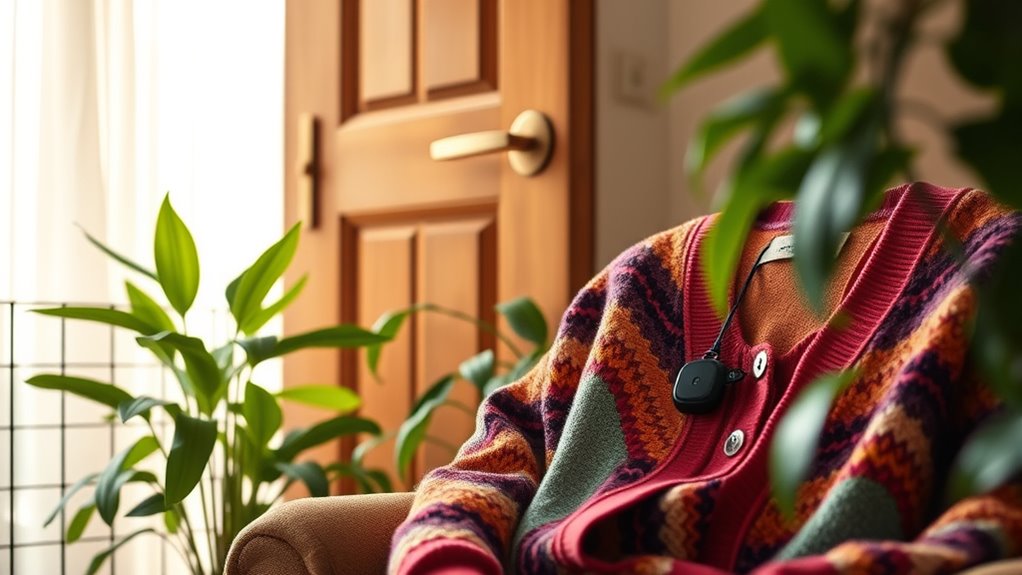
Wander-proofing for seniors is essential for ensuring safety and peace of mind for both older adults and their families. When your loved one has a tendency to wander, it’s crucial to implement effective strategies that address their needs while maintaining their independence. One of the first steps involves caregiver communication, which plays a vital role in understanding the senior’s behaviors and establishing trust. Regularly talking with your loved one helps you recognize triggers or patterns that might lead to wandering, allowing you to tailor your approach accordingly. Open, compassionate dialogue also reassures them that their safety is a priority, which can reduce anxiety-driven attempts to leave the home unassisted.
Alongside communication, environmental modifications are key to creating a secure living space. Simple adjustments can significantly decrease the risk of wandering incidents. For example, installing locks on doors and windows that are out of the senior’s sight or reach helps prevent accidental exits. These locks should be discreet yet effective, ensuring that they don’t cause frustration or feelings of confinement. Bright, clear signage or visual cues can also guide seniors within their environment, reducing confusion and helping them find their way around safely. Securing hazardous areas, such as staircases or kitchens, with child-proof locks or barriers can further minimize accidents during wandering episodes. The goal is to make the environment both safe and comforting, so your loved one feels less compelled to leave due to discomfort or disorientation.
Environmental tweaks like discreet locks and clear signage can help seniors feel safe and reduce wandering risks effectively.
In addition to environmental modifications, technology offers valuable support. GPS trackers are an excellent tool to monitor your loved one’s whereabouts in real time. When used appropriately, these devices provide peace of mind, allowing you to respond quickly if your loved one ventures outside designated safe zones. Combining technology with caregiver communication ensures a thorough approach to wander-proofing. You can set up alerts or geofencing boundaries that notify you if your loved one leaves a predefined area, enabling swift intervention. Remember, however, that technology should complement, not replace, direct caregiver involvement and proper environmental adjustments. Regularly reviewing and updating these measures ensures they remain effective as your loved one’s needs evolve.
Furthermore, understanding the importance of color accuracy in creating a comfortable environment can help caregivers select the best visual cues and signage that are easy to distinguish, reducing confusion and enhancing safety. Ultimately, wander-proofing isn’t about restricting freedom; it’s about creating a safe environment that supports independence while minimizing risks. Clear communication, thoughtful environmental modifications, and modern technology work together to protect your loved one and give you peace of mind. By proactively addressing wandering tendencies, you foster a safer, more comfortable space where your loved one can maintain as much independence as possible without compromising their safety.
Frequently Asked Questions
How Do I Choose the Best Wander-Proofing Method for My Loved One?
To select the best wander-proofing method for your loved one, start with a risk assessment to identify their specific wandering risks. Consider their safety preferences and daily routines. You might prefer discreet GPS trackers for ongoing location updates or locks and fences for physical barriers. Involving your loved one in the decision guarantees comfort and cooperation, making the chosen method more effective and respectful of their independence and safety.
Are There Legal or Ethical Considerations When Using GPS Trackers?
Think of GPS trackers as a trusted map—powerful but needing careful handling. Legally and ethically, you must prioritize consent considerations, ensuring your loved one agrees to tracking. Also, safeguard data security by protecting personal information from misuse or breaches. By respecting their autonomy and privacy, you create a safe environment where wandering is managed responsibly, like guiding a ship securely through calm waters.
What Are the Costs Associated With Different Wander-Proofing Solutions?
The costs vary for wander-proofing solutions like locks, GPS trackers, and fences. A cost comparison shows GPS trackers are generally affordable, ranging from $50 to $200, while fences can cost thousands depending on size. Funding options include insurance coverage, government grants, or community programs. You might also consider DIY solutions to reduce expenses. Weigh these options carefully to find the best balance between safety and affordability for your loved one.
How Can I Ensure My Senior’s Privacy Is Protected?
Think of safeguarding your senior’s privacy as planting a delicate garden. You must nurture their data security by choosing trusted devices and encrypting information. Always seek their consent, respecting their autonomy like tending to each plant’s needs. Regularly update permissions and be transparent about how their data is used. By doing so, you create a safe space where their independence blossoms while being protected from unwanted intrusions.
What Signs Indicate a Need for Increased Wandering Prevention Measures?
You should look for early warning signs like increased restlessness, confusion, or attempts to leave the home unexpectedly. Conduct a risk assessment to identify if your senior’s behavior is changing or if they’re showing signs of forgetfulness about safety. These indicators suggest it’s time to contemplate enhanced wandering prevention measures, such as locks, GPS trackers, or fences, to keep them safe and prevent potential harm.
Conclusion
By implementing locks, GPS trackers, and fences, you create a safety net that keeps your loved one secure. Think of these measures as a fortress of love, shielding them from harm while preserving their independence. Remember, proactive steps aren’t just precautions—they’re promises of peace of mind. When you prioritize their safety today, you build a safer tomorrow. After all, isn’t peace of mind priceless when it comes to those we cherish most?