
Proper lighting is essential for seniors to navigate safely and see clearly at night. Bright, focused lights around stairs, hallways, and bathroom areas help highlight hazards and prevent missteps. Using motion-activated nightlights and adjustable fixtures can make nighttime movement easier and reduce fall risks. Focus on maintaining at least 300 lux of ambient light and installing safety-enhancing features. Stay tuned to discover practical ways to improve lighting environments for safer, more confident nights.
Key Takeaways
- Install motion-activated nightlights in hallways, stairs, and bathrooms to ensure immediate illumination during nighttime movement.
- Maintain ambient lighting around 300 lux with energy-efficient LEDs to improve overall visibility and contrast.
- Use indirect lighting and high CRI bulbs to reduce glare and enhance object detection, preventing missteps.
- Incorporate pathway and guiding lights to minimize switch searching and support safer navigation at night.
- Educate caregivers and residents on optimal lighting levels and strategies to promote safety, confidence, and better vision.
The Critical Role of Adequate Lighting in Senior Safety
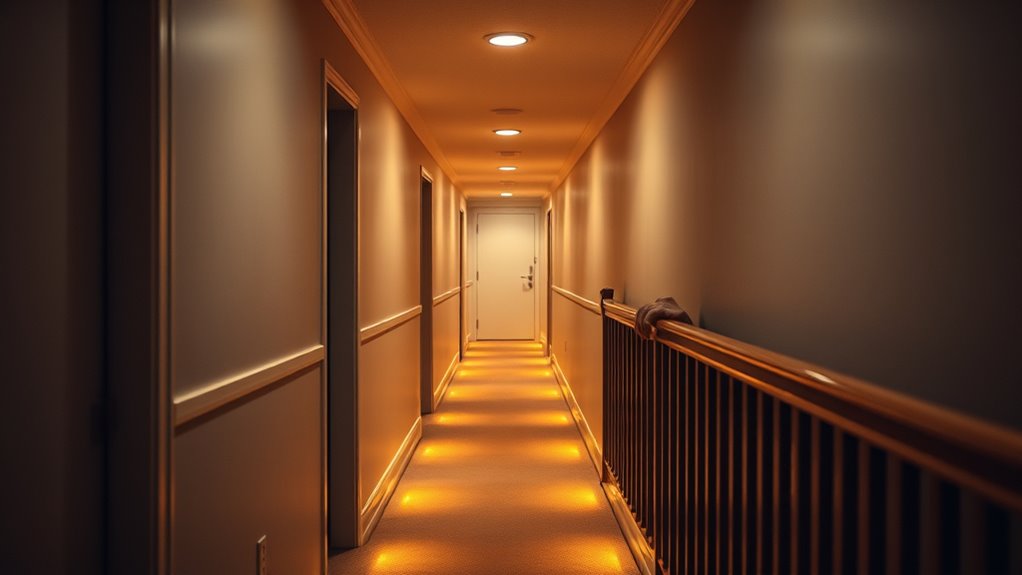
Adequate lighting is essential for senior safety because it directly impacts their ability to see clearly and move confidently. When lighting is insufficient, visual cues become harder to interpret, increasing the risk of trips and falls. Poor lighting can cause shadows and glare, which confuse depth perception and hinder navigation. Inadequate illumination especially affects critical areas like bedrooms, bathrooms,, and stairways, where falls are most common. By ensuring proper lighting, you help seniors better identify obstacles, stairs, and changes in floor levels. This also involves understanding thermal behavior and how different lighting sources can influence visibility and comfort. For example, using appropriate lighting color temperatures can improve contrast and clarity. Proper lighting can also influence color accuracy, enhancing the visibility of important signage and objects. Additionally, understanding lighting quality helps in selecting fixtures that provide even illumination without producing distracting flicker or harsh shadows. This not only reduces fall risk but also enhances visual contrast, making hazards more noticeable and safer to navigate. This not only reduces fall risk but also boosts their confidence in moving around independently. Good lighting creates a safer environment, enabling seniors to maintain their mobility and independence longer. Proper lighting is a simple, effective step toward fall prevention and enhanced safety.
Recommended Lighting Levels for Comfortable and Safe Aging

To prevent falls and support safe mobility, it’s important to maintain proper lighting levels throughout a senior’s living space. Adequate lighting helps improve visibility, reduces confusion, and enhances safety during daily activities. Experts recommend around 300 lux (30 footcandles) for general areas to ensure comfort and clarity. For task-specific zones like bathrooms and kitchens, higher illumination—up to 500 lux—is ideal. To achieve this, consider these strategies:
Proper lighting enhances safety, visibility, and independence for seniors at home.
- Use bright, energy-efficient LED bulbs that produce white light for clear visibility.
- Incorporate indirect lighting to minimize glare and enhance contrast.
- Install strategic lighting around stairs, thresholds, and key pathways for better guidance.
- Additionally, employing modern smart lighting technology can help automatically adjust brightness levels based on time of day or activity, further improving safety and convenience. Incorporating lighting controls such as dimmers and motion sensors can also enhance safety and energy efficiency.
- Proper lighting design can also benefit from lighting level assessments to ensure consistent illumination tailored to specific needs, reducing shadows and dark spots that may pose hazards. Regularly evaluating lighting quality can help maintain optimal safety standards as environments and individual needs change.
Consistent, well-designed lighting supports independence and reduces fall risks as you age.
How Nighttime Lighting Interventions Can Reduce Fall Risks

Proper nighttime lighting can markedly improve visibility, making it easier to navigate in the dark and reducing the risk of falls. Installing automated guides or motion-sensor lights along pathways helps seniors see where they’re going, easing fears of falling. When your home is well-lit at night, you create a safer environment that supports independence and peace of mind. Additionally, selecting appropriate lighting options can enhance overall safety and energy efficiency. Incorporating air quality considerations into your lighting choices can further improve your living environment, especially for those with allergies or sensitivities. Furthermore, using vetted wave and wind lighting solutions ensures durability and reliability in different weather conditions, adding an extra layer of safety to outdoor pathways. Considering smart‑home integrations can also help automate lighting adjustments, making nighttime navigation even safer and more convenient. Implementing lighting standards can help ensure that your lighting solutions meet safety guidelines and best practices for senior living environments.
Enhancing Visibility at Night
Nighttime lighting interventions play a crucial role in reducing fall risks among seniors by improving visibility during nocturnal activities. Proper lighting helps you see obstacles, stairs, and pathways clearly, reducing confusion and missteps. To enhance visibility effectively, consider these strategies:
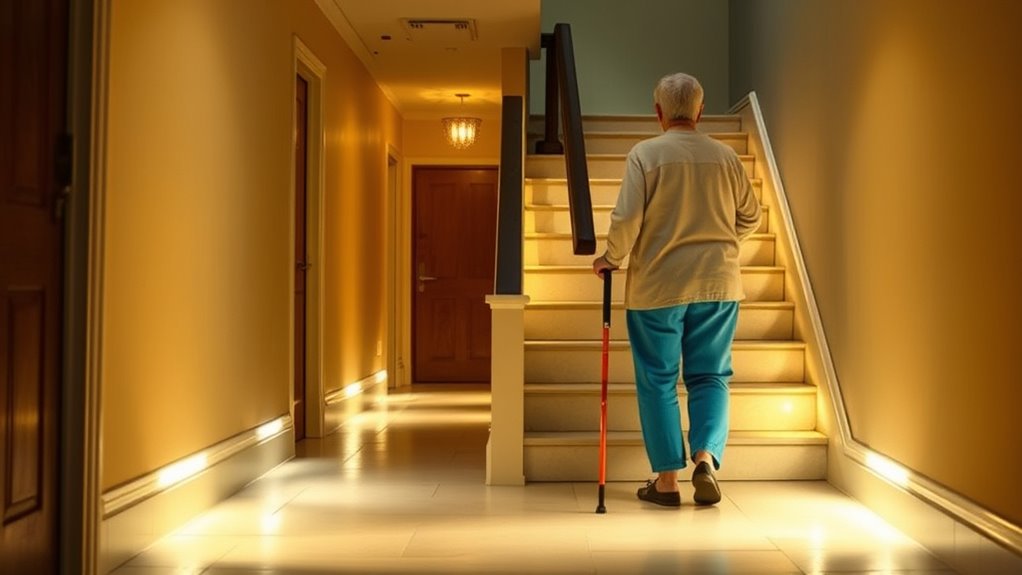
- Install motion-activated nightlights along hallways, bathroom entrances, and stairs to provide immediate illumination.
- Use LED pathway lights from your bed to key areas like the bathroom, minimizing the need to search for switches.
- Ensure ambient lighting is soft but sufficient, avoiding glare that can cause visual discomfort or disorientation. Adequate illumination is essential for safe navigation.
- Incorporate at-home safety gadgets that utilize LED technology to optimize lighting and further reduce hazards, enhancing overall home safety for seniors. Additionally, choosing lighting options with high color rendering index (CRI) can improve visual clarity and help you distinguish objects more accurately. Incorporating appropriate lighting placement can also reduce shadows and enhance overall visibility.
These interventions create a safer environment, enabling you to navigate at night confidently, and help prevent dangerous falls during common nighttime trips.
Reducing Fear of Falling
When the environment is well-lit during the night, seniors often feel less anxious about getting up and moving around, which can substantially reduce their fear of falling. Proper lighting creates a sense of safety, encouraging independence and reducing hesitation during nighttime activities. Automated guiding lights along pathways, especially to bathrooms, can ease the worry of stumbling in the dark. Reduced fear not only improves confidence but also promotes better sleep and overall well-being. Additionally, incorporating easy homemade flautas or other comforting routines can help create a calming environment conducive to restful sleep. Ensuring the lighting is energy-efficient and adjustable can further enhance safety and comfort, allowing seniors to customize brightness levels as needed. Research shows that lighting interventions can also positively influence circadian rhythms, helping seniors maintain a healthier sleep-wake cycle.
Enhancing Visual Cues to Improve Balance and Postural Control

Enhancing visual cues through targeted lighting can substantially improve balance and postural control in older adults. Proper lighting makes it easier to perceive edges, steps, and obstacles, reducing the risk of missteps. To optimize visual cues:
- Use bright, focused lighting around stairs, thresholds, and uneven surfaces to highlight changes in elevation.
- Incorporate horizontal and vertical visual cues, like contrasting stripes or markings, to provide clear spatial references.
- Guarantee ambient lighting is sufficient, around 300 lux, to support overall visibility without causing glare.
- Consider integrating lighting controls that adjust brightness levels based on time of day or activity to maintain optimal visibility.
These strategies help your visual system accurately interpret your environment, decreasing sway and instability. Improved visual cues translate into steadier posture, safer movements, and lowered fall risk, especially during passages like sit-to-stand or walking in dim areas.
Practical Home Modifications to Improve Lighting and Prevent Falls

Practical home modifications, such as improving lighting, play a crucial role in preventing falls among seniors. Start by ensuring all rooms have adequate illumination, aiming for at least 300 lux in key areas like bedrooms and bathrooms. Replace dim bulbs with bright, energy-efficient LEDs that turn on instantly and produce white light for better visibility. Install nightlights along hallways, stairs, and bathrooms to provide safe pathways during nighttime trips. Use indirect lighting fixtures, like lampshades, to reduce glare and improve contrast. Place lights strategically around thresholds, steps, and handrails to highlight hazards. Consider motion-sensor lights in bathrooms and entryways to automatically activate when needed. These modifications can considerably reduce fall risks and support safer, more independent living.
Common Environmental Hazards Linked to Poor Lighting Conditions
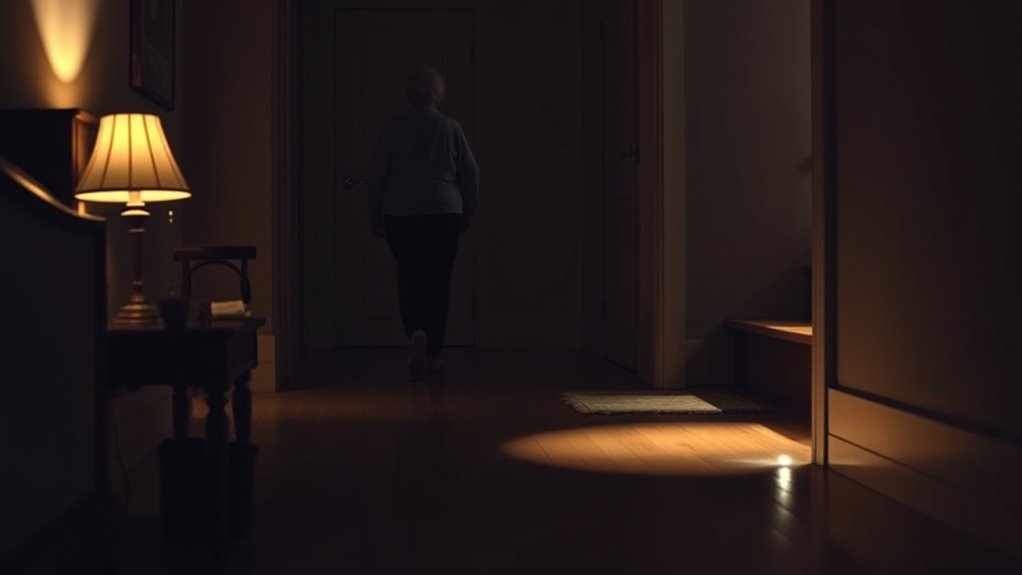
Poor lighting conditions in the home create several environmental hazards that increase fall risk for seniors. Insufficient or uneven lighting can cause missteps and misjudgments of stairs, thresholds, or obstacles. Here are some common hazards:
Poor lighting increases fall risks by hiding obstacles and causing missteps at night.
- Hidden obstacles: Poor lighting can hide clutter, loose rugs, or cords that trip you. Ensuring proper illumination can help reveal potential hazards before they cause accidents.
- Inadequate stair and hallway lighting: Dim or uneven lights make it hard to see steps clearly, increasing fall chances.
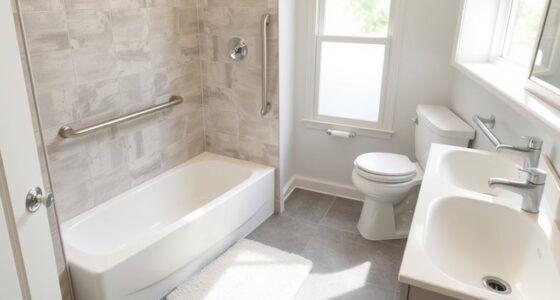
- Poor bathroom illumination: Insufficient light around toilets and showers can cause slips or missed footing during critical moments.
- Lack of adequate lighting controls can make it difficult to adjust brightness levels quickly, leaving areas poorly lit when needed most.
These hazards undermine your safety, especially at night, and heighten the risk of falls. Addressing them with better lighting can make a significant difference in preventing accidents and maintaining independence.
Implementing Technology: Automated and Motion-Sensor Lighting Solutions

Automated and motion-sensor lighting solutions are transforming how we improve safety for seniors by providing timely illumination without requiring manual switches. These systems detect movement and automatically turn lights on, ensuring well-lit pathways during nighttime trips. This reduces the risk of falls caused by sudden darkness or disorientation, especially in bathrooms, hallways, or staircases. Installation is straightforward and adaptable to various settings, from homes to care facilities. You can program lights to activate at specific times or in response to motion, creating a seamless safety net. These solutions also conserve energy, turning lights off when not needed. By integrating automated lighting, you help seniors navigate their environment confidently, reducing fall risks and promoting independence.
Strategies for Healthcare Providers to Advocate for Better Lighting in Senior Care

Healthcare providers play a vital role in ensuring that seniors live in safe environments, and advocating for improved lighting is a key part of fall prevention efforts. You can influence change by:
Healthcare providers are key advocates for safe lighting to prevent falls among seniors.
- Educating families and facility staff about recommended lighting levels (300–500 lux) for safe mobility and visual clarity.
- Conducting assessments of current lighting conditions during routine visits and recommending specific upgrades, like LED bulbs or indirect lighting.
- Collaborating with facility managers to implement environmental modifications, such as installing night lights and improving hallway illumination.
Frequently Asked Questions
How Can I Assess if My Home Lighting Is Sufficient for Safe Aging?
You can assess your home lighting by checking if each room, especially bedrooms and bathrooms, has at least 300 lux of focused light. Use a light meter or a smartphone app to measure brightness. confirm pathways, stairs, and thresholds are well-lit with bright, even lighting, preferably LED. Test nighttime lighting by turning off main lights to see if nightlights or motion-sensor lights illuminate key areas clearly, reducing fall risks.
Are There Affordable Options to Upgrade Lighting in Existing Homes?
Are you worried about your home’s lighting not being enough? You can find affordable options like LED bulbs, which are energy-efficient and provide bright, focused light. Installing motion sensors or night lights is also budget-friendly and helps with nighttime safety. Can you just imagine how these small upgrades can make your space safer, reducing fall risks and giving you peace of mind every day?
What Are the Best Types of Lighting for Seniors With Visual Impairments?
You should choose bright, high-quality LED lights that produce intense white light, helping seniors see clearly. Focus on indirect lighting to reduce glare and enhance contrast, especially around stairs and thresholds. Use motion-sensor or night lights for safe nighttime navigation without disrupting sleep. Strategic placement of lighting, with around 300 lux, improves visual cues and balance, reducing fall risk for seniors with impairments.
How Effective Are Automated Lighting Systems in Preventing Nighttime Falls?
Have you wondered how much automated lighting systems can reduce nighttime falls? They’re quite effective, as they provide consistent, glare-free illumination along pathways, stairs, and bathrooms, minimizing visual confusion and trip hazards. These systems activate automatically when needed, helping seniors navigate safely without fumbling for switches. Studies show they lower fall risks, reduce fear at night, and improve sleep quality, making them a smart addition for safer, more independent living.
What Role Do Healthcare Providers Play in Advocating for Improved Lighting Safety?
As a healthcare provider, you play a vital role in advocating for improved lighting safety by evaluating your patients’ home environments, emphasizing the importance of proper lighting, and educating them about fall risks. You can recommend necessary modifications, such as installing nightlights or brighter bulbs, and encourage regular reviews of home safety measures. Your proactive guidance helps seniors reduce fall risks and maintain independence safely.
Conclusion
By shining a light on your environment, you illuminate safety and confidence. When you brighten pathways and eliminate shadows, you’re not just preventing falls—you’re paving a smoother journey through everyday life. Embrace smart lighting solutions and practical modifications, turning your home into a sanctuary of clarity. With each well-placed glow, you help seniors navigate their world with steady steps and brighter days, transforming darkness into a guiding light of safety and independence.