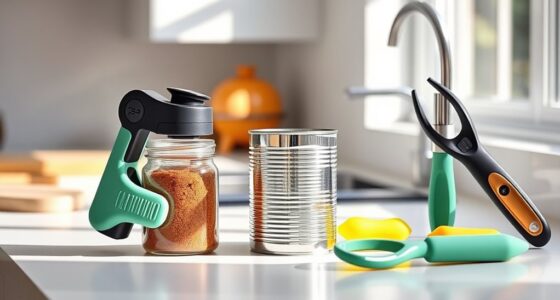
To make your kitchen safer, keep frequently used items within easy reach and organize your space to prevent falls. Always stay attentive when cooking, never leave the stove unattended, and keep flammable items away from heat. Choose appliances with simple controls, safety features, and easy-to-clean surfaces. Slip-resistant mats and good lighting can reduce trip hazards. Want more tips to create a secure cooking environment? Keep exploring for practical ideas to protect yourself while preparing meals.
Key Takeaways
- Keep frequently used items within easy reach to prevent bending or stretching and reduce fall risk.
- Use proper lighting, non-slip mats, and clear clutter to minimize slips and trips in the kitchen.
- Never leave the stove unattended and regularly clean grease to prevent fire hazards.
- Choose appliances with simple controls, safety alerts, and automatic shut-off features for easier and safer use.
- Organize the kitchen ergonomically, storing heavy items low and ensuring accessible, hazard-free pathways.
Enhancing Kitchen Accessibility for Safety
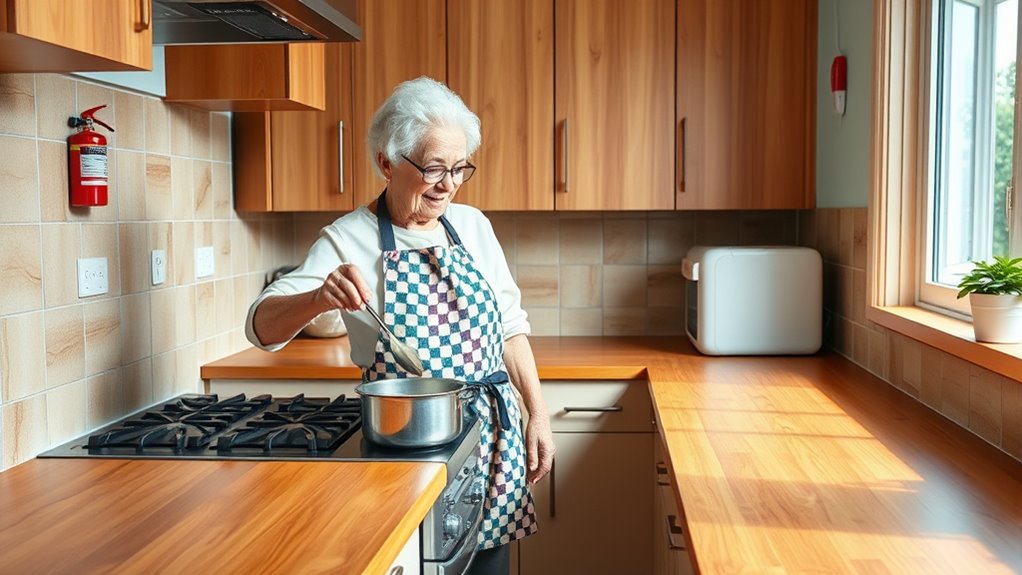
To enhance kitchen safety for seniors, making the space more accessible is essential. Keep frequently used items within easy reach to avoid unnecessary bending or stretching. Installing pull-out shelves and lazy Susans makes accessing stored items simpler and safer. Store everyday dishes and pans between waist and shoulder height, reserving higher shelves for seldom-used items. Use lightweight, ergonomic utensils and tools to reduce strain and improve handling. Organizing your kitchen so that essential items are logically placed, minimizing the need to stretch or climb. Clear clutter and remove obstacles like rugs or cords that could cause tripping. Incorporating essential oils for safety such as eucalyptus or lavender can promote a calming environment that reduces stress and enhances overall safety while cooking. Using proper lighting can further improve visibility and prevent accidents in the kitchen. Ensuring your kitchen has accessible features such as lever faucets and easy-to-grip handles can also significantly improve safety and independence. Additionally, implementing kitchen safety technology such as smart sensors or automatic shut-off devices can further reduce the risk of accidents. This approach not only reduces accident risks but also promotes independence and confidence when cooking. An accessible kitchen creates a safer environment for seniors to prepare meals comfortably.
Fall Prevention Strategies in the Kitchen
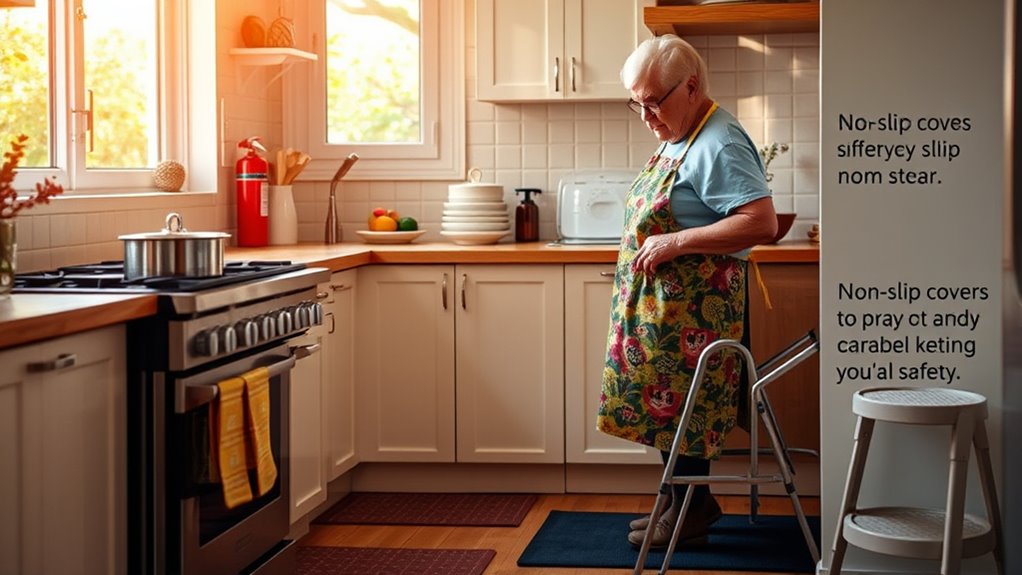
Slippery surfaces and cluttered spaces markedly increase your risk of falling in the kitchen. Keeping floors dry and removing obstacles like cords and spills can make a big difference. By staying attentive to these hazards, you can create a safer cooking environment. Additionally, being aware of contrast ratio and how it impacts visual clarity can help you better judge your surroundings, especially in dimly lit areas. Understanding the importance of whole-house water filtration systems can also contribute to a healthier, safer home environment. Incorporating community engagement strategies can foster a supportive environment for seniors to share safety tips and experiences. Paying attention to lighting quality is essential, as proper illumination can greatly reduce accidents caused by poor visibility.
Slippery Surface Hazards
Have you noticed how easily a wet or polished surface can cause a fall in the kitchen? Spills from water, oil, or food can turn your floor into a slipping hazard. To prevent accidents, clean up spills immediately and use absorbent mats in high-risk areas like the sink and stove. Make sure your kitchen floor is even and free of loose rugs or cords that could cause tripping. Non-slip mats with textured surfaces provide extra traction, especially on smooth or shiny floors. Avoid wearing slippery footwear, such as socks or smooth-soled shoes, while cooking. Regularly check your flooring for damage or uneven spots, and fix any issues promptly. Creating a safe, slip-resistant environment helps you stay confident and secure while preparing meals.
Clutter and Obstacle Risks
Clutter and obstacles can substantially increase the risk of falls in your kitchen, especially for seniors. When walkways are blocked by clutter, you may trip or stumble, leading to serious injuries. Keep pathways clear by removing unnecessary items like bags, boxes, and cords. Store frequently used tools and ingredients within easy reach to avoid stretching or bending. Clear the floor of loose rugs, cords, and other tripping hazards. Use adhesive non-slip pads under rugs to prevent slipping. Regularly tidy countertops, removing unused utensils or appliances. Organizing cabinets so that essential items are accessible without overreaching can significantly enhance safety. Maintaining a tidy, obstacle-free environment helps you move safely, reduces fall risk, and creates a more comfortable cooking space. Organized storage strategies can further enhance safety by keeping clutter out of the way. Incorporating hazard awareness into your routine helps identify potential dangers before they cause an accident. Additionally, understanding auditory processing can help seniors recognize dangerous sounds, such as smoke alarms or falling objects, more effectively. Furthermore, using visual cues like bright colors or contrasting patterns can improve visibility and prevent accidents. Being aware of fire safety precautions is also crucial to prevent kitchen fires and protect everyone in the household.
Fire Safety Tips for Senior Cooks
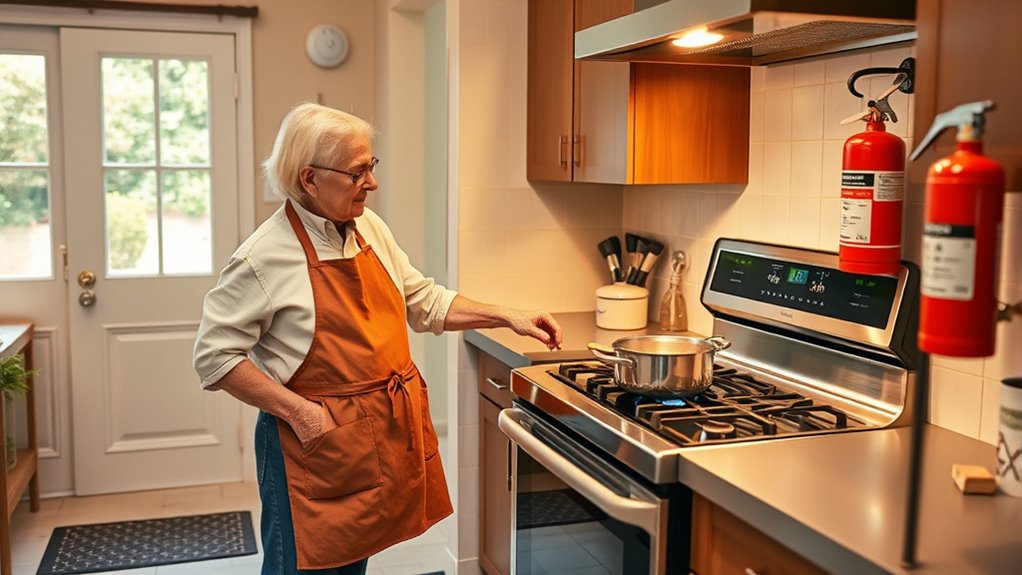
To reduce the risk of fire in the kitchen, senior cooks should prioritize safety measures that prevent accidents before they happen. Always stay attentive while cooking, and never leave the stove unattended. Keep flammable items, like dishcloths and paper towels, away from heat sources. Use appliances with automatic shut-off features to prevent overheating or fires if you forget to turn them off. Keep a fire extinguisher nearby, and know how to use it properly. Avoid loose clothing that could catch fire, and ensure smoke detectors are working correctly by testing them monthly. Regularly clean grease buildup from stovetops and oven surfaces to reduce fire risk. Incorporating safety protocols similar to those used in advanced systems can further enhance your kitchen safety by monitoring heat levels and alerting you to potential hazards. Utilizing smart smoke detectors can provide an additional layer of security by detecting smoke early and sending alerts to your phone. Additionally, installing temperature monitoring devices can help you maintain safe cooking environments and prevent overheating. Paying attention to fire prevention techniques, such as keeping exits clear and knowing emergency procedures, can also make a significant difference. By staying alert and following these precautions, you can enjoy cooking safely while minimizing fire hazards.
Choosing Senior-Friendly Appliances and Tools
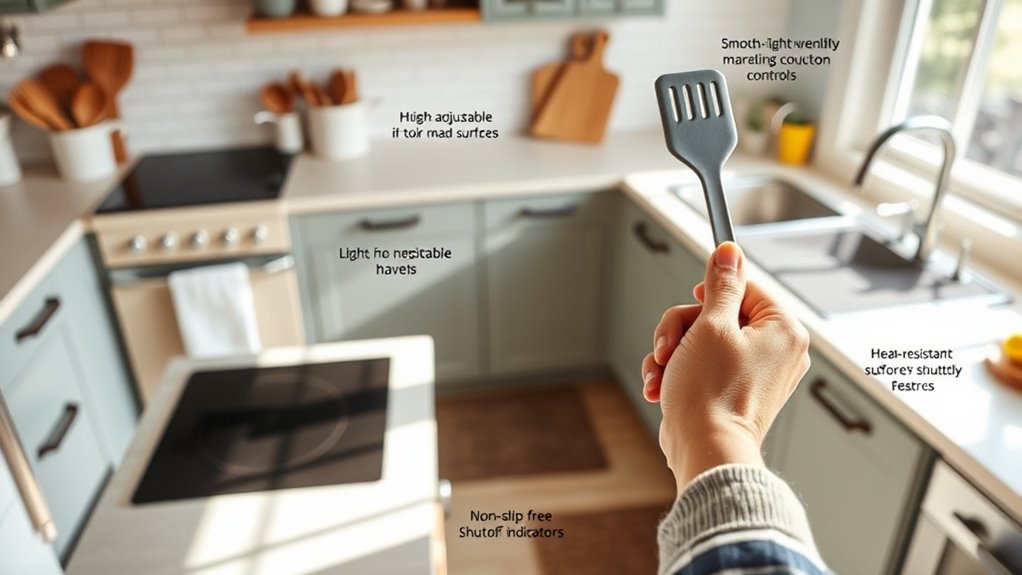
When selecting appliances and tools, look for those with easy-to-use controls and clear displays to prevent confusion. Safety alert features, like automatic shut-off or warning lights, can help prevent accidents. Choosing ergonomic designs ensures comfort and minimizes strain during daily tasks. Additionally, selecting appliances with safe installation practices can further reduce risks in the kitchen. Incorporating accessible design features can also enhance safety and usability for seniors. Implementing risk management strategies, such as regular maintenance and proper usage guidelines, can further prevent potential hazards. Moreover, considering appliances with power capacity and efficiency can help ensure reliable performance while minimizing energy consumption. Being aware of safety certifications can also provide added assurance of the appliance’s safety standards.
Easy-to-Use Controls
Choosing appliances with easy-to-use controls is essential for ensuring safety and independence in the kitchen. Look for models with large, clearly labeled buttons and simple interfaces, so you don’t get confused or make mistakes. Features like digital displays with high contrast and tactile knobs make operation straightforward, especially if your vision isn’t sharp. Choose appliances with automatic shut-off functions to prevent accidents if you forget to turn them off. Consider tools with warning lights or alerts that notify you when something’s wrong. Simplified controls reduce the risk of mishaps and make daily cooking less stressful. Additionally, selecting appliances with easy-to-clean features can help maintain safety and hygiene in your kitchen. By selecting appliances designed for ease of use, you stay safer and maintain more control over your kitchen activities.
Safety Alert Features
Safety alert features are vital in selecting appliances and tools that support independence and reduce risks in the kitchen. These features can notify you of potential hazards and prevent accidents before they happen. Look for stoves with automatic shut-off and warning lights that alert you if the appliance has been left on or if there’s an abnormal temperature. Choose refrigerators with alerts for door openings or temperature fluctuations, ensuring food safety and energy efficiency. Smart appliances often include voice alerts or notifications sent to your phone, providing additional safety support. Handheld devices with audible alarms can warn you of gas leaks or smoke presence. Incorporating these features helps you stay aware of dangers, making your kitchen safer and more manageable.
Ergonomic Design
Ergonomic design plays a crucial role in making kitchen tools and appliances safer and easier for seniors to use. When selecting appliances, prioritize those with large displays, simple controls, and automatic shut-off features. These reduce the effort needed and prevent accidents. Tools like electric can openers and jar openers with rubber grips make handling easier and safer. For example:
| Feature | Benefit |
|---|---|
| Large buttons & displays | Easier to see and operate, reducing strain |
| Non-slip handles | Better grip, less effort, and safer handling |
| Automatic shut-off | Prevents overheating and fire risk |
Choosing well-designed tools minimizes physical strain, enhances safety, and supports independence in the kitchen. Remember, ergonomic tools are a essential part of creating a senior-friendly cooking space.
Organizing Your Kitchen for Reduced Risks
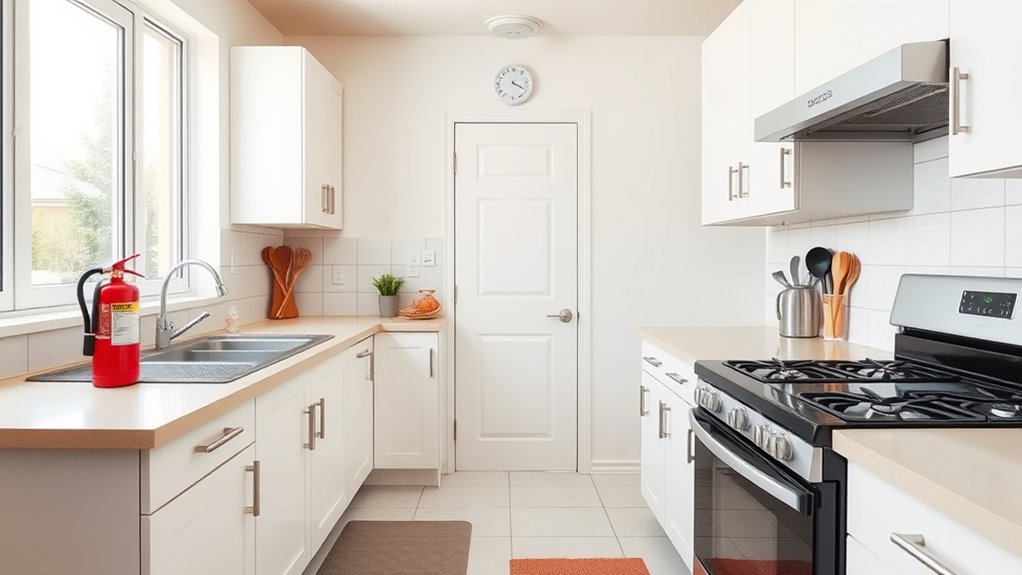
Have you ever considered how the way you organize your kitchen can considerably reduce fall and fire risks? Keeping frequently used items within easy reach prevents unnecessary bending or climbing, lowering the chance of falls. Use pull-out shelves and lazy Susans for easier access and avoid storing heavy or bulky items on high shelves. Store everyday dishes and pans at waist to shoulder height, reserving higher shelves for rarely used items. Clear clutter from countertops and floors to prevent tripping hazards. Place non-slip mats near sinks and cooking areas for added stability. Ensure cords are tucked away and rugs are secure. A well-organized kitchen minimizes awkward movements, reduces clutter, and creates a safer environment, helping you stay independent and safe while cooking.
Maintaining Proper Lighting and Visibility

Good lighting is essential in the kitchen to help you see clearly and prevent accidents. Well-lit spaces make it easier to identify hazards, handle sharp objects, and monitor cooking progress. To enhance visibility, consider installing bright, adjustable ceiling lights and task lighting over countertops and stove areas. Use daylight LED bulbs with high color rendering indexes (CRI) to replicate natural light and reduce eye strain. Keep switches conveniently located and ensure all areas are evenly illuminated to avoid shadows. You can also add under-cabinet lighting for focused illumination. Proper lighting not only improves safety but also boosts confidence in your cooking routine.
Good lighting enhances safety and confidence in your kitchen routines.
- Install dimmable LED fixtures for adaptable lighting levels
- Use contrasting colors on countertops and walls to improve visibility
- Regularly clean light fixtures to ensure maximum brightness
Best Practices for Safe Cooking Habits

Practicing safe cooking habits is essential to prevent accidents and injuries in the kitchen. Always stay nearby when using the stove or oven, and never leave cooking food unattended. Keep flammable items like paper towels, oven mitts, and curtains away from heat sources. Use timers to remind you when food is cooking, reducing the risk of burning or fires. Turn off appliances immediately after use, and unplug them if you’re not actively using them. Wear well-fitting, non-loose clothing to prevent catching fire. Keep a clear workspace free of clutter to avoid knocking over items or tripping. Regularly check that smoke detectors are working and keep a fire extinguisher nearby. By adopting these habits, you can enjoy cooking safely and confidently.
Emergency Preparedness and Response Measures
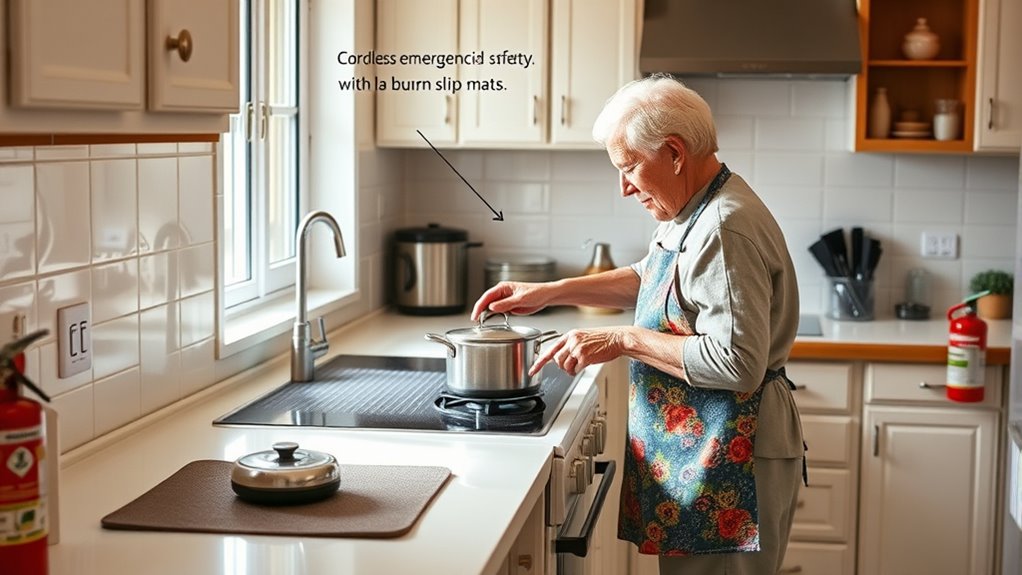
Preparing for emergencies in the kitchen is essential to protect yourself from injuries and hazards. You should have a clear plan for fires, injuries, or power outages. Keep a fully charged fire extinguisher nearby and ensure you know how to use it. Develop an emergency escape route and share it with family or caregivers. Keep important phone numbers easily accessible, including local fire, police, and medical services. Regularly check smoke and carbon monoxide detectors to ensure they’re working. Practice fire drills so you’re prepared to act swiftly if needed. Consider installing smart appliances with automatic shut-offs, which can prevent fires during emergencies. Staying vigilant and prepared minimizes risks, giving you confidence to handle unexpected situations safely.
Frequently Asked Questions
How Can I Ensure My Kitchen Is Truly Accessible for All Mobility Levels?
To make your kitchen accessible for all mobility levels, you should install pull-out shelves and lazy Susans for easy reach, keep frequently used items at waist level, and use ergonomic tools with large grips. Guarantee clear pathways by removing obstacles, add non-slip mats, and consider lower countertops or adjustable surfaces. Good lighting and organized spaces also help everyone move safely and comfortably while cooking.
What Are the Best Methods to Teach Seniors Fire Safety Procedures?
You should start by demonstrating simple, step-by-step fire safety procedures, making sure to use clear, easy-to-understand language. Visual aids like posters or flashcards help reinforce key points, and hands-on practice boosts confidence. Address common fears by reassuring them that safety measures are easy to follow. Regularly review procedures, encourage questions, and keep emergency contact info visible to guarantee they’re prepared without feeling overwhelmed.
How Often Should Kitchen Safety Equipment Be Inspected or Replaced?
You should inspect your kitchen safety equipment monthly to guarantee everything works properly. Replace smoke detector batteries at least once a year and test the alarms monthly. Check fire extinguishers annually for pressure and damage, replacing or recharging them as needed. Regular maintenance keeps your safety devices reliable, helping prevent accidents and fires. Staying proactive with inspections and replacements ensures your kitchen remains a safe environment for you.
Are There Specific Colors or Contrast Features That Improve Visibility for Seniors?
Bright, high-contrast colors aren’t just for fashion—they’re your kitchen’s safety superheroes. You should go for contrasting shades like white counters with dark appliances or vibrant color-coded handles. These features make it easier for your eyes to distinguish objects quickly, preventing slips or burns. Think of it as your kitchen’s way of saying, “Hey, I want you to stay safe,” while you’re busy cooking up a storm.
What Are Simple Ways to Prevent Kitchen Clutter and Maintain Organization?
You can prevent kitchen clutter by keeping only essential items on countertops and storing others in cabinets. Use clear containers to identify contents easily and label shelves for quick access. Regularly declutter, discard unused items, and organize utensils and tools by frequency of use. Keep pathways clear of cords, rugs, and clutter to prevent tripping. Implementing these simple habits helps maintain a safe, organized, and efficient kitchen space.
Conclusion
Creating a senior-friendly kitchen isn’t just about safety; it’s about empowering you to cook confidently. While some might think these changes limit your independence, they actually enhance it by reducing risks and boosting confidence. With thoughtful adjustments, you can enjoy cooking safely and comfortably. Remember, investing in safety today guarantees many more enjoyable, accident-free meals tomorrow—because your independence and well-being are worth it.