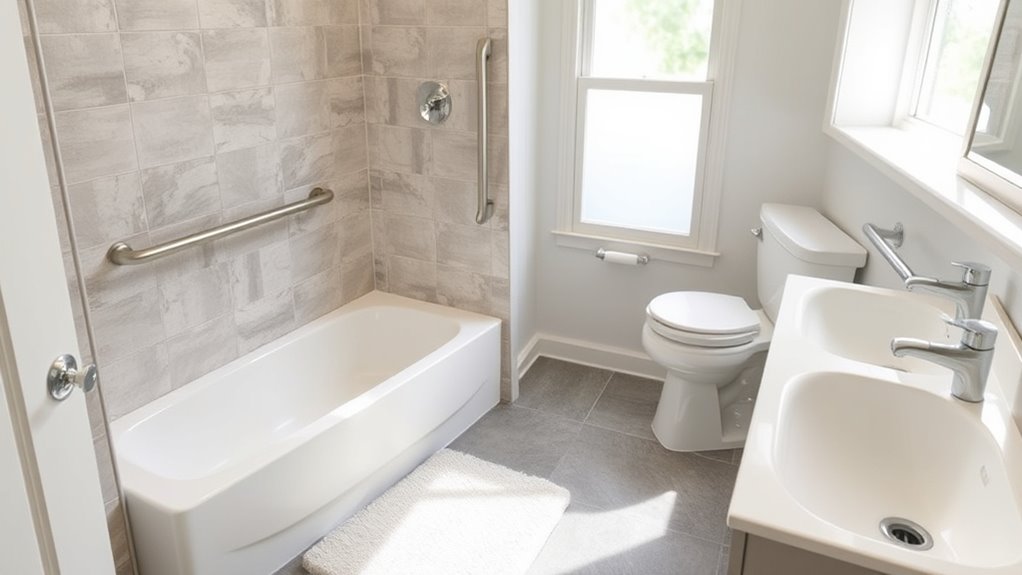

To make your bathroom safer for seniors, you can install grab bars in key areas, use non-slip mats and textured flooring, and upgrade to walk-in showers or barrier-free tubs. Adding raised toilet seats and support frames helps with mobility, while ensuring good lighting improves visibility. Keeping pathways clear and incorporating shower chairs or bath lifts offer extra support. Keep these upgrades in mind to protect loved ones, and explore more tips for greater safety.
Key Takeaways
- Install grab bars and support frames near the toilet, shower, and bathtub to prevent falls and improve stability.
- Upgrade to walk-in showers and barrier-free tubs to reduce tripping hazards and facilitate easy access.
- Use non-slip mats and textured flooring to enhance traction and prevent slips on wet surfaces.
- Improve lighting with bright, motion-activated, or nightlights to increase visibility and reduce accidents.
- Incorporate raised toilet seats and bath lifts to support safe transfers and maintain independence.
Install Grab Bars in Key Areas
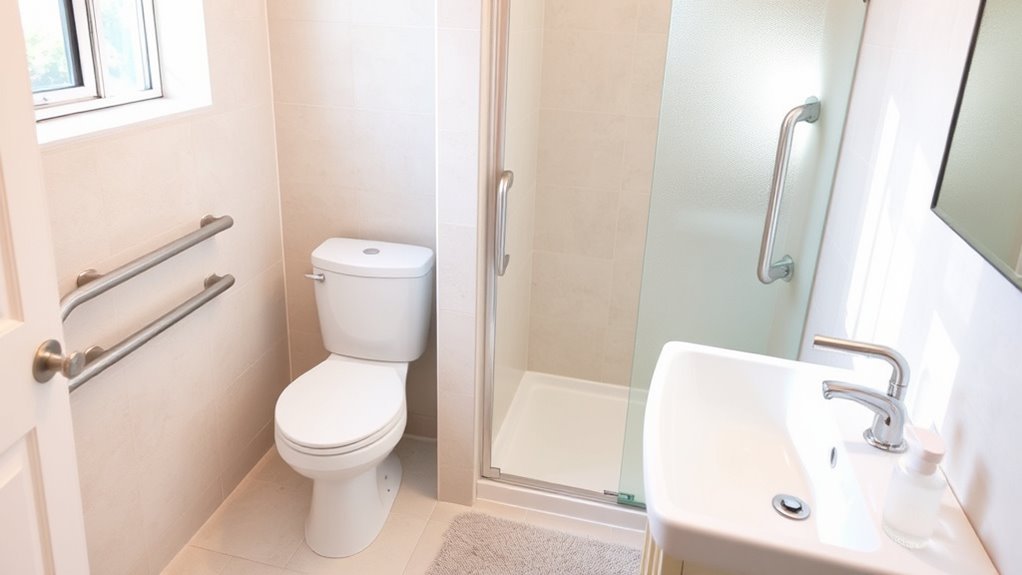
Installing grab bars in key areas of your bathroom is one of the most effective ways to prevent falls and improve safety. Place them near the toilet, inside the shower, and beside the bathtub to provide stable support where you need it most. Grab bars give you something secure to hold onto when sitting, standing, or moving around, reducing the risk of slipping on wet surfaces. Make sure they’re mounted securely into wall studs or with appropriate anchors to handle your weight. Choose bars with textured or slip-resistant surfaces for extra grip. Proper placement ensures you can use them comfortably without overextending or losing balance. Proper placement is essential to maximize safety and usability. These simple additions can make a significant difference in maintaining independence and preventing dangerous falls. Utilizing AI tools can also help identify the most vulnerable areas in your bathroom for additional safety upgrades. Additionally, consulting reliable safety guidelines can ensure your modifications meet recommended standards for fall prevention.
Use Non-Slip Mats and Textured Flooring

To reduce the risk of slipping in your bathroom, using non-slip mats and textured flooring is essential. These surfaces provide better grip, especially when floors are wet, preventing dangerous falls. Choose mats with suction cups or adhesive backing to keep them secure. Textured flooring, like rubber or textured tile, adds extra traction. When selecting mats and flooring, consider these features:
Non-slip mats and textured flooring enhance bathroom safety by providing better grip when floors are wet.
- High-traction surfaces designed for wet environments
- Mats with non-slip backing or suction cups
- Easy-to-clean materials to prevent mold and residue buildup
- Properly fitted mats that cover high-traffic or slippery areas
Implementing these simple upgrades can considerably improve safety. Regularly check and replace worn mats or damaged flooring to maintain ideal grip. Recognizing fall prevention strategies and incorporating these safety features can make your bathroom safer for everyone, especially seniors. Incorporating textured flooring options that are designed for wet environments can further enhance safety and durability. Additionally, choosing materials with high durability and slip resistance can ensure long-term safety and ease of maintenance. Incorporating non-slip surface treatments can also help improve traction on existing flooring, especially when combined with modern smart home solutions that monitor bathroom conditions for added safety.
Upgrade to Walk-In Showers and Barrier-Free Tubs
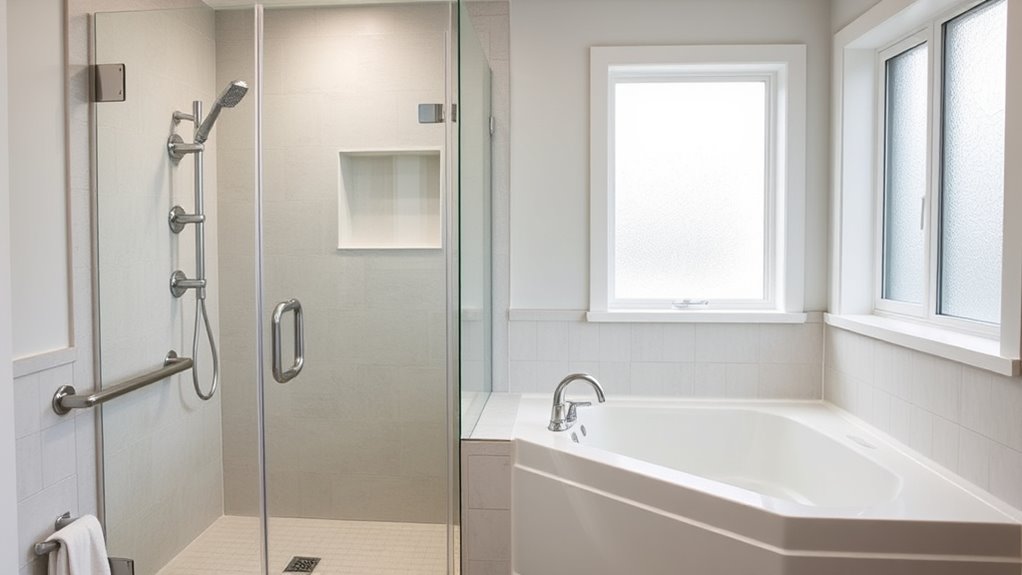
Upgrading to walk-in showers and barrier-free tubs considerably enhances bathroom safety by eliminating high step-in barriers that pose fall risks. Walk-in showers feature low or zero-threshold entrances, making it easier for seniors to enter and exit without risking a fall. These showers often include non-slip flooring and built-in seating, providing stability and reducing slips. Barrier-free tubs are designed without high edges, allowing seamless access that minimizes the need to step over a barrier. This not only decreases fall hazards but also promotes independence. Proper installation ensures safe and reliable use, and consulting with a professional can help ensure proper setup and prevent leaks or structural issues. Additionally, selecting appropriate fixtures can further improve safety and usability. Both options streamline bathroom movement, prevent accidents, and accommodate mobility limitations. Understanding installation considerations and selecting suitable options are crucial for maximizing safety benefits. Making these simple upgrades is an essential step toward home safety for seniors, creating a safer, more accessible bathroom environment that encourages confidence and reduces injury risks.
Enhance Lighting for Better Visibility

Since poor lighting can substantially increase the risk of slips and falls in the bathroom, ensuring adequate illumination is essential for safety. Bright, well-placed lighting helps you see hazards clearly, preventing accidents. You should consider installing:
- Overhead LED fixtures with high lumens for general lighting
- Motion-activated lights to illuminate the space automatically
- Nightlights in the bathroom and hallway for late-night visits
- Adjustable or dimmable lighting to customize brightness as needed
Proper lighting reduces shadows and glare, making it easier to navigate safely. Keep bulbs bright and replace them promptly when they burn out. Focus on even, consistent illumination to improve visibility, especially in critical areas like near the toilet, sink, and shower.
Add Raised Toilet Seats and Support Frames
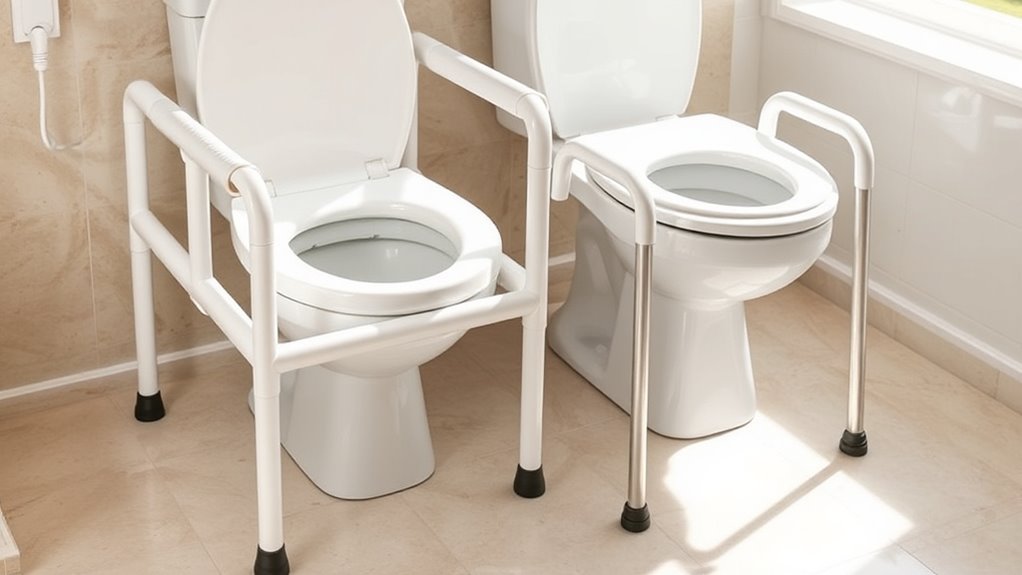
Adding raised toilet seats and support frames can considerably improve bathroom safety for seniors and individuals with limited mobility. Raised seats make sitting down and standing up easier by reducing the distance to the seat, helping prevent falls and strain. Support frames, such as grab bars or frames around the toilet, provide stability and balance, especially for those who feel unsteady. These accessories give users added confidence and reduce the risk of slips or falls during transfers. Installing a raised toilet seat with a support frame is simple and cost-effective, yet it offers significant safety benefits. It’s a proactive step to make your bathroom more accessible and secure, helping you maintain independence and reduce injury risks in one of the most fall-prone areas of your home. Vetted Incorporating home safety features like these can further enhance overall bathroom safety for seniors. Additionally, choosing reliable hardware ensures that these safety upgrades remain secure and durable over time, which is particularly important given the market demand for durable and safe bathroom accessories. To maximize safety, consider consulting with cybersecurity experts who can recommend secure and tamper-proof hardware options.
Widen Doorways and Create Clear Pathways
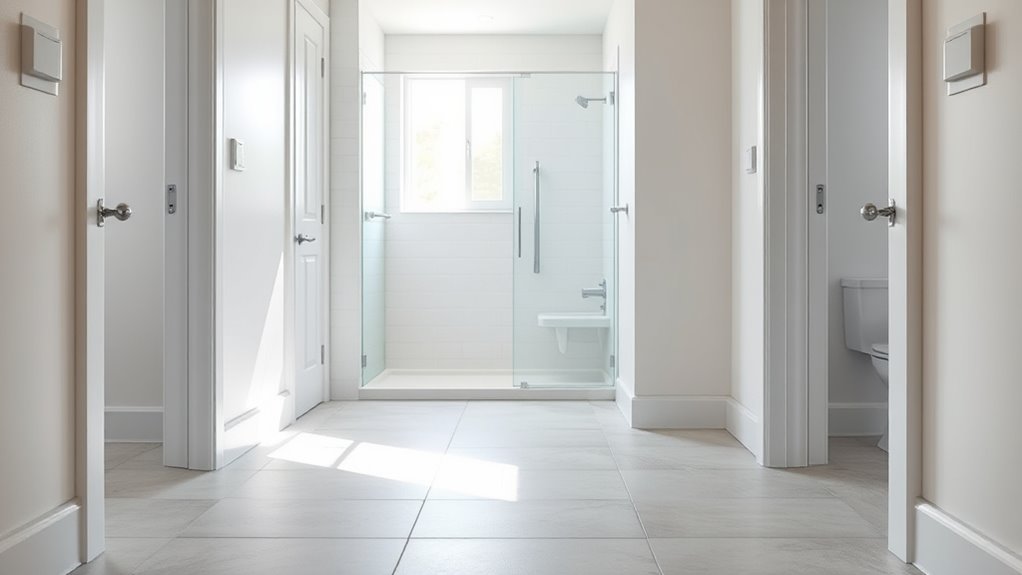
Widening doorways and creating clear pathways in your bathroom can markedly improve safety by making it easier to move around, especially for those using wheelchairs, walkers, or other mobility aids. Narrow doorways or cluttered spaces increase the risk of trips and falls. By expanding door frames, you allow for smoother wheelchair or walker access. Clearing pathways ensures unobstructed movement, reducing hazards. To achieve this, consider:
Widen doorways and clear pathways to improve bathroom safety and prevent falls.
- Removing unnecessary furniture or fixtures
- Installing wider door frames (at least 32 inches)
- Reorganizing storage to prevent clutter
- Adding grab bars along walls for additional support
- Incorporating accessible design principles to enhance overall safety and usability
- Regularly inspecting and maintaining home accessibility features to ensure ongoing safety
- Consulting with professional accessibility experts to optimize bathroom modifications
- Educating household members on safe mobility practices to promote ongoing safety and awareness
- Using age-friendly design strategies to adapt the space for evolving needs
These updates create a safer environment, promote independence, and help prevent dangerous falls. Making your bathroom more accessible benefits everyone and greatly lowers injury risk for seniors.
Incorporate Shower Chairs and Bath Lifts
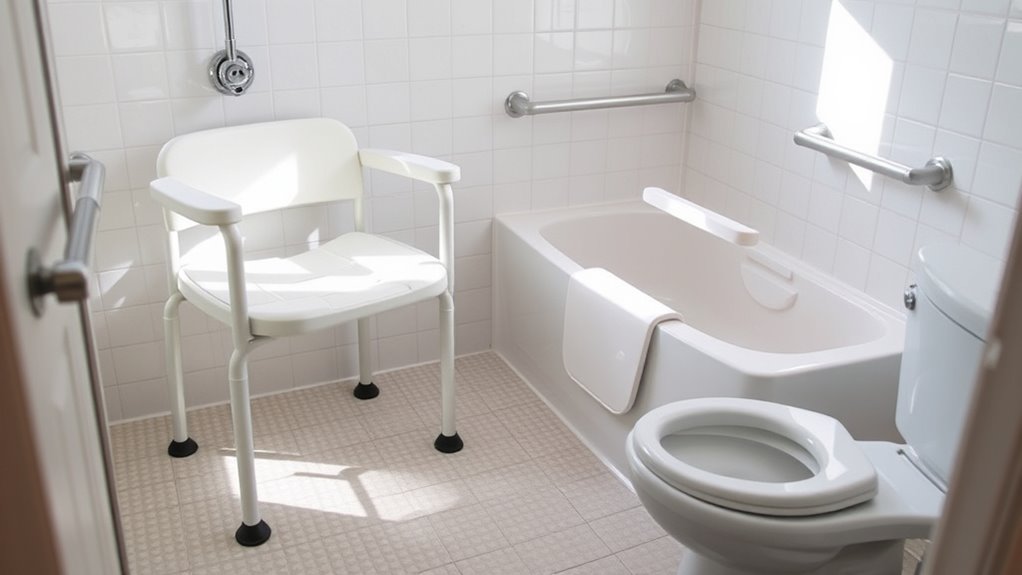
Incorporating shower chairs and bath lifts can substantially enhance bathroom safety by providing stable seating and support during bathing. These devices help prevent falls by offering a secure place to sit, especially for those with limited mobility or balance issues. Shower chairs are designed to be sturdy and often feature non-slip feet, ensuring stability on wet surfaces. Bath lifts, on the other hand, assist seniors in getting in and out of the bathtub safely, reducing the risk of slipping or falling. Both options promote independence, allowing you to bathe comfortably and confidently. Installation is straightforward, and many models are adjustable to fit individual needs. By adding these simple upgrades, you greatly reduce fall hazards and enhance overall bathroom safety for seniors.
Frequently Asked Questions
How Can I Identify Bathroom Hazards Specific to My Home?
You can identify bathroom hazards in your home by thoroughly inspecting every area. Look for slippery surfaces like tile or polished tubs, high edges or steps, and loose or uneven flooring. Check that grab bars are secure and accessible, and make certain lighting is bright enough. Test for easy access to the toilet, shower, and tub. Also, evaluate if space allows for mobility aids like walkers or wheelchairs, reducing fall risks.
Are There Affordable Options for Senior-Friendly Bathroom Modifications?
Yes, there are affordable options for senior-friendly bathroom modifications. You can install grab bars near the toilet and shower, add non-slip mats, and replace standard tubs with walk-in showers. Using portable raised toilet seats and handheld showerheads also helps. These updates are cost-effective, easy to DIY, and considerably improve safety, allowing your loved ones to maintain independence without breaking the bank.
What Maintenance Is Required for Safety Features Like Grab Bars?
You need to regularly check your grab bars to make certain they’re secure and in good condition. Tighten any loose mounting hardware and inspect for rust or corrosion. Clean the bars with mild soap and water to prevent buildup that could cause slipping. Replace worn or damaged grab bars promptly to maintain safety. Regular maintenance keeps the bars sturdy and reliable, reducing fall risk and ensuring ongoing safety for seniors.
How Do I Choose the Best Walk-In Shower Design for Safety?
Choosing the best walk-in shower design for safety is like finding a sturdy boat in choppy waters. Look for low or zero-threshold entries to prevent tripping, non-slip flooring that grips like a lifeline, and built-in seating for stability. make certain there’s ample space for mobility aids, proper lighting, and grab bars. Prioritize features that make you feel secure and independent, turning your bathroom into a safe haven rather than a hazard zone.
Can These Upgrades Be Installed Without Professional Help?
Yes, many bathroom upgrades can be installed without professional help if you’re handy and follow instructions carefully. You can add non-slip mats, grab bars, or raised toilet seats yourself. However, for complex projects like walk-in shower conversions or tub-to-shower replacements, it’s best to hire a professional to guarantee safety and proper installation. Proper installation is vital for the upgrades to be effective and secure.
Conclusion
By making these simple upgrades, you’re taking vital steps to protect your loved ones. But don’t stop here—there’s more you can do to guarantee their safety and independence. Imagine a bathroom where accidents are a thing of the past, where comfort and security go hand in hand. Ready to transform your space into a haven of safety? The next step could be closer than you think—are you prepared to make that change today?