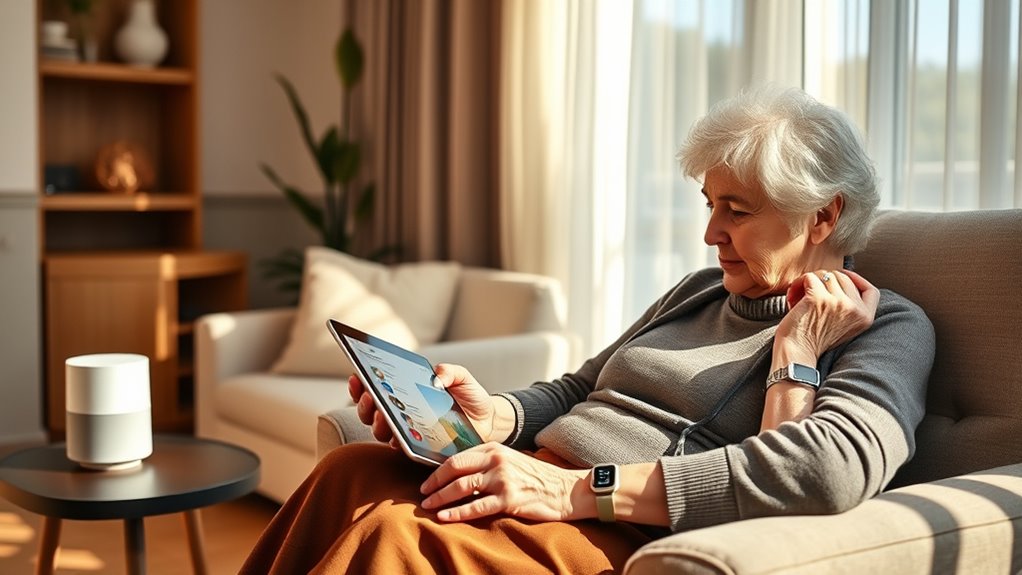

Using technology to monitor your aging parent at home can substantially improve their safety and independence. Devices like wearable sensors, smart home sensors, and environmental monitors track essential signs, movements, and hazards in real-time, alerting you promptly to any concerns. AI-powered platforms analyze patterns to predict risks, while user-friendly designs make devices easy for seniors to use. To discover how these systems can best support your family, explore the latest innovations and tips.
Key Takeaways
- Utilize wearable sensors and smart devices to monitor vital signs, activity, and fall detection in real-time.
- Implement environmental sensors for detecting hazards like smoke, temperature changes, or intrusions.
- Use AI-powered platforms for pattern recognition, risk prediction, and automated alerts to caregivers.
- Choose user-friendly, accessible devices with voice commands and large buttons to enhance senior independence.
- Integrate home automation and renewable energy solutions for reliable, energy-efficient continuous monitoring.
Overview of Elderly Care Monitoring Technologies
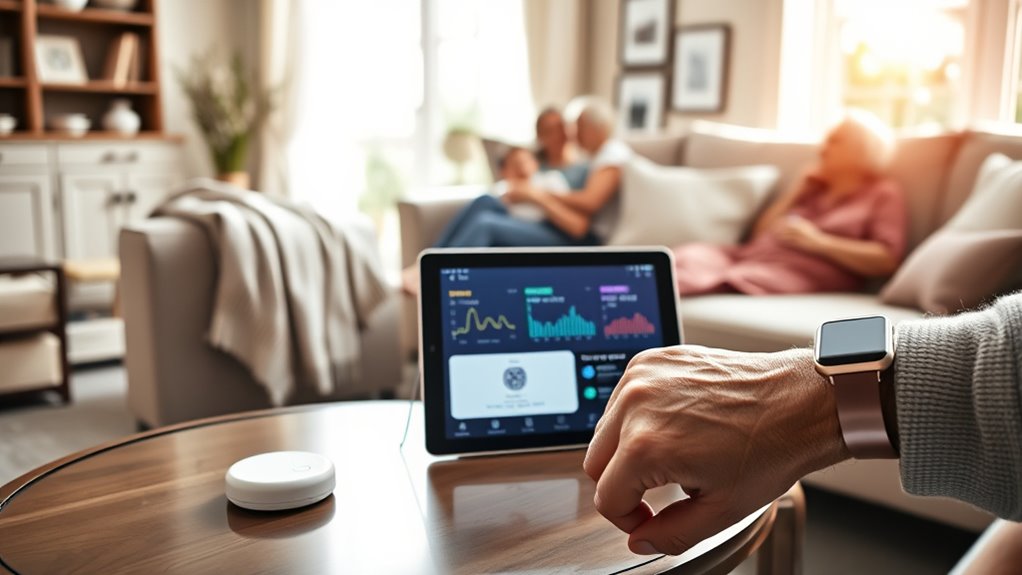
Elderly care monitoring technologies have rapidly advanced to support seniors living independently at home. These systems include remote patient monitoring devices that track vital signs like heart rate, oxygen levels, and movement, providing real-time data to caregivers. AI-powered platforms analyze this data to spot patterns, predict risks, and send alerts for early intervention. Smart home sensors monitor activities such as gait, posture, and falls, giving a thorough view of daily routines. Smart home sensors can also adapt to individual needs, further customizing the monitoring experience. Incorporating high-precision sensors ensures more accurate detection of health changes, improving overall safety. Additionally, implementing real-time alerts allows caregivers to respond promptly to urgent health events, further enhancing safety and responsiveness. The integration of wearable health devices with other smart systems creates a comprehensive safety network for seniors. wearable health devices and smart hubs combine multiple sensors for seamless monitoring, while telemedicine platforms enable remote consultations and medication management. These integrated monitoring systems create an ecosystem that enhances safety, promotes independence, and offers peace of mind for families caring for aging loved ones.
Key Benefits for Families and Seniors
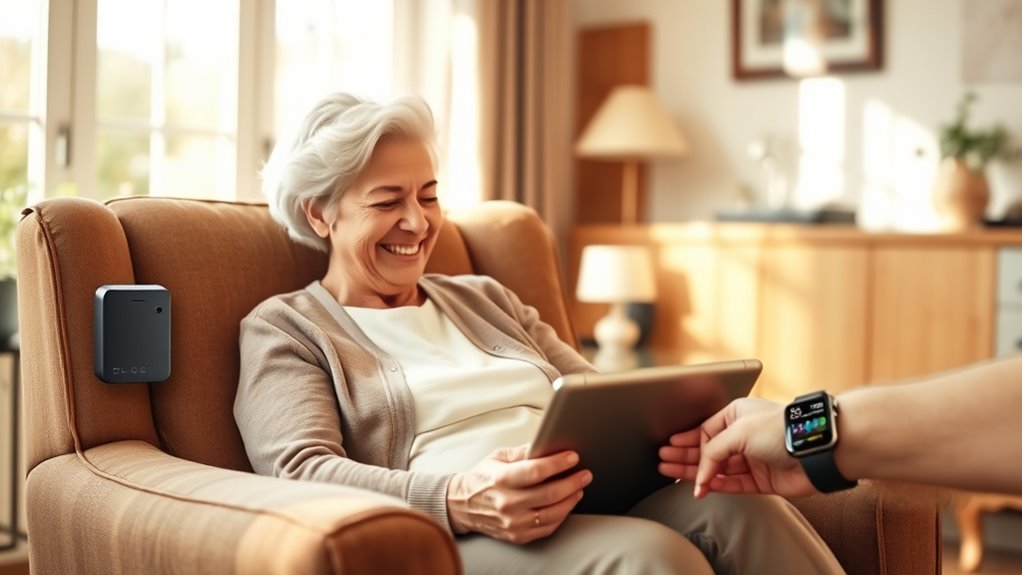
Using technology to monitor aging parents at home offers numerous benefits that directly enhance safety and independence. You can quickly detect health emergencies, like falls or sudden changes in essential signs, allowing for immediate help. This reassurance helps your parent stay in their familiar environment longer, maintaining their independence and quality of life. It also reduces your worry, knowing you have real-time updates and alerts. Digital tools support medication adherence and manage chronic conditions effectively, preventing hospitalizations. Additionally, smart communication features enable frequent social interaction, which boosts mental well-being. Implementing connected health devices can provide continuous monitoring and early warning signs of health issues. These devices often utilize remote monitoring technology, enabling caregivers to oversee health data from anywhere. Understanding sensor accuracy and data reliability is crucial for effective monitoring systems. Incorporating wearable sensors into daily routines can further enhance early detection of health changes. The integration of real-time alerts ensures prompt responses to potential emergencies, increasing safety. Overall, technology promotes a safer, more connected lifestyle for your parent while easing the caregiving burden on you. This balance helps everyone feel more secure and supported in daily life.
Popular Devices and System Features
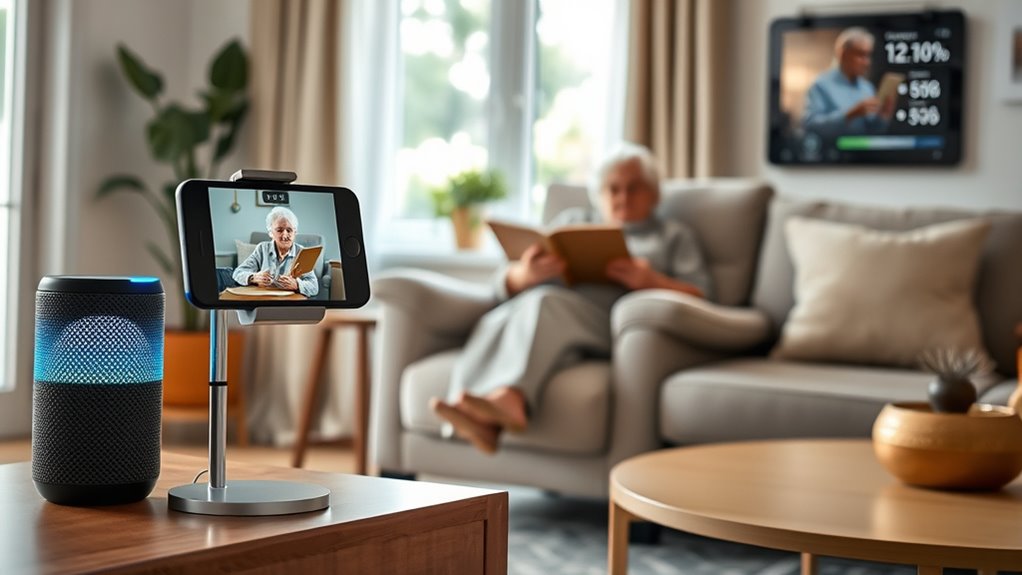
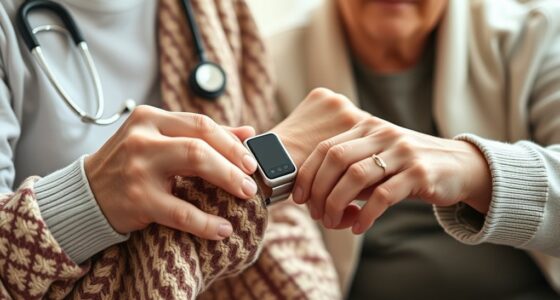
Popular devices and system features are the backbone of effective at-home elderly monitoring. These tools help you stay connected and guarantee your loved one’s safety. Wearable sensors track vital signs and activity levels, alerting you to any sudden changes. Smart sensors placed around the home monitor falls, movement, and environmental hazards, providing real-time updates. Incorporating user-friendly technology ensures your loved one can navigate and benefit from these systems comfortably. Using environmental monitoring devices can also help detect issues like temperature fluctuations or smoke, adding an extra layer of safety. Understanding field‑of‑view and imaging‑scale concepts can assist in optimizing the placement and effectiveness of sensors, making your monitoring system more reliable. Additionally, considering sensor placement strategies can enhance detection accuracy and reduce false alarms. Employing home automation features can streamline alerts and responses, improving overall safety. These features create a safer environment, giving you peace of mind and your parent confidence to live independently.
Enhancing Acceptance and Ease of Use
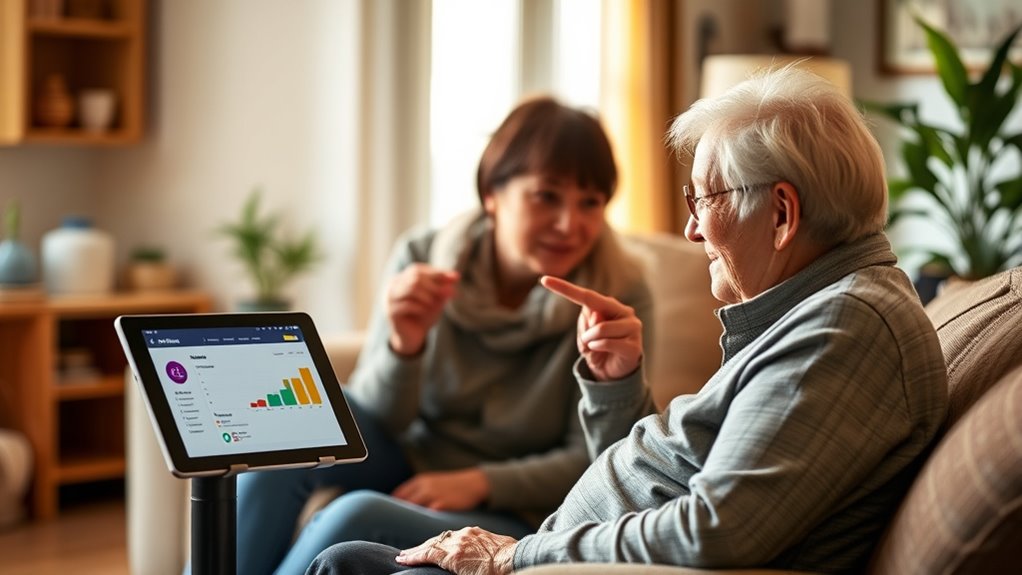
Making sure that monitoring devices and systems are easy to use is key to ensuring their acceptance among seniors. You should choose intuitive, simple interfaces with clear icons and minimal steps to operate. Providing hands-on demonstrations and written guides tailored for seniors can boost confidence and familiarity. Incorporate voice commands or large, tactile buttons to accommodate limited dexterity and vision challenges. Regularly seeking feedback helps identify usability issues and refine the system. It’s also helpful to involve your parent in choosing devices, fostering a sense of control and comfort. Ensuring seamless integration with existing routines reduces resistance and encourages consistent use. When technology feels straightforward and supportive, your parent is more likely to embrace it, leading to better safety and peace of mind. Additionally, designing the system with comfort as a foundation can improve overall acceptance and long-term use. Paying attention to usability principles ensures that the system is accessible and easy to navigate, which is crucial for sustained adoption. Incorporating familiar technology that your parent already uses regularly can further increase their confidence and willingness to engage with the monitoring system. Utilizing massage chairs and recliners with user-friendly features can provide added comfort and familiarity, making technology adoption more appealing. Incorporating simple diagnostic tools can also help quickly identify and resolve any technical issues, promoting ongoing usability.
Future Trends and Considerations
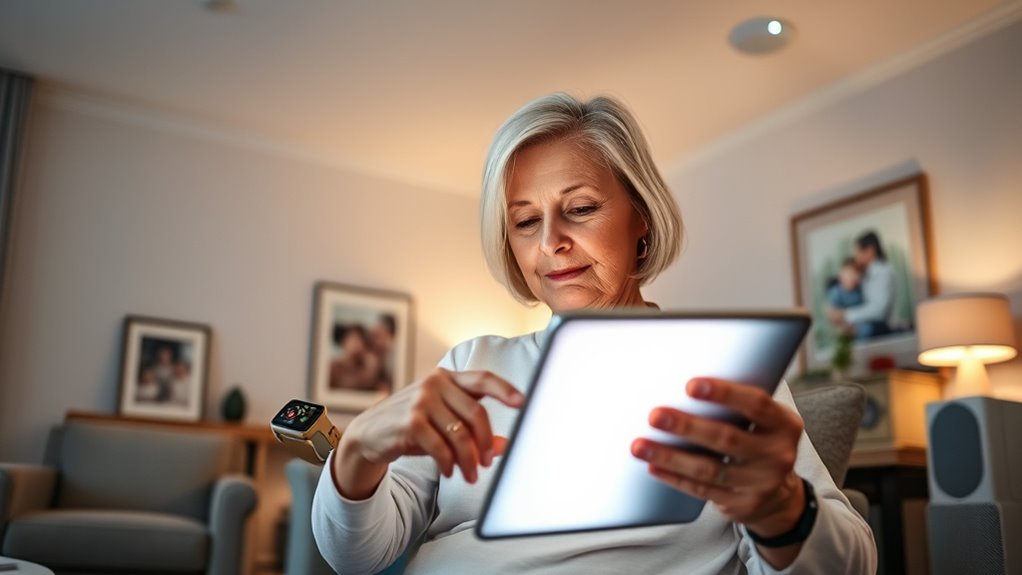
As technology continues to evolve, future elderly care monitoring systems are expected to become more intelligent, personalized, and seamlessly integrated. You’ll see innovations that adapt to your parent’s unique habits, providing tailored alerts and support. Edge computing will process data locally, ensuring faster responses and enhanced privacy. AI and deep learning will refine care by recognizing patterns and predicting health risks, enabling early interventions. Integration of sensors, telehealth, and robots will create a detailed ecosystem, offering social interaction and daily assistance. Consider these future developments:
- *Enhanced privacy protections to safeguard sensitive data*
- *More intuitive, user-friendly devices designed for seniors*
- *Greater accessibility through affordable, scalable solutions*
These trends aim to improve safety, independence, and peace of mind for your loved ones. Additionally, advances in home energy integration will support the deployment of these technologies within a secure and efficient environment. Incorporating secure cloud storage will further ensure that sensitive health data remains protected and accessible only to authorized users. Moreover, developments in user-centered design will make these systems more accessible and easier for seniors to operate independently. Furthermore, the integration of vetted wave and wind technologies can contribute to sustainable energy solutions that power these monitoring systems efficiently. As these innovations develop, the importance of interoperability standards will grow to ensure different devices and systems work together smoothly.
Frequently Asked Questions
How Do Monitoring Systems Ensure My Parent’s Privacy and Data Security?
Monitoring systems protect your parent’s privacy and data security by using encryption to keep information confidential, ensuring only authorized caregivers access it. They also incorporate secure communication protocols and regular software updates to patch vulnerabilities. You can control permissions, monitor data access, and choose systems compliant with privacy laws. Additionally, many devices anonymize data and store it locally when possible, reducing exposure to breaches and safeguarding your parent’s personal information.
What Are the Costs Associated With Deploying Elderly Monitoring Technology?
The costs of deploying elderly monitoring technology vary depending on the system, device types, and service plans. You might pay upfront for equipment like sensors or wearable devices, which can range from a few hundred to over a thousand dollars. Ongoing expenses include subscription fees for cloud storage, telehealth services, or monitoring plans. While some options are affordable, all-encompassing solutions with advanced features tend to be more expensive.
How Can Technology Be Customized for Seniors With Cognitive Impairments?
You can customize technology for seniors with cognitive impairments by simplifying interfaces and using familiar, easy-to-recognize icons to reduce confusion. Combining voice-activated commands with visual cues helps them navigate systems confidently. Incorporate reminders for medications and appointments, and use sensor alerts to monitor safety. By blending intuitive design with adaptive features, you empower your loved ones to maintain independence while ensuring their safety and peace of mind.
What Training or Support Is Available for Seniors to Use These Devices?
You can access various training programs, tutorials, and support services designed specifically for seniors. Many tech companies offer user-friendly guides, video tutorials, and step-by-step instructions to help you learn how to operate devices. Community centers and senior organizations often provide hands-on workshops or one-on-one coaching. Additionally, family members and caregivers can offer personalized support, ensuring your parent feels comfortable and confident using the technology daily.
How Do Regulations Affect the Availability and Reimbursement of Monitoring Systems?
Regulations substantially influence the availability and reimbursement of monitoring systems. You’ll find that government policies and healthcare regulations determine which devices qualify for insurance coverage or subsidies, making them more accessible. Additionally, evolving standards ensure data security and privacy, impacting product approval and market entry. Staying updated on local regulations helps you choose compliant, reimbursed systems, guaranteeing your parent receives safe, affordable monitoring solutions that meet regulatory requirements.
Conclusion
By embracing these monitoring technologies, you’re planting seeds of peace and security in your parent’s golden years. Think of it as building a safety net woven with care and innovation, catching them gently when needed. As technology advances, it becomes your steadfast companion, turning worry into reassurance. With each device, you’re crafting a symphony of support that allows your loved one to flourish peacefully at home—because their happiness is the melody that makes your heart sing.