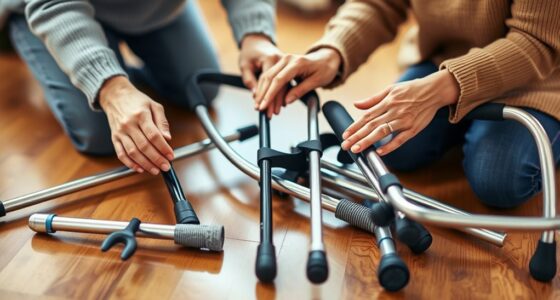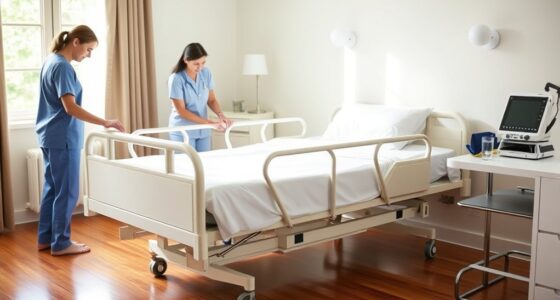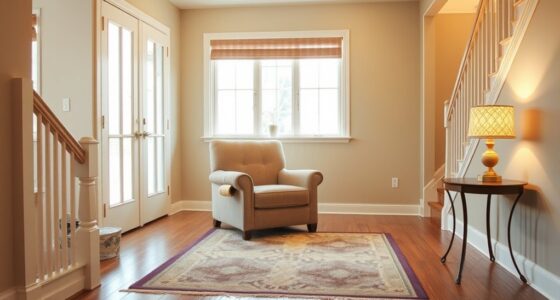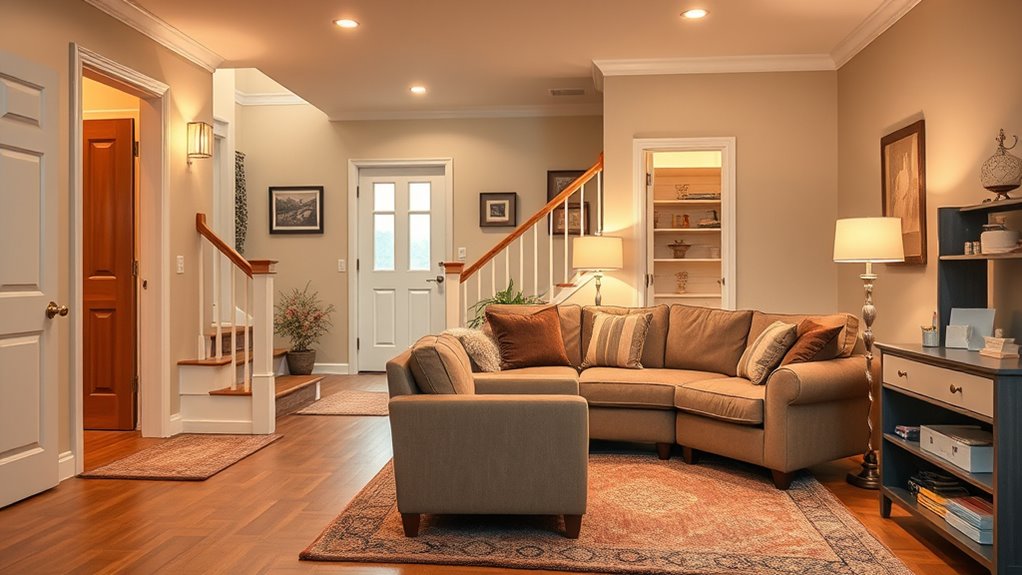

To senior-proof your home, start by improving lighting and visibility with brighter lights and nightlights. Remove hazards like loose rugs and secure flooring to prevent trips. Install safety devices such as smoke and carbon monoxide detectors, and make structural modifications like ramps and grab bars to boost accessibility. Enhance security with alarms and easy-to-use locks. Upgrade bathroom and electrical safety, and keep essentials within reach. If you explore further, you’ll discover more simple steps to keep your home safer.
Key Takeaways
- Improve lighting and add nightlights to enhance visibility and prevent falls throughout the home.
- Remove hazards, secure loose rugs, and repair uneven flooring to reduce tripping risks.
- Install safety devices like grab bars, non-slip mats, and accessible door handles for easier mobility.
- Ensure smoke and carbon monoxide detectors are working, and have emergency plans and communication devices in place.
- Widen doorways, add ramps, and reorganize furniture to create clear, accessible pathways for seniors.
Improve Lighting and Visibility Throughout Your Home
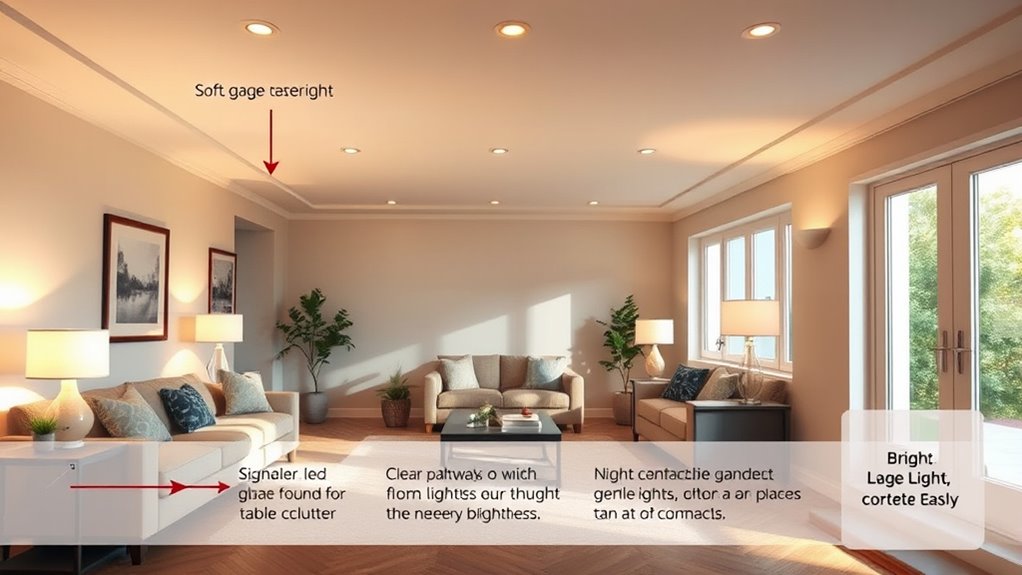
Good lighting is essential for preventing falls and ensuring safety at home. Bright, even lighting helps you see clearly in all rooms, hallways, and stairways, reducing the risk of accidents. Install nightlights in bedrooms, hallways, and bathrooms to make nighttime navigation safer. Outdoor lighting, like solar lights along walkways and entrances, illuminates paths and prevents outdoor falls. Mark the top and bottom of stairs with colored tape or paint to make steps more visible. Regularly check your bulbs and replace any that are burned out to keep lighting ideal. Ensuring proper lighting enhances visibility and helps you identify potential hazards early, further reducing the risk of accidents. Proper lighting also supports visual contrast awareness, aiding in distinguishing different surfaces and obstacles. Additionally, using high-quality lighting fixtures can improve overall illumination and safety. By maintaining good visibility, you make your home safer and reduce fall risks, especially for seniors or those with limited eyesight. Proper lighting creates a safer environment you can rely on daily. Incorporating properly installed and maintained lighting systems can maximize safety benefits and prevent potential hazards.
Remove Hazards and Secure Flooring to Prevent Trips

Make sure walkways stay clear of clutter, cords, and furniture to prevent tripping. Secure loose rugs with tape or specific rug anchors so they don’t slip or bunch up. Repair uneven surfaces like cracked pavement or warped flooring to keep your home safe and steady. Additionally, consider installing non-slip flooring in high-traffic areas to further reduce the risk of slips and falls. Regularly inspect and maintain flooring to catch and fix any hazards early, and ensure proper ventilation to prevent moisture buildup that can lead to slippery surfaces. Incorporating proper drainage systems can also help prevent water accumulation that increases slip hazards. Using surface testing methods can help identify potentially hazardous areas before accidents happen.
Clear Walkways Regularly
Regularly clearing walkways is essential for preventing trips and falls around your home. You should keep all pathways free of clutter, cords, and furniture that can obstruct movement. Check for loose or uneven flooring, and repair or secure any hazards promptly. Remove small objects or toys from walkways to avoid accidental trips. Secure loose rugs or mats with tape to prevent slipping or tripping, ensuring they stay flat. Keep walkways well-maintained, especially in high-traffic areas, and clear snow or ice during winter for outdoor safety. Good lighting also helps you spot hazards, but maintaining clear paths guarantees you won’t trip over unexpected obstacles, creating a safer environment for you and your family. Additionally, incorporating natural landscaping elements can help guide foot traffic safely and reduce hazards in outdoor walkways. Implementing hazard prevention strategies, such as installing handrails or non-slip surfaces, can further enhance safety. Being aware of home safety tips can help prevent accidents and promote a secure living space. For added security, consider using non-slip flooring in potentially hazardous areas to minimize the risk of slips and falls.
Secure Loose Rugs Firmly
Loose rugs can pose a serious tripping hazard, especially in high-traffic areas or on stairways. To prevent falls, guarantee all rugs are secured firmly to the floor. Use double-sided tape, rug grippers, or non-slip pads underneath to keep rugs in place. Regularly check for signs of wear or curling edges that can catch your feet. If a rug continues to slip or bunch up, consider replacing it with a more stable option or removing it altogether. Keep walkways clear of loose rugs that could cause trips, especially in areas where you walk frequently. Securing rugs not only reduces trip risks but also creates a safer, more confident environment for your daily activities. Additionally, choosing rug options with non-slip backing can provide extra security. Taking these simple steps can make a big difference in home safety.
Repair Uneven Surfaces
Uneven surfaces such as cracked steps, broken walkways, or uneven flooring can considerably increase the risk of trips and falls. To prevent accidents, inspect your home regularly for damaged areas and repair them promptly. Fill cracks in concrete, level out uneven flooring, and replace broken tiles or boards. For outdoor walkways and steps, use durable materials and ensure they’re firm and stable. Adding ramps or handrails can improve safety on uneven entryways. Use non-slip strips on stairs and textured paint on slippery surfaces. Keep walkways clear of debris, tools, or clutter that could cause trips. Maintaining level, secure surfaces helps reduce hazards and creates a safer environment, giving you peace of mind and reducing fall risks at home.
Install Safety Devices and Maintain Emergency Preparedness
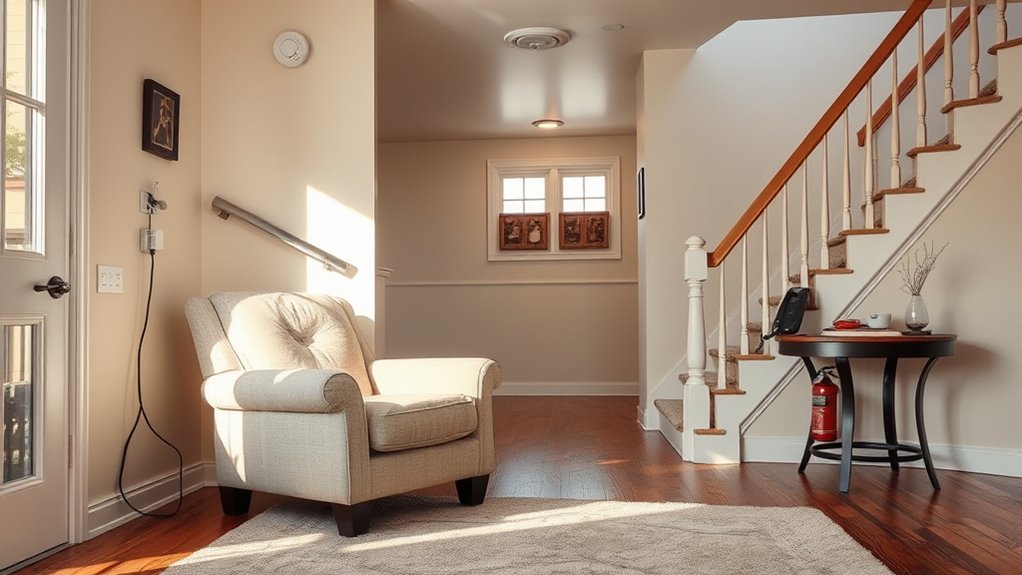
You should regularly test and maintain smoke and carbon monoxide detectors to keep your home safe. It’s also important to check fire safety equipment like fire extinguishers and make certain they’re ready to use. Additionally, having reliable emergency communication devices accessible can make a critical difference during a crisis. Incorporating security systems can further enhance your home’s safety and provide deterrence for intruders. Understanding thermal behavior of your heating and cooling devices can help prevent malfunctions that compromise safety. Familiarizing yourself with home safety protocols can improve your preparedness for unexpected events and ensure quick, effective responses. Regularly reviewing your home safety protocols is essential to stay prepared for unexpected events. Moreover, being aware of vetted safety products ensures you choose reliable solutions to protect your household effectively.
Smoke and Carbon Monoxide Detectors
Installing smoke and carbon monoxide detectors is an essential step in safeguarding your home. Place detectors on every floor, especially near bedrooms, kitchens, and garages. Test them at least twice a year to guarantee they work properly and replace batteries annually or as needed. Consider interconnected detectors so when one sounds an alarm, all do, alerting everyone in the house. Keep detectors away from vents, windows, and humid areas to prevent false alarms. Regularly check the expiration dates and replace units every 7-10 years. Educate yourself and your loved ones on what the alarms mean and how to respond quickly. Properly maintained detectors provide early warnings, giving you critical time to react and stay safe during emergencies. Additionally, choosing high-quality detectors with features like HEPA filters can improve overall home safety and allergen control. Understanding the impact of detectors and their proper placement can further enhance your home safety measures. Ensuring your detectors are connected to home safety systems can provide an extra layer of security and peace of mind. Incorporating regular maintenance routines for detectors can help prevent malfunctions and ensure consistent operation.
Fire Safety Equipment Checks
Regularly checking and maintaining fire safety equipment is essential for protecting your home and loved ones. Confirm all smoke and carbon monoxide detectors are tested at least twice a year and replace batteries as needed. Keep fire extinguishers accessible, especially in the kitchen and near fireplaces, and verify they are in working order. Regular inspections help catch issues early and ensure devices function properly during emergencies. To emphasize the importance, review this checklist:
| Equipment Type | Inspection Frequency | Action Needed |
|---|---|---|
| Smoke detectors | Twice a year | Test and replace batteries |
| Carbon monoxide detectors | Twice a year | Test and replace batteries |
| Fire extinguishers | Annually and after use | Check pressure gauge, recharge if needed |
| Fire escape plan | Annually | Practice and update |
| Emergency contacts | Quarterly | Confirm accuracy |
Proper maintenance keeps your home safe and ready for emergencies. Staying informed about home safety measures and fire prevention techniques can further enhance your preparedness.
Emergency Communication Devices
Having reliable emergency communication devices is crucial for quick assistance during crises. You should install a landline or mobile phone within easy reach in key areas of your home, like the bedroom and living room. Consider a wearable alert system or a monitored emergency response system that can automatically notify emergency services if you fall or experience a medical emergency. Keep these devices charged and tested regularly to confirm they work when needed. Make sure your mobile phone has emergency contacts saved and quick-dial options. Inform family members and caregivers about how to use these devices. Also, place visible labels and instructions for emergency procedures, so help can reach you promptly. Properly maintained communication devices provide peace of mind and critical support when every second counts.
Make Structural Modifications for Better Accessibility
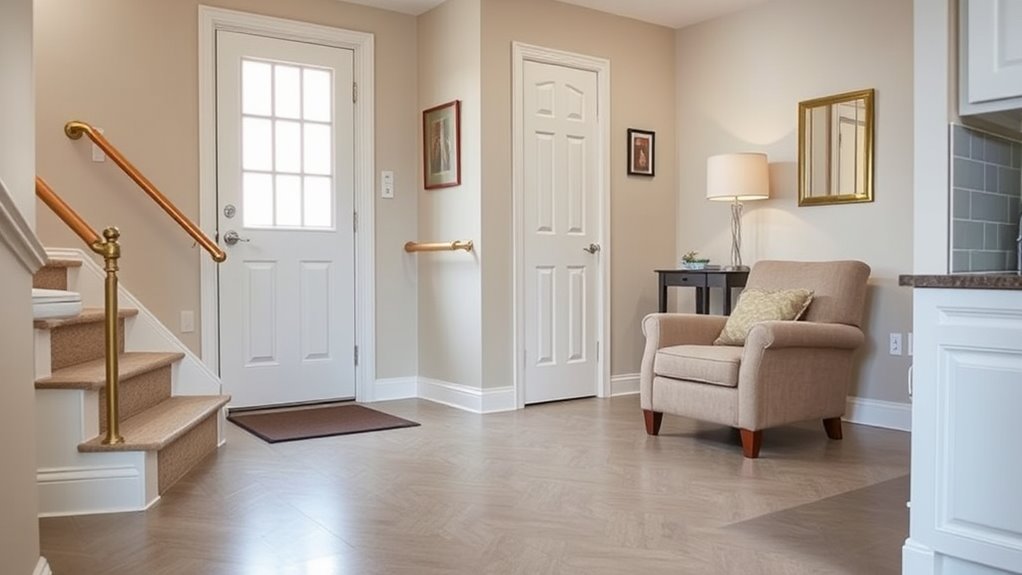
Making structural modifications can considerably improve home accessibility and reduce fall risks for seniors. Start by repairing uneven or cracked steps, walkways, and driveways to prevent trips outdoors. Adding ramps with sturdy handrails at entry points makes doorways accessible for wheelchairs or walkers. Use safety strips on stair treads for better traction and visibility. Guarantee all floors are level and free of hazards like holes or clutter. Update electrical wiring, fuse boxes, and outlets, especially in older homes, to lower fire and shock risks. Consider widening doorways and hallways to allow easier navigation. Installing grab bars near toilets and in showers enhances safety. These modifications create a safer, more accessible environment that supports independence and minimizes injury risks.
Enhance Security and Easy Access for Daily Use
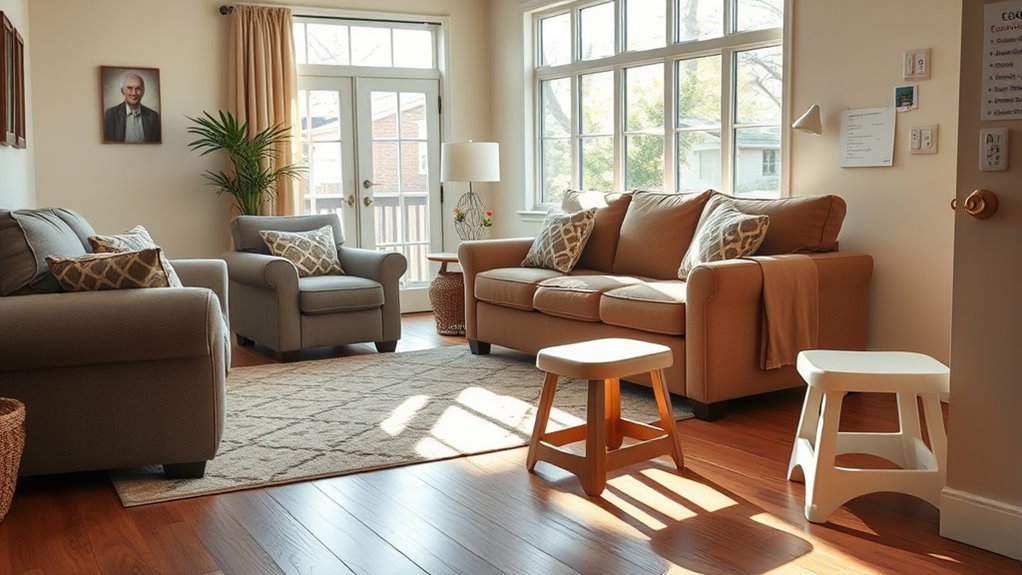
To enhance security and facilitate easier daily access, focus on optimizing your home’s layout and lighting. Rearrange furniture to create wide, clear pathways that reduce obstacles and make navigation smooth. Keep electrical cords and wires off walkways to prevent tripping. Install easy-to-reach light switches and consider motion sensor lights in hallways and entryways for automatic illumination. Ensure door handles and knobs are easy to operate, replacing traditional ones with lever-style handles if needed. Add nightlights in bedrooms, bathrooms, and hallways to improve visibility during nighttime hours. Well-placed lighting not only prevents falls but also deters intruders. Regularly check and replace burnt-out bulbs to maintain ideal lighting and security, ensuring your home remains safe and accessible for daily use.
Create Clear and Wide Pathways Inside and Outside
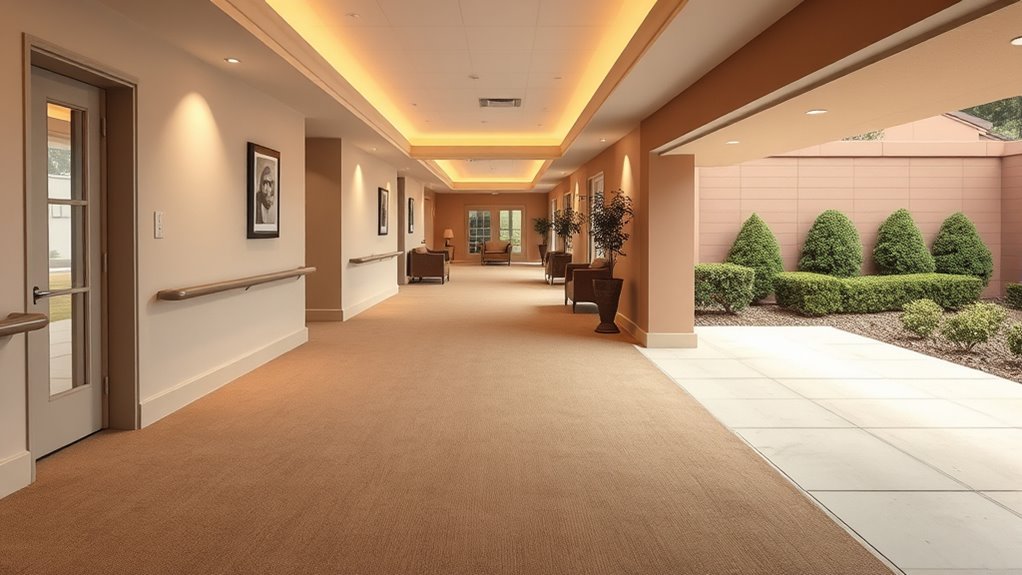
Are your walkways and hallways wide enough to guarantee safe movement throughout your home? If not, consider widening narrow corridors to at least 36 inches, making it easier to navigate with mobility aids. Clear clutter and remove unnecessary furniture that could obstruct paths. Outside, trim bushes and shrubs to prevent overgrowth from blocking walkways. Use edge markings or contrasting colors on steps and walkways to improve visibility. Make certain outdoor paths are level, smooth, and free of cracks or uneven surfaces to prevent trips. Add ramps where stairs exist, with sturdy handrails on both sides. Properly lighting pathways, both inside and outside, helps you see obstacles clearly, especially at night. Creating wide, unobstructed routes boosts safety and independence in your daily routines.
Upgrade Bathroom Safety Features for Fall Prevention
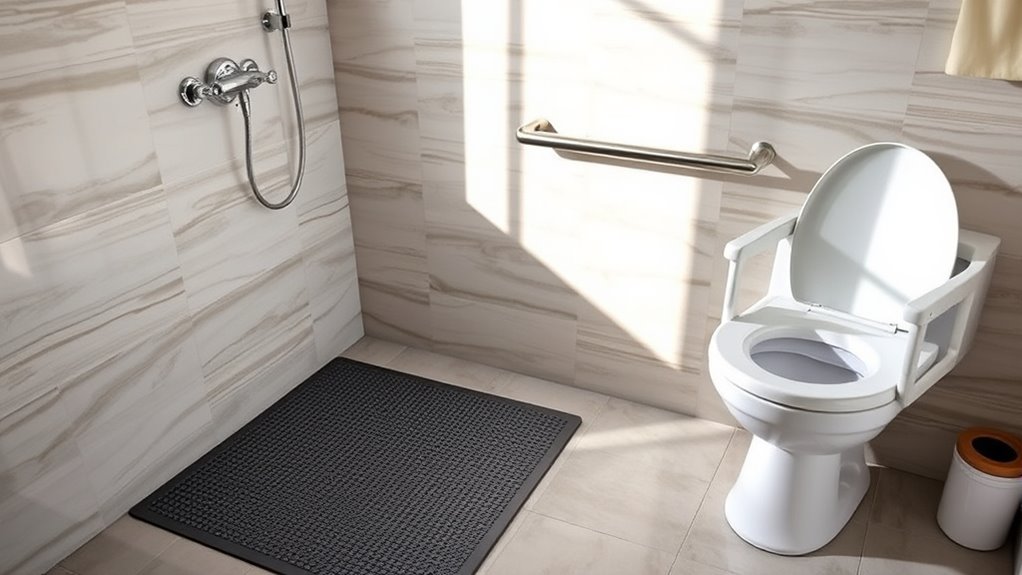
To prevent falls in your bathroom, you should install grab bars securely near the toilet and in the shower or tub area. Using non-slip mats or strips inside the shower and on the bathroom floor can also considerably reduce slipping risks. These simple upgrades make your bathroom safer and help maintain independence.
Install Grab Bars Securely
Securely installing grab bars in your bathroom is essential for preventing falls and enhancing safety. Make sure you choose sturdy, corrosion-resistant bars designed to hold weight. Locate them near the toilet, inside the shower, and beside the bathtub, where you need support most. Use a stud finder to locate wall studs, and attach the bars directly into them for maximum strength. If installing into drywall, use appropriate anchors rated for load-bearing support. Tighten all screws securely and check the stability regularly. Avoid using weak adhesive or suction-mounted bars, as they can loosen over time. Proper installation guarantees reliable support, giving you confidence when transferring or standing, and considerably reduces the risk of slips and falls in the bathroom.
Use Non-Slip Shower Mats
Installing grab bars is a great step toward bathroom safety, but adding non-slip shower mats further reduces the risk of falls. These mats provide essential traction, especially on wet surfaces, helping you stay steady while bathing or showering. Choose mats with a textured surface designed to grip your feet securely. Make sure they are slip-resistant and fit the shower or tub base properly. Regularly clean the mats to prevent mold and soap residue buildup, which can make surfaces slicker. Replace worn or damaged mats promptly. For added safety, consider using adhesive strips or suction cups to keep the mat firmly in place. By incorporating non-slip mats, you create a safer bathroom environment that helps prevent slips and falls.
Adjust Electrical Systems for Safety and Convenience
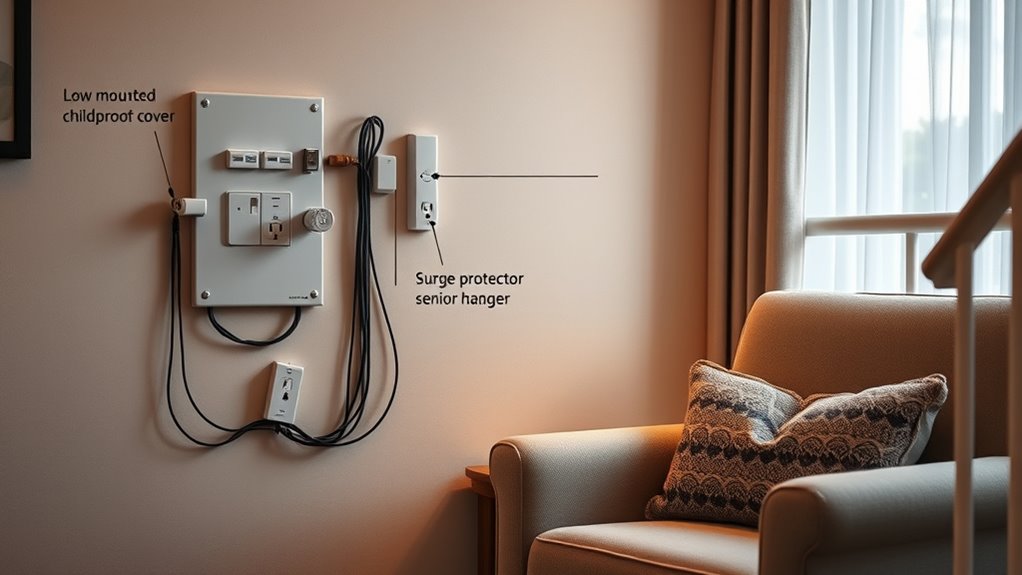
Have you considered how your electrical system can be safer and more convenient for everyday use? Start by inspecting all outlets and switches, replacing any damaged or outdated ones. Install ground-fault circuit interrupters (GFCIs) in bathrooms, kitchens, and outdoor areas to prevent shocks. Use rocker or push-button switches instead of toggle types for easier operation. Ensure cords and wires are organized and out of walkways to avoid tripping. Consider installing nightlights with built-in outlets for added visibility and accessibility at night. Use switches with large, easy-to-press buttons, and add dimmer controls to adjust lighting levels. Regularly check and replace burned-out bulbs to maintain bright illumination. These simple updates can make your home safer and more user-friendly.
Keep Items Within Reach to Avoid Bending and Climbing
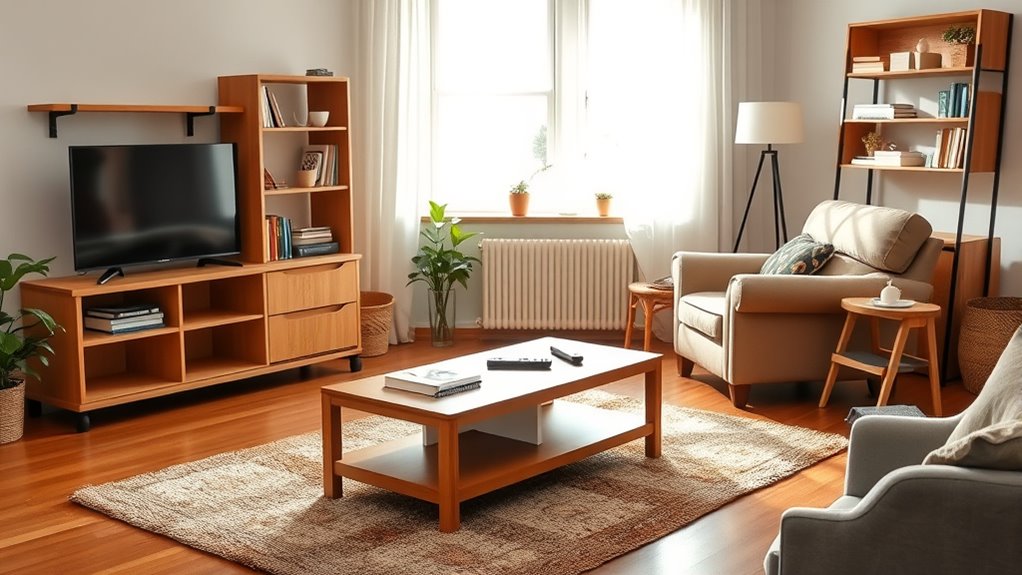
To reduce the risk of falls and injuries, keep frequently used items within easy reach so you don’t have to bend, stretch, or climb to access them. Store everyday essentials like dishes, utensils, medications, and remote controls at waist level or in accessible cabinets. Use pull-out shelves or organizers to avoid reaching into deep cabinets. Place rarely used items higher up, out of the way, and avoid stacking heavy or bulky objects on high shelves. Keep clutter off countertops and floors to maintain clear pathways. By organizing your belongings thoughtfully, you’ll minimize the need to balance on stools or stretch awkwardly, reducing fall risks. Regularly reassess your storage to ensure everything remains within safe, easy reach as needs change.
Promote Physical Activity to Maintain Strength and Balance
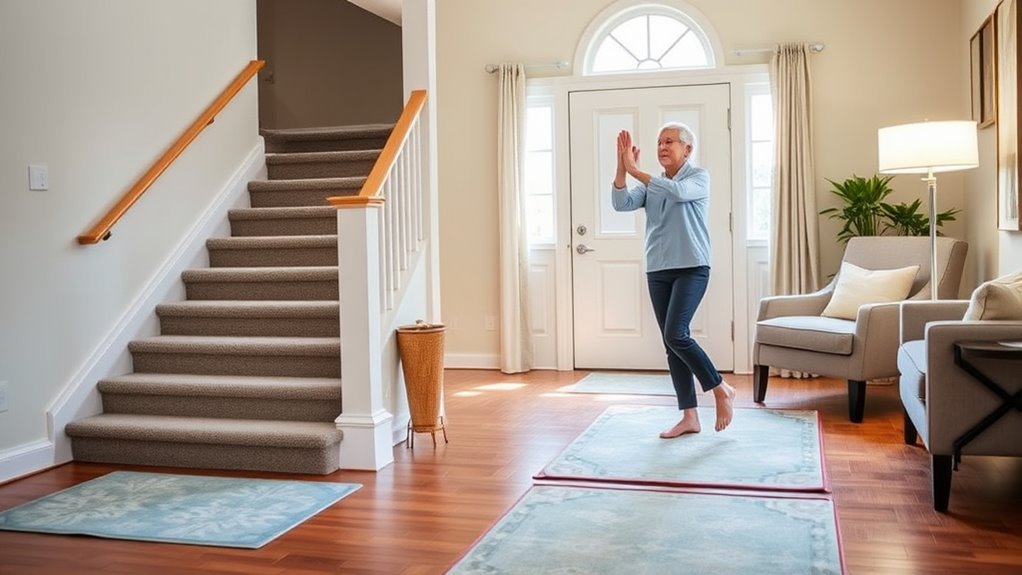
Maintaining regular physical activity is essential for preserving strength, flexibility, and balance as you age. Engaging in daily exercises like walking, strength training, or balance routines helps reduce fall risk by keeping muscles and joints active. Incorporate simple activities such as chair exercises or gentle stretches to improve mobility. Consistency is key; aim for at least 150 minutes of moderate activity each week. Consider joining a senior fitness class or working with a physical therapist to develop a personalized plan. Staying active not only boosts physical health but also enhances mood and cognitive function. Always check with your healthcare provider before starting new exercises, especially if you have existing health conditions. Prioritize movement to maintain independence and overall safety at home.
Frequently Asked Questions
How Often Should Smoke and Carbon Monoxide Detectors Be Tested?
You should test your smoke and carbon monoxide detectors at least twice a year to verify they’re working properly. Regular testing helps you catch any malfunctions early, keeping you safe. It’s also a good idea to change the batteries annually or whenever the detectors beep to signal low power. Make testing part of your routine, like during daylight saving time changes, so it becomes a habit.
What Are the Best Materials for Non-Slip Flooring?
You should choose non-slip flooring made from materials like textured vinyl, rubber, or cork. These surfaces provide excellent traction, reducing the risk of falls. Avoid smooth, glossy tiles or polished hardwoods, which can be slippery when wet. Make certain the flooring has a slip-resistant finish and is properly maintained by cleaning spills promptly. Installing safety strips or mats in wet areas further enhances grip and safety.
How Can I Make My Home More Accessible for Wheelchairs?
You can make your home a wheelchair paradise by installing wide, unobstructed doorways—think of transforming narrow halls into grand avenues. Add ramps with sturdy handrails at every entrance, making stairs vanish like magic. Guarantee floors are level and smooth, so wheelchairs glide effortlessly. Place switches, outlets, and controls within easy reach, turning your space into a domain where mobility is effortless and every corner invites independence.
What Type of Lighting Is Safest for Overnight Use?
For overnight use, you should install nightlights with soft, warm LED bulbs that provide bright, even illumination without being harsh. Choose motion-activated or plug-in nightlights in bedrooms, hallways, and bathrooms to guarantee safe navigation in the dark. Keep them low to the ground and avoid overly bright lights that can disrupt sleep. Regularly check and replace any burnt-out bulbs to maintain consistent visibility and safety throughout the night.
How Can I Effectively Identify and Fix Electrical Hazards at Home?
You must stay alert to electrical hazards lurking in your home. Start by inspecting cords, outlets, and switches for signs of wear, damage, or overheating—don’t ignore flickering lights or sparks. Turn off and replace frayed cords immediately, and make certain outlets aren’t overloaded. Regularly test your circuit breakers, and hire an electrician for a thorough safety assessment. Spotting and fixing these hazards now can prevent disaster tomorrow.
Conclusion
Now that you’ve meticulously senior-proofed your home, just remember: safety is a journey, not a destination—because nothing says “prepared” like turning your sanctuary into a fortress. With these tips, you’ll impress your friends with your vigilance and maybe even keep your grandkids guessing whether you’re a homeowner or secret safety ninja. So go ahead, pat yourself on the back—just avoid the stairs while you’re at it—and enjoy your accident-free haven.