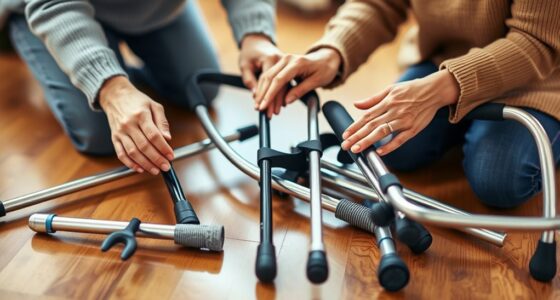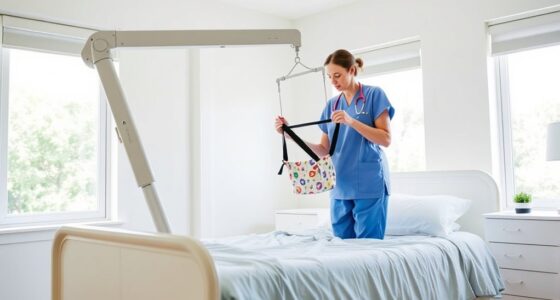
Adaptive clothing and tools are designed to make daily routines easier and safer for seniors. Features like magnetic closures, Velcro fasteners, slip-on shoes, and elastic fabrics help you dress independently with less effort and risk. Comfortable, breathable materials reduce irritation, and wide openings prevent bending or twisting. These options also support caregivers by simplifying dressing tasks. If you want to discover how these innovations can boost safety, comfort, and independence, keep exploring more solutions tailored for seniors.
Key Takeaways
- Adaptive clothing features easy-to-use fasteners like Velcro, magnetic closures, and elastic waistbands for quick, independent dressing.
- Soft, breathable fabrics with seamless and flat seams reduce skin irritation and enhance comfort during daily wear.
- Safety-focused designs include wide openings, reinforced closures, and slip-on shoes to prevent falls and support stability.
- Time-saving tools such as dressing aids and assistive devices facilitate easier dressing and caregiver support.
- Stylish, functional clothing promotes confidence, social engagement, and independence for seniors in daily activities.
Enhancing Independence Through Adaptive Clothing Design
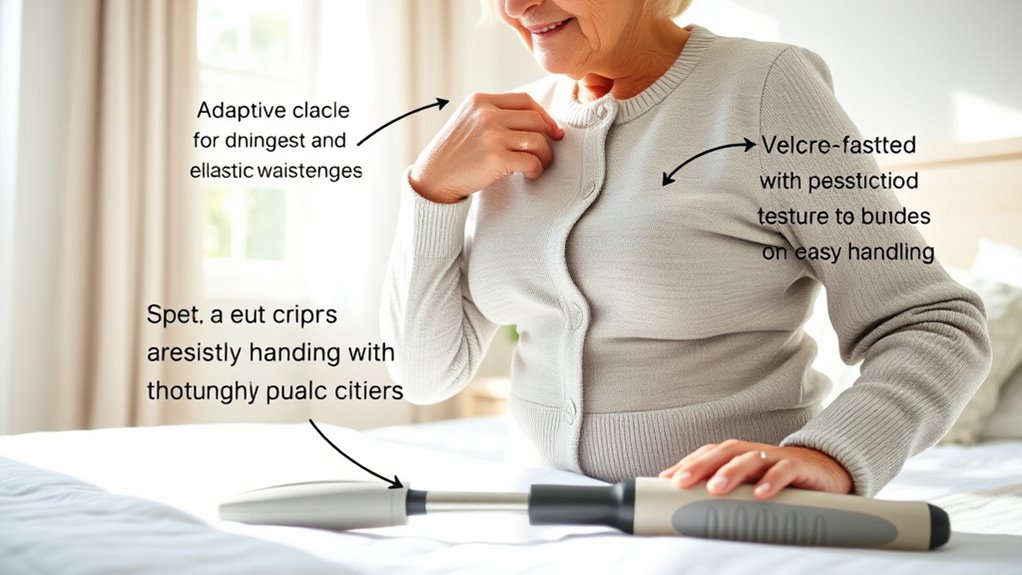
Adaptive clothing is thoughtfully designed to empower seniors to dress themselves with minimal assistance, fostering greater independence. When you choose adaptive garments, you’ll notice features like easy-to-use fasteners, elastic waistbands, and magnetic closures that simplify dressing routines. These thoughtful details help you manage daily tasks more confidently, especially if you experience limited mobility or joint pain. By reducing the effort needed to put on and remove clothing, you can maintain your sense of autonomy and dignity. Incorporating safety features into adaptive clothing can further enhance confidence and reduce the risk of accidents. This independence not only boosts your self-esteem but also encourages you to stay active and engaged in everyday life. Adaptive clothing makes dressing less frustrating, enabling you to focus on what matters most—your comfort, self-sufficiency, and quality of life.
Comfort and Pain Reduction Benefits for Seniors
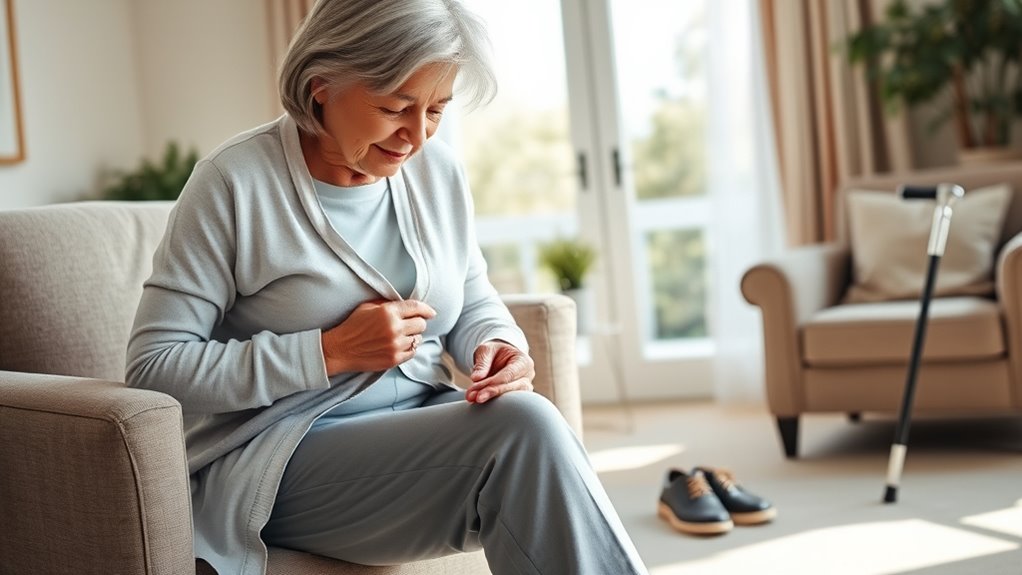
Have you ever experienced discomfort or pain when dressing, especially due to fragile joints or sensitive skin? Adaptive clothing is designed to minimize that pain by using soft, breathable fabrics and seamless construction, reducing skin irritation and pressure sores. Elastic materials allow easier movement without restrictive or painful materials that traditional garments often cause. Flat seams and thoughtful design help lessen pressure on brittle joints and bones, making dressing less uncomfortable. Wider cuts and specialized designs accommodate mobility challenges, such as wheelchair use, enhancing comfort. These features not only reduce physical pain but also make dressing quicker and less stressful. Incorporating ergonomic design principles can further optimize clothing for comfort and ease of use, ensuring that garments better suit individual needs. For example, Adaptive clothing often includes innovative fastenings and adjustable features that simplify dressing processes. By prioritizing comfort, adaptive clothing helps you feel more at ease, supporting better quality of life and easing daily routines. Additionally, incorporating water-based therapies like hydrotherapy can further improve mobility and reduce discomfort, complementing adaptive clothing’s benefits. Recognizing the importance of specialized textiles, which are designed to enhance comfort and functionality, can further improve the daily experiences of seniors. Exploring advanced textile technologies can lead to even more effective solutions for comfort and skin health.
How Adaptive Garments Help Prevent Falls and Injuries
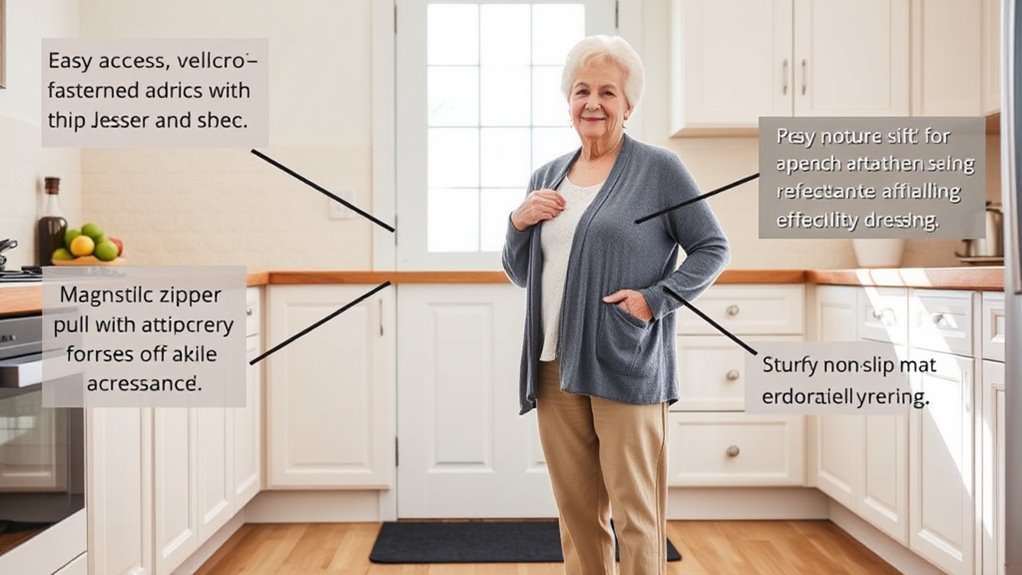
Comfort and pain reduction play a big role in making dressing easier for seniors, but safety is equally important. Adaptive garments help prevent falls and injuries by eliminating hazardous fasteners and simplifying dressing. Easy-access features like Velcro, magnetic closures, and slip-on designs reduce the need for twisting, bending, or reaching—common causes of falls. They also minimize the risk of tripping on buttons or zippers. Here’s how these features work:
| Feature | Benefit |
|---|---|
| Velcro & magnetic closures | Prevent accidental falls during dressing |
| Slip-on designs | Reduce need for complex movements, lowering fall risk |
| Wide, non-slip soles | Provide stability, especially in footwear |
In addition, innovative European cloud servers support the development of advanced adaptive clothing technologies by enabling secure and sustainable data management. These thoughtful features keep you safer, reducing the chance of injury during daily routines.
Time-Saving Features for Effortless Dressing

You can save time and reduce effort with adaptive clothing that features quick-release closures and easy-access fasteners. These designs simplify dressing, making the process faster and less frustrating for both you and your caregiver. Streamlined dressing options help you get ready quickly, so you can spend more time on what you enjoy. Additionally, incorporating best adaptive clothing design principles can enhance comfort and mobility, allowing you to move more freely during daily activities. Implementing smart design strategies further optimizes these clothing features, contributing to a more comfortable and welcoming living experience. Exploring top-rated adaptive clothing options can ensure you select products that meet your specific needs and preferences.
Quick-Release Closures
Quick-release closures are essential features in adaptive clothing that make dressing faster and easier for seniors. These closures, such as magnetic, Velcro, or snap buttons, allow you to put on and take off garments with minimal effort. These types of fasteners are designed to be secure yet easy to operate, reducing the need for fine motor skills and dexterity, which can be challenging with arthritis or limited hand strength. They also decrease the time spent struggling with closures, making dressing a more efficient process. Whether you’re dressing yourself or assisting a loved one, these closures help prevent frustration and save energy. Designed to be secure yet easy to operate, quick-release closures support independence while offering a practical solution for simplifying daily routines. For those interested in the design and functionality of clothing fastenings, understanding closure mechanisms can provide insight into creating more user-friendly apparel. Additionally, selecting closures made from durable materials ensures longevity and consistent performance over time. Incorporating ergonomic designs can further enhance ease of use, especially for individuals with limited dexterity.
Easy-Access Fasteners
Easy-access fasteners, such as Velcro, magnetic closures, and large zipper pulls, are designed to streamline the dressing process for seniors. These features make dressing quicker and less frustrating, reducing the need for fine motor skills or extensive effort. They help you maintain independence and confidence by simplifying daily routines. With easy-access fasteners, you spend less time struggling with buttons or zippers and more time on what matters most. The following table illustrates how these features evoke emotion and improve daily life:
| Fastener Type | Emotional Benefit | Physical Advantage |
|---|---|---|
| Velcro | Sense of autonomy | Easy to open and close |
| Magnetic Closures | Confidence in independence | Minimal effort for closure |
| Large Zipper Pulls | Reduced frustration | Easier grip for weak hands |
| Snap Buttons | Quick, secure fastening | Simplifies dressing |
| Hook and Loop | Feelings of control | Less strain on joints |
Streamlined Dressing Process
Innovative time-saving features in adaptive clothing simplify the dressing routine, making it faster and less taxing for seniors. With designs like Velcro closures, magnetic fasteners, and stretchable fabrics, you can get dressed quickly without struggling with buttons or zippers. Slip-on sneakers and elastic waistbands eliminate the need for complicated fastening, saving you both time and effort. These features enable you to dress independently, reducing reliance on caregivers and boosting your confidence. The smart arrangement of openings and closures minimizes twisting and bending, lowering the risk of falls or strains. Additionally, specialized tools can assist with dressing and adjusting adaptive clothing, further enhancing independence. Proper piercing care and hygiene practices, such as using saline solutions and avoiding irritants, can help maintain healthy skin and prevent infections, which is especially important for seniors with sensitive skin. Incorporating easy-to-use fastening mechanisms can also make dressing even more straightforward and accessible. Overall, adaptive clothing streamlines your morning routine, allowing you to start your day more comfortably and with less frustration. It’s all about making dressing effortless and efficient, so you can focus on what matters most.
Supporting Caregivers With User-Friendly Clothing Options
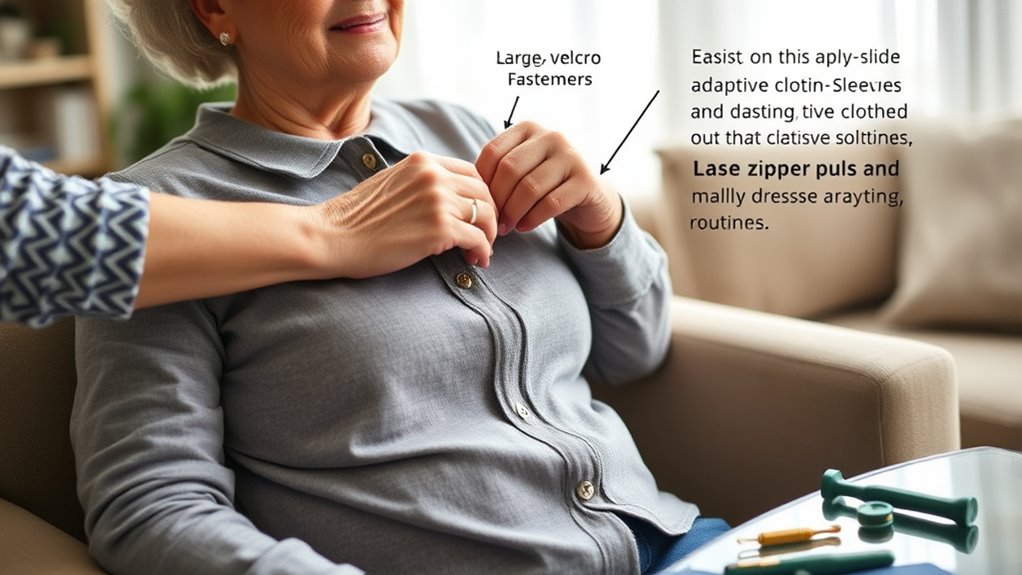
Supporting caregivers with user-friendly clothing options is essential for reducing physical strain and improving efficiency during daily care routines. When garments feature easy-to-use fasteners like Velcro, magnetic closures, or stretchable fabrics, caregivers spend less time struggling with buttons or zippers. These designs also lessen the need for awkward movements, reducing the risk of back injuries or muscle strains. Adaptive clothing allows for quicker dressing and undressing, which saves valuable time and minimizes discomfort for both the caregiver and the senior. Additionally, garments with accessible features enable caregivers to assist more comfortably, maintaining the senior’s dignity and independence. By choosing clothing that’s simple to manage, you streamline your caregiving tasks, making daily routines safer, easier, and less physically demanding. Recognizing the importance of global chaos incidents emphasizes the need for reliable and efficient solutions in caregiving environments to prevent disruptions. Incorporating easy-to-manage clothing options can also help caregivers better adapt to unpredictable situations by ensuring clothing can be handled quickly in emergencies, especially when safety and reliability are critical. Utilizing AI tools to analyze caregiving patterns can further optimize clothing choices and routines for better efficiency, supported by advancements in AI-powered data analytics.
Boosting Confidence and Social Engagement With Adaptive Wear
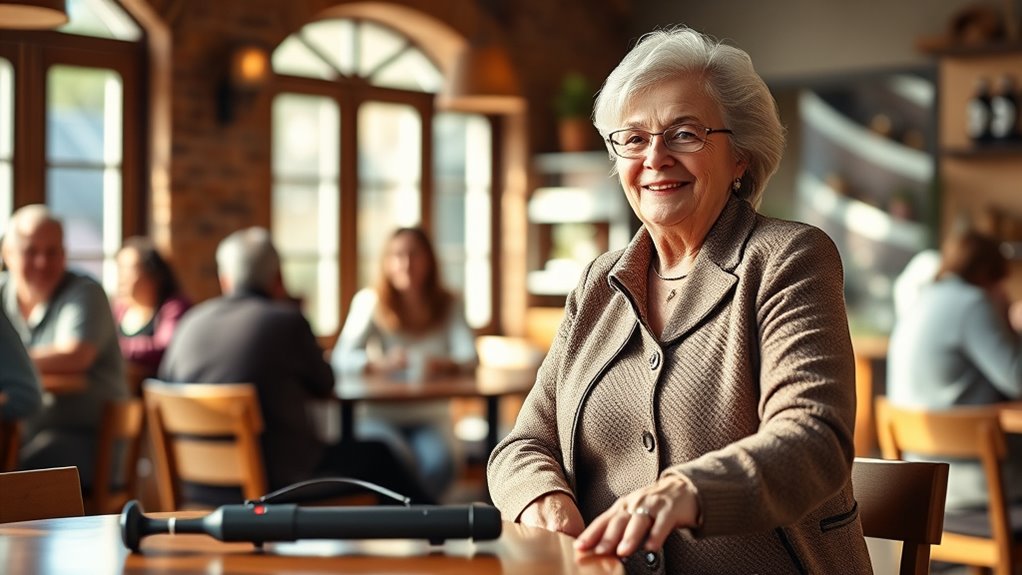
When caregivers choose clothing that’s simple to manage, they help seniors regain a sense of control over their daily routines. Feeling confident in their appearance encourages seniors to participate more actively in social activities. Adaptive wear offers stylish options that suit individual tastes, helping seniors feel good about how they look. Easy-to-wear designs reduce frustration and embarrassment, making social outings less stressful. When dressing feels less like a chore, seniors are more likely to attend gatherings, visit friends, or enjoy community events. This boost in confidence fosters a sense of independence and self-worth. Incorporating cultural influences can further improve comfort and usability for seniors. Adaptive clothing becomes a tool for empowerment, not just comfort.
Key Fabrics and Materials in Adaptive Clothing

Choosing the right fabrics and materials is vital for adaptive clothing, as they directly impact comfort, ease of use, and skin health. Soft, breathable fabrics like cotton, bamboo, and moisture-wicking synthetics help keep skin dry and reduce irritation, especially for sensitive skin. Stretch fabrics, such as spandex blends, provide flexibility and ease of movement without restricting mobility. Seamless or flat-seam constructions minimize pressure points and prevent chafing, which is essential for seniors with fragile skin or joint issues. Durable, easy-care materials ensure garments withstand frequent washing while maintaining their function. Additionally, hypoallergenic fabrics reduce allergic reactions and skin sensitivities. Selecting high-quality, thoughtfully chosen textiles helps seniors dress comfortably, confidently, and independently each day.
Innovative Closures and Fasteners for Ease of Use
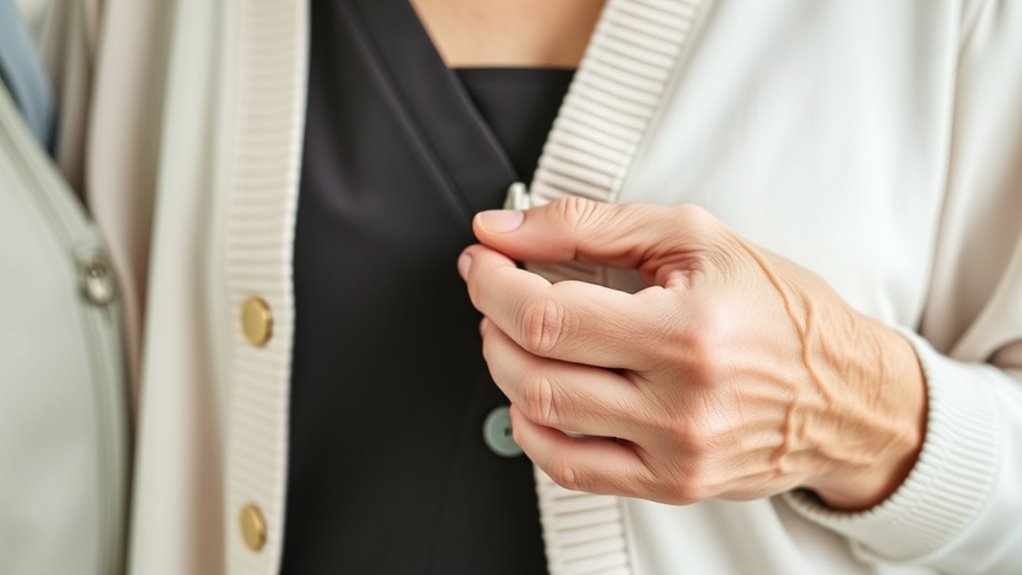
Innovative closures and fasteners transform the way seniors dress by making garments easier and safer to put on and take off. These designs minimize the struggle and risk of falls, offering practical solutions like Velcro, magnets, and push-buttons. They simplify dressing routines, saving time and reducing frustration. Consider the following options:
| Closure Type | Benefits | Ideal For |
|---|---|---|
| Velcro | Quick, adjustable, easy to operate | Arthritis, limited dexterity |
| Magnetic Fasteners | Secure, effortless to connect and disconnect | Fine motor challenges |
| Push-Button Fasteners | Durable, one-handed use | Limited hand strength |
These innovations support independence, enhance safety, and promote confidence in daily routines.
Adaptive Clothing Solutions for Wheelchair Users
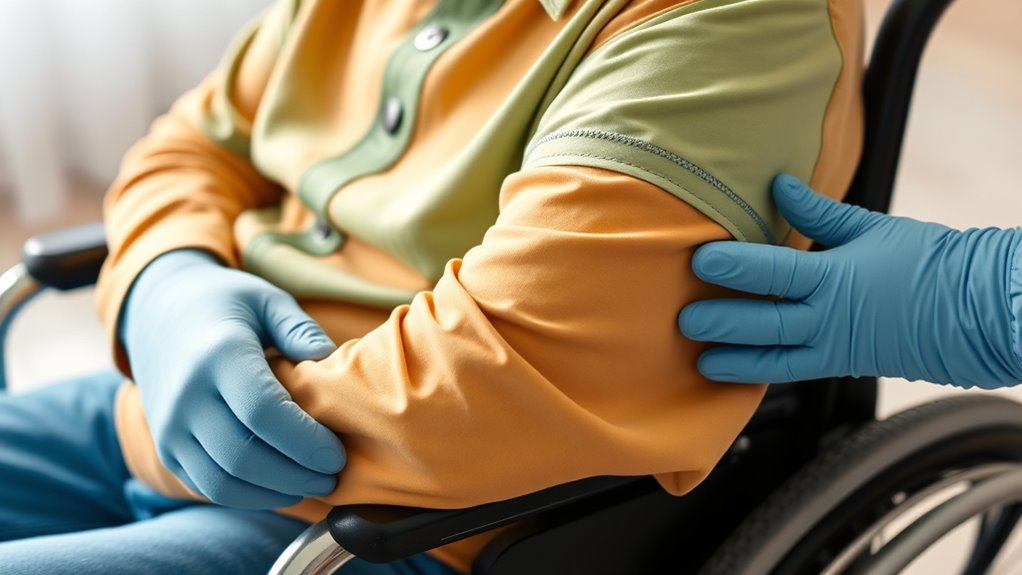
When choosing clothing for wheelchair users, easy-access garments with front or side openings can make dressing much simpler. You’ll want fabrics that are both comfortable and supportive, reducing skin irritation and providing stability. Additionally, fall-preventive closures like Velcro or magnetic fasteners help minimize accidents and enhance safety during dressing.
Easy-Access Wheelchair Garments
For wheelchair users, adaptive clothing with easy-access features can substantially improve independence and comfort. These garments are designed to streamline dressing and undressing, reducing reliance on caregivers. Here’s what makes them effective:
- Side zippers or Velcro openings enable quick access without needing to lift legs or hips.
- Elastic waistbands provide flexibility and ease of wear while maintaining a secure fit.
- Drop-seat designs allow for toileting without removing entire garments.
- Magnetic closures replace buttons or zippers, simplifying fastening and unfastening.
These features minimize physical strain, reduce fall risks, and boost confidence. Adaptive garments tailored for wheelchair users help them maintain dignity, independence, and comfort during daily routines.
Comfortable, Supportive Fabrics
Have you noticed how much comfort depends on the fabrics in adaptive clothing for wheelchair users? Soft, breathable materials like cotton blends and moisture-wicking fabrics help keep you comfortable all day. These fabrics reduce skin irritation and prevent pressure sores, especially important when sitting for long periods. Seamless construction and flat seams minimize friction and chafing, easing discomfort on sensitive or brittle skin. Elastic, stretchy textiles allow freedom of movement without feeling restrictive, making dressing easier and less painful. Specialized fabrics also provide support where needed, such as in compression zones, without sacrificing softness. When you wear clothing made from supportive, gentle fabrics, you experience less discomfort, enhanced mobility, and increased confidence, helping you stay active and independent.
Fall-Preventive Closures
Fall-preventive closures in adaptive clothing are designed to keep you safe by minimizing the risk of slips, trips, and falls during dressing and daily activities. These closures eliminate the need for complicated fasteners that can cause imbalance or entanglement. Here’s how they improve safety:
- Velcro and magnetic fasteners allow quick, secure closure without extra effort or twisting.
- Wide, accessible openings reduce the need for bending or stretching, lowering fall risk.
- Low-profile zippers or snap buttons prevent snagging or tripping hazards.
- Reinforced closures stay securely in place, preventing accidental openings during movement.
Tips for Selecting the Right Adaptive Attire for Seniors

Choosing the right adaptive attire for seniors involves understanding their unique physical needs and daily routines. Focus on garments that offer easy closures, soft fabrics, and tailored fits to enhance independence and comfort. Consider clothing with Velcro, magnetic, or elastic features that simplify dressing and reduce fall risks. Prioritize breathable, seamless materials to prevent skin irritation, especially for sensitive skin or mobility challenges. Also, select styles that accommodate mobility aids like wheelchairs or walkers. Use the table below to compare key features:
| Feature | Benefits | Suitable For |
|---|---|---|
| Easy-fasteners | Simplifies dressing, reduces frustration | Arthritis, limited dexterity |
| Soft, breathable fabrics | Enhances comfort, prevents irritation | Sensitive skin, pressure sores |
| Wide openings | Easier access, quick dressing | Wheelchair users, limited mobility |
| Adjustable fits | Personalized comfort, support | Swelling, weight fluctuations |
| Slip-on designs | No need for complex closures | Balance issues, fall prevention |
Frequently Asked Questions
How Do I Choose Adaptive Clothing Suitable for Specific Mobility Limitations?
To choose adaptive clothing suited for your mobility limitations, assess your specific needs first. Look for garments with easy closures like Velcro, magnets, or zippers that require minimal effort. Consider fabrics that are soft, breathable, and stretchy for comfort. Verify the design accommodates your mobility, such as wider openings or elastic waistbands. Prioritize clothing that promotes independence, reduces fall risk, and fits your lifestyle to enhance comfort and confidence daily.
Are Adaptive Garments Easy to Clean and Maintain Over Time?
Ever wonder if adaptive garments stand up to regular cleaning? They generally are easy to maintain, made from durable, machine-washable fabrics that resist fading and shrinking. You can typically wash them like regular clothes without special care, saving you time and effort. Just follow the manufacturer’s instructions, and your adaptive clothing will stay in good condition, ensuring your loved ones remain comfortable and confident with minimal upkeep.
Can Adaptive Clothing Be Customized for Individual Style Preferences?
Yes, adaptive clothing can be customized to match your style preferences. You can choose fabrics, colors, and patterns that suit your taste, ensuring you feel confident and comfortable. Many brands offer personalized options, allowing you to select designs that reflect your personality. With customization, you get garments that not only meet your physical needs but also help you express your individuality, making daily dressing both practical and fashionable.
What Safety Features Should I Look for in Adaptive Clothing?
You should look for clothing with safety features that actively protect. Imagine easy-to-use closures like Velcro or magnetic fasteners that reduce fall risks during dressing. Check for non-slip grips on shoes, seamless designs that prevent skin irritation, and wider cuts for stability. These features work together to prevent accidents, keep your loved one secure, and provide peace of mind, ensuring safety without sacrificing comfort or independence.
How Do I Ensure Proper Fit for Different Body Types and Sizes?
To guarantee proper fit for different body types and sizes, measure accurately using a flexible tape measure at key points like shoulders, chest, waist, hips, and inseam. Refer to sizing charts carefully, and consider adjustable features like elastic waistbands and stretchy fabrics. Try clothes on when possible, or choose brands with good return policies. Properly fitted adaptive clothing boosts comfort, safety, and confidence for seniors.
Conclusion
By choosing the right adaptive clothing and tools, you empower seniors to maintain independence and dignity in their daily routines. These innovations simplify dressing, reduce discomfort, and help prevent injuries, making life easier for both seniors and caregivers alike. Remember, embracing modern solutions is akin to having a trusty quill in a time of digital chaos—timeless and invaluable. With thoughtful selection, you guarantee comfort, safety, and confidence every step of the way.