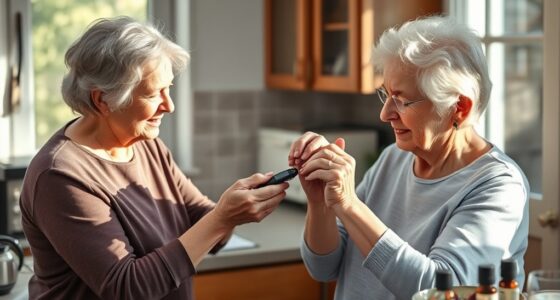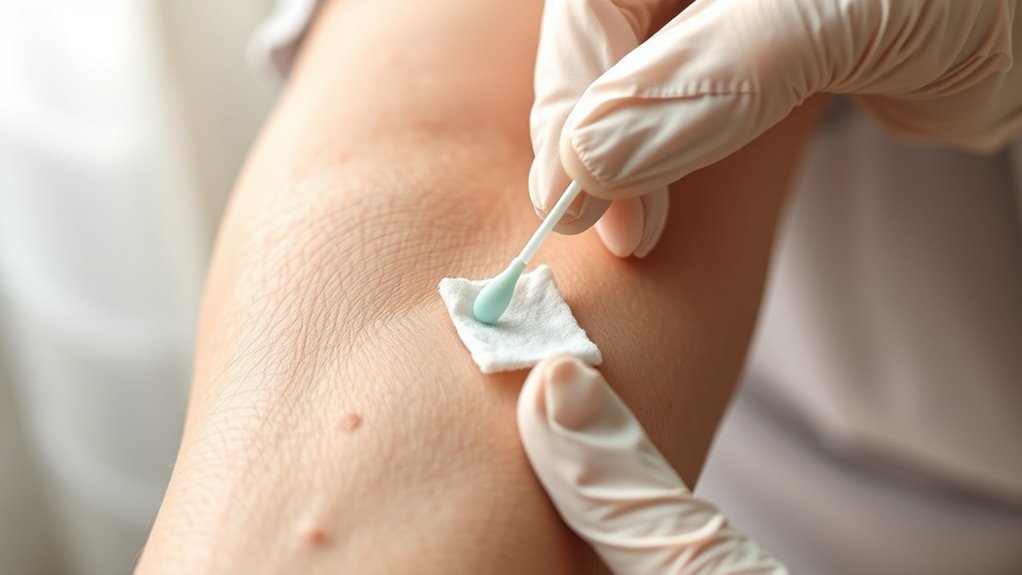

To effectively treat minor cuts and prevent infections, start by washing your hands thoroughly and cleaning the wound gently with mild soap and water. Pat it dry and apply a clean, sterile bandage. Keep an eye out for signs of infection like redness or pus. Maintaining good hygiene, staying hydrated, and using moisturizing lotions help keep skin healthy and resistant to wounds. If you want to learn more about proper wound care for seniors, continue exploring helpful tips and techniques.
Key Takeaways
- Clean minor cuts thoroughly with mild soap and water, then pat dry before applying ointments and covering.
- Use sterile dressings and change them regularly to prevent infection and promote healing.
- Monitor wounds closely for signs of infection, such as redness, swelling, warmth, or pus.
- Maintain good overall hygiene and ensure proper skin hydration to support skin integrity and healing.
- Encourage prompt attention to wounds and regular skin inspections, especially for seniors with limited mobility.
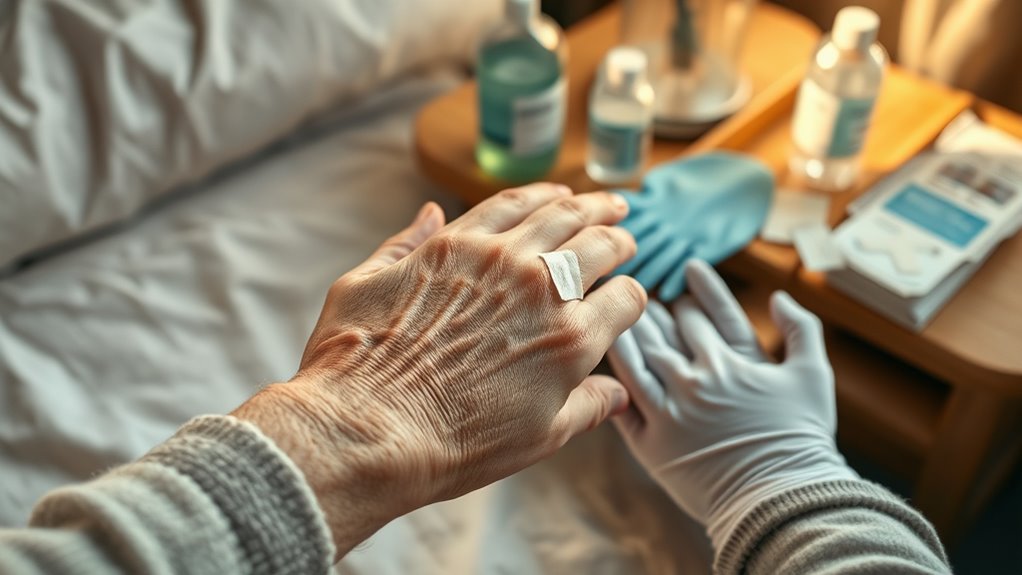
Wound care for seniors is a vital aspect of maintaining health and preventing complications as we age. One of the most common concerns is pressure ulcers, also known as bedsores, which develop when prolonged pressure cuts off circulation to certain areas of the skin. If not managed properly, these wounds can become serious infections. To prevent pressure ulcers, it’s necessary to regularly change positions, especially for those who are bedridden or wheelchair-bound. Using supportive cushions or specialized mattresses can also help distribute pressure evenly across the skin, reducing the risk of skin breakdown.
Another critical element in wound care is maintaining skin hydration. As you age, your skin tends to become drier and less elastic, making it more vulnerable to tearing and slow healing. Keeping the skin moisturized helps preserve its integrity and resilience. Use gentle, fragrance-free moisturizers daily, especially after bathing, to lock in moisture. Be careful not to overhydrate or use products that might irritate sensitive skin. Proper hydration supports the skin’s barrier, making it less prone to developing pressure ulcers and other injuries. Additionally, incorporating skin hydration techniques, such as humidifiers or topical emollients, can further enhance skin resilience.
Maintaining skin hydration preserves elasticity and aids healing in seniors.
When caring for minor cuts or wounds, always start by washing your hands thoroughly to prevent infection. Clean the wound gently with mild soap and water, avoiding harsh antiseptics that can irritate the tissue. Pat the area dry with a clean towel before applying any ointments or dressings. Cover the wound with a sterile bandage to keep it protected from dirt and bacteria. Regularly change the dressing, especially if it becomes wet or dirty, to promote a clean environment for healing. Keep an eye out for signs of infection, such as increased redness, swelling, warmth, or pus. If any of these appear, consult a healthcare professional promptly.
Preventing infections is all about good hygiene, proper wound management, and staying vigilant. Encourage seniors to avoid scratching or irritating their skin, which can cause new wounds or worsen existing ones. Maintain a balanced diet rich in vitamins and minerals to support wound healing, and ensure adequate fluid intake to keep the skin hydrated from within. If mobility is limited, assist with daily skin inspections so you can catch any issues early. Remember, prompt attention to minor wounds and consistent skin care are key to avoiding complications. By focusing on pressure ulcer prevention and skin hydration, you actively contribute to healthier skin and quicker healing, helping seniors stay comfortable and safe.
Frequently Asked Questions
How Can I Tell if a Wound Is Infected?
To tell if a wound is infected, watch for signs to look out for like increased redness, swelling, warmth, or pain around the area. Infection symptoms also include pus or foul odor, and if the wound is not healing or feels worse over time. If you notice these signs, it’s important to seek medical advice promptly to prevent further complications and ensure proper healing.
Are There Specific Wound Dressings Recommended for Seniors?
You should consider using advanced dressings like hydrocolloids or foam pads, which provide extra protection and promote healing. Skin adhesives are also useful for closing small cuts quickly and securely. These options help reduce infection risk and keep the wound moist, which is essential for seniors’ skin. Always consult a healthcare professional to choose the best dressing based on the wound’s size and location.
When Should I Seek Professional Medical Help?
You should seek professional medical help immediately if you notice emergency signs like heavy bleeding, increasing pain, redness, swelling, or pus. If the wound worsens despite proper care, or if there’s concern about infection, antibiotics may be needed. Don’t delay if you see signs of infection or if the wound isn’t healing, as prompt care prevents complications. Trust your instincts and consult a healthcare provider when in doubt.
Can Seniors Safely Use Home Remedies for Minor Cuts?
While natural healing methods and home remedy safety are appealing, you should be cautious with seniors. Minor cuts may seem simple, but age-related skin fragility increases infection risk. Always verify remedies like honey or aloe vera are used properly, and avoid unverified treatments. If there’s any doubt, or if the cut shows signs of infection, it’s best to consult a healthcare professional rather than relying solely on home remedies.
How Often Should a Wound Be Re-Dressed?
You should re-dress a wound at least once daily or whenever the dressing becomes wet, dirty, or loose to guarantee proper wound healing and prevent infection. Regular dressing changes help keep the wound clean and promote healing by allowing you to monitor for signs of infection. Always follow your healthcare provider’s instructions, but generally, maintaining a consistent dressing frequency supports ideal wound healing and reduces complications.
Conclusion
Taking good care of minor cuts helps prevent infections and promotes faster healing. Did you know that seniors are more prone to infections due to a weaker immune system? By staying vigilant and following proper wound care steps, you can reduce complications and keep your skin healthy. Remember, quick action is key—clean the wound, keep it covered, and watch for signs of infection. Your proactive approach makes a real difference in maintaining your well-being.