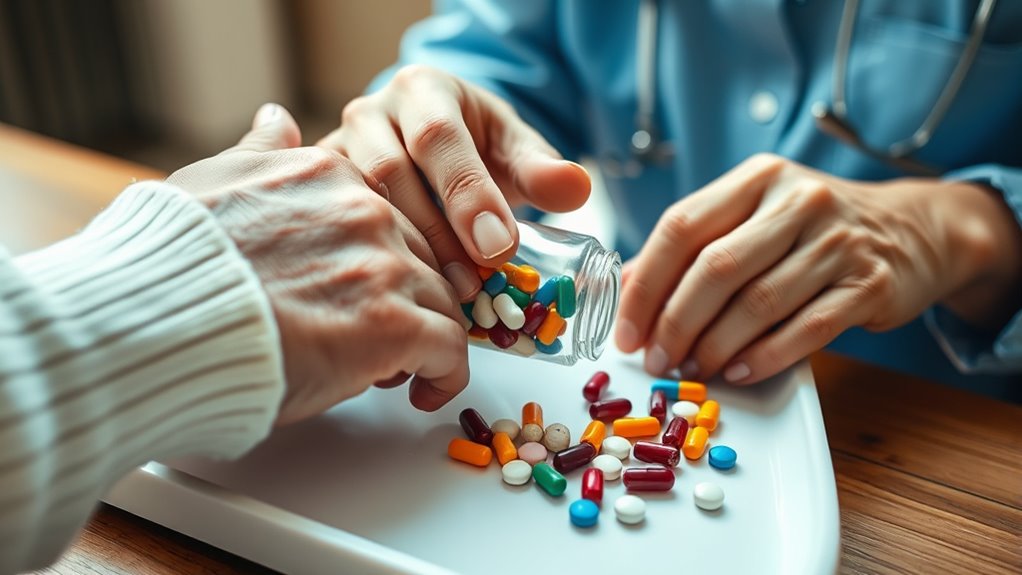

To guarantee the safe use of opioids and pain medications in elderly care, you should develop a thorough protocol that combines alternative therapies like physical therapy and mindfulness with proper medication monitoring. Use smart tools to track doses and communicate with healthcare providers regularly. Educate patients and families on reporting symptoms promptly. Balancing effective pain relief with safety is essential—by following these steps, you’ll provide safer, tailored care that improves quality of life. Keep exploring to learn more.
Key Takeaways
- Implement multimodal pain management, combining opioids with alternative therapies like physical therapy and mindfulness for safer relief.
- Use smart medication tools and regular monitoring to ensure correct dosing, detect side effects early, and prevent overmedication.
- Educate patients and caregivers on proper opioid use, potential risks, and the importance of reporting new or worsening symptoms promptly.
- Start with the lowest effective opioid dose, regularly reassess pain levels, and adjust treatment to minimize adverse effects.
- Prioritize non-pharmacological options and holistic approaches to reduce opioid dependence and enhance overall safety in elderly care.
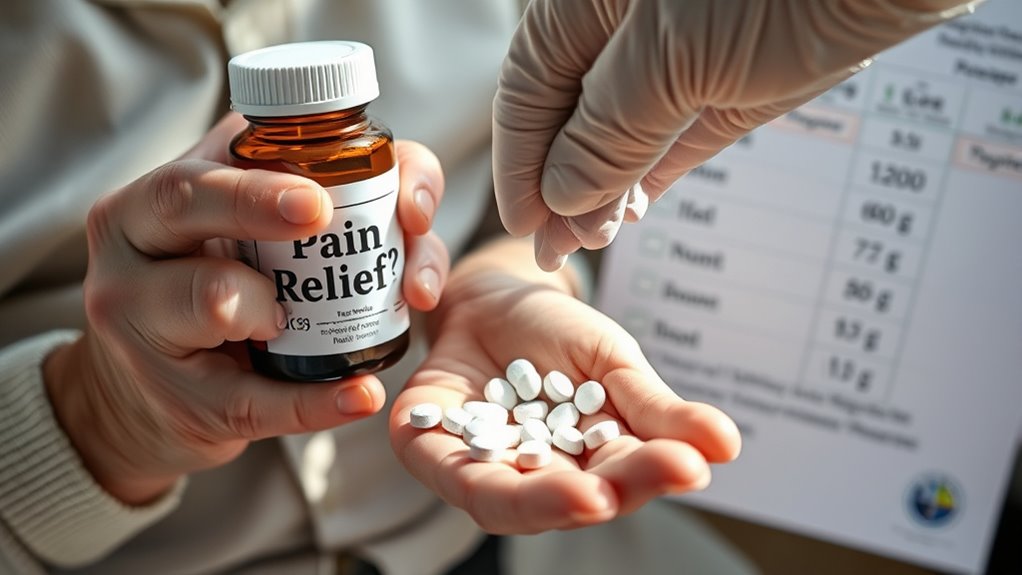
Have you ever wondered how to effectively manage pain with minimal risks? When it comes to caring for elderly patients, finding the right balance between relief and safety is pivotal. One way to achieve this balance is by exploring alternative therapies that can complement or sometimes replace traditional pain medications. These therapies include physical therapy, acupuncture, massage, and mindfulness techniques, which have shown promise in reducing pain without the side effects associated with opioids or other medications. Incorporating alternative therapies into a pain management plan can help lower the dosage or frequency of medication needed, thereby decreasing the potential for adverse effects. Additionally, using smart medication management tools can enhance oversight and improve safety. However, it’s imperative to be cautious and ensure these therapies are administered by trained professionals.
Medication monitoring plays an essential role in safeguarding elderly patients who are prescribed pain medications. Regular assessments allow you to track how the patient responds to the treatment, identify any side effects early, and adjust dosages accordingly. Monitoring might involve routine check-ins, reviewing medication logs, and observing for signs of overmedication or adverse reactions. This ongoing vigilance guarantees that the pain relief provided is effective while risks are minimized. It’s especially important because older adults often have multiple health conditions and take various medications, increasing the likelihood of interactions or complications. By closely monitoring medication use, you can prevent issues like respiratory depression, sedation, or dependency, which are potential concerns with opioids and other pain meds.
Combining alternative therapies with diligent medication monitoring creates a complete approach to pain management in elderly care. You become proactive in addressing pain, focusing not only on alleviating discomfort but also on maintaining overall safety. Educating patients and their families about the importance of reporting new symptoms or side effects is equally important. This collaborative effort helps ensure treatment remains tailored to the individual’s evolving needs. Remember, the goal isn’t just to eliminate pain but to do so responsibly, minimizing risks and enhancing quality of life. By integrating alternative therapies and sticking to strict medication monitoring protocols, you can provide more effective, safer pain relief for your elderly patients. This approach fosters trust, promotes better outcomes, and guarantees that pain management aligns with best practices for aging populations.
Frequently Asked Questions
How Can Caregivers Identify Opioid Misuse in Seniors?
You can identify opioid misuse in seniors by watching for behavioral changes like agitation, confusion, or withdrawal, which may signal issues. Be alert to medication interactions that could cause adverse effects, and track any unexplained mood shifts or sleep disturbances. Regularly communicate with the senior about how they feel, and consult healthcare providers if you notice signs of misuse, ensuring safe and effective pain management.
Are There Natural Alternatives to Opioids for Pain Management?
Picture a garden where herbal remedies bloom, offering gentle relief like soothing sunlight. You can turn to herbal remedies and physical therapy as natural pain management options, nurturing your body without relying on opioids. These alternatives act as the steady roots holding your well-being, promoting healing and comfort. Embracing these methods helps you find balance naturally, cultivating pain relief that’s safe and harmonious with your health.
What Are Signs of Opioid Overdose in Elderly Patients?
If you notice an elderly patient showing signs of opioid overdose, watch for respiratory depression, where breathing slows or becomes shallow, and pinpoint pupils that constrict tightly. They may also become unresponsive, confused, or have cold, clammy skin. These symptoms require immediate medical attention. Promptly call emergency services if you suspect an overdose to prevent serious complications or death.
How Often Should Pain Levels Be Reassessed in Elderly Care?
You should perform pain assessment frequently, ideally every 4 to 6 hours, especially when starting or adjusting medications. Monitoring intervals depend on the patient’s condition, but regular reassessments guarantee effective pain control and safety. Be attentive to any changes in pain levels or side effects, adjusting monitoring intervals as needed. Consistent pain assessment helps you tailor treatment and prevent complications related to medication use in elderly patients.
What Legal Considerations Exist for Prescribing Opioids to Seniors?
Think of prescribing opioids as steering a delicate tightrope—your goal is safety and trust. You must guarantee legal compliance by adhering to regulations like proper documentation and informed consent. Prescription monitoring programs act as your safety net, preventing misuse. By following these guidelines, you protect your senior patients and uphold ethical standards, demonstrating your commitment to their well-being and legal responsibilities every step of the way.
Conclusion
By following this painkiller protocol, you guarantee safe and effective pain management for your elderly loved ones. Remember, isn’t it worth taking those extra steps to protect their well-being and preserve their dignity? With careful monitoring and responsible use, you can help them enjoy better comfort and quality of life. So, aren’t you ready to make pain relief both safe and compassionate today? Your vigilance makes all the difference in their journey to comfort.