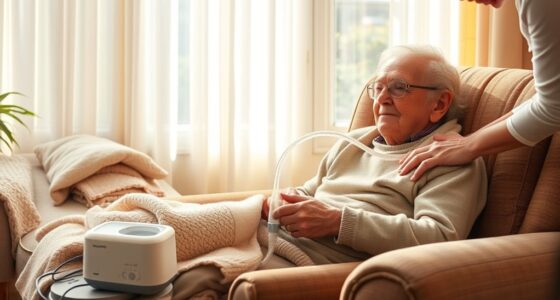
If a senior refuses to wear hearing aids, try using assistive devices like personal amplifiers, TV listeners, or doorbell signalers to improve sound clarity and communication. Face them directly, speak clearly, and reduce background noise to make conversations easier. Using visual cues and patience also helps build understanding. These alternatives can bridge the gap and make interactions more comfortable. Keep exploring options to find what works best for your loved one.
Key Takeaways
- Use assistive devices like TV amplifiers, doorbell signals, or phone amplifiers to improve sound clarity without traditional hearing aids.
- Practice effective communication techniques, such as speaking clearly, facing the senior, and minimizing background noise.
- Incorporate visual cues and written messages to enhance understanding when hearing aids are refused or unsuitable.
- Create a supportive environment with patience and positive interactions to reduce frustration and encourage better communication.
- Explore alternative listening devices and strategies tailored to the senior’s preferences to bridge hearing gaps effectively.

Are you struggling to hear clearly? If so, you’re not alone. Many seniors with hearing loss find it challenging to communicate effectively, especially if they’re hesitant to use traditional hearing aids. But there are alternative solutions that can make a real difference. Assistive devices and communication strategies can help bridge the gap, even if your loved one refuses to wear hearing aids. Exploring these options can restore some of that lost clarity and ease frustration for everyone involved.
Assistive devices are a fantastic starting point. These tools are designed to amplify sound directly or enhance speech understanding without the need for standard hearing aids. For example, personal amplifyers can be used during conversations or while watching TV, helping seniors pick up sounds more clearly. Doorbell signalers alert them when someone is at the door, and phone amplifiers make conversations over the phone more intelligible. These devices are often straightforward to operate and can be discreet, reducing any embarrassment or stigma associated with hearing aids. They work well as supplementary tools or alternatives, especially if your loved one is resistant to wearing traditional devices. Additionally, high-quality projectors can be used to create visual cues or display subtitles, further aiding communication in shared environments.
Alongside assistive devices, honing effective communication strategies can considerably improve conversations. When talking with someone who has hearing difficulties, ensure you’re facing them directly and maintaining eye contact. Speak clearly, at a steady pace, and avoid shouting, which can distort sounds. Reducing background noise is also vital; turn off the TV or radio and move to a quieter area if possible. Simplify sentences and use gestures or facial expressions to reinforce your message. Sometimes, it’s helpful to check in periodically, asking if they understood or need you to repeat yourself. These small adjustments can reduce frustration and foster a more positive communication environment, making interactions more enjoyable and less tiring for everyone.
Frequently Asked Questions
Are There Alternative Hearing Loss Treatments Besides Hearing Aids?
Yes, there are alternative treatments for hearing loss beyond hearing aids. You might consider assistive listening devices, which improve sound clarity in different settings. For severe cases, cochlear implants can be an option, converting sound into electrical signals directly sent to the brain. These alternatives can greatly enhance hearing and communication, especially if a senior is unwilling or unable to use traditional hearing aids.
How Can I Convince a Senior to Try Hearing Aids?
You can convince a senior to try hearing aids by using motivational strategies and sharing peer testimonials. Highlight stories of others who experienced improved quality of life with hearing aids, making it relatable. Offer gentle encouragement, emphasize the benefits, and address concerns patiently. Sometimes, knowing peers have successfully adapted can boost their confidence. Your understanding and positive approach can make a big difference in helping them see the value.
What Are Non-Invasive Options for Severe Hearing Loss?
Irony strikes—you’d think severe hearing loss would be enough, but sometimes you need even more help. Non-invasive options include cochlear implants, which bypass damaged parts, and auditory training to sharpen what remains. These methods don’t require surgery or devices you can’t stand, making them perfect for seniors hesitant about hearing aids. Embrace these alternatives, and your loved one might just find their new soundscape without invasive procedures.
How Do I Maintain and Care for Hearing Devices?
To maintain your hearing devices, you should regularly clean them with a soft, dry cloth to remove earwax and debris. Keep device cleaning tools handy and avoid water or harsh chemicals. Manage batteries by opening the battery compartment at night to prevent moisture buildup, and replace batteries promptly when they weaken. Proper battery management and device cleaning guarantee your hearing aids stay functional and comfortable for daily use.
Can Hearing Loss Be Fully Reversed in Seniors?
Hearing loss in seniors, often due to age-related decline, can’t usually be fully reversed, but hearing restoration is possible through medical treatments like cochlear implants or surgery in some cases. While hearing aids improve hearing, they don’t cure the loss. Early diagnosis and intervention can help preserve hearing ability and quality of life, but it’s important to understand that complete reversal isn’t typical with current technology.
Conclusion
When you find a senior who won’t use hearing aids, imagine trying to listen to a symphony through a brick wall—frustrating and nearly impossible. But with patience and creative solutions, you can turn that brick wall into a clear window of sound. Don’t give up; your efforts can transform their world from silent chaos into a vibrant, connected melody. Together, you’ll make their hearing loss seem like a tiny bump in an otherwise beautiful life.