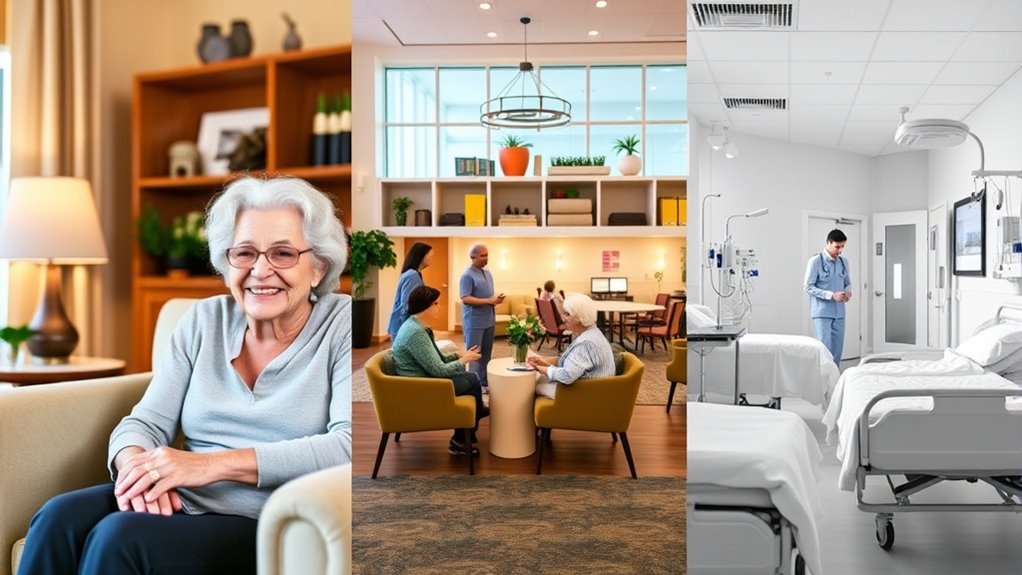

Choosing between in-home care, assisted living, and nursing homes depends on your loved one’s health, independence, and budget. In-home care offers personalized help at home but may limit social interaction. Assisted living provides community support with social activities, while nursing homes focus on round-the-clock medical care. Costs vary widely, and eligibility depends on health needs. To find the best fit, consider these options carefully—more details can help guide your decision.
Key Takeaways
- In-home care offers personalized assistance in familiar surroundings, while assisted living combines independence with community support.
- Nursing homes provide comprehensive 24/7 medical care for individuals with serious health needs.
- Costs vary significantly: in-home care ($6,000-$8,500/month), assisted living (~$64,200/year), nursing homes (~$116,800/year).
- Assisted living emphasizes social engagement and activities, whereas nursing homes focus on safety and medical treatment.
- Eligibility depends on medical condition, mobility, and care needs, guiding the appropriate care setting choice.
Understanding In-Home Care Services

Have you ever wondered what in-home care services entail and how they can support your loved ones? In-home care provides assistance right in the comfort of their own home, tailored to individual needs. It can range from simple companionship and help with daily activities like bathing, dressing, or meal prep to more complex medical tasks such as wound care or medication management. Licensed health professionals, like nurses or therapists, may deliver skilled services, ensuring proper medical support. The goal is to maintain independence while ensuring safety and well-being. Proper care planning and communication with healthcare providers can help ensure that the services align with your loved one’s specific health requirements. You can choose part-time visits or around-the-clock care, depending on your loved one’s needs. In-home care offers a flexible, personalized approach that helps seniors stay in familiar surroundings, fostering comfort and security. Additionally, understanding home safety measures can further enhance the quality of care provided.
Exploring Assisted Living Communities

Curious about what life in an assisted living community looks like? You’ll find a blend of independence and support tailored to your daily needs. These communities offer private apartments or shared spaces, along with amenities like meals, social activities, and housekeeping. Staff assist with activities of daily living (ADLs), medication, and wellness check-ins, promoting social engagement and safety. Residents enjoy a community atmosphere that encourages friendships and participation, all while maintaining independence. Additionally, personalized care plans are often developed to meet each resident’s unique health and wellness requirements. Understanding safe installation practices helps ensure that residents live in a secure environment, especially in settings where safety protocols are a priority. Emphasizing proper soundproofing measures can also enhance comfort and privacy within these communities, creating a more secure environment for all residents. Regular maintenance of life safety systems is essential to uphold safety standards and protect residents effectively.
What Nursing Homes Offer
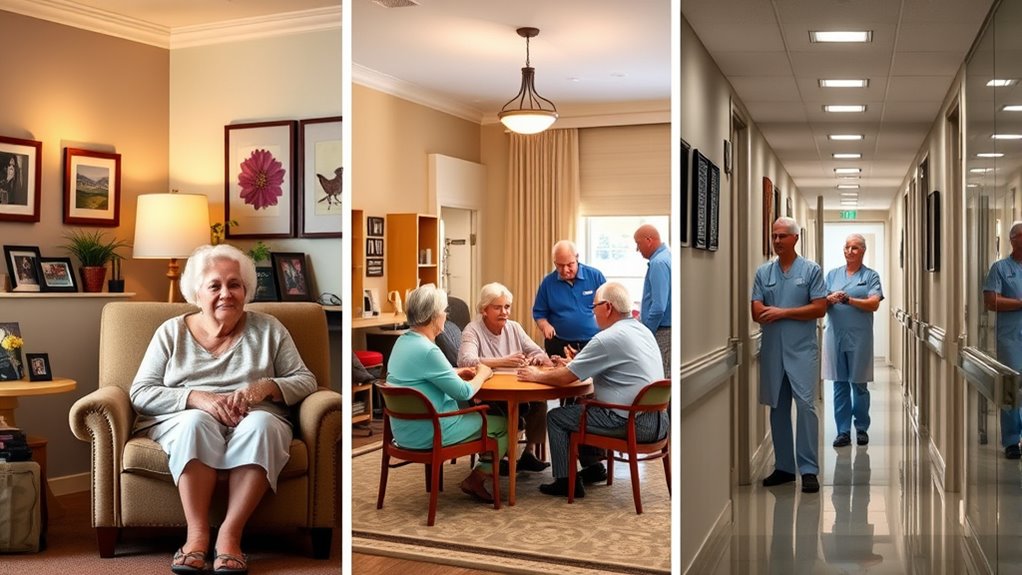
Nursing homes provide around-the-clock medical care and supervision, making them ideal for seniors with complex health needs. You’ll find skilled nurses and healthcare professionals available 24/7 to manage medications, monitor health conditions, and respond quickly to emergencies. These facilities also offer specialized services like physical, occupational, and speech therapy to support recovery and mobility. Rehabilitation programs are tailored to help residents regain strength after illness or injury. The environment is more clinical, resembling a hospital setting, with private or semi-private rooms. Social activities are available but often secondary to medical care. Nursing homes focus on safety and intensive treatment, ensuring that residents with serious or ongoing health issues receive the continuous attention they require. Additionally, some facilities incorporate protective styling benefits to help maintain residents’ hair health and appearance. Many nursing homes now integrate medical technology to improve patient monitoring and care management, enhancing safety and treatment efficiency. To promote overall well-being, these facilities often emphasize comprehensive healthcare approaches that address both medical and emotional needs of residents. Furthermore, staff training in emergency response protocols ensures prompt and effective care in critical situations.
Comparing Costs and Budgeting
Understanding the costs of different care options can help you plan your budget effectively. You’ll want to compare averages, explore insurance coverage, and consider strategies to manage expenses. This way, you can choose the right care without surprising financial burdens.
Cost Averages Overview
When planning for senior care, knowing the average costs of different options helps you make informed decisions and set realistic budgets. Typically, nursing homes cost around $116,800 annually, with monthly rates near $10,646 for private rooms. Assisted living averages about $64,200 per year or roughly $5,190 per month, offering a more affordable option with social and support services. In-home care varies widely, usually between $6,000 and $8,500 monthly, depending on hours and services needed. Keep in mind that costs increase with higher medical complexity or round-the-clock assistance. Budgeting effectively requires understanding these averages, so you can compare options based on your loved one’s needs and financial situation. This overview helps you plan without surprises down the line. Cost management is also crucial to ensure that your chosen care option remains sustainable over time. Additionally, considering free floating services and resources can sometimes provide supplemental support to reduce overall expenses. Exploring community-based programs can further help manage costs and provide additional assistance tailored to individual needs.
Payment and Insurance Options
Managing payment and insurance options for senior care can be intricate, but understanding how different programs and coverage work helps you plan effectively. Medicaid often covers nursing home costs and some in-home care services, but limited assistance is available for assisted living. Medicare provides short-term coverage for skilled nursing and certain home health services but isn’t designed for ongoing senior care. Private pay remains the primary way to cover assisted living and in-home care, with costs varying widely. Long-term care insurance can offset some expenses, but many policies have strict eligibility and coverage limits. It’s crucial to explore multiple options, including state programs, veterans benefits, and community resources, to develop a thorough financial plan that aligns with your budget and care needs. Additionally, understanding body jewelry measurements and materials can be useful for those considering personal health and safety in various care settings. Being aware of cost-of-ownership math for different care options can also help families make informed financial decisions and create sustainable care plans. Furthermore, considering insurance coverage limitations can assist in setting realistic expectations for out-of-pocket expenses when planning for long-term care. Exploring care coordination services can improve overall management of care and reduce unexpected costs. Considering the potential impact of exfoliation benefits on skin health may also be relevant when choosing care products or routines for aging skin.
Budgeting Strategies
Are you trying to figure out how to make senior care costs fit within your budget? First, compare the costs of each option. In-home care averages around $75,500 annually, but costs vary depending on hours and services. Assisted living typically costs about $64,200 per year, offering a balance of support and independence. Nursing homes are the most expensive, averaging $116,800 yearly, but they provide extensive medical care. To budget effectively, consider what level of care your loved one needs now and may need in the future. Look into insurance coverage, Medicaid, and other assistance programs. Remember, costs can fluctuate, so plan for unexpected expenses. Additionally, exploring essential oils for health support may offer complementary benefits for your loved one’s well-being. Understanding AI ethics and the role of AI professionals can also inform future planning for healthcare technology integration. Being aware of Deaf Vibes and other communication resources can help you better advocate for your loved one’s needs. Prioritize options that meet both your loved one’s needs and your financial situation for a sustainable care plan.
Medical and Supportive Assistance Differences

Medical and supportive assistance vary considerably across care options, reflecting the level of medical intervention required. In-home care can include skilled medical services like wound care, medication management, and therapy when licensed professionals are involved. It offers personalized support in familiar surroundings but depends on the availability of qualified caregivers. Assisted living provides basic medical assistance such as medication management and daily personal care, but staff aren’t usually licensed nurses. It emphasizes independence with some health oversight. Nursing homes deliver all-encompassing, 24-hour skilled medical care, including rehabilitation and complex treatments, with a team of nurses and physicians. This level of care is suitable for seniors with serious health needs. The differences highlight how each setting balances medical complexity with support, tailored to individual health requirements.
Living Environment and Social Engagement

How does the living environment influence your loved one’s well-being? It shapes their daily experiences, sense of independence, and social connections. In-home care keeps them in familiar surroundings, offering comfort and stability, but there’s a risk of social isolation if interactions are limited. Assisted living provides a community setting, encouraging social engagement through shared activities, events, and amenities like fitness centers and common areas. This environment fosters friendships and mental stimulation, helping seniors stay connected. Nursing homes tend to have a more clinical atmosphere focused on safety and medical supervision, which can feel less personal. While social activities are available, they might be less frequent or engaging. Overall, the environment impacts mental health, sense of belonging, and quality of life, making it a crucial factor in choosing the right care option.
Determining Eligibility and Choosing the Right Option
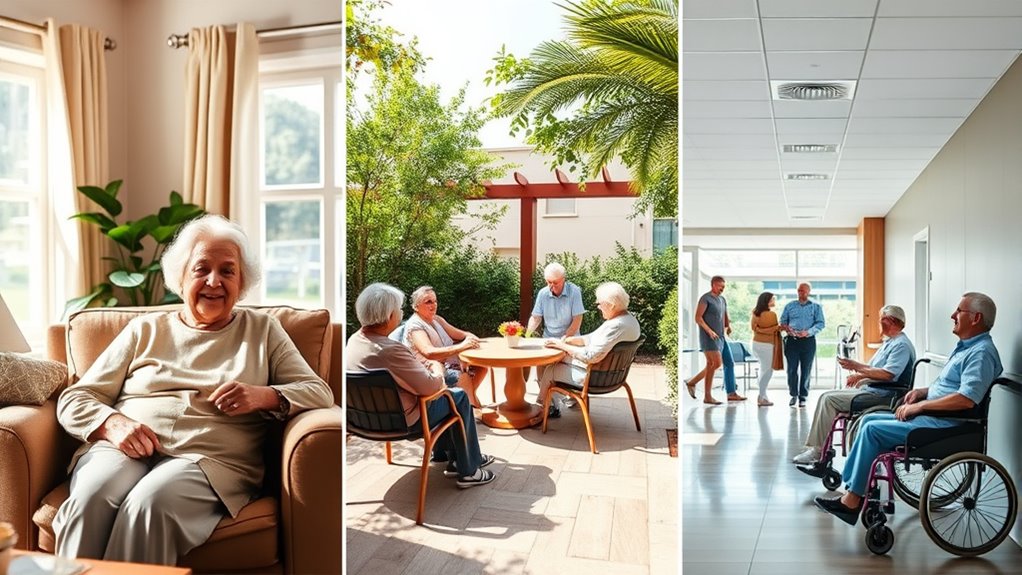
Choosing the right care option starts with understanding your loved one’s eligibility and specific needs. First, assess their medical condition: do they require intensive nursing, or are they mostly independent with some assistance? Next, consider their mobility, cognitive status, and emotional well-being. For serious health issues or complex medical needs, a nursing home may be necessary, often requiring a doctor’s recommendation. If your loved one needs help with daily tasks but remains relatively independent, assisted living could be suitable, usually without strict medical criteria. In-home care offers flexibility for those who prefer staying at home, depending on their health and the level of support needed. Evaluate costs, insurance coverage, and social preferences to make an informed choice that promotes safety, comfort, and dignity.
Frequently Asked Questions
How Can I Evaluate the Quality of Care at Each Facility Type?
To evaluate care quality at each facility, start by visiting in person to observe cleanliness, staff interactions, and resident engagement. Ask about staff training, resident-to-staff ratios, and safety protocols. Read reviews and check for accreditation or licensing. Talk to residents and their families, and inquire about how they handle emergencies and individual needs. Trust your instincts and confirm the environment feels safe, respectful, and supportive of independence.
Are There Any Tax Benefits Associated With Different Senior Care Options?
Think of senior care options like different paths in a forest—some are clear and easy to follow, others more winding. You might qualify for tax benefits with in-home care expenses, like deductions for medical costs. Assisted living costs often aren’t tax-deductible, but specific services may qualify. Nursing home costs can sometimes be partially deducted if they’re primarily for medical care. Always check with a tax professional to navigate your specific situation.
What Legal Considerations Should I Be Aware of When Choosing Care?
When choosing senior care, you should review legal documents like advance directives, power of attorney, and healthcare proxies to make certain your loved one’s wishes are respected. Verify the facility’s licensing and accreditation to confirm quality standards. Understand resident rights and the facility’s policies on privacy and safety. Also, consult with an elder law attorney to navigate Medicaid, Medicare, and long-term care planning, avoiding future legal issues.
How Do Emergency Response Systems Differ Across Care Settings?
In emergency response systems, you’ll find significant differences across care settings. In a nursing home, trained staff are available 24/7 to respond immediately to emergencies, often with advanced medical equipment. Assisted living communities usually have emergency call systems and staff on duty, but responses may take a few minutes. In-home care relies on personal emergency response devices like pendants or phones, which alert responders quickly, but response times depend on the caregiver’s proximity.
Can Residents Transition Smoothly Between In-Home Care, Assisted Living, and Nursing Homes?
You can shift smoothly between in-home care, assisted living, and nursing homes if you plan carefully, communicate clearly, and coordinate with healthcare providers. You’ll need to assess changing needs, update care plans, and involve your loved ones in decisions. Flexibility, patience, and support help ease the process, making each move less stressful. Proper planning guarantees your loved one’s safety, comfort, and continued quality of life throughout these transitions.
Conclusion
Choosing the right care is like finding the perfect puzzle piece—you want it to fit seamlessly into your life. Whether in-home care feels like a cozy sweater, assisted living offers a vibrant community, or a nursing home provides thorough support, each option shapes your daily experience. Remember, it’s about finding what feels right for you, so you can embrace this new chapter with confidence and peace of mind, knowing you’re supported every step of the way.