

When home isn’t safe, start by observing signs like frequent falls, forgetfulness, or neglect of personal care. Approach your loved one with empathy, actively listening and validating their feelings. Share the benefits of assisted living, such as safety, round-the-clock care, and social activities, to ease concerns. Involve trusted professionals like healthcare providers or advisors to support your discussions. If you want tips on steering this sensitive conversation, there’s more to consider to make the process smoother.
Key Takeaways
- Approach conversations with empathy, active listening, and validation to address emotional concerns and reduce resistance.
- Involve your loved one in decision-making to promote autonomy and ensure their preferences are considered.
- Highlight safety improvements and enhanced quality of life that assisted living offers, focusing on their well-being.
- Share detailed information about the facility’s features, amenities, and safety measures to build trust and confidence.
- Offer support, patience, and time for processing to ease the transition and foster a respectful, open dialogue.
Recognizing the Signs That It May Be Time to Consider Assisted Living

Recognizing the signs that it may be time to contemplate assisted living can be challenging, but paying attention to changes in your loved one’s health and daily routines is essential. Notice if they’re experiencing frequent falls, forgetfulness, or difficulty managing medications. If they’re neglecting personal hygiene, missing meals, or showing withdrawal from social activities, these are red flags. Increasing confusion, mobility issues, or worsening health conditions also indicate a need for additional support. Pay attention if they struggle with household chores or forget important appointments. These signs suggest that their current environment may no longer be safe or suitable. Incorporating home safety assessments can help identify hazards and determine if modifications or a move are necessary. Conducting a comprehensive care needs evaluation early on can facilitate timely decisions and ensure your loved one receives the appropriate level of support. Regular health monitoring can also help detect early warning signs before problems escalate. Being aware of aging-related risks can further guide you in making informed decisions. Recognizing potential safety hazards early allows for proactive measures to prevent accidents and ensure well-being. Early recognition helps you start a compassionate conversation about options and ensures your loved one receives the care they need.
Understanding Your Loved One’s Perspective and Emotions

Understanding your loved one’s perspective and emotions is essential when discussing a move to assisted living. Recognize that change can trigger feelings of loss, fear, or independence concerns. To navigate this, consider these approaches:
Respect their feelings, listen actively, and involve them in decisions to ease the transition.
- Listen actively and validate their feelings, showing empathy without judgment.
- Acknowledge their fears and reassure them that their well-being remains the priority.
- Respect their autonomy by involving them in decision-making, giving them a sense of control.
- Recognizing how contrast ratio and image quality impact their comfort can help address concerns about new environments and ensure the discussion remains sensitive to their perceptions. Additionally, understanding how battery capacity affects mobility can help reassure them about the practicality of new living arrangements.
- Being aware of outdoor environment features can help you better address safety and accessibility concerns they may have about the new setting. Incorporating user experience principles can further foster trust and ease during these conversations. Understanding how lighting conditions influence their safety can also support a more comfortable transition.
Gathering Information About Assisted Living Options
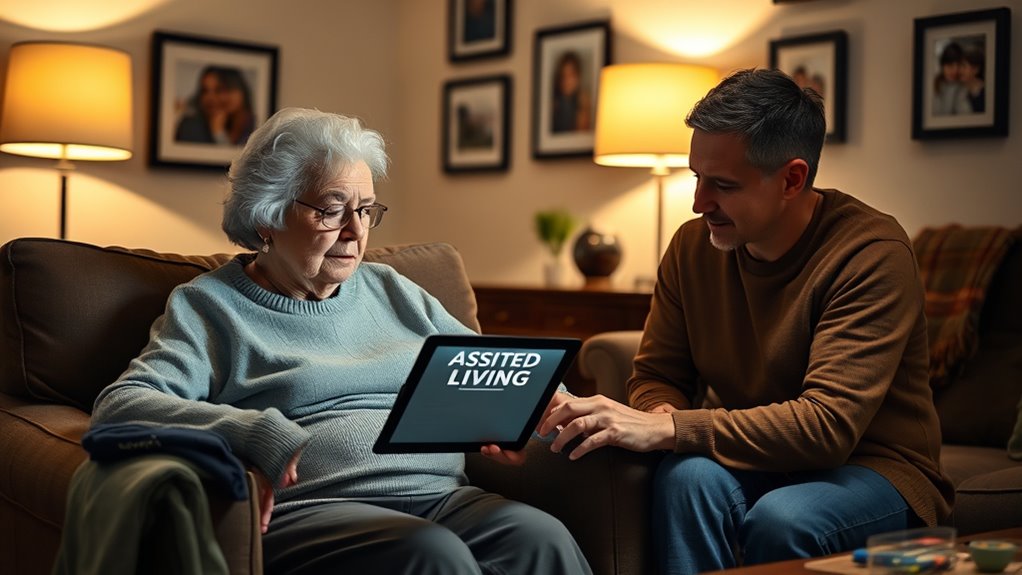
Start by researching local assisted living communities to understand what’s available nearby. Then, compare their service offerings, like health care, social activities, and safety features, to find options that best meet your loved one’s needs. Gathering this information helps you have informed and meaningful conversations about the next steps. Learning about green-chemistry principles can also help you identify facilities with environmentally sustainable practices, which may be important to your loved one’s values. Additionally, understanding wave and wind energy options can provide insight into eco-friendly infrastructure investments that some communities may adopt. Exploring sustainable energy sources can further inform your understanding of environmentally responsible community planning, and familiarizing yourself with renewable energy technologies can help you assess the community’s commitment to sustainability. Incorporating knowledge of environmentally friendly building materials can also give you a clearer picture of how these communities prioritize eco-conscious development.
Research Local Facilities
To find the right assisted living option, begin by researching local facilities thoroughly. You want to gather detailed information about nearby communities to compare their offerings and standards. Consider these key steps:
- Visit facilities in person to assess cleanliness, safety measures, and resident interactions, giving you a firsthand impression of the environment. Observing the thermal behavior of the space can also help determine comfort levels in different areas of the facility. Additionally, paying attention to the physical environment can reveal how well the space is maintained and adapted for residents’ needs. Looking into the care protocols and staff-to-resident ratios can further inform you about the quality of daily support provided. Asking about the staff training requirements can ensure staff are well-prepared to meet residents’ needs.
- Review licensing and accreditation to ensure they meet state requirements and uphold quality standards.
- Examine resident reviews and ratings online or through word-of-mouth to gauge overall satisfaction and potential concerns.
- Look into the availability of specialized services, such as Glycolic acid treatments or skincare amenities, to support residents’ health and well-being. Skincare treatments can be an important aspect of quality care in assisted living communities.
This focused research helps you build a clear picture of what each community provides, making it easier to narrow down options that suit your loved one’s needs and preferences.
Compare Service Offerings
How do you compare the service offerings of different assisted living communities to find the best fit for your loved one? Start by listing essential features like medical care, medication management, and assistance with daily activities. Check if they offer personalized care plans tailored to your loved one’s needs, especially if they have specific health conditions like high blood pressure or mobility issues. Review amenities such as social programs, transportation, and meal options, and consider the facility’s staffing levels and staff-to-resident ratios. Visit each community, ask about staff training, and observe the environment. Consider how smart home technology features like safety sensors and emergency alert systems are integrated to promote security. Look into care coordination services to see how well each community manages ongoing health needs and communicates with family members. Comparing technology integration across communities can help identify those prioritizing safety and responsiveness. Additionally, evaluating staff training programs can provide insight into the quality of care provided. Gathering this detailed information helps you make informed decisions and choose a community that promotes safety, comfort, and quality of life for your loved one. For example, understanding how care plans are developed and updated can reveal the level of personalized attention each community provides.
Approaching the Conversation With Empathy and Patience

Approaching the conversation with empathy and patience is essential because these discussions often involve strong emotions and concerns about change. You want to create a safe space where your loved one feels heard and respected. Here are three key strategies:
Approach conversations with empathy and patience to foster understanding and respect during emotional discussions about change.
- Listen actively—acknowledge their feelings without interrupting or dismissing concerns.
- Validate emotions—express understanding and reassure them that their feelings are normal.
- Take your time—don’t rush the conversation; allow space for processing and questions.
Highlighting the Benefits of Assisted Living for Safety and Well-Being

Highlighting the benefits of assisted living for safety and well-being can help loved ones see how these communities support a healthier, more secure lifestyle. In assisted living, residents receive around-the-clock care, reducing risks like falls and medication errors. Social activities and structured routines promote mental health and reduce feelings of loneliness. The environment is designed to accommodate mobility challenges and cognitive changes, making daily tasks safer. Professional staff monitor health conditions closely, catching issues early and coordinating medical care. Additionally, emergency response systems provide quick assistance when needed. By emphasizing these safety features and health benefits, you can help your loved one recognize how assisted living enhances their quality of life, offering peace of mind for both of you.
Addressing Financial Considerations and Planning Ahead

Discussing financial considerations early on is essential to making a smooth progression to assisted living. Addressing costs upfront helps prevent surprises and ensures you’re prepared. Here are key steps to contemplate:
Starting financial planning early ensures a smooth transition to assisted living and peace of mind.
- Review current finances, including savings, income, and assets, to determine affordability.
- Explore insurance options like long-term care policies, understanding coverage and premiums.
- Investigate potential subsidies, Medicaid eligibility, and community payment plans to offset expenses.
Planning ahead allows you to evaluate options thoroughly and set realistic expectations. It also opens the door for honest conversations about affordability, reducing stress when making the decision. Being proactive in financial planning ensures you’re equipped to support your loved one’s needs without compromising their financial stability.
Involving Healthcare Professionals and Trusted Advisors in the Discussion

Bringing healthcare professionals and trusted advisors into the conversation helps you get clear, objective insights about your loved one’s needs. They can collaborate with you to develop a thorough care plan that addresses medical, emotional, and social aspects. Their support ensures the decision is well-informed and tailored to your loved one’s best interests.
Seeking Expert Opinions
Involving healthcare professionals and trusted advisors in the conversation about assisted living can provide valuable clarity and reassurance. Their insights help clarify medical needs, dispel misconceptions, and guarantee your loved one’s well-being is prioritized. Here are three ways to effectively seek expert opinions:
- Consult Healthcare Providers: Talk with doctors, therapists, or specialists who understand your loved one’s health status. They can recommend appropriate care levels and address concerns about safety or mobility.
- Engage Trusted Advisors: Include family members, legal advisors, or financial planners who can provide emotional support, legal guidance, and help navigate costs and insurance options.
- Request Facility Feedback: Speak with staff or administrators at potential assisted living communities to gain insights into care quality, staffing, and resident satisfaction.
These experts can help make the decision more informed, confident, and compassionate.
Collaborating on Care Plans
Collaborating on care plans guarantees everyone’s perspectives and expertise come together to create a thorough support system for your loved one. Involve healthcare professionals, such as doctors, nurses, or therapists, to provide expert insights into your loved one’s medical needs. Trusted advisors, like social workers or eldercare specialists, can offer practical advice and emotional support. Share your loved one’s preferences, daily routines, and concerns openly to develop a personalized plan. Ask questions about medication management, safety measures, and social activities to ensure extensive care. Keeping communication clear and consistent helps coordinate efforts and adapt the plan as needs evolve. This collaborative approach ensures your loved one receives quality, tailored care while maintaining dignity and independence.
Ensuring Objective Support
To guarantee your loved one receives balanced and reliable support, it’s essential to involve healthcare professionals and trusted advisors in the discussion. Their objective input can clarify medical needs and dispel misconceptions, making the decision more informed.
Consider these steps:
- Consult healthcare providers to assess medical conditions and determine necessary care levels.
- Engage trusted advisors, such as financial planners or legal experts, to review funding options and legal considerations.
- Share insights from professionals to help your loved one understand the benefits and realities of assisted living objectively.
Including these voices ensures the conversation remains fact-based, reducing emotional bias and fostering a well-rounded decision-making process that prioritizes safety and well-being.
Supporting Your Loved One Through the Transition Process

Supporting your loved one through the shift to assisted living requires patience and understanding, as it can be an emotional and challenging process. Start by listening to their concerns and validating their feelings, which helps ease anxiety. Be clear and honest about the reasons for the move, emphasizing safety, health, and improved quality of life. Offer reassurance that they won’t be alone and that support will be available every step of the way. Involve them in decision-making, allowing them to feel a sense of control. Visit the new community together beforehand to familiarize them with the environment. Provide emotional support by staying present, offering encouragement, and giving them time to adjust. Remember, this progression is a process, and your ongoing patience makes all the difference.
Frequently Asked Questions
How Can I Find the Best Assisted Living Facilities in My Area?
To find the best assisted living facilities nearby, start by researching local options online and checking reviews. Visit the communities, ask about staff-to-resident ratios, care services, and safety measures. Talk to current residents and their families for honest feedback. Consult healthcare professionals or senior care advisors for recommendations. Compare costs, amenities, and quality ratings to choose a facility that meets your loved one’s needs and provides a supportive, safe environment.
What Questions Should I Ask When Touring an Assisted Living Community?
Imagine you’re opening a door to a new chapter — what questions should you ask? Start with staff-to-resident ratios, safety protocols, and staffing hours. Ask about healthcare services, social activities, and meal options. Inquire about costs, payment plans, and emergency procedures. Don’t forget to explore the cleanliness, maintenance, and resident satisfaction. These questions help you see if the community truly meets your loved one’s needs and comfort.
How Do I Address My Loved One’s Fears About Moving?
You should acknowledge your loved one’s fears with empathy and patience, reassuring them that their feelings are valid. Share factual information about how assisted living offers safety, social opportunities, and personalized care. Involve them in the decision-making process, and consider bringing in trusted professionals for support. Focus on their well-being and independence, emphasizing that this move aims to enhance their quality of life rather than take it away.
What Financial Assistance Options Are Available Beyond Medicaid?
Ever wonder how to ease financial worries about assisted living? Beyond Medicaid, there are long-term care insurance policies, VA benefits for veterans, and state-specific assistance programs. You can also explore personal savings, reverse mortgages, or family contributions. Have you considered combining these options to create a sustainable plan? Discussing these possibilities openly can help your loved one see that support exists, making the progression smoother and less stressful.
How Can Technology Improve Safety and Quality of Life in Assisted Living?
Technology can considerably enhance safety and quality of life in assisted living by using sensors and wearable devices to monitor residents’ health and mobility in real time. Smart home systems can detect falls or emergencies instantly, alert staff immediately, and automate routine tasks, reducing risks. Additionally, social apps and communication tools keep residents connected with loved ones, reducing loneliness and promoting mental well-being. Embracing these innovations creates a safer, more engaging living environment.
Conclusion
Talking about moving to assisted living can feel overwhelming, but remember, it’s about your loved one’s safety and happiness. They might fear losing independence, but with patience and understanding, you can help them see the benefits. Focus on how this step guarantees they’re cared for and secure. By approaching the conversation gently, you’ll make the transition easier, showing them that this change is a caring choice, not a loss of freedom.