
To avoid talking down to your elderly loved one, speak respectfully with a calm, clear tone and address them directly. Use simple words, avoid patronizing phrases, and listen attentively while respecting their privacy and personal boundaries. Maintain eye contact and be mindful of their body language to show genuine interest and support. Recognizing age-related changes helps you communicate more effectively. If you want to understand how to keep interactions respectful and empowering, keep exploring these important techniques.
Key Takeaways
- Use respectful titles and address your loved one directly to affirm their identity and independence.
- Speak clearly with a calm, gentle tone, avoiding condescending language or tone.
- Maintain eye contact and active listening to show genuine interest and value their opinions.
- Focus on their abilities and involve them in decisions, emphasizing autonomy and respect.
- Be attentive to nonverbal cues and comfort levels, adjusting your approach to preserve dignity.
Recognizing the Importance of Respect and Dignity in Elder Care

Understanding respect and dignity is essential for providing quality elder care because these principles directly influence an older adult’s well-being and sense of self-worth. When you treat your loved one with respect, you acknowledge their individuality, preferences, and life experiences. Recognizing their dignity means valuing their independence and privacy, even if they need assistance. It’s important to see them as a whole person, not just their medical condition or dependence. Respect and dignity foster trust, reduce emotional distress, and promote better psychosocial adjustment. When you prioritize these principles, you help your loved one feel valued and empowered, which can improve their overall quality of life. Remember, dignity isn’t just about actions; it’s about the attitude and respect you consistently show. Understanding respect and dignity is essential for creating a supportive and compassionate caregiving environment. Additionally, acknowledging the importance of color accuracy in the broader context of providing personalized care can help ensure that visual aids, signage, and communication tools are clear and effective for elderly individuals with visual impairments. Furthermore, being mindful of visual accessibility can significantly enhance communication and comfort for seniors with sensory limitations. Incorporating respectful communication techniques also plays a vital role in maintaining dignity and fostering trust between caregivers and the elderly, especially by understanding the impact of Free Floating in social interactions.
Understanding How Speech Patterns Can Impact Your Loved One’s Feelings

Your speech patterns can substantially influence how your loved one feels about themselves and their place in your relationship. When you speak respectfully, using a calm and clear tone, you reinforce their dignity and worth. Avoid talking over them or using a condescending tone, as this can make them feel invisible or less valued. Instead, direct your words toward them, making eye contact and listening actively. Using simple, respectful language helps prevent misunderstandings and shows you respect their autonomy. Remember, the way you phrase things can either boost their confidence or diminish it. Speak compassionately, acknowledging their feelings and experiences. This approach fosters trust, preserves their independence, and reinforces their sense of self-respect.
Using Proper Communication Techniques to Promote Autonomy

You can promote autonomy by choosing respectful language and a calm, supportive tone when communicating. Providing clear, accessible information empowers your loved one to make informed decisions and maintain independence. When you focus on respectful dialogue, you affirm their dignity and strengthen trust in your relationship. Additionally, incorporating supportive communication techniques can further foster a positive and respectful environment. Employing empathy and active listening helps ensure your loved one feels heard and valued, reinforcing their sense of control and self-worth. Recognizing respectful language as a fundamental component can significantly enhance your interactions and promote a sense of safety and respect. Being mindful of digital distractions can help maintain meaningful conversations and strengthen your connection with your elderly loved one. Furthermore, understanding communication barriers can help you adapt your approach to better meet their unique needs.
Respectful Language and Tone
Using respectful language and tone is essential for promoting older adults’ autonomy and dignity. Your words influence how they feel and how much control they retain. Here are four ways to guarantee respectful communication:
- Speak directly to the older adult, not just to caregivers or family members, affirming their personhood. Recognizing personal agency can help reinforce their sense of independence. Additionally, being attentive to effective communication techniques can further enhance interactions, fostering trust and mutual respect.
- Use clear, simple language without condescension or jargon, showing respect for their understanding.
- Maintain a gentle tone, avoiding harsh or dismissive voice inflections that could undermine confidence.
- Listen attentively, giving them time to express themselves and validating their feelings and opinions. Additionally, being aware of decoding slang and informal language can help ensure your communication remains respectful and easily understood. Recognizing respectful language can further promote a positive and empowering environment.
Empowering Through Information
How can proper communication techniques empower older adults to maintain their autonomy? When you provide clear, consistent information, you enable them to make informed decisions about their care and daily lives. Avoid assumptions or vague language—be direct and respectful, ensuring they understand their options. Active listening shows you value their input, fostering trust and confidence. By explaining procedures, treatments, or care plans in a respectful manner, you help them retain control and independence. Remember, accessible information supports their ability to participate fully in their care, reducing feelings of helplessness. When you respect their right to know and involve them in decisions, you uphold their dignity and promote a sense of control, which is essential to their emotional well-being. Using respectful communication techniques is key to creating a respectful and empowering environment for older adults.
Avoiding Common Language Pitfalls That Undermine Self-Respect

Language choices in interactions with older adults have a powerful impact on their sense of self-respect. To avoid undermining their dignity, steer clear of common pitfalls. Using respectful titles and names instead of dismissive labels or diminutives helps affirm their identity. Speaking directly to the older adult, not just to caregivers or family members, fosters respect. Avoid patronizing phrases like “You should” or “You must,” which can feel controlling. Choose positive, empowering language that emphasizes abilities rather than limitations. Additionally, being mindful of trusted resources can provide guidance on respectful communication practices. Recognizing the importance of self-esteem in maintaining dignity encourages more compassionate interactions. Understanding the role of regulatory compliance in communication can also help you navigate respectful conversations effectively. Being aware of cultural sensitivities can further enhance respectful and considerate interactions with elderly individuals. Furthermore, incorporating effective communication strategies can significantly improve your interactions with seniors, ensuring they feel valued and respected.
Engaging in Active Listening to Foster Trust and Connection

When you maintain eye contact and show genuine interest, you signal that you value what the older adult is saying. This active engagement builds trust and encourages open communication. By being present and attentive, you foster a deeper connection that respects their dignity.
Maintain Eye Contact
Have you ever noticed how maintaining eye contact during conversations can instantly build trust and deepen connection? When you look directly into your loved one’s eyes, you show you’re fully present and engaged. This simple act communicates respect and attentiveness, making them feel valued. To do this effectively:
- Keep your gaze steady but relaxed, avoiding stare-downs.
- Break eye contact naturally every few seconds to prevent discomfort.
- Mirror their eye contact rhythm to create harmony.
- Combine eye contact with genuine facial expressions to reinforce sincerity.
- Remember that active listening involves more than just eye contact; it includes being attentive to verbal and non-verbal cues to truly understand their feelings. Engaging in mindful awareness can further enhance your presence and responsiveness during conversations. Using appropriate body language can also help convey your attentiveness and respect. Being aware of non-verbal communication cues can help you better interpret their emotions and respond compassionately.
Maintaining eye contact fosters openness, helps you pick up on subtle cues, and shows your commitment to understanding their feelings. It’s a powerful way to honor their dignity and strengthen your bond.
Show Genuine Interest
Ever wonder how genuine interest during conversations can deepen trust? When you actively listen, you show you value their words and feelings. This builds connection and respect, making your loved one feel seen and heard. To do this effectively, focus on their words, facial expressions, and body language.
| You listen attentively | You observe their non-verbal cues |
|---|---|
| You respond thoughtfully | You ask open-ended questions |
| You give your full attention | You avoid distractions |
Engaging sincerely shows you care about their experiences and perspective. It’s not just about hearing words but truly understanding their emotions. By showing genuine interest, you foster trust, reinforce their dignity, and create a meaningful, respectful relationship.
Respecting Privacy and Personal Boundaries in Conversations

Respecting privacy and personal boundaries in conversations is essential for maintaining an older adult’s dignity and trust. You show respect by being mindful of their comfort level and avoiding intrusive questions.
- Always ask before discussing personal topics, and respect their response if they decline.
- Keep conversations focused on topics they’re comfortable sharing, avoiding sensitive areas unless invited.
- Be attentive to cues that signal discomfort or a desire to change the subject.
- Maintain personal space and avoid physical contact that might feel invasive.
Being Mindful of Nonverbal Cues and Body Language

Paying attention to nonverbal cues and body language is an essential part of maintaining an older adult’s dignity during interactions. Your gestures, facial expressions, and posture send powerful messages that can either reinforce respect or undermine it. For example, maintain eye contact to show engagement and avoid crossing your arms, which may appear defensive. Be mindful of your tone of voice and facial expressions—smiling warmly and nodding can convey understanding and reassurance. Notice signs of discomfort or confusion, like fidgeting or avoiding eye contact, and adjust your approach accordingly. Respectful body language demonstrates your genuine interest and attentiveness, making the older person feel valued and respected. Small adjustments can notably enhance communication, protecting their sense of dignity and fostering trust.
Educating Yourself on Age-Related Changes and Challenges

Understanding age-related changes is essential for providing respectful and effective care, as these changes directly impact an older adult’s physical, cognitive, and emotional well-being. When you educate yourself, you gain insight into what they experience daily and can adapt your approach accordingly.
- Learn about common physical changes like reduced mobility, vision, and hearing impairments.
- Understand cognitive shifts such as memory lapses or slower processing speeds.
- Recognize emotional challenges, including feelings of loneliness or frustration.
- Stay informed about chronic conditions that may affect daily life, like arthritis or hypertension.
This knowledge helps you communicate more compassionately, respect boundaries, and foster a supportive environment that preserves dignity. It’s a crucial step toward building trust and ensuring your loved one feels understood and valued.
Encouraging Empowerment and Involving Your Loved One in Decision-Making
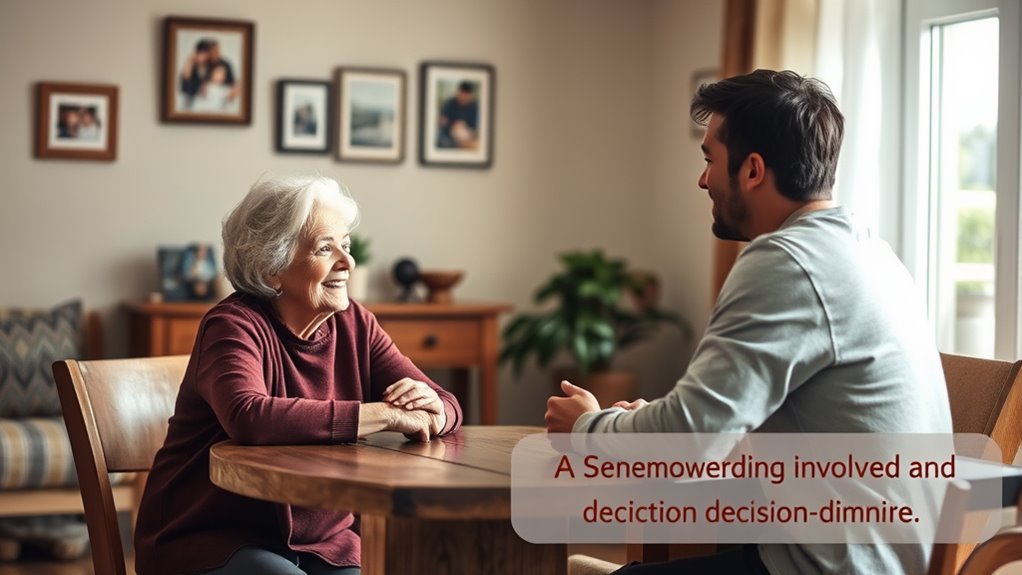
How can you truly empower your loved one in their care decisions? The key is to involve them actively and respect their preferences. Speak directly to your loved one, not just their caregivers or family members, and listen carefully to their wishes. Provide clear, honest information about options, so they can make informed choices. Encourage questions and express that their opinions matter, reinforcing their autonomy. Avoid making decisions for them or assuming what’s best; instead, ask how they want to be involved. Recognize their capacity to decide, even if their choices differ from yours. This approach fosters dignity, builds trust, and helps them feel valued and in control of their own life. Empowerment begins with respect and genuine engagement.
Frequently Asked Questions
How Can I Tell if I’M Talking Down to My Elderly Loved One?
You can tell you’re talking down to your elderly loved one if you notice you’re speaking above them, using a condescending tone, or making decisions without involving them. Pay attention to their reactions—if they seem disengaged, upset, or dismissive, it’s a sign. Always address them directly, listen actively, and treat them as the capable person they are. Respect their input, and avoid assuming they can’t understand or participate.
What Are Signs My Communication Might Be Disrespectful?
Imagine your words as windows—if they’re fogged or cracked, your loved one might feel unseen or misunderstood. Signs of disrespect include speaking above them as if they’re deaf, ignoring their opinions, or offering little information about their care. When you dismiss their feelings or make decisions without their input, you’re dimming their light. Stay clear and direct, listen actively, and treat them as the bright, capable person they are.
How Do I Balance Safety With Respecting Independence?
You can balance safety with respecting independence by involving your loved one in decisions about their care and environment. Offer support without taking over, listen to their preferences, and encourage autonomy whenever possible. Use clear, respectful communication and provide necessary safety measures gradually, ensuring they feel empowered. Regularly check in to reassess their comfort level, showing trust in their judgment while prioritizing their well-being.
What Are Effective Ways to Include My Loved One in Decisions?
So, you want your loved one to make decisions? Start by talking to them directly, not through the family pet or the neighbor’s kid. Always provide clear, honest information, and listen actively. Respect their preferences, even if you think you know better. Encourage their independence by asking for their opinions and involving them in choices. Remember, their voice matters more than you think—trust that they’re still capable of guiding their own life.
How Can I Improve My Understanding of Age-Related Communication Challenges?
To improve your understanding of age-related communication challenges, pay close attention to how your loved one communicates, including any speech or hearing difficulties. Educate yourself on common issues like communication disabilities and recognize how stereotypes and negative attitudes can impact interactions. Practice active listening, speak clearly and directly, and avoid speaking over or past them. This approach helps you better meet their needs, fosters respect, and preserves their dignity.
Conclusion
By speaking with kindness and respect, you help your loved one maintain their dignity. For example, instead of saying, “You can’t do that,” try, “Let’s figure out how you can do this together.” Small changes in how you communicate can foster trust and independence. Remember, treating your elderly loved one as an equal shows you value their life experience and feelings, strengthening your bond and ensuring they feel respected every day.