To prevent wandering in seniors with dementia, focus on creating a safe, engaging environment tailored to their preferences. Recognize triggers like routine changes or unmet needs and plan activities that promote purpose and calm, such as music or gentle exercises. Use visual cues, secure pathways, and safety features like alarms and pressure mats. Educate caregivers on early signs and effective responses. For more practical strategies to keep your loved one safe, explore further tips below.
Key Takeaways
- Develop personalized routines and environmental cues to reduce confusion and anxiety, decreasing wandering triggers.
- Incorporate engaging, meaningful activities aligned with the resident’s interests to promote purpose and reduce restlessness.
- Use safety features like bright signage, contrasting colors, and secure pathways to support orientation and prevent exit-seeking behavior.
- Employ technology such as GPS trackers and alarm systems for real-time monitoring and quick intervention.
- Educate caregivers and healthcare professionals on early signs, triggers, and effective communication to manage wandering risks proactively.
Understanding the Risks and Triggers of Wandering

Understanding the risks and triggers of wandering is essential for preventing dangerous episodes in seniors with dementia. You need to recognize that up to 60% of individuals with dementia will wander at least once, especially in unfamiliar environments or during stress, agitation, or confusion. Certain factors increase risk, including unmet needs, side effects from medication, sensory impairments, and environmental cues. Higher cognitive function usually means less wandering, but as dementia progresses, the likelihood rises. Critical episodes can be deadly, with a 20% mortality rate. By observing patterns and understanding personal triggers, you can better anticipate when wandering might occur. Addressing these triggers early helps keep seniors safe, reducing the chance of dangerous or life-threatening wandering behaviors. Incorporating home safety modifications can also significantly reduce risks associated with wandering episodes. Additionally, understanding water hazards in the environment is crucial, as seniors may be unaware of dangers around pools, lakes, or other bodies of water, increasing the risk of accidents. Recognizing the environmental cues that prompt wandering can help caregivers intervene before episodes escalate. Implementing safety measures based on risk factors identified through careful observation can prevent many wandering incidents before they happen. Utilizing techniques like visual and auditory cues can also assist in guiding seniors back to safe areas and preventing episodes.
Building a Person-Centered Care Approach

You can prevent wandering by understanding each person’s unique preferences, routines, and triggers. Anticipating what might cause confusion or agitation allows you to adjust environments and activities accordingly. Engaging residents in meaningful routines gives them purpose and helps reduce the urge to wander. Incorporating educational resources about individual needs can further enhance personalized care strategies. Additionally, designing environments that incorporate natural elements can create calming spaces that support residents’ well-being. Being aware of pinball machine weights and their impact can inspire the creation of safe, engaging activity areas that promote physical and mental well-being. Understanding the horsepower of electric dirt bikes and their capabilities can also guide the design of stimulating, yet safe, physical activities for residents. Recognizing the importance of proper nutrition and hydration helps maintain residents’ overall health and reduce wandering caused by discomfort or dehydration.
Know Individual Preferences
Knowing individual preferences is fundamental to building an effective person-centered care approach for seniors at risk of wandering. When you understand what each person enjoys, their routines, and their past experiences, you can tailor activities and environments that feel familiar and comforting. This knowledge helps you identify what triggers their wandering and address those needs proactively. For example, if someone loved gardening, incorporating plants or outdoor time into their day can reduce restlessness. Respecting personal habits and favorite activities gives the senior a sense of control and purpose, decreasing anxiety that might lead to wandering. Regularly engaging with families and reviewing personal histories keeps your approach personalized, making it easier to create a safe, supportive environment that honors each individual’s unique identity. Incorporating energy-efficient technology can further enhance safety and comfort by providing reliable monitoring and support without adding to environmental impact.
Anticipate Wandering Triggers
Building on personalized care strategies, anticipating wandering triggers allows you to proactively prevent episodes before they occur. By understanding what causes your loved one to want to wander, you can modify their environment and routines accordingly. Common triggers include changes in routine, unfamiliar surroundings, stress, fatigue, or unmet needs like hunger or discomfort. Observe their behavior closely—note when they become restless or agitated. Talk to family members and caregivers to gather insights about their habits and past experiences. Recognizing these patterns helps you implement preventative measures, such as adjusting daily schedules, creating familiar surroundings, or addressing physical discomfort promptly. Anticipating triggers empowers you to reduce anxiety and confusion, ultimately helping to keep your loved one safe and calm.
Engage in Meaningful Routines
Engaging seniors in meaningful routines is a cornerstone of person-centered care that can substantially reduce wandering. When you create daily activities aligned with their interests and history, you foster a sense of purpose and familiarity. Consistent routines provide comfort, reduce anxiety, and help residents feel secure. By involving them in simple chores, hobbies, or social interactions, you meet their emotional and physical needs. Tailoring routines to their preferences minimizes confusion and restlessness, decreasing the likelihood of wandering episodes.
| Routine Type | Purpose | Example Activities |
|---|---|---|
| Morning | Establish familiarity | Breakfast, morning walk |
| Midday | Promote engagement | Gardening, crafts |
| Afternoon | Reduce restlessness | Music, storytelling |
| Evening | Prepare for restful sleep | Gentle exercises, reading |
| Night | Ensure comfort and safety | Personal hygiene, calming routines |
Enhancing Safety Through Environmental Changes
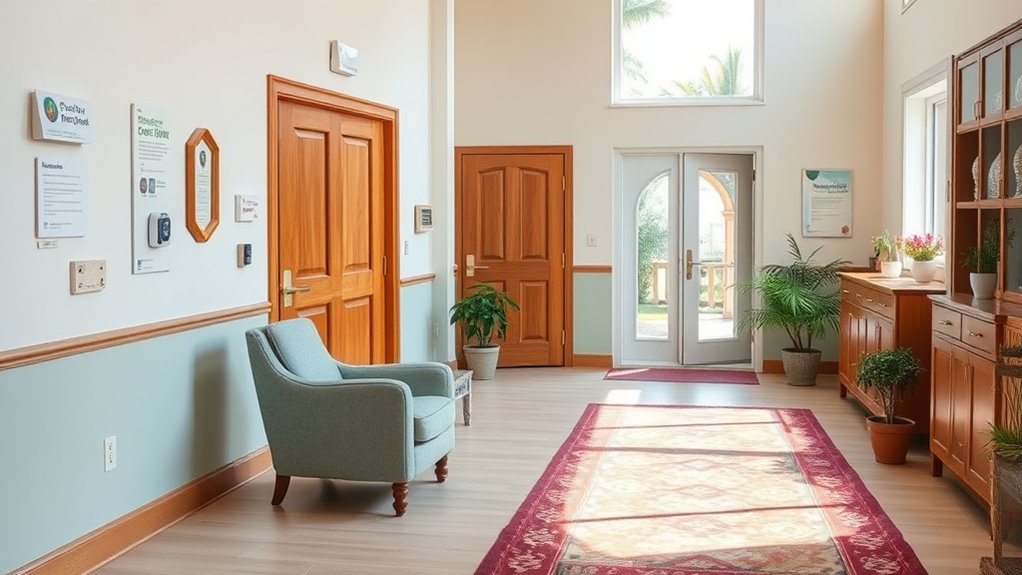
You can improve safety by using strategic visual cues that guide seniors and prevent exit-seeking behavior. Designing safe pathways with clear, uncluttered routes reduces confusion and encourages confident walking. Incorporating visual markers helps seniors recognize familiar spaces and stay oriented. Additionally, environmental cues can be tailored to support wayfinding and minimize wandering tendencies. Creating a consistent environment with familiar signage can further reinforce orientation and reduce anxiety. Utilizing visual cues that are easily distinguishable can also assist in reducing disorientation and promoting independence. Implementing proper ventilation considerations ensures that the environment remains comfortable and safe, further supporting overall well-being.
Strategic Visual Cues
Strategic visual cues play a crucial role in enhancing safety for seniors prone to wandering by guiding them and reducing their tendency to seek exits. You can use visual markers to subtly direct attention or signal boundaries, helping seniors stay safe without feeling confined. For example, painted lines on floors or contrasting colors at doorways can provide clear cues. Proper placement of familiar objects and signage can also help orient them within the environment. Here’s a simple overview:
| Visual Cue | Purpose |
|---|---|
| Brightly colored door frames | Signal entrances/exits clearly |
| Murals or paintings | Deter exit-seeking behavior |
| Contrasting floor patterns | Guide safe walking paths |
Additionally, environmental modifications can further support their independence and safety by creating intuitive cues that naturally guide movement and reduce confusion.
Safe Pathways Design
Designing safe pathways is essential for reducing wandering risks and ensuring seniors can move freely without feeling confined. You should create clear, unobstructed routes that are easy to navigate, minimizing trip hazards and clutter. Use contrasting colors to define edges and pathways, helping individuals with visual impairments stay oriented. Incorporate points of interest along the route to encourage purposeful movement, such as murals, plants, or familiar objects. Install visual shields or murals near exits to discourage exit-seeking behaviors. Ensure pathways are well-lit to prevent disorientation and falls, especially during the evening. Use safety features like handrails or textured flooring to provide support. By designing these safe, engaging routes, you help seniors maintain independence while reducing the risk of wandering into dangerous areas. Incorporating field‑of‑view considerations can also help create environments that are easier for residents to navigate and monitor effectively.
Implementing Engaging Behavioral and Activity Strategies

Implementing engaging behavioral and activity strategies plays a crucial role in reducing wandering among seniors with dementia. You can start by offering brief, meaningful activities that match their interests and attention span, such as sorting, crafts, or simple puzzles. These tasks help keep their minds occupied and decrease the urge to wander. Incorporate sensory experiences like music, art, or gentle physical exercises, which can soothe agitation and provide stimulation. Regularly check that hearing aids and glasses are working properly to minimize confusion. Distracting caregivers during shift changes or stressful times can prevent restlessness. Remember, understanding each individual’s preferences and triggers allows you to tailor activities effectively. Consistent engagement fosters a sense of purpose, reduces anxiety, and greatly lowers the likelihood of wandering episodes. Additionally, creating a calm and organized environment can further reduce confusion and agitation, helping seniors feel safer and more settled.
Utilizing Technology to Monitor and Protect

Have you considered how technology can enhance safety and provide peace of mind when caring for seniors prone to wandering? Modern devices offer real-time monitoring and quick responses, reducing risks. You can use:
Technology boosts safety for wandering seniors with real-time tracking and quick alerts.
- GPS wristbands or smart watches to track location instantly
- Pressure-sensitive mats that alert you when someone gets up
- Alarm systems with remote notifications for immediate action
- Mobile apps that display the senior’s whereabouts on your phone
- Community programs like Silver Alert or Medic Alert for quick recovery
Additionally, modern monitoring devices utilize advanced sensors and connectivity to ensure continuous oversight and prompt alerts, further safeguarding your loved ones. These tools help you respond swiftly, prevent dangerous situations, and maintain independence for your loved ones. Incorporating wearable technology can further enhance monitoring capabilities and provide additional reassurance. Furthermore, understanding the importance of cloud-based systems can improve data management and alert accuracy in caregiving situations. Advanced AI-driven systems can analyze behavior patterns to identify early signs of distress or wandering, offering an extra layer of protection and early warning.
Educating Caregivers and Family Members

Educating caregivers and family members is essential for effectively managing wandering behaviors and ensuring safety. When you understand the reasons behind wandering, you can anticipate triggers and respond appropriately. Training on individualized care plans helps you recognize early signs of agitation or confusion, allowing for a timely intervention. Learning how to communicate calmly and redirect attention reduces the risk of escalation. It’s also important to know safety precautions, like securing exits and monitoring your loved one closely. Sharing information with neighbors, creating a recent photo, and knowing their favorite spots can speed up emergency responses. By staying informed and prepared, you can help prevent wandering incidents and promote a safer environment, giving everyone peace of mind. Education empowers you to handle wandering with confidence and compassion. Recognizing manipulation tactics used by dementia-related behaviors can help you better understand and address underlying needs. Additionally, understanding kitchen safety & appliance care principles can help you create a secure environment by minimizing hazards that might contribute to wandering or accidents.
Developing Emergency and Neighborhood Safety Plans

When you’ve taken steps to educate yourself and your loved ones about wandering risks, the next important move is to develop thorough emergency and neighborhood safety plans. These plans prepare you to respond quickly and effectively if your loved one wanders. Start by informing neighbors about the situation and sharing recent photos. Create a list of likely destinations and safe return routes. Ensure emergency contacts are updated and accessible. Keep a current photo and medical information handy for authorities. Consider training neighbors on how to assist and recognize wandering behaviors. Lastly, establish clear communication protocols for emergencies.
- Notify neighbors and community members about the risks
- Share recent photos and known wandering destinations
- Keep emergency contacts and medical info accessible
- Develop clear, step-by-step response procedures
- Train trusted neighbors on how to assist
Reducing Environmental Stressors and Confusion

Environmental stressors and confusion often trigger wandering in seniors with dementia, but you can reduce these risks by creating a calm, predictable setting. Simplify the environment by minimizing noise, clutter, and sudden changes. Use consistent routines and clear signage to help your loved one navigate familiar spaces confidently. Bright lighting and visual cues can ease disorientation, while hiding exit doors or using visual shields can prevent exit-seeking behaviors. To emphasize key ideas:
| Focus Area | Practical Tips |
|---|---|
| Minimize sensory overload | Use soft lighting, reduce noise levels |
| Enhance familiarity | Keep furniture and décor consistent |
| Improve wayfinding | Use clear signs and visual cues |
Collaborating With Healthcare Professionals for Ongoing Support

How can you guarantee effective, ongoing support for seniors who wander? Collaborating with healthcare professionals ensures you get expert guidance tailored to your loved one’s needs. Regular communication with doctors, therapists, and social workers helps track changes and adjust care plans promptly. They can identify underlying health issues contributing to wandering and recommend appropriate interventions.
Consider these key strategies:
- Schedule consistent check-ins to review safety and medication effects
- Share detailed observations about wandering patterns and triggers
- Follow professional advice on environmental modifications and activities
- Access specialized programs or therapies designed for dementia-related behaviors
- Educate yourself continuously through caregiver training and support groups
Partnering with healthcare pros empowers you to implement effective, personalized strategies, reducing risks and promoting safety for your loved one.
Frequently Asked Questions
How Can I Identify Early Signs of Wandering Risk?
You can identify early signs of wandering risk by paying close attention to changes in behavior, such as increased restlessness, pacing, or aimless walking. Notice if your loved one becomes more agitated, confused, or starts searching for something. Observe if they seem to seek exits or become easily distracted. Monitoring these signs allows you to intervene early, implement safety measures, and address underlying needs before wandering occurs.
What Are Cost-Effective Safety Tools for Managing Wandering?
You can use affordable safety tools like pressure-sensitive mats at doors to alert you when your loved one tries to leave. Installing visual shields or murals near exit doors can deter wandering without high costs. Using personal GPS devices or smartphone apps is also budget-friendly and effective for locating them quickly. Additionally, simple measures like ensuring clear, safe pathways and keeping doors locked or hidden help prevent wandering without significant expense.
How Does Sleep Disruption Influence Wandering Behaviors?
Sleep disruption increases wandering behaviors because it causes confusion, irritability, and disorientation. When seniors with dementia don’t get enough restful sleep, they’re more likely to become restless and attempt to wander in search of comfort or safety. You’ll notice more aimless pacing, exit-seeking, and agitation. To reduce this, establish a consistent bedtime routine, create a calming environment, and address any sleep disturbances promptly, helping to minimize wandering episodes.
Are There Specific Dietary or Nutritional Factors Linked to Wandering?
You should know that certain dietary and nutritional factors can influence wandering behaviors. Poor nutrition, dehydration, or low blood sugar levels can increase confusion and agitation, prompting wandering. Avoiding caffeine and sugar before bedtime helps improve sleep, reducing restlessness. Ensuring a balanced diet with adequate hydration supports overall brain health, which may help lessen wandering episodes. Monitoring and adjusting dietary habits can be a key part of managing wandering risks effectively.
How Can Technology Be Integrated Into Daily Routines for Safety?
You can seamlessly integrate technology into daily routines by setting up GPS devices or smart alarms to monitor movement. Imagine your loved one wearing a GPS wristband, giving you peace of mind while they enjoy independent activities. Use apps to alert you if they approach unsafe areas, and install pressure mats at exits. These tools enhance safety without being intrusive, allowing your loved one to maintain independence while staying protected.
Conclusion
By understanding triggers, creating a supportive environment, and leveraging technology, you can prevent wandering and keep your loved one safe. Your dedication is like a lighthouse guiding them through foggy seas, offering hope and security. Remember, every small step you take can make a huge difference in their safety and well-being. Stay proactive, stay compassionate, and know that your efforts can change their world—making it a safer, more comforting place to call home.