
To help your loved one with dementia during bathing, establish a routine with consistent times, familiar products, and a calm environment. Use gentle communication, keep instructions simple, and offer choices to promote control. Adjust water temperature slowly and incorporate soothing sensory techniques like soft lighting and calming scents. Safety devices such as grab bars and nonslip mats protect against falls, while distraction methods like music or conversation help reduce anxiety. If you explore further, you’ll discover even more ways to create a comfortable, respectful bathing experience.
Key Takeaways
- Establish consistent routines, using familiar scents and choices to foster trust and reduce confusion during bathing.
- Create a safe, warm environment with proper lighting, grab bars, and clutter-free space to promote comfort and security.
- Use gentle, simple communication, explaining each step and offering choices to lessen fear and resistance.
- Incorporate calming sensory elements like soft lighting, soothing sounds, and comfortable water temperature to relax your loved one.
- Respect individual preferences and cues, responding promptly to discomfort, and employing distraction techniques for a more positive experience.
Establishing a Consistent Bathing Schedule

Establishing a consistent bathing schedule is essential because it helps your loved one with dementia know what to expect, reducing confusion and anxiety. When you bathe them at the same time each day, it creates a routine that becomes familiar, making the process smoother. Stick to the same bathing method—whether it’s a shower or bath—to prevent disorientation. By doing so, you help your loved one feel more secure and in control. Choose a time when they’re usually calm and cooperative, like after a meal or nap. Keep the schedule simple and predictable, and gently remind them beforehand. Consistency not only eases their stress but also makes bathing a more manageable, less stressful experience for both of you. Additionally, maintaining color accuracy in your environment can help make the space more soothing and visually clear for your loved one. Incorporating consistent lighting can further reduce confusion and promote a calming atmosphere during bathing. Using familiar objects or routines can also provide comfort and reassurance during the process, especially when you incorporate trusted brands or products known for their gentle and effective formulations. Being aware of the importance of supportive environments can further enhance their comfort and safety during bathing.
Creating a Calm and Safe Bathroom Environment

Creating a calm and safe bathroom environment is key to reducing anxiety and preventing accidents during bathing. Guarantee the space is warm, free of drafts, and softly lit to avoid harsh lighting that can startle or overwhelm your loved one. Install grab bars and handrails near the shower, tub, and toilet for added stability. Use nonskid mats or appliqués on floors to prevent slipping. Keep frequently used items within easy reach to minimize movement and confusion. Warming the bathroom beforehand can help ease the shock of cool air. Environmental modifications like adjusting lighting and temperature contribute significantly to a comfortable bathing experience. Incorporating sauna heaters and ventilation can improve airflow and maintain a consistent, comfortable temperature in the bathroom. Proper air quality control ensures that the environment remains fresh and reduces respiratory discomfort. Remove clutter to create a simple, distraction-free space. Maintaining a tidy, organized environment helps your loved one feel secure and reduces the chance of falls or injuries during bathing. Incorporating smart home safety devices can further enhance security and monitoring during bath time.
Adjusting Water Temperature and Sensory Techniques

Before bathing, always test the water to guarantee it’s at a comfortable temperature, between 90°F and 105°F. Allow your loved one to feel the water with their hands first, helping build trust and reduce anxiety. Incorporate calming sensory techniques, like gentle water flow and soothing touches, to make the experience more relaxing. Consider using Free Floating techniques to gently support and stabilize your loved one during the bath, promoting a sense of security. Being mindful of sensory sensitivities can help tailor the experience to your loved one’s comfort levels and minimize distress. Additionally, understanding body awareness can assist in creating a more comfortable and reassuring bathing routine. Paying attention to touch sensitivity can further improve the experience by adjusting pressure and contact to suit your loved one’s preferences. Recognizing comfort cues can also help you respond promptly to signs of discomfort and adapt the bathing process accordingly.
Test Water Beforehand
Testing the water temperature before bathing is vital to guarantee safety and comfort for a loved one with dementia. Before placing them in the tub or shower, turn on the water and check the temperature with your wrist or elbow—these areas are more sensitive than your hands. Adjust the faucet until the water feels comfortably warm, ideally between 90°F and 105°F (32°C–40°C). Then, let the person feel the water with their hands to reassure them. Monitoring the temperature throughout the bath is essential because individuals with dementia may not sense changes accurately. Taking these steps helps prevent scalding, reduces anxiety, and builds trust, making the bathing experience safer and more comfortable for your loved one. Incorporating sensory sensitivities techniques, such as soft background sounds, can also help create a calming atmosphere during bathing. Being mindful of environmental acoustics can further enhance their comfort and cooperation during the process. Understanding emotional well-being is crucial in addressing their anxiety and resistance. Additionally, paying attention to personal comfort cues can help you notice signs of discomfort early, ensuring a more positive bathing experience. Recognizing the importance of patience can also significantly improve the overall experience for both caregiver and loved one.
Use Comfortable Water Temp
Adjusting the water temperature to a comfortable level is essential for a safe and calming bathing experience for someone with dementia. Set the water between 90°F and 105°F (32°C–40°C), slightly above body temperature, to prevent shock and discomfort. Always test the water with your hand or a thermometer before starting. Let the person feel the water with their hands first; this builds confidence and reduces fear. Use shallow water instead of deep to make them feel more secure. Throughout the bath, monitor the temperature, as individuals with dementia may not sense hot or cold accurately. Consistently maintaining a comfortable temperature helps create a soothing environment, reducing resistance and promoting a positive bathing experience. Being aware of home safety considerations, such as water temperature, is crucial to ensure comfort and prevent accidents. Additionally, installing temperature regulators can help maintain a consistent and safe water temperature automatically. Regularly checking the water temperature and using safety devices can further prevent burns and ensure peace of mind during bathing.
Incorporate Sensory Comfort
Creating a comfortable sensory experience during bathing involves more than just setting the right water temperature; it also means engaging the senses in a calming way. You can do this by adjusting the water to a soothing warmth and allowing your loved one to feel it with their hands first. Use gentle, calming scents or soft textures on washcloths to enhance relaxation. Soft lighting and quiet surroundings help reduce overstimulation. Incorporate calming techniques like gentle rinsing or slow movements to create a soothing environment. Understanding water quality, including the importance of clean, well-maintained systems, can also contribute to a more comfortable bathing experience. Paying attention to environmental factors such as noise and lighting can further support your loved one’s comfort and reduce anxiety during bath time. Additionally, ensuring proper water filtration helps maintain optimal water quality and can prevent skin irritation.
Communicating Clearly and Respectfully
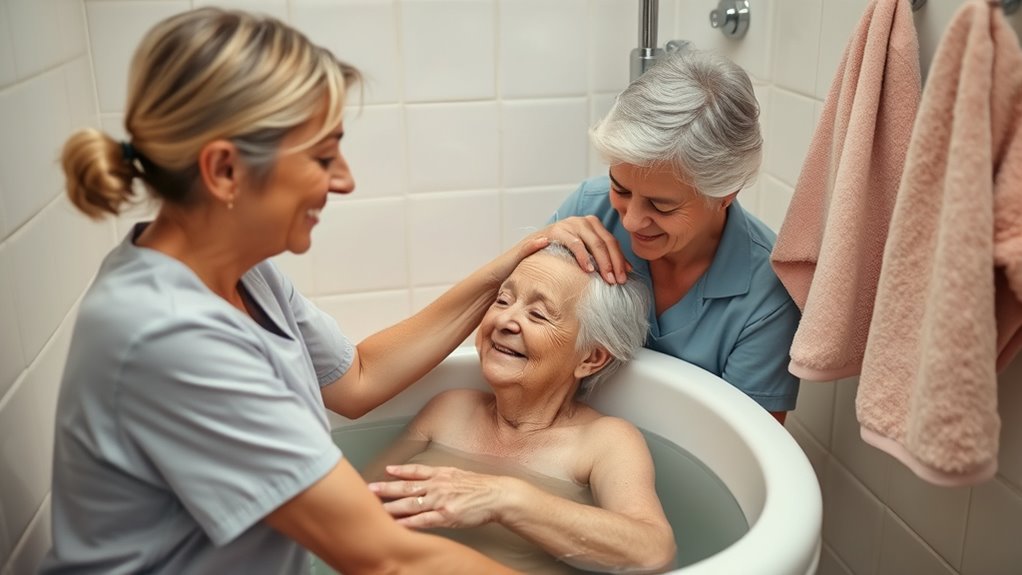
Clear and respectful communication is essential when bathing a loved one with dementia, as it helps reduce confusion and anxiety. Use simple, direct language to explain each step before you do it, so your loved one knows what to expect. Speak calmly and in a gentle tone, avoiding hurried or loud voices that can increase agitation. Offer choices when possible, like “Would you like to sit first or wash your hands?” This promotes a sense of control and cooperation. Keep instructions clear and concise, and avoid arguing or correcting mistakes. Maintain eye contact and use positive, reassuring words to build trust. Remember to listen and respond patiently to any concerns they voice, making the experience more comfortable and respectful.
Using Distraction to Ease Anxiety
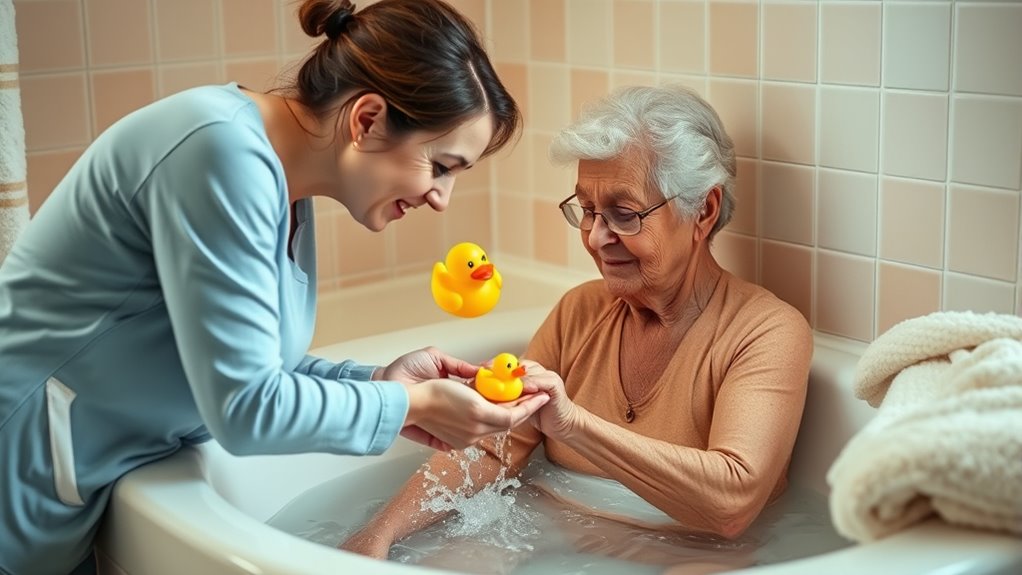
Distraction can be a powerful tool to help your loved one feel calmer and more cooperative during bath time. When anxiety rises or resistance occurs, redirect their attention to something pleasant or familiar. Play soft, calming music to create a soothing atmosphere that distracts from discomfort. Offer a favorite towel or a cozy blanket to hold, which can ease feelings of vulnerability. Engage them in light conversation or ask about their hobbies to shift focus away from the bathroom setting. Using a gentle, engaging voice helps keep their mind occupied and reduces agitation. If they become upset, offering a small treat or discussing a happy memory can redirect their thoughts and promote relaxation. Distraction helps make bath time a more positive, less stressful experience.
Incorporating Familiar Routines and Preferences
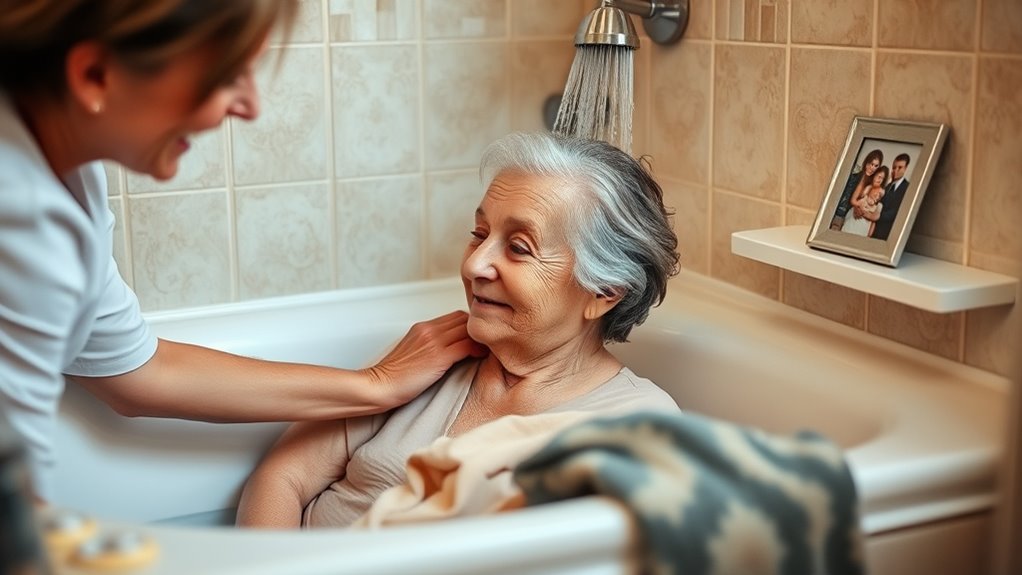
Incorporating familiar routines and preferences into bath time helps reduce anxiety and fosters a sense of security. You can start by bathing your loved one at the same time each day, creating predictability that eases confusion. Stick to preferred methods, whether they like showers or baths, so they feel comfortable and in control. Use familiar scents or favorite towels to evoke positive associations. If they have a favorite bathing spot or specific products, incorporate those into the routine. Maintaining these familiar elements reassures them and reduces resistance. Be attentive to their preferences, allowing choices when possible, such as selecting a towel or water temperature. This consistency builds trust and helps your loved one feel safe, making the experience more manageable for both of you.
Ensuring Physical Safety With Safety Devices
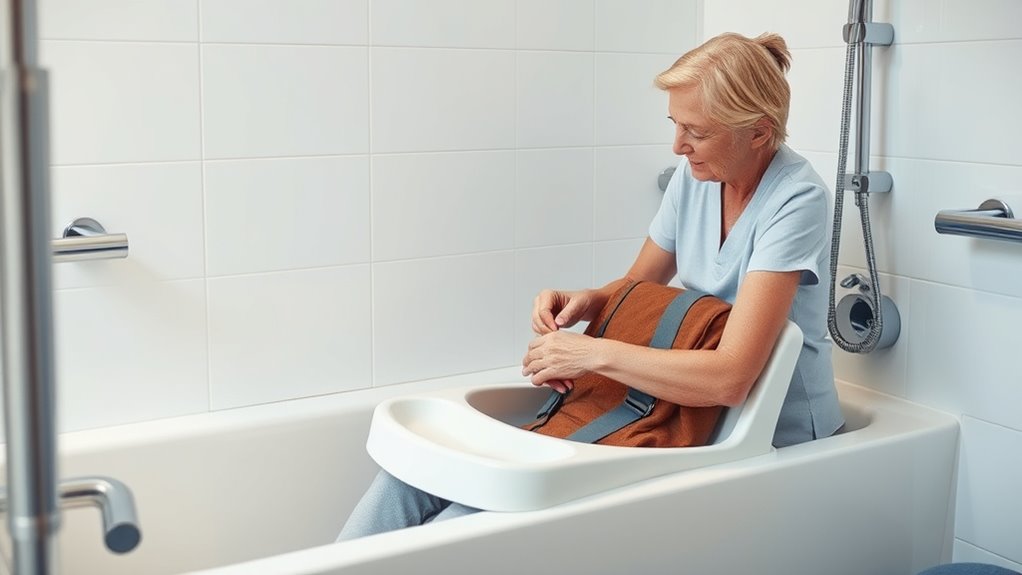
Implementing safety devices in the bathroom is essential for preventing falls and injuries during bathing. Install grab bars near the tub, shower, and toilet to give your loved one sturdy support when entering and exiting. Use nonskid appliqués or mats on floors and inside the tub to reduce slipping hazards. Consider a shower chair or bath seat to provide stability and confidence during the bath. Ensure the water temperature is controlled with a thermostatic mixing valve or an anti-scald device to prevent burns. Keep frequently used items within easy reach to minimize reaching or bending. Regularly check safety devices for stability and wear. By equipping the bathroom with these safety tools, you create a secure environment that encourages independence and reduces the risk of accidents.
Promoting Dignity During Bathing

Promoting dignity during bathing is essential for preserving your loved one’s self-esteem and emotional well-being. Respect their privacy by keeping as much covered as possible and using curtains or screens. Speak calmly and kindly, explaining each step to foster trust and understanding. Offer choices, like whether to wash their hair first or last, to give them a sense of control. Use gentle touch and maintain eye contact to reassure them. Keep the environment warm and comfortable, minimizing exposure to cold surfaces. Cover sensitive areas with towels when necessary, and avoid rushing through the process. Remember, your respectful attitude and attention to their feelings can transform bathing from a distressing ordeal into a dignified, caring experience.
Recognizing and Responding to Signs of Distress

Recognizing signs of distress during bathing is essential because individuals with dementia may not always communicate their discomfort clearly. Watch for facial expressions like grimacing or frowning, tense muscles, or quick, shallow breaths. Restlessness, attempting to pull away, or verbal protests also indicate discomfort. If you notice these signs, stop what you’re doing and check in with gentle words, asking how they’re feeling. Offer reassurance and observe their reactions. Sometimes, simple adjustments like changing water temperature or giving a brief break can help. Pay attention to non-verbal cues, as they often reveal underlying issues. Respond calmly and compassionately, ensuring your loved one feels safe and understood. Recognizing these signs early allows you to adapt your approach and reduce their anxiety effectively.
Making Bathing a Gentle and Positive Experience

Using calm, clear language during bathing helps your loved one feel safe and in control. Incorporate soothing elements like soft music or gentle touches to create a relaxing atmosphere. By maintaining a gentle tone and adding comforting touches, you can make the experience more positive and less stressful.
Use Calm Communication
Gentle, calm communication can make a significant difference in how your loved one experiences bath time. When you speak softly and clearly, it helps reduce confusion and anxiety. Using a soothing tone shows patience and reassurance, making them feel safe. To improve your approach, consider these tips:
- Clearly explain each step before doing it, so they know what to expect.
- Use simple, matter-of-fact language like, “Now, I’m going to wash your hands.”
- Offer gentle choices, such as “Would you like to sit first or stand?” to maintain their sense of control.
Staying calm and respectful encourages cooperation and creates a positive, comforting atmosphere during bath time.
Incorporate Soothing Elements
Incorporating soothing elements into bath time can transform the experience into a calm and positive moment for your loved one with dementia. You can do this by playing soft, calming music to create a tranquil atmosphere that eases anxiety. Using gentle lighting, such as dimmed or warm lights, helps avoid harsh brightness that might overwhelm them. Keep the bathroom warm to prevent discomfort from cold air, and warm the water to a comfortable temperature, testing it first. Offering a favorite towel or blanket over their shoulders maintains dignity and comfort. Using familiar scents, like lavender or chamomile, can also promote relaxation. These small touches foster a peaceful environment, making bathing feel safe and soothing rather than intimidating.
Frequently Asked Questions
How Can I Handle Resistance if My Loved One Refuses Bathing?
When your loved one refuses bathing, stay calm and patient. Respect their feelings, and try to find a better time when they’re more receptive. Offer choices, like the water temperature or whether to sit or stand, to give them a sense of control. Use gentle, reassuring language, and distract with calming music or a favorite towel. Remember, building trust and comfort is key to easing resistance over time.
What Are Signs of Distress During Bathing I Should Watch For?
Did you know that nearly 70% of dementia patients show signs of distress during bathing? You should watch for signs like facial grimacing, crying, or pulling away, which indicate discomfort or fear. Restlessness, verbal protests, or trying to escape are also cues they’re overwhelmed. If you notice these, pause, speak calmly, and reassess the environment to guarantee they feel safe. Your attentive response helps ease their distress.
How Do I Adapt the Routine for Unpredictable Moods or Behaviors?
When adapting the routine for unpredictable moods or behaviors, you should stay flexible and patient. Watch for signs of agitation or discomfort, then pause or slow down the process. Offer reassurance, use calming techniques like soft music, and give your loved one time to adjust. If necessary, break the bath into shorter sessions or reschedule to a better time. Always prioritize their emotional state and comfort, adjusting as needed.
What Alternative Methods Can I Use if My Loved One Is Afraid of Water?
Think of gentle waves lapping softly on the shore. If your loved one fears water, try sponge baths or using pre-moistened wipes instead. You can also offer a damp cloth for face or hands, creating a soothing, less intimidating experience. Use a handheld showerhead on a gentle stream, or consider bathing in a basin. These alternatives help maintain hygiene while respecting their comfort, easing anxiety with calm and familiar touches.
How Can I Make Bathing More Enjoyable Without Causing Confusion?
To make bathing more enjoyable without causing confusion, keep the routine simple and consistent. Use gentle, calm language and give clear instructions. Play soothing music and offer choices to promote a sense of control. Use familiar scents or favorite products, and guarantee the environment feels warm and inviting. Maintain dignity by covering them with towels and avoid rushing. Your calm, reassuring presence makes the experience comfortable and less stressful.
Conclusion
Bathing your loved one with dementia is like guiding a delicate flower through gentle rain—you want to nurture trust and comfort. By staying patient, using calming techniques, and prioritizing safety, you can turn bath time into a positive experience. Remember, your understanding and compassion make all the difference. With these tips, you’ll create a calmer, more respectful routine that eases fears and preserves dignity, making each bath a caring act of love.