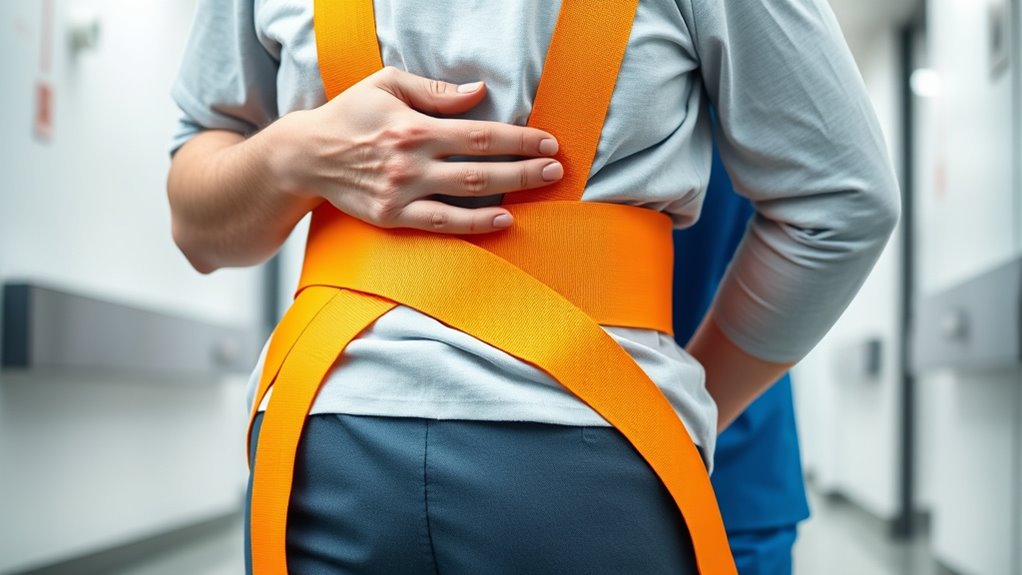

Using a transfer belt properly helps prevent falls and protects your back during patient assistance. Wrap it securely around the patient’s waist, avoiding the abdomen or chest, and make certain it’s snug but comfortable. Communicate clearly to ease anxiety and maintain control during transfers or ambulation. Good technique supports safety, reduces caregiver strain, and promotes independence. Keep in mind proper placement and secure fastening—continue exploring how to maximize safety and comfort with gait belts to become a confident caregiver.
Key Takeaways
- Properly position the gait belt around the patient’s waist, avoiding the abdomen or chest for effective support.
- Adjust the belt to fit snugly without causing discomfort or restricting breathing.
- Communicate clearly with the patient during transfers to reduce anxiety and ensure cooperation.
- Use correct body mechanics and proper belt placement to minimize caregiver strain and prevent back injuries.
- For children, select appropriately sized or adjustable gait belts to ensure safety and effective fall prevention.
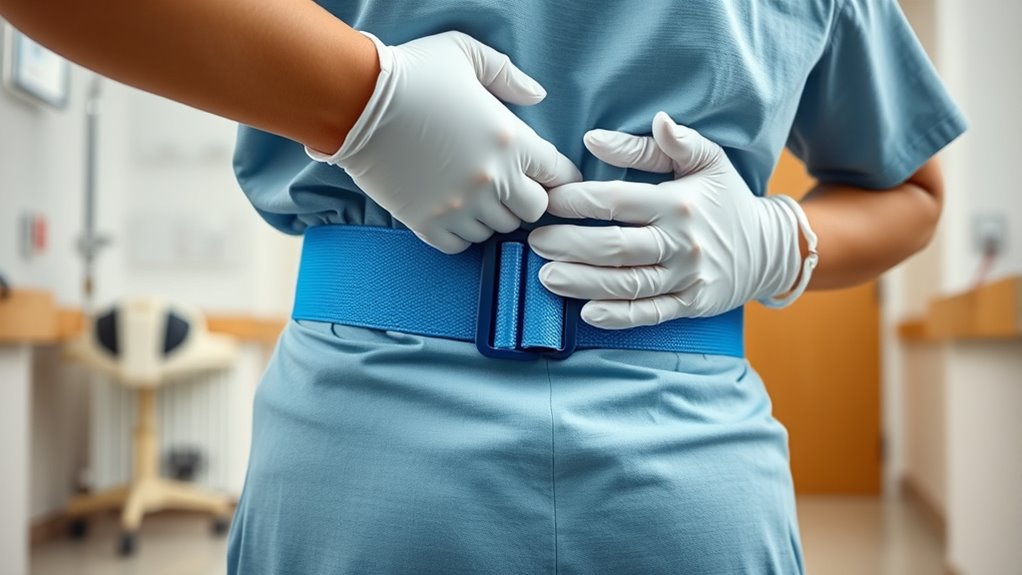
Gait belts are vital tools used by healthcare providers to assist patients with walking or transferring from one position to another. Whether you’re helping an elderly patient or a child with mobility challenges, a gait belt provides a secure grip and stability, reducing the risk of falls. When working with pediatric mobility, using a gait belt is especially important because children may have limited strength or coordination, making them more vulnerable to falls. Properly applying the belt ensures you can support their movement safely without causing discomfort or injury. As a caregiver, your goal is to promote independence while maintaining safety, and gait belts serve as a key aid in achieving that balance.
Using a gait belt correctly also plays a significant role in caregiver ergonomics. When you’re supporting a patient’s weight, improper body mechanics can lead to back strain, muscle fatigue, or even injuries. By positioning the gait belt properly and maintaining a good stance, you reduce the physical effort required to move or stabilize the patient. This not only protects your back but also allows you to focus on the patient’s safety and comfort. For caregivers, understanding how to use gait belts effectively means less physical strain and increased endurance during transfers or ambulation assistance.
In pediatric settings, you might find that gait belts need to be smaller or more adjustable to fit children comfortably. It’s essential to guarantee the belt isn’t too tight, which could cause discomfort or restrict breathing, or too loose, which might compromise support. When securing the belt, position it around the waist or hips, avoiding the abdomen or chest to prevent injury. Always communicate with the child during the transfer, explaining what’s happening to ease anxiety and build trust. Supporting the child during mobility exercises with a gait belt helps you maintain control, prevent falls, and promote confidence.
Frequently Asked Questions
Are Gait Belts Suitable for All Patient Sizes?
Gait belts are generally suitable for most patient sizes, but you should consider patient comfort and size adaptability. Choose a belt that fits snugly without causing discomfort or restricting movement. Adjustable gait belts help accommodate different body sizes, ensuring safety and comfort for everyone. Always check the fit before use, and select a belt that provides secure support, especially for larger or smaller patients, to prevent falls and ensure effective transfers.
How Do I Choose the Right Gait Belt Material?
You should choose a gait belt made from durable fabric options like nylon or leather, as these materials offer excellent strength and longevity. Consider the material’s durability to guarantee it withstands frequent use and cleaning. Comfort is also key, so look for belts with padded or soft fabric. By selecting a belt with sturdy, high-quality material, you’ll enhance safety and support during transfers.
Can Gait Belts Be Used for Non-Ambulatory Patients?
Yes, gait belts can be used for non-ambulatory patients, but with limitations. They help with patient mobility and transferring, yet may not be suitable for patients who can’t bear weight or have fragile skin. Always assess the patient’s condition and consult protocols, as gait belt limitations include potential discomfort or skin injury. Use proper technique to ensure safety and prevent falls during transfers or repositioning.
What Are Signs of Misuse or Improper Fitting?
Misusing a gait belt is like trying to fit a square peg in a round hole. Signs of improper fitting include the belt being too loose or too tight, which can cause discomfort or slipping. Always check for signs of discomfort, such as skin redness or protests from the patient. Verify a proper fit by snugly securing the belt, allowing you to grasp it comfortably without causing pain or restricting movement.
Are There Alternative Transfer Aids to Gait Belts?
Yes, there are alternative transfer aid options to gait belts that can enhance patient safety. You might consider transfer sheets, slide boards, or trapeze bars, which help reduce strain and improve stability during transfers. These aids are especially useful for patients with fragile skin or limited mobility. Always evaluate the patient’s needs and guarantee proper training to prevent falls, making transfers safer for both you and your patient.
Conclusion
Using a gait belt is a simple step that can make a big difference in preventing falls and protecting your back. It’s like having a safety net when assisting someone—you’re there to catch them if they stumble. By mastering its proper use, you’ll feel more confident and in control. Remember, it’s better to be safe than sorry; a steady hand and a reliable tool can turn a potentially risky situation into a smooth, safe transfer every time.